
TL;DR
An Ideal Home cleaning editor tested a lemon and bicarbonate of soda method instead of paying £60 for a professional oven clean. She reported that the mixture loosened grease on her lightly soiled oven, but the result is a personal test, not evidence that the method will work on heavy buildup.
An Ideal Home cleaning editor says she cleaned her oven herself with lemon and bicarbonate of soda rather than paying £60 for a professional service ahead of festive hosting. In her test, the mixture helped loosen grease from an oven she described as not heavily soiled, though the result does not establish how well the method works on tougher buildup.

Get cleaning gear delivered free with Prime
- Fast, free delivery on millions of items
- Prime Video, Amazon Music and more included
- Member-only deals all year
The editor said she had usually hired a professional to clean her oven twice a year, but chose to try a home method after a recent move left her with less money to spend. She said she rarely uses the oven, relying on an air fryer for meals for herself and her husband, but expects to use it more while hosting over the festive period.
For the test, she sprayed the oven with water, put bicarbonate of soda on half a lemon and used it to scrub the oven’s interior. She left the mixture for one hour, then wiped the surface with a damp microfibre cloth. She reported removing a substantial amount of grease with little additional scrubbing and said the cloth showed grime she had not noticed beforehand.
The editor described seeing a fizzing residue during the process. Ryan McSorley, co-founder of cleaning company Neat, said citric acid helps break down grease, while bicarbonate of soda is mildly alkaline and mildly abrasive, helping loosen residue and lift dirt. That explanation is his account of the ingredients’ roles; the published test was a single household experience.
A festive oven clean with lemon and bicarbonate
An Ideal Home editor tried a home method instead of paying for a professional clean. Her result came from one lightly soiled oven.
The editor’s test
She sprayed the oven with water, scrubbed with half a lemon coated in bicarbonate of soda, then wiped it with a damp microfibre cloth.
Use half a lemon with bicarbonate of soda on the oven interior.
The editor said the mixture loosened grease in her oven.
Use a damp microfibre cloth to remove residue.
Choose by oven condition
The editor’s result applies to her lightly soiled oven; advice for tougher grime came from cleaning expert Ryan McSorley.
- The editor reported wiping away substantial grease.
- Her account suggests the method may help before festive cooking.
- McSorley advises leaving bicarbonate of soda for several hours or overnight.
- Use a damp, non-scratch scourer; lemon steam is another suggested option.
What the ingredients do
McSorley explains the ingredients’ roles; his comments are not additional test results.
Helps break down grease
McSorley attributes this action to citric acid.
Loosens and lifts residue
He describes it as mildly alkaline and gently abrasive.
A Lower-Cost Option Before Hosting
The reported test offers a low-cost alternative to a £60 professional clean for someone whose oven is not heavily soiled. For households preparing to cook more during the holidays, cleaning the appliance in advance may make it easier to deal with grease and residue before a busy period.
However, the practical value depends on the oven’s condition. The editor explicitly said hers was not particularly greasy, so her result should not be treated as proof that lemon and bicarbonate of soda will remove baked-on grime from every oven. Readers deciding whether to hire a cleaner or use a home method should account for the amount of buildup and the time they can spend cleaning.
Products Worth Considering

TCL F8D Series 50-Inch 4K QLED Smart Fire TV

Bose Smart Dolby Atmos Soundbar with Alexa, A.I. Dialogue Mode, and Bluetooth, Black

Shark AI Ultra Robot Vacuum with Matrix Clean and Self-Empty Base
As an affiliate, we earn on qualifying purchases.
How the Editor Tested the Method
The editor said she generally prefers cleaning methods using ingredients already in her home, including lemons and bicarbonate of soda. She tried the scrub method as an alternative to her usual twice-yearly professional service, with the timing linked to preparations for festive cooking.
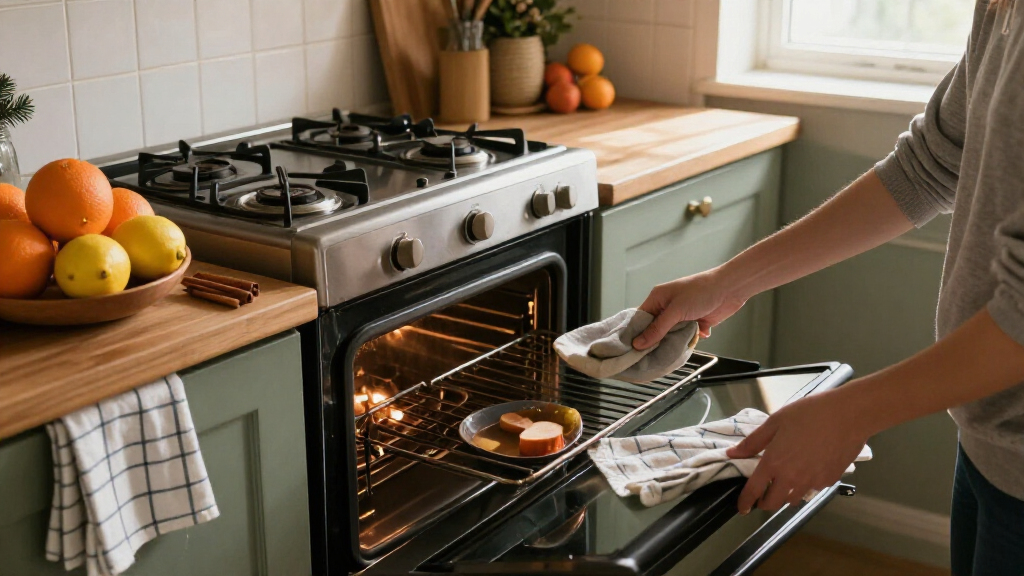
McSorley also described a separate lemon-steam approach for people without bicarbonate of soda: squeeze the juice of a couple of halved lemons into an ovenproof dish of water, add the lemon halves and heat the oven to about 120°C for 30 minutes. He said the steam can soften grime and that the oven should be allowed to cool before wiping. For heavier deposits, he advised using bicarbonate of soda and allowing it to sit for several hours or overnight before cleaning with a damp, non-scratch scourer.
The article also mentions steam cleaners as another option, using water rather than the lemon-and-bicarbonate mixture. These alternatives are advice attributed to McSorley or presented by the publication; the editor’s reported one-hour test used the lemon half and bicarbonate method.
“Citric acid helps break down grease.”
— Ryan McSorley, co-founder of Neat
Results May Vary With Oven Grime
The report does not provide a controlled comparison, a measurement of how much grease was removed, or results from other ovens. The editor said her oven was not heavily soiled, and the test therefore does not show whether the approach can tackle thick, baked-on deposits or how it compares with professional cleaning across different appliance types.
It is also unclear how much effort the editor’s initial scrubbing took: she reported that she could wipe away a large amount after leaving the mixture for an hour, but did not quantify the time spent applying it or cleaning the full oven. McSorley’s alternative method and advice for tougher grime are recommendations, not additional tests documented in the report.
Assess the Oven Before Choosing
Readers considering the method can first judge how much residue has built up and whether a one-hour treatment is likely to be enough. For a lightly soiled oven, the editor’s account suggests trying the lemon-and-bicarbonate approach may reduce the need for a paid service, but it does not guarantee the same result in another home.
For more persistent grime, McSorley recommends giving bicarbonate of soda longer to sit and using a damp, non-scratch scourer; his lemon-steam suggestion is another option for loosening residue. The report does not set out a follow-up test or a broader comparison with professional cleaning, so any wider conclusions about cost, time or cleaning performance remain open.
Source: rss
Key Questions
What did the editor use to clean the oven?
She used half a lemon with bicarbonate of soda, after spraying the oven interior with water. She left the mixture for one hour before wiping it away with a damp microfibre cloth.
Did the method remove all oven grime?
The editor reported wiping away a large amount of grease, but said her oven was not heavily soiled. The report does not establish whether the method removes all grime or works on thick, baked-on deposits.
What is the lemon-steam alternative?
Ryan McSorley recommends putting the juice and halves of a couple of lemons in an ovenproof dish of water and heating it at about 120°C for 30 minutes. He says to let the oven cool before wiping the softened residue.
How much did the editor say a professional clean would cost?
She said she had been paying £60 for a professional clean this year. That is the cost she cited for her situation, not a stated standard price for oven cleaning.
Source: idealhome.co.uk