
To clean your mattress and bedding effectively, wash sheets and pillowcases weekly in hot water to kill dust mites and remove allergens. Vacuum your mattress with a HEPA filter regularly, focusing on seams and crevices. Use dust-mite-proof covers and reduce humidity below 50% with a dehumidifier or air conditioner. Sunlight and airing out your bedding also help diminish mites. For more tips on creating a healthier sleep space, keep exploring these strategies.

Get cleaning gear delivered free — and shop member deals
- Fast, free delivery on millions of items
- Access to Prime Big Deal Days deals on October 6–7
- Prime Video, Amazon Music and more included
Key Takeaways
- Wash sheets, pillowcases, and blankets weekly in hot water (~130°F/54°C) to kill dust mites and remove allergens.
- Vacuum mattress surfaces thoroughly with a HEPA filter, including seams and crevices, regularly to reduce dust mite populations.
- Use dust-mite-proof covers on pillows and mattresses to create a barrier against mites and allergens.
- Reduce bedroom humidity below 50% with dehumidifiers or air conditioning to discourage dust mite growth.
- Sunlight and fresh air help eliminate dust mites; regularly air out bedding and expose mattress to sunlight when possible.
Have you ever wondered how clean your mattress and bedding really are? Many people don’t realize just how much dirt, dust, and allergens can accumulate over time. Your bed isn’t just a place to rest; it’s a hotspot for dust mites, which are tiny creatures that thrive in warm, humid environments. These microscopic pests feed on dead skin cells and are almost impossible to see with the naked eye. Over time, they can cause allergic reactions, leading to sneezing, itchy eyes, and congestion. If you suffer from allergies or asthma, addressing dust mites is essential for allergy relief. Regular cleaning of your mattress and bedding is the best way to keep these allergens at bay and improve your overall sleep quality.
Your mattress harbors dust mites that can trigger allergies and disrupt your sleep. Regular cleaning is key.
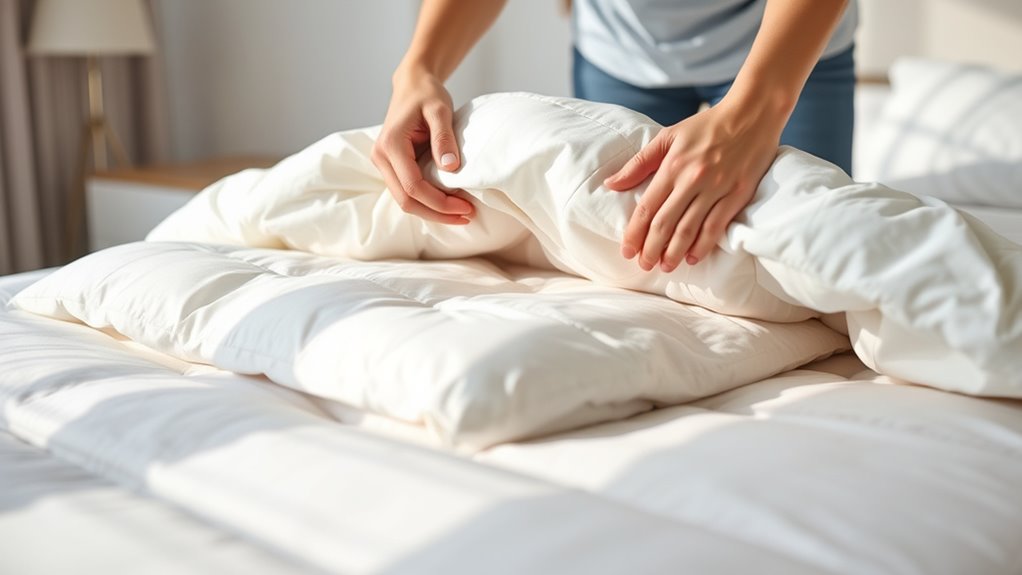
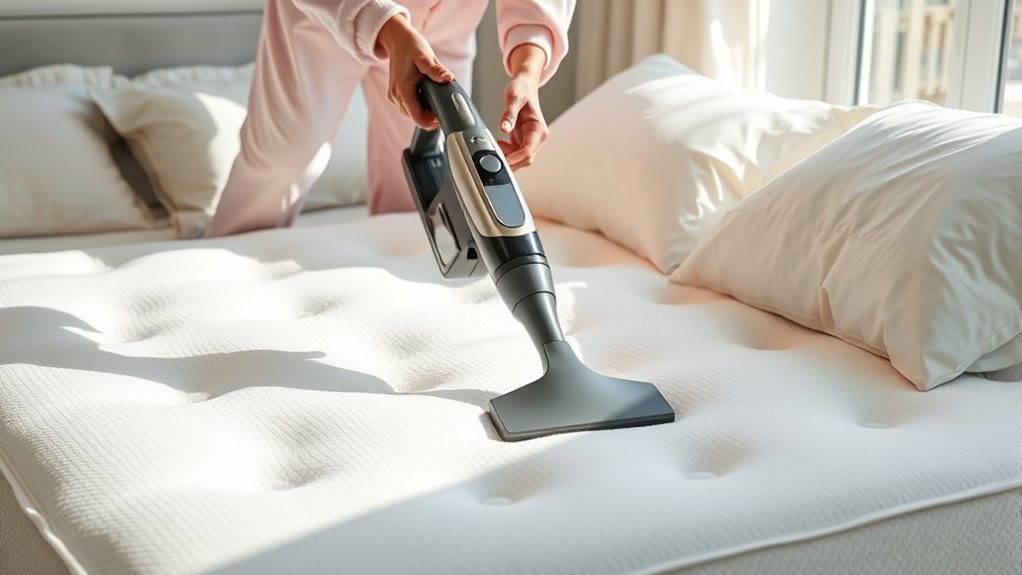
To start, it’s *vital* to wash your bedding frequently. Use hot water—around 130°F (54°C)—to kill dust mites and remove accumulated dust, sweat, and skin flakes. Washing sheets, pillowcases, and blankets at least once a week helps prevent the buildup of allergens. Don’t forget to clean or replace your pillow regularly, as pillows can harbor dust mites even more than mattresses. Vacuuming your mattress can also *considerably* reduce dust mite populations. Use a vacuum with a HEPA filter, which traps tiny particles, and make sure to vacuum the entire surface, paying special attention to seams and crevices where dust and mites tend to settle. Incorporating proper cleaning techniques can further enhance the effectiveness of your routine.
Another effective step involves protecting your mattress with a dust-mite-proof cover. These covers are tightly woven and act as a barrier, preventing dust mites from colonizing your mattress. When combined with regular cleaning, they can make a noticeable difference in allergy relief. Additionally, consider reducing indoor humidity with a dehumidifier or air conditioner, since dust mites thrive in humid environments. Keeping the humidity below 50% can make your bedroom less hospitable to these pests.
Finally, placing your mattress in direct sunlight every few months can help kill dust mites, as they dislike dry, bright environments. If possible, air out your bedding daily by letting fresh air circulate, which also helps reduce moisture. Maintaining a consistent cleaning routine not only keeps your bedding fresh but also minimizes allergens, making your sleep environment healthier. By taking these simple but effective steps, you’re actively reducing dust mites and creating a space that promotes allergy relief and better sleep.
As an affiliate, we earn on qualifying purchases.
Frequently Asked Questions
How Often Should I Replace My Mattress?
You should replace your mattress every 7 to 10 years, as its lifespan diminishes over time. Regular use causes wear and tear, affecting your sleep quality and health. Monitoring for sagging, lumps, or persistent allergies can help determine if it’s time for a replacement. Following the recommended replacement frequency guarantees you enjoy a comfortable, supportive sleep surface and maintains good hygiene for your overall well-being.
Can I Use Vinegar to Clean My Bedding?
Yes, you can use vinegar cleaning as a bedding disinfectant. Vinegar is effective at killing bacteria and removing odors, making it a natural choice for revitalizing your bedding. Mix equal parts white vinegar and water, then spray lightly on sheets and pillowcases. Let it sit for a few minutes before washing. This simple method helps keep your bedding fresh, clean, and free from germs without harsh chemicals.
What’s the Best Way to Remove Stains From Mattresses?
Imagine your mattress as a canvas, waiting for your touch to restore its beauty. To remove stains effectively, act quickly with stain removal techniques—dab, don’t rub, with a mixture of mild detergent and water. For stubborn spots, try a spot cleaner or a homemade solution like baking soda paste. Regular mattress cleaning with these methods keeps your bed fresh, inviting, and free of blemishes.
Are There Eco-Friendly Cleaning Options for Bedding?
Yes, you can choose eco-friendly cleaning options for your bedding. Use organic detergents that are free from harsh chemicals, ensuring a safer, more natural clean. For stains, opt for natural stain removers like baking soda, hydrogen peroxide, or lemon juice. These options effectively lift stains without harming the environment. By making these choices, you protect your health and reduce your ecological footprint while keeping your bedding fresh and clean.
How Do I Prevent Dust Mites in My Mattress?
Want to keep dust mites at bay? Start by sealing your mattress with a hypoallergenic cover—this simple step prevents dust mite intrusion and boosts allergy relief. Wash bedding weekly in hot water, and vacuum your mattress regularly to remove dust and mites. Keep humidity low, ideally below 50%, because dust mites thrive in moist environments. Follow these steps consistently, and you’ll notice a significant difference in allergy symptoms and sleep quality.
As an affiliate, we earn on qualifying purchases.
Conclusion
By regularly cleaning your mattress and bedding, you’re nurturing a sanctuary where restful nights bloom. Think of your bed as a treasure chest—keeping it pristine guards your health and transforms every sleep into a peaceful retreat. When you invest in cleanliness, you’re planting seeds of comfort and serenity in your everyday life. So, embrace these simple steps and let your bed be a haven that welcomes you home, night after night, like a gentle embrace.
bedroom dehumidifier for dust mites
As an affiliate, we earn on qualifying purchases.
As an affiliate, we earn on qualifying purchases.
mattress and bedding cleaning kit
As an affiliate, we earn on qualifying purchases.
As an affiliate, we earn on qualifying purchases.
Fall Picks
fall essentials
As an affiliate, we earn on qualifying purchases.