
To prevent mold after a leak, keep your indoor humidity between 30-50%, with 40-45% being ideal. Use a hygrometer to monitor levels regularly and address any spikes immediately. Maximize ventilation, run dehumidifiers, and dry wet surfaces quickly to reduce moisture. Maintaining these targets and strategies creates an environment less inviting for mold growth. To discover more ways to protect your space, keep exploring effective moisture management tips.
Key Takeaways
- Maintain indoor humidity levels between 30-50% to minimize mold growth after leaks.
- Use dehumidifiers and proper ventilation to quickly dry affected areas and control moisture.
- Regularly monitor humidity with calibrated hygrometers placed away from sunlight and drafts.
- Repair leaks promptly and ensure moisture barriers are intact and sealed properly.
- Promote air circulation with fans or open windows to accelerate drying and prevent mold establishment.
Why Humidity Control Is Key After a Leak
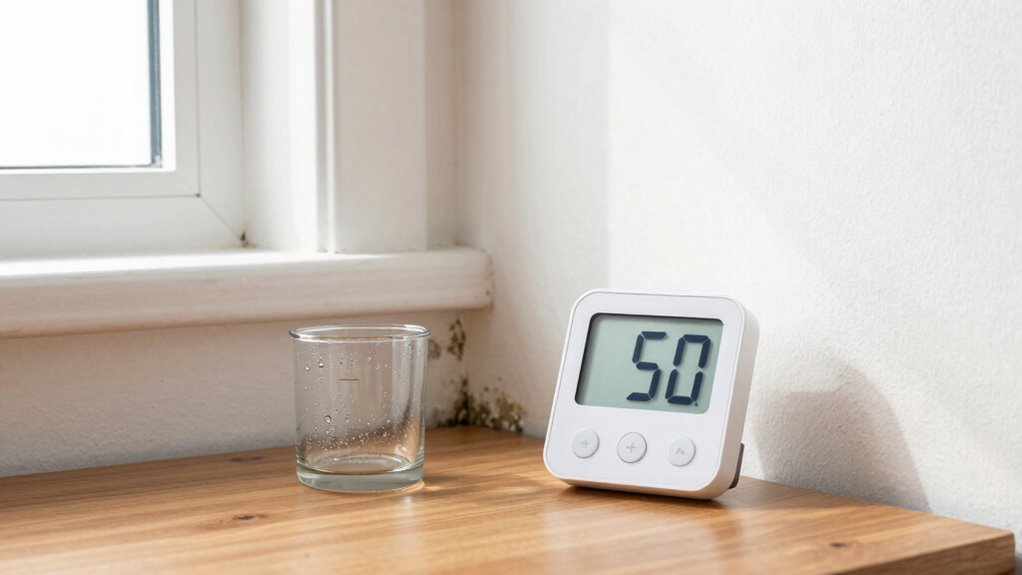
After a leak, controlling humidity is essential because excess moisture creates an ideal environment for mold growth. High humidity levels can lower air quality by increasing mold spores in the air, which you breathe daily. When moisture lingers, mold spores settle on surfaces and proliferate rapidly. By managing humidity, you reduce the chances of mold spores becoming airborne and spreading throughout your home. Proper humidity control discourages mold from attaching to walls, furniture, and other surfaces, helping maintain a healthier indoor environment. Keeping humidity in check not only prevents mold growth but also improves air quality, making your space safer and more comfortable. Acting quickly to control moisture levels is your first line of defense against mold-related health issues. Monitoring indoor humidity levels can help ensure your home remains mold-resistant. Understanding humidity targets is crucial for effective prevention, especially considering vetted vacuum options for thorough cleaning and moisture removal. Maintaining optimal indoor air quality further supports mold prevention efforts. Implementing humidity measurement tools allows homeowners to adjust conditions proactively and prevent mold development before it starts.
What Humidity Levels Prevent Mold Growth?
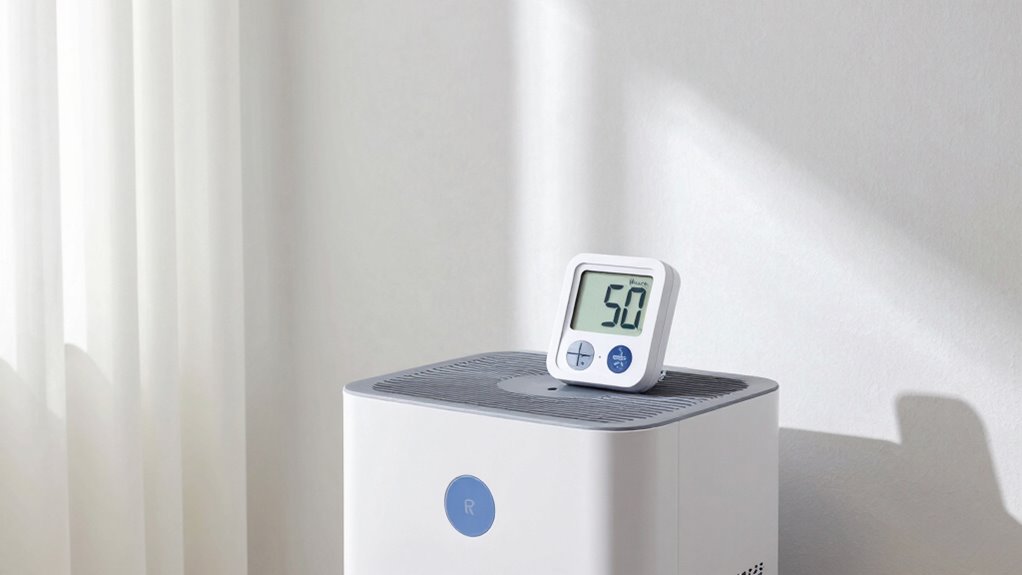
Have you wondered what humidity level is ideal for preventing mold growth? Keeping indoor humidity between 30% and 50% is your best bet. This range helps maintain good air quality and discourages mold spores from settling and thriving. Humidity sensors are essential tools; they provide real-time data, so you can adjust your environment accordingly. If humidity rises above 60%, mold risks increase considerably, especially in damp areas. By monitoring humidity levels closely, you can create an environment that’s inhospitable to mold while preserving air quality. Consistent control of humidity ensures your space stays healthy and mold-free, particularly after leaks or water damage. Regularly checking your humidity sensors helps you stay ahead of mold growth before it becomes a problem.
How to Measure and Monitor Indoor Humidity
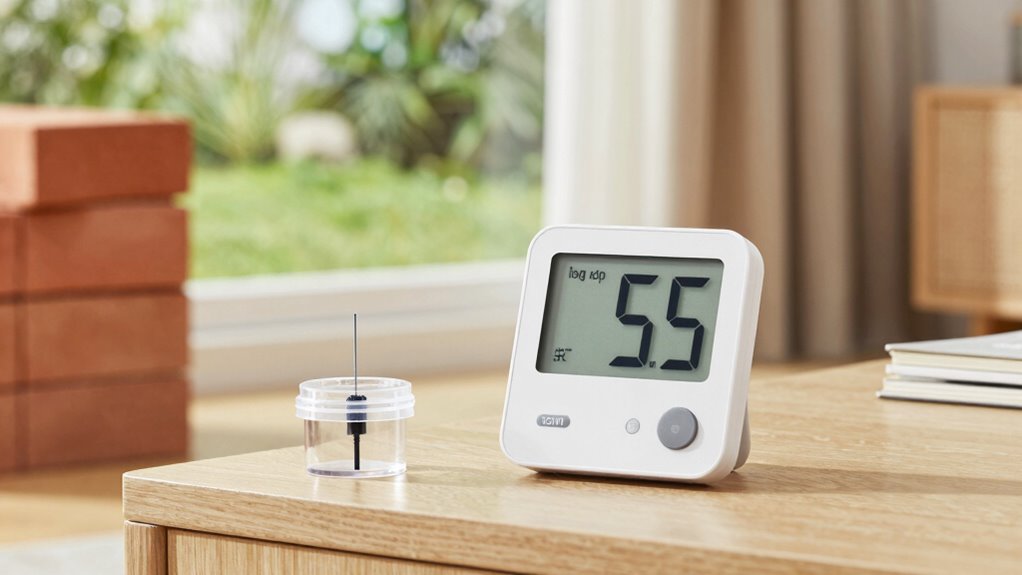
Monitoring indoor humidity effectively starts with choosing the right tools. Indoor humidity sensors are essential for tracking moisture levels accurately. Look for reliable digital hygrometers that offer precise readings and can be easily integrated into your home environment. Regular hygrometer calibration is vital to guarantee your measurements remain accurate over time, preventing false readings that could lead to mold risk. Keep sensors in central locations away from direct sunlight or drafts, and check them periodically. Using these tools helps you maintain ideal humidity levels, especially after leaks, reducing mold growth potential. Consistent monitoring allows you to identify any spikes or drops in moisture and take prompt action if needed. Accurate measurement is the foundation of effective humidity management and mold prevention. Understanding media literacy can also help you interpret sensor data more effectively and avoid unnecessary concerns. Additionally, understanding the regional climate can inform your humidity targets and help you adapt your environment accordingly. Regularly reviewing the environmental conditions in your home aids in maintaining the appropriate humidity range and prevents mold development, especially considering the climate variations that can affect indoor moisture levels. Incorporating proper ventilation strategies can further enhance your mold prevention efforts, especially after leaks or heavy rainfall.
Easy Strategies to Lower Humidity After Leaks
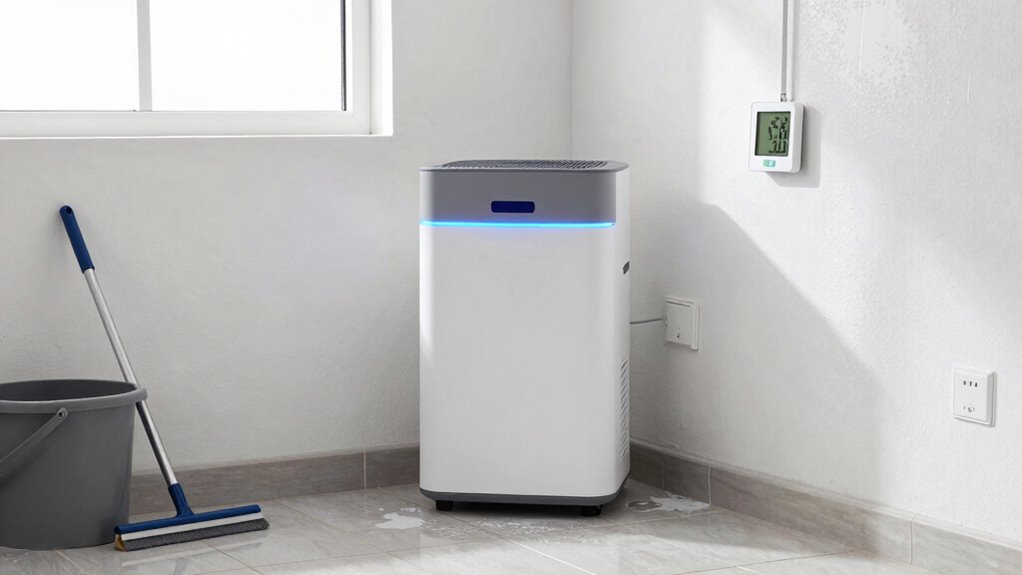
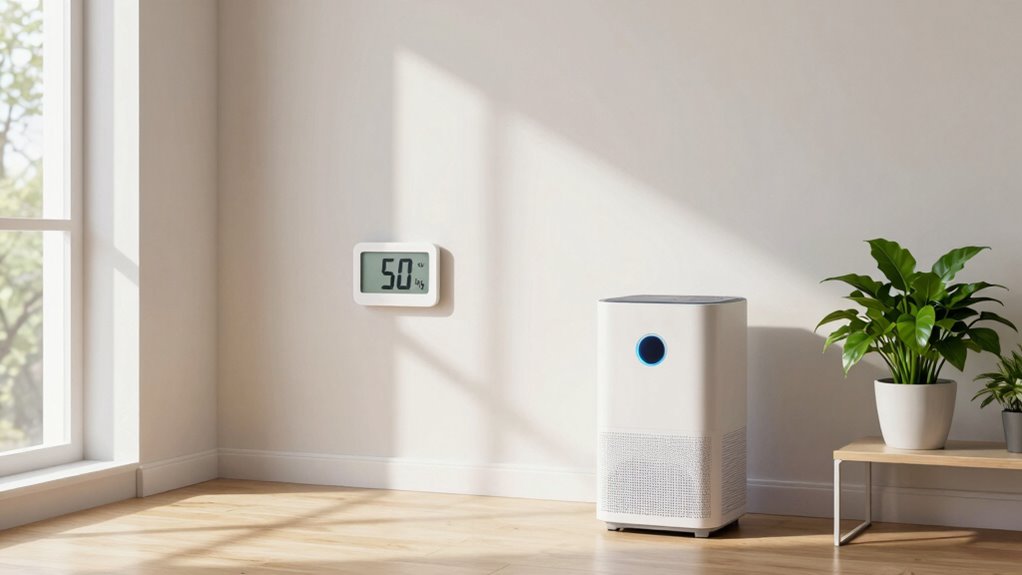
When humidity levels rise due to leaks, taking immediate steps can effectively reduce moisture and prevent mold growth. Start by positioning a dehumidifier in the affected area, ideally in the center for maximum coverage. Use air circulation techniques like opening windows or using fans to promote airflow, helping moisture escape. Proper dehumidifier placement ensures maximum efficiency, while good air circulation prevents stagnant, damp spots. Here’s a quick guide:
| Strategy | Action | Benefit |
|---|---|---|
| Dehumidifier placement | Place in the center of the room | Faster moisture removal |
| Air circulation techniques | Use fans or open windows | Prevents damp, stagnant air |
| Regular monitoring | Check humidity levels regularly | Maintains ideal moisture balance |
| Prompt drying | Dry wet surfaces immediately | Reduces mold risk |
Additionally, maintaining proper humidity targets is essential for long-term mold prevention. Ensuring that humidity remains within the recommended range (generally between 30-50%) is a key part of mold‑risk prevention, especially after leaks. Regularly checking humidity levels with a hygrometer helps to sustain these ideal conditions and prevent mold growth over time. Consistent humidity control can significantly lower the chances of mold development in vulnerable areas. Incorporating proper ventilation practices can further enhance moisture management and mold resistance.
Common Mistakes That Make Mold More Likely: And How to Avoid Them

Ignoring humidity levels, not ensuring proper ventilation, and delaying leak repairs can all increase mold risk. These mistakes let moisture linger and create ideal conditions for mold growth. To protect your home, stay attentive to humidity, improve airflow, and fix leaks promptly. Additionally, controlling humidity around 50% can significantly reduce mold development humidity targets. Maintaining proper ventilation helps remove excess moisture from indoor air, further reducing mold risk. Being aware of moisture control strategies can make a significant difference in mold prevention efforts. Regularly monitoring indoor moisture levels can help detect hidden issues early and prevent mold from establishing. Implementing professional assessments can also identify hidden moisture sources before problems arise.
Ignoring Humidity Levels
Many homeowners overlook the importance of controlling indoor humidity levels, but failing to do so creates ideal conditions for mold growth. Ignoring humidity can lead to problems like improper dehumidifier placement and inaccurate humidity sensor readings. To avoid this, consider these key points:
- Make certain your dehumidifier is placed in a central location, away from walls and furniture, for ideal air circulation.
- Regularly check the humidity sensor accuracy to maintain consistent readings and avoid over- or under-drying the air.
- Use a reliable hygrometer alongside your dehumidifier to cross-verify humidity levels and prevent unnoticed spikes.
- Choosing the right performance parts like high-quality dehumidifiers and sensors can enhance your mold prevention efforts and maintain optimal engine and vehicle conditions. Proper humidity management is essential to prevent mold issues and ensure a healthy indoor environment. Additionally, understanding indoor air quality can help homeowners better identify potential mold risks before they become severe.
Overlooking Ventilation Needs
Proper ventilation is essential for preventing mold growth after leaks, yet it’s often overlooked. Ventilation importance lies in reducing excess moisture and maintaining dry air, which inhibits mold development. Without adequate airflow enhancement, damp areas trap humidity, creating ideal conditions for mold spores to thrive. You might focus on fixing leaks or controlling humidity but forget to improve airflow, leaving moisture stagnant. To avoid this mistake, ensure vents are unobstructed and consider using exhaust fans or air movers to increase circulation. Proper ventilation helps dry out affected spaces quickly and prevents moisture buildup. Additionally, air circulation systems are vital components that can optimize airflow throughout the space. By prioritizing airflow enhancement, you reduce mold risk and support a healthier environment after leaks. Don’t underestimate the power of good ventilation—it’s a crucial step in mold prevention.
Delaying Leak Repairs
Delaying leak repairs substantially increases the risk of mold growth because moisture remains in the environment longer than it should. This persistent dampness negatively impacts air quality and allows mold spores to thrive. When you postpone fixing leaks, you give mold more time to develop and spread. To minimize risks, focus on these key actions:
- Address leaks immediately to prevent prolonged moisture exposure.
- Dry affected areas thoroughly before mold spores settle or multiply.
- Regularly inspect vulnerable spots to catch leaks early and reduce moisture buildup.
Tips for Long-Term Mold Prevention in Moist Areas
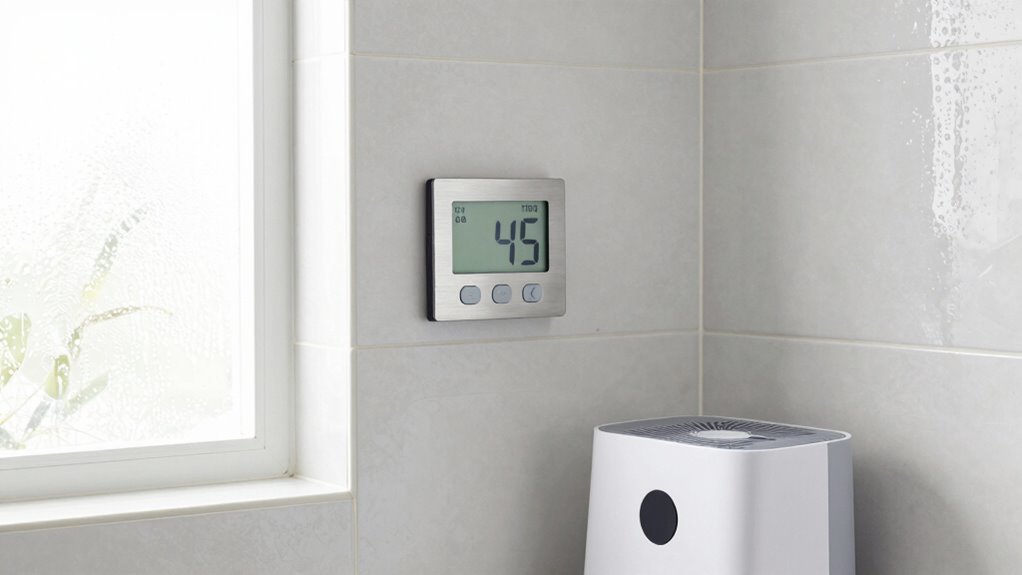
To prevent mold from returning in moist areas, you need to keep humidity levels in check and use moisture barriers properly. Maintaining ideal humidity helps inhibit mold growth, while barriers protect surfaces from ongoing moisture. When you combine these strategies, you create a less hospitable environment for mold to thrive long-term.
Maintain Optimal Humidity Levels
Maintaining the right humidity levels is essential for preventing mold growth in moist areas. To do this effectively, focus on three key steps. First, choose the right dehumidifier by considering its capacity and energy efficiency, ensuring it handles your space’s size. Second, carefully select humidity sensor placement; position sensors in areas prone to moisture but away from direct water sources or vents for accurate readings. Third, regularly monitor and adjust humidity levels, keeping them between 30-50%. This prevents excess moisture that promotes mold. By properly selecting your dehumidifier and strategically placing sensors, you maintain consistent humidity control. Consistent humidity management minimizes mold risk and keeps your environment safe and healthy long-term.
Use Moisture Barriers Effectively
Effective use of moisture barriers is essential for long-term mold prevention in moist areas. Installing high-quality moisture barriers, such as vapor retarders, helps prevent excess moisture from penetrating walls, floors, and ceilings. Make certain these barriers are continuous and properly sealed at seams and edges to avoid gaps that can let moisture seep through. Use vapor retarders in areas prone to high humidity, like basements, bathrooms, and kitchens, to reduce moisture migration. Regularly inspect the integrity of these barriers, especially after leaks or repairs, and replace damaged sections promptly. Proper installation and maintenance of moisture barriers create a reliable defense against persistent dampness, reducing mold risk and protecting your home’s structural integrity over time.
Frequently Asked Questions
Can Certain Materials Resist Mold Even at Higher Humidity Levels?
Yes, certain materials can withstand mold even at higher humidity levels. Look for materials with high durability, like metal or treated wood, which are less prone to mold growth. Applying mold-resistant coatings also helps protect surfaces in humid environments. These options create a barrier against moisture and mold spores, making your space safer. Choosing the right materials and treatments ensures you can maintain a healthier environment despite increased humidity.
How Quickly Should Humidity Be Lowered After a Leak Occurs?
If you want to prevent mold from taking over, lower humidity immediately after a leak—think within a few hours, not days! Rapid humidity control is your best weapon in leak remediation. Use fans, dehumidifiers, and proper ventilation to bring moisture levels down swiftly. The quicker you act, the less chance mold has to set in. Don’t wait around—mold doesn’t take a vacation, so neither should you!
Are Dehumidifiers Effective in Preventing Mold in All Climates?
Dehumidifiers can be effective in preventing mold across many climates, but their success depends on proper HVAC maintenance and the use of air purifiers. In humid environments, they help lower moisture levels quickly, but in very dry or cold climates, their impact may be limited. Regularly maintaining your HVAC system and using air purifiers enhances mold prevention, ensuring peak humidity control regardless of climate conditions.
What Are Signs of Hidden Mold Growth Behind Walls or Ceilings?
You might think mold hides well, but its signs are sneaky. If you notice a persistent mold smell or wall discoloration, hidden mold could be lurking behind walls or ceilings. Sometimes, it shows up as damp patches or peeling paint, but often, it stays hidden until it causes visible damage or health issues. Keep an eye out for these subtle clues—your home’s health depends on it.
How Does Seasonal Weather Affect Indoor Humidity Management Strategies?
Seasonal weather greatly impacts your indoor humidity management strategies. During humid summers, you should use dehumidifiers and air conditioning to reduce moisture levels, while in dry winter months, a humidifier can help maintain comfortable humidity. Climate adaptation means adjusting your efforts based on seasonal humidity fluctuations, ensuring your home stays mold-free. Monitoring humidity levels regularly helps you respond effectively to seasonal changes and prevent mold growth behind walls or ceilings.
Conclusion
By keeping humidity in check after a leak, you’re like a vigilant gardener tending delicate plants. When you maintain the right moisture levels, you prevent mold from taking root, preserving your home’s health and comfort. Think of each small adjustment as watering your sanctuary just enough—not too much, not too little—ensuring it stays vibrant and mold-free. With careful monitoring, you create a resilient space where mold can’t grow, and peace can flourish.