Robot vacuums navigate your home using different technologies. LiDAR uses lasers for precise mapping, helping it clean efficiently and adapt to changes. Camera-based models use visual sensors to recognize rooms and obstacles, offering detailed understanding. Bump-and-pray vacuums move randomly, relying on sensors to avoid obstacles after contact. Each system has pros and cons; if you want smarter cleaning, explore how these technologies compare to find the best fit for your space.
Listen free for 30 days with Audible
Thousands of audiobooks and originals — cancel anytime.
As an affiliate, we earn on qualifying purchases.
Key Takeaways
- LiDAR uses laser sensors for precise 3D mapping and obstacle detection, making it highly accurate for navigation.
- Camera-based vacuums utilize visual sensors and image processing to recognize rooms and objects, offering detailed environmental understanding.
- “Bump and Pray” vacuums rely on reactive, random movements and contact sensors, often missing spots and providing less efficient cleaning.
- LiDAR systems adapt well to environmental changes, while camera systems can struggle in low-light conditions.
- “Bump and Pray” models are simpler, less accurate, and less reliable for comprehensive cleaning compared to advanced navigation technologies.
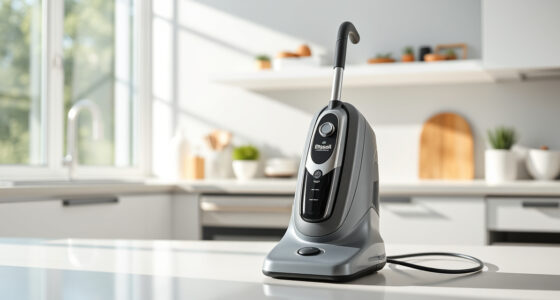
robot vacuum with LiDAR navigation
As an affiliate, we earn on qualifying purchases.
As an affiliate, we earn on qualifying purchases.
How Do Robot Vacuums Find Their Way Around Your Home?
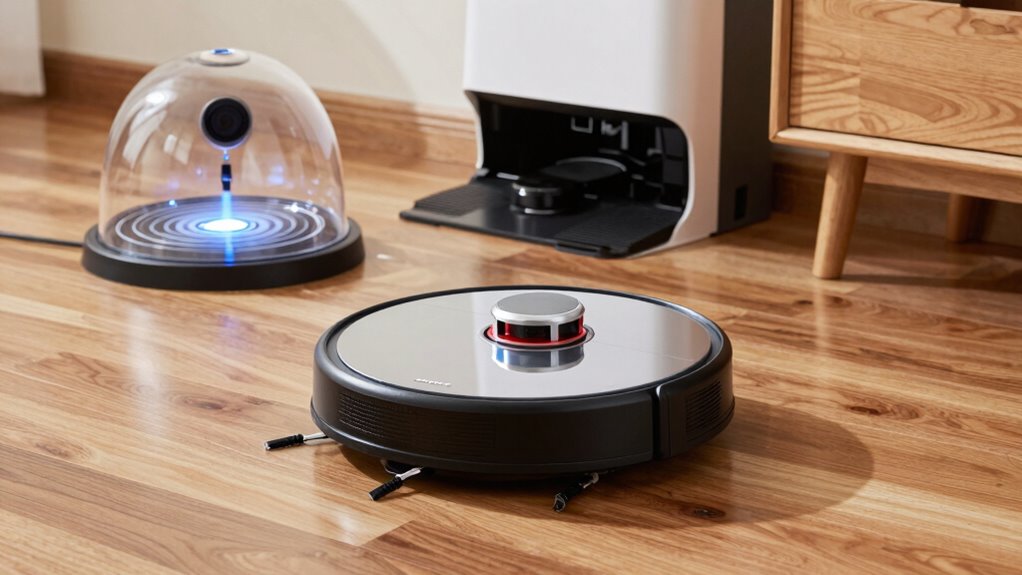
Have you ever wondered how robot vacuums navigate your home so efficiently? It all comes down to their ability to achieve high mapping accuracy and obstacle detection. These vacuums use sensors and cameras to scan their environment, creating a detailed map of your space. With precise mapping, they know exactly where they’ve cleaned and where they still need to go. Obstacle detection helps them avoid furniture, shoes, and other objects, preventing collisions and damage. As they move, they continuously update their map, adjusting their route for maximum efficiency. The effectiveness of these navigation systems depends on sensor accuracy, which is crucial for reliable obstacle detection and mapping. Additionally, advancements in sensor technology continually improve their ability to navigate complex home layouts. The integration of mapping algorithms enhances their ability to interpret the sensor data accurately, leading to smarter navigation. Moreover, robot navigation systems often incorporate multiple sensor types to increase robustness and adaptability in various environments. Improved sensor calibration also plays a key role in maintaining consistent navigation performance. So, your robot vacuum’s ability to find its way around relies on a combination of accurate mapping and effective obstacle detection.
camera-based robot vacuum cleaner
As an affiliate, we earn on qualifying purchases.
As an affiliate, we earn on qualifying purchases.
What Is LiDAR and Why Is It the Most Advanced Navigation Tech?
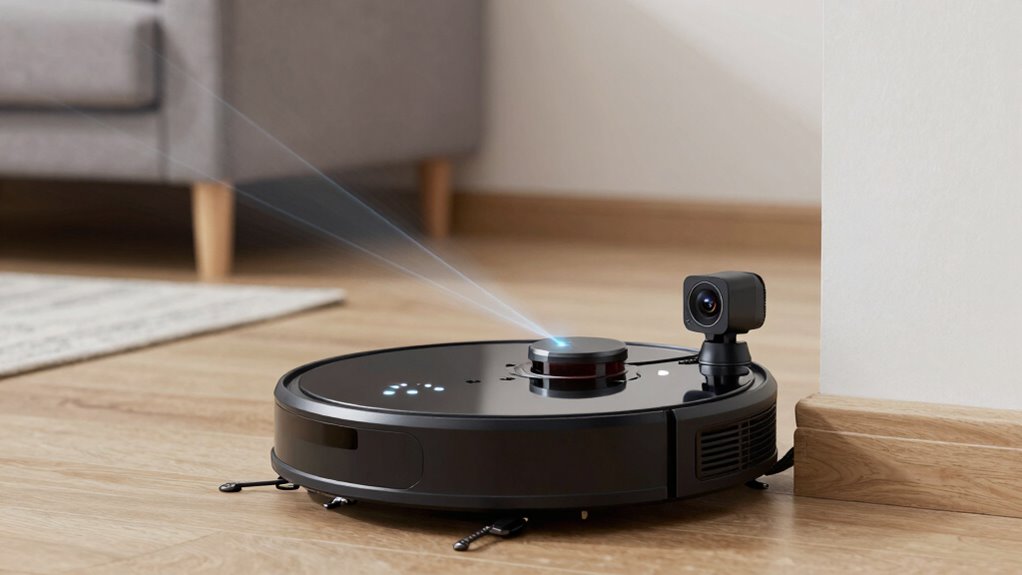
LiDAR, short for Light Detection and Ranging, is a cutting-edge technology that considerably enhances a robot vacuum’s navigation capabilities. It uses laser sensors to create precise, real-time 3D maps of your home. This results in superior mapping accuracy, ensuring the vacuum understands your space thoroughly. With advanced obstacle detection, it can identify furniture, walls, and even small objects, avoiding collisions effortlessly. Imagine a sweeping laser beam scanning your entire room in seconds, updating its map as it moves. This technology allows for efficient cleaning paths, minimal missed spots, and smarter zone management. LiDAR-equipped vacuums can adapt to changes in your environment, such as moved furniture or new obstacles, making them the most advanced navigation tech available today. Additionally, understanding the battery capacity helps determine how long these sophisticated vacuums can operate on a single charge. Modern LiDAR sensors also utilize cold sensing techniques to improve performance in varying lighting conditions, ensuring reliable operation whether in daylight or darkness. Furthermore, the incorporation of environmental adaptability enables these vacuums to optimize their cleaning based on the specific layout and obstacles present in your home. They can also detect dust and debris levels, helping to adjust cleaning intensity for more efficient performance.
As an affiliate, we earn on qualifying purchases.
How Do Camera-Based Robot Vacuums Map and Recognize Your Space?
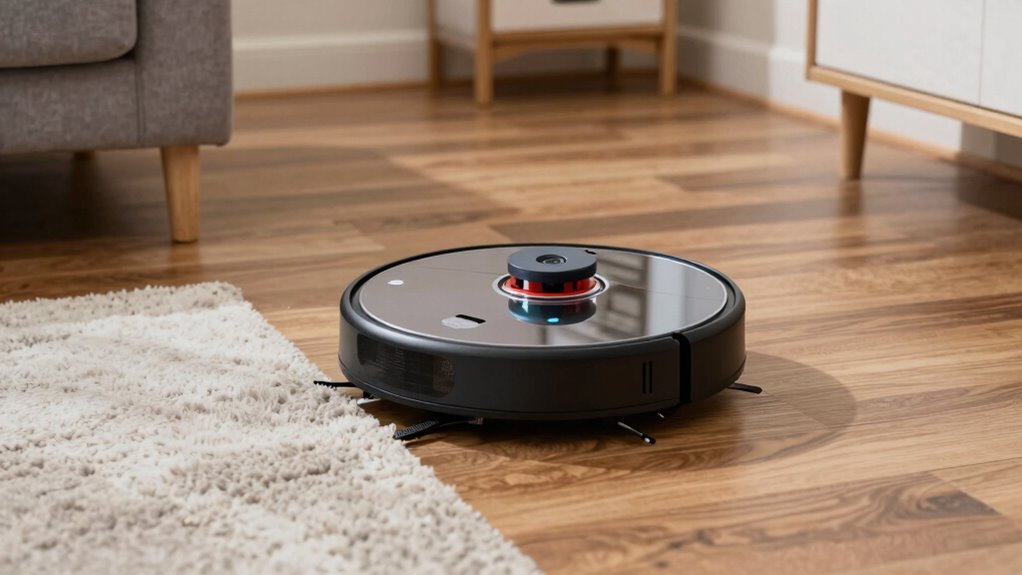
Camera-based robot vacuums use visual sensors to steer and map your home by capturing images and videos of their surroundings. This allows them to create detailed maps, improving mapping accuracy and helping them understand the layout of your space. As they move, they analyze the visual data to recognize walls, furniture, and other obstacles. Their advanced obstacle detection enables them to adapt in real-time, avoiding collisions and navigating tight spaces effectively. Unlike other methods, cameras can identify specific objects and features, enhancing their ability to recognize and remember your home’s unique layout over time. This visual approach provides a more thorough understanding of your environment, leading to more thorough cleaning and fewer missed spots. visual sensors play a crucial role in enabling these capabilities by capturing detailed information about your surroundings. Additionally, the ability to identify distinctive features helps these vacuums improve their navigation and cleaning efficiency over time. Furthermore, advancements in image processing technology allow these devices to better interpret complex environments and adapt their cleaning paths accordingly.
smart robot vacuum mapping technology
As an affiliate, we earn on qualifying purchases.
As an affiliate, we earn on qualifying purchases.
How Do Bump-and-Pray Robot Vacuums Navigate Without Mapping?
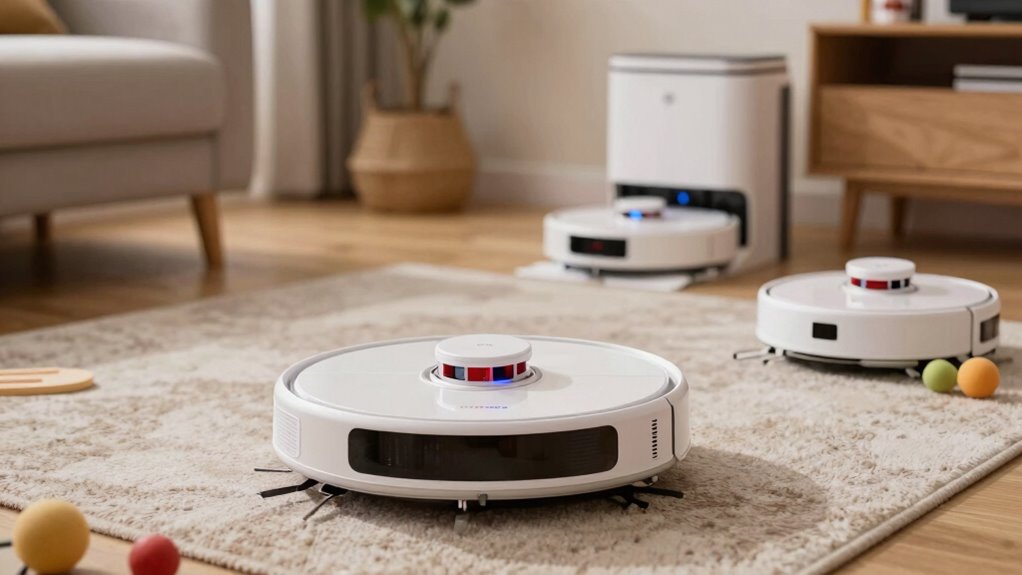
Bump-and-pray robot vacuums rely on a straightforward, reactive approach to navigation, moving randomly around your home without creating detailed maps. They depend on basic sensors for obstacle detection, which alert the vacuum when it hits something or senses a barrier. Since sensor reliability can vary, these vacuums may miss small or transparent objects. As they bump into furniture, walls, or other obstacles, they change direction randomly and continue cleaning. This method works best in open spaces but can be inefficient in cluttered areas. You might notice the vacuum repeatedly hitting the same spots or missing corners. Overall, they navigate by feeling their way around, without any memory of the layout, making their cleaning pattern unpredictable but simple. In some regions, the design and effectiveness of these vacuums are influenced by regional regulations, which can affect their sensor technology and navigation capabilities. Additionally, their lack of sophisticated sensors means they are less effective in complex environments where precise mapping would improve cleaning efficiency. Their sensor technology limitations can lead to missed spots or repeated collisions, further reducing cleaning effectiveness in certain settings. Understanding their navigation method helps users set realistic expectations for performance, especially when considering environmental factors that can impact sensor performance.
Which Navigation System Cleans Smarter and Faster?
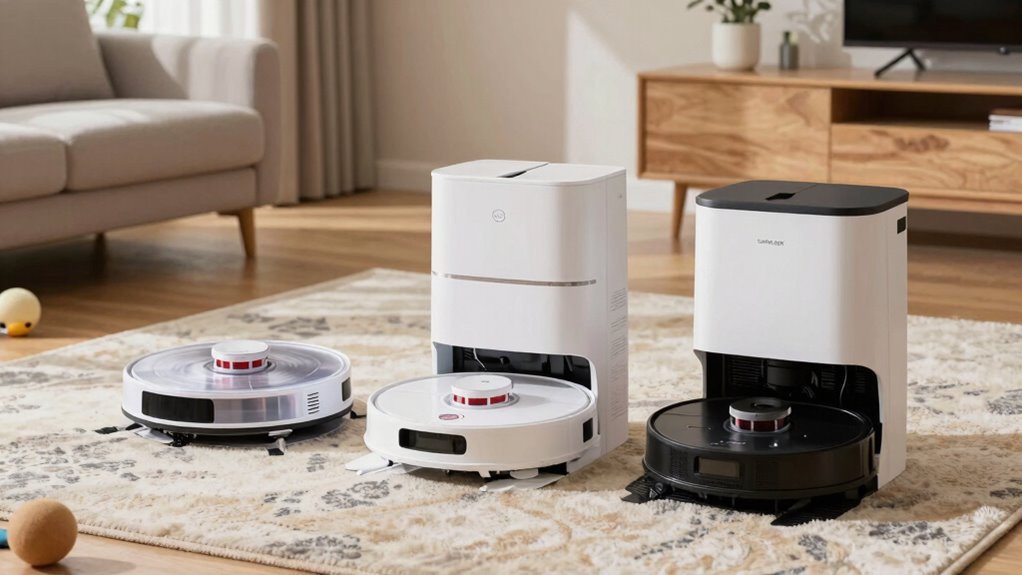
When it comes to cleaning efficiency, navigation systems that create detailed maps tend to outperform those relying on random movements. Robotic navigation that uses technologies like LiDAR or cameras allows the vacuum to plan ideal routes, cover every area systematically, and avoid unnecessary repeats. These systems greatly improve cleaning efficiency by reducing missed spots and saving time. In contrast, bump-and-pray models move randomly, often missing spots or cleaning the same area multiple times. A smarter navigation system speeds up the cleaning process and ensures thorough coverage. Additionally, mapping accuracy plays a crucial role in how well the vacuum can optimize its cleaning path. If you want a robot vacuum that cleans smarter and faster, look for one with advanced robotic navigation. This technology maximizes efficiency, minimizes cleaning time, and delivers a more complete clean in less effort.
Which Robot Vacuum Is Best for Small Spaces, Pets, or Large Homes?
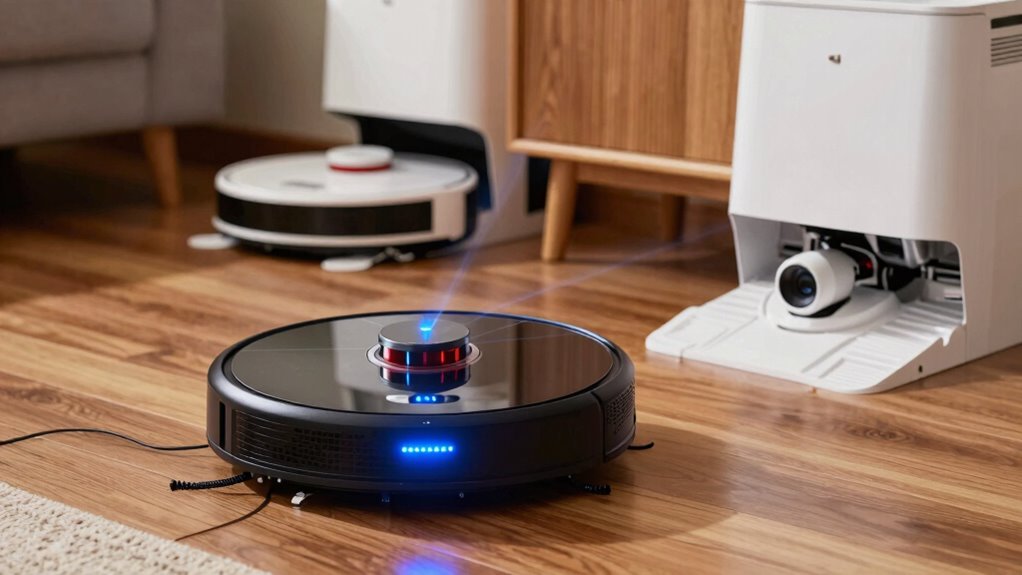
When choosing a robot vacuum for small spaces or pet hair, look for models with smart features that optimize cleaning in tight areas. If you have pets, pick one with strong suction and specialized brushes to handle stubborn hair. For large homes, focus on batteries with long run times and efficient navigation to cover more ground quickly. Additionally, consider models that can detect obstacles and hazards to prevent collisions and ensure hive-like stability during cleaning. Incorporating work-life harmony principles can also help you select devices that reduce your daily chores, freeing up time for personal well-being. Furthermore, selecting a model with advanced mapping technology can improve overall efficiency and cleaning performance across different home layouts.
Smart Features for Small Spaces
Are you wondering which robot vacuum is best suited for small spaces? Look for models with smart features that maximize efficiency. These vacuums often include smart scheduling, so you can set cleaning times around your routine, and some adapt to your home’s layout over time. Compact designs help them navigate tight corners and narrow hallways easily. Features like app control let you start or pause cleaning remotely, while automatic dirt detection ensures thorough coverage. To keep your device running smoothly, choose one with easy robot vacuum maintenance options, such as accessible brushes and filters. Additionally, selecting models with effective navigation technology can significantly improve cleaning performance in confined areas. Implementing supporting caregivers’ emotional well-being by choosing reliable devices can reduce stress associated with household chores. Incorporating user-friendly controls can also make operation more straightforward for users of all ages. These smart features help small spaces stay clean without constant oversight, saving you time and effort. The right choice makes cleaning effortless, even in confined areas.
Pet Hair Handling Capabilities
If pet hair is a frequent challenge in your home, choosing a robot vacuum with strong pet hair handling capabilities is essential. Look for models designed for effective pet hair removal and allergen containment. These vacuums often feature powerful suction and specialized brushes that lift pet hair from carpets and upholstery. To maximize performance, consider the following:
| Feature | Benefit |
|---|---|
| Strong suction | Removes stubborn pet hair efficiently |
| Tangle-free brushes | Prevents hair from clogging the vacuum |
| HEPA filters | Contain allergens and improve air quality |
| Bristle vs. Rubber brushes | Rubber brushes excel at pet hair removal |
| Automatic dirt disposal | Reduces maintenance and allergen spread |
Choosing a vacuum with these features ensures cleaner spaces and better allergen containment for you and your pets.
Pros and Cons of LiDAR, Camera, and Bump-and-Pray Navigation
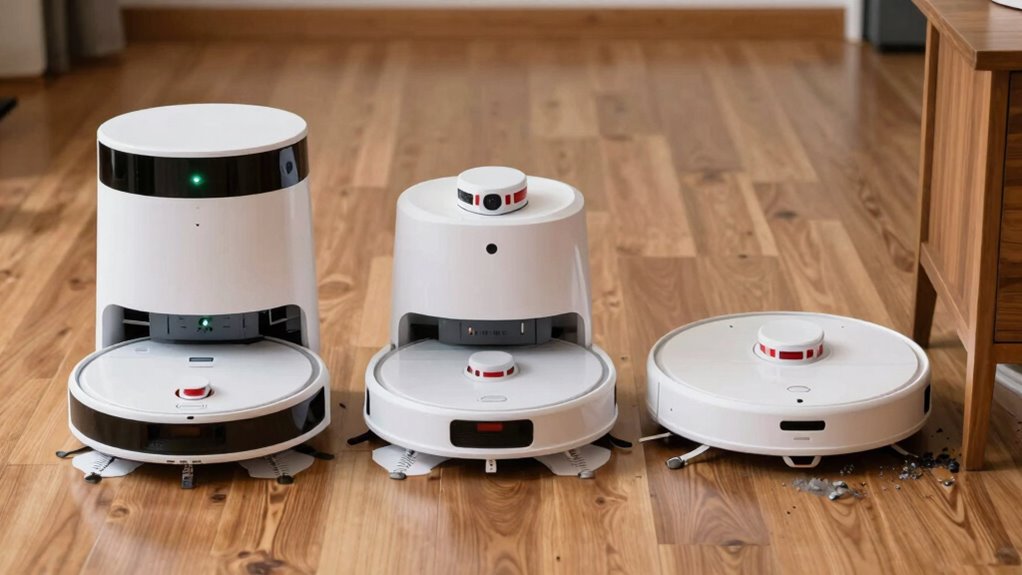
LiDAR, camera, and bump-and-pray navigation systems each have unique strengths and weaknesses that impact a robot vacuum’s performance. LiDAR offers high mapping accuracy and precise obstacle detection, making it ideal for complex layouts. Cameras can provide visual context, helping identify hazards but might struggle in low light. Bump-and-pray relies solely on physical contact, which can lead to missed obstacles and less efficient cleaning.
- LiDAR creates detailed maps for thorough cleaning
- Cameras adapt to changing environments with visual cues
- Bump-and-pray is simple but less precise
- Obstacle detection varies, affecting cleaning efficiency and safety
How to Choose the Best Robot Vacuum for Your Home and Budget
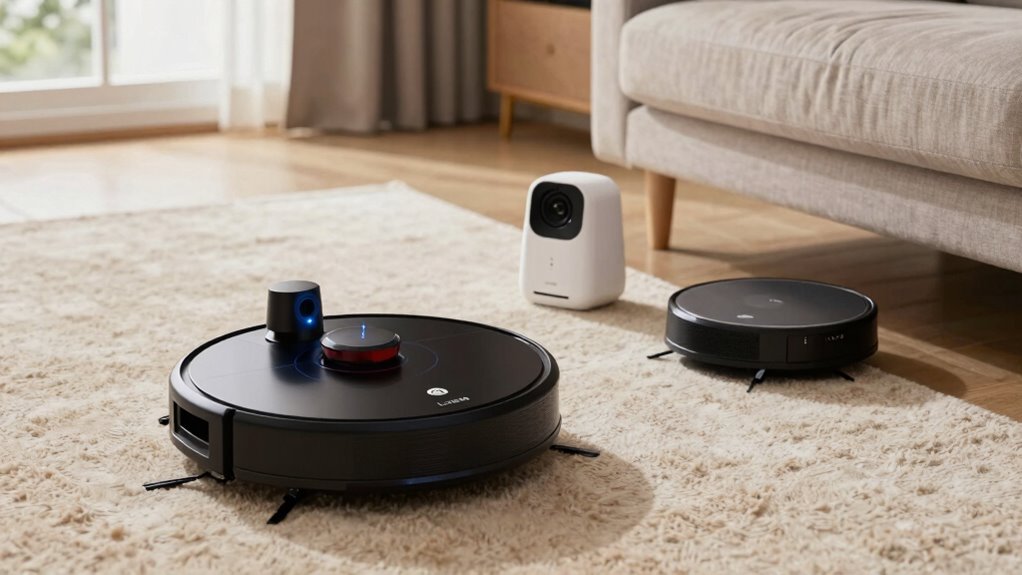
Choosing the right robot vacuum depends on your home’s layout, cleaning needs, and budget. First, consider battery life; longer-lasting batteries can cover more ground without frequent recharging, ideal for large spaces. Next, think about noise levels—if you work from home or have sleeping children, a quieter model may suit your environment better. Balance features with cost: higher-end models often offer longer battery life and lower noise, but you can find budget-friendly options that still do a good job. Also, assess if you need advanced navigation like LiDAR or cameras, or if a simple “bump and pray” approach suffices. Ultimately, match your priorities—whether cleaning power, quiet operation, or affordability—to select a robot vacuum that fits your home and budget perfectly.
Frequently Asked Questions
How Does a Robot Vacuum Handle Furniture and Obstacle Detection?
You’ll find that robot vacuums handle furniture and obstacle detection using obstacle sensors and furniture mapping. These sensors detect objects in real-time, allowing the vacuum to avoid collisions. Some models create detailed maps of your space, improving navigation efficiency. Instead of bumping into furniture repeatedly, they plan routes around obstacles, cleaning thoroughly while protecting your furniture. This combination of obstacle sensors and furniture mapping makes your cleaning smarter and safer.
Can Robot Vacuums Learn and Adapt to New Home Layouts Over Time?
Your robot vacuum’s learning capabilities are impressive, but it won’t suddenly transform into a genius! Over time, it can adapt to your home layout by recognizing obstacles and optimizing its cleaning path, making future sessions more efficient. While it may not learn every nook, some models improve with home layout adaptation, ensuring thorough cleaning and fewer mishaps. Think of it as your home’s smart, ever-improving cleaning assistant!
What Maintenance Is Required for Different Navigation Systems?
For different navigation systems, you need to perform sensor calibration regularly to guarantee accuracy, especially for LiDAR and camera-based models. Keep your software updated to fix bugs and improve performance. For bump-and-pray systems, less maintenance is needed, but check for debris or damage to sensors. Regularly clean sensors and charging contacts, and follow manufacturer instructions to keep your robot vacuum working efficiently.
How Do Robot Vacuums Perform on Different Floor Types?
You’ll find robot vacuums perform best on smooth, hard floors and struggle more on thick carpets or uneven surfaces. Their mapping accuracy depends on sensor calibration, which helps navigate different floor types effectively. LiDAR models excel on varied surfaces, while camera-based vacuums might need more frequent recalibration. To guarantee ideal performance across floors, regularly check and calibrate sensors, and choose a model suited to your flooring for thorough cleaning.
Are There Privacy Concerns With Camera-Based Navigation?
You might have privacy concerns with camera-based navigation because it involves camera surveillance, which can capture images of your home and personal spaces. While manufacturers often emphasize data security, there’s always a risk of data breaches or misuse. If privacy is a priority, consider opting for robot vacuums that use LiDAR or bump sensors instead, as they don’t rely on cameras and minimize potential privacy issues.
Conclusion
Choosing the right robot vacuum depends on your home’s size, layout, and cleaning needs. While advanced tech like LiDAR offers precise navigation, budget-friendly options like bump-and-pray still get the job done for smaller spaces. Don’t let the complexity of features overwhelm you—consider your priorities and trust that even simpler models can provide efficient cleaning without breaking the bank. Ultimately, finding the right fit guarantees you enjoy a spotless home with less effort.
Evergreen bestsellers Picks
bestsellers
As an affiliate, we earn on qualifying purchases.