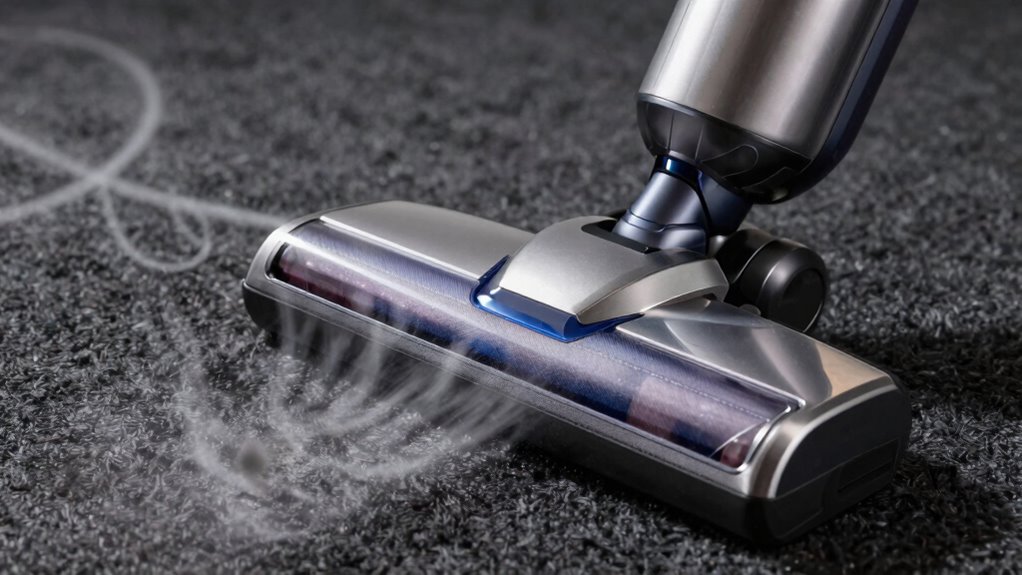

When comparing vacuums, airflow often matters more than suction power because it directly affects how well debris is transported through the system and how thoroughly your surfaces are cleaned. High airflow helps lift dirt from deep within carpets and covers larger areas quickly, while suction alone can be misleading. To get the best cleaning performance, understanding these metrics is key—stay with us to uncover how to choose the ideal vacuum for your needs.
Key Takeaways
- Airflow determines debris transport and cleaning speed, often more critical than suction for effective vacuum performance.
- Suction power pulls dirt from surfaces, but without proper airflow, debris may not reach the filter efficiently.
- Balanced airflow and suction prevent motor strain, noise, and dust leakage, optimizing overall cleaning efficiency.
- High airflow enhances deep cleaning, especially on carpets and hard-to-reach areas, regardless of suction strength.
- Focusing on airflow management and proper maintenance yields better cleaning results than emphasizing suction power alone.
What Are Suction and Airflow in Vacuum Cleaners?

Understanding suction and airflow is essential to grasp how vacuum cleaners work. Suction is the force that pulls dirt and debris into the vacuum, creating a powerful grip on surfaces. Airflow refers to the movement of air through the vacuum’s system, carrying debris to the dust filtration area. High airflow helps improve cleaning efficiency, especially on deep carpets. Dust filtration is vital because it traps allergens and tiny particles, ensuring cleaner air. Noise levels also matter, as powerful suction and airflow can generate loud sounds. Some vacuums balance strong suction with quieter operation by optimizing airflow and dust filtration. Recognizing how these elements interact helps you choose a vacuum that suits your cleaning needs while minimizing noise and maximizing dirt pickup. Additionally, vacuum metrics are crucial for understanding overall performance and efficiency. A thorough understanding of airflow dynamics can also influence how effectively a vacuum cleans different surfaces, making it an important factor to consider. Moreover, understanding the interaction between suction and airflow can help you select a vacuum that provides optimal cleaning performance without unnecessary energy consumption, while also considering the balance of power and noise levels for a quieter experience. Knowing how airflow management impacts vacuum efficiency can help you choose models that are both effective and energy-conscious.
How Do Suction and Airflow Affect Cleaning Performance?

Suction and airflow work together to determine how effectively your vacuum cleans. Strong suction pulls dirt from surfaces, but without good airflow, debris may not reach the dust filtration system efficiently. Proper airflow ensures that dust and particles move smoothly through the vacuum, minimizing blockages and maintaining consistent cleaning power. If airflow is restricted, the motor has to work harder, reducing overall motor efficiency and risking overheating. This can also affect the dust filtration system, leading to decreased filtration performance and potential allergen escape. This can lead to less effective dust filtration, allowing allergens and dust to escape back into the environment. Balancing suction and airflow is essential for thorough cleaning, especially in homes with allergy sufferers. When both work in harmony, your vacuum performs at its best, capturing more dirt and maintaining better dust filtration over time. Additionally, kitchen equipment such as globes and freezers often rely on efficient airflow systems to operate optimally. Understanding the vacuum metric that actually matters can help you choose a more effective cleaning device.
Which Matters More: Suction or Airflow for Your Floors?

When it comes to cleaning your floors effectively, many wonder whether suction or airflow plays a more significant role. Suction power directly impacts how well dirt gets lifted, but airflow ensures debris moves efficiently through the vacuum. To optimize performance, consider these factors:
- Regular vacuum maintenance keeps suction strong and prevents loss of power.
- Higher airflow helps cover larger areas quickly, reducing cleaning time.
- Noise levels often increase with stronger suction or airflow, so balance performance with comfort.
- Incorporating free floating components can enhance the overall efficiency of the vacuum system.
While both matter, focusing on maintaining proper suction is essential for deep cleaning. However, don’t neglect airflow, which influences cleaning speed and coverage. Also, a well-maintained vacuum with balanced suction and airflow often operates quieter, making your cleaning less disruptive.
How to Read Vacuum Specs to Find the Right Power

To choose the right vacuum, start by learning how to read its specs—these numbers reveal the power and performance you can expect. Focus on factors like airflow, which impacts dust containment, and suction, related to overall cleaning strength. Check the airflow ratings, usually given in CFM, and suction in inches of water lift. Noise levels matter too, as quieter vacuums improve comfort. Use this table to compare features:
| Specification | What It Means | Consideration |
|---|---|---|
| CFM (Cubic Feet per Minute) | Airflow, affects dust containment | Higher is better for particles |
| Water Lift | Suction strength, cleaning power | Look for adequate levels |
| Noise Level (dB) | Operating sound, comfort | Lower dB, quieter operation |
Reading these specs helps you find a vacuum that balances power, dust control, and noise for your needs. Understanding vacuum specifications can help you make more informed choices tailored to your cleaning priorities. Additionally, airflow plays a critical role in capturing fine dust and allergens, which is essential for maintaining a healthy indoor environment. Being aware of specification accuracy ensures you select a vacuum that truly meets your cleaning expectations. Moreover, considering electric power generation capabilities in some vacuums can provide insights into their energy efficiency and operational sustainability. Recognizing how these specifications relate to performance consistency can further guide your selection for long-term use.
Common Myths About Vacuum Suction and Airflow Debunked

Many people believe higher suction always means better cleaning, but that’s a common myth. Understanding how airflow works can reveal what really impacts your vacuum’s performance. Proper airflow management is essential for optimal cleaning efficiency and can make a significant difference in how well your vacuum operates. In fact, airflow efficiency often plays a more critical role than suction strength alone. For example, airflow design within the vacuum determines how effectively debris is lifted and moved through the system. Additionally, airflow paths influence how smoothly debris travels, preventing blockages and maintaining consistent suction. Recognizing the importance of airflow dynamics can help you choose and maintain your vacuum for better results. Let’s clarify these misconceptions and see how suction and airflow truly influence cleaning results.
Suction vs Airflow Basics
Understanding the difference between suction and airflow is essential, especially since many myths suggest they’re interchangeable or that one is always more important than the other. Suction refers to the vacuum’s ability to lift debris, while airflow measures how much air moves through the system. Here’s what you need to know:
- Higher suction helps with dust filtration, trapping fine particles effectively.
- Good airflow improves cleaning speed and reduces noise levels during operation.
- Both factors work together; focusing on only one can lead to ineffective cleaning.
Many assume that strong suction alone guarantees great cleaning, but airflow influences how debris is moved through the vacuum. Recognizing this balance ensures your vacuum performs *effectively* without sacrificing noise comfort or dust filtration efficiency.
Misconceptions About Power
It’s common to hear that stronger suction automatically means better cleaning, but that’s not always true. Many assume higher power equals superior results, but airflow and design matter more. A vacuum with impressive suction can still underperform if it lacks good airflow or an ergonomic design that helps you maneuver easily. Battery life also plays a role; a powerful motor drains batteries quickly, limiting cleaning time. Additionally, self-care and understanding your equipment can help prevent frustration and promote better maintenance. Recognizing the significance of airflow efficiency can lead to choosing a device that delivers consistent, effective cleaning without unnecessary strain, especially since airflow directly impacts how well debris is lifted and sustained in the vacuum. Proper piercing techniques and materials can also influence maintenance and longevity of the equipment, ensuring optimal performance over time. Moreover, incorporating high-quality materials in the vacuum’s construction ensures durability and preserves optimal airflow over time.
Real Impact on Cleaning
While high suction power might seem like the key to spotless cleaning, it doesn’t always deliver the results you want. In fact, focusing solely on suction can overlook what truly impacts cleaning performance.
- Airflow plays a vital role in removing dust mites and debris, especially from deep within carpets.
- A higher noise level often accompanies powerful vacuums, making cleaning less comfortable.
- Effective cleaning depends more on balanced airflow and proper brush agitation than on suction alone.
Understanding this helps you choose a vacuum that reduces dust mite allergens efficiently without unnecessary noise. Ultimately, a vacuum with optimized airflow will clean better and be more comfortable to use, proving that suction isn’t the only metric that matters.
Choosing the Best Vacuum for Carpet, Hardwood, or Pet Hair

Choosing the right vacuum depends on the surfaces you clean and the type of debris you want to remove. Pet hair, for instance, requires strong suction or airflow to pick up effectively, especially on carpets. Understanding how different vacuums perform on hardwood versus carpet can help you make the best choice for your needs.
Surface Suitability Factors
Selecting the right vacuum depends heavily on the surface you’re cleaning, as different floors and materials demand specific features for ideal performance. For carpets, prioritize models with strong suction and adjustable height to handle deep fibers. Hardwood floors benefit from vacuums with soft brushes and low noise levels to prevent damage and disturbance. Pet hair removal requires good airflow and a motorized brush to pick up stubborn fur. When choosing, consider:
- Battery life, especially for cordless models, to ensure extended cleaning sessions.
- Noise levels, which matter for quiet operation on delicate surfaces or shared spaces.
- Surface compatibility features like adjustable settings or soft brushes for various flooring types.
Matching these factors guarantees ideal cleaning without sacrificing efficiency or comfort.
Pet Hair Removal Efficiency
Effective pet hair removal depends on a vacuum’s airflow and brush design, which work together to lift stubborn fur from various surfaces. A strong airflow guarantees the suction pulls hair from deep within carpets and upholstery, while a well-designed brush agitates fibers for easier removal. Battery life is vital for cordless models, as longer-lasting batteries let you clean more thoroughly without frequent recharges. Similarly, cord length impacts your reach and convenience, allowing you to cover larger areas without switching outlets. A vacuum with optimized airflow paired with a rotating brush can efficiently pick up pet hair on carpets and hard floors alike. Prioritizing these features helps guarantee you get the best results, especially if you’re dealing with persistent pet fur on multiple surfaces.
Carpet vs Hardwood Power
When it comes to cleaning your home, understanding how a vacuum’s power varies between carpets and hardwood floors is essential. Your vacuum’s design influences its effectiveness on different surfaces, especially regarding power and energy consumption. For carpets, you need a vacuum with:
- Strong suction and adjustable brush roll to lift deep dirt.
- A motor designed for high airflow to penetrate fibers.
- Efficient energy use to avoid overheating during extended use.
In contrast, hardwood floors benefit from a lightweight design with minimal brush agitation to prevent scratching and reduce energy consumption. Choosing a vacuum that balances suction, airflow, and energy use ensures you clean effectively on both surfaces without overworking your device or wasting power.
How Manufacturers Promote Suction and Airflow to Influence Buyers

Manufacturers often highlight suction and airflow features to sway buyers by emphasizing how these qualities improve performance and convenience. They use marketing claims that suggest higher numbers mean better cleaning, but these claims can create consumer misconceptions. Many brands focus on showcasing maximum suction power or airflow rates, implying these metrics directly translate to superior cleaning. However, this isn’t always accurate, as other factors like brush design and filtration matter more. Manufacturers may also exaggerate these figures or present them in ways that seem more impressive. As a result, you might believe that higher suction or airflow guarantees better results, but understanding the real importance of these metrics helps you make smarter choices. Don’t get caught up in marketing hype—look beyond the numbers to what truly impacts cleaning performance.
Practical Tips for Testing Vacuum Performance at Home

Understanding how to evaluate your vacuum’s performance at home can help you see past marketing claims and find a device that truly meets your needs. To do this effectively, focus on simple tests you can perform regularly.
- Check vacuum maintenance: Clear brushes and filters to ensure peak suction and reduce noise.
- Test suction power: Use a piece of paper or a lightweight cloth and see how easily it is pulled or lifted.
- Observe noise reduction: Run the vacuum on different surfaces and note any loud or inconsistent sounds, indicating potential issues.
Performing these steps regularly helps maintain your vacuum’s efficiency, prolongs its lifespan, and ensures effective cleaning without unnecessary noise.
Balancing Suction and Airflow: The Key to Effective Cleaning

To clean effectively, you need to find the right balance between suction and airflow. Adjusting ideal suction settings and using airflow management techniques can make a big difference. When you master this balance, you’ll maximize power and efficiency for better results.
Optimal Suction Settings
Finding the right suction setting is essential for effective cleaning, as too much can damage surfaces or waste energy, while too little may leave debris behind. To optimize your vacuum, start by adjusting the suction to match the surface and debris type.
- Use vacuum accessories like brushes or upholstery tools to target specific areas without over-suctioning.
- Keep noise levels in check by lowering suction when cleaning delicate surfaces or quiet spaces.
- Regularly test and fine-tune the suction to balance power and airflow, ensuring thorough cleaning without unnecessary strain.
Airflow Management Techniques
Balancing suction and airflow is essential for maximizing your vacuum’s cleaning efficiency. To improve dust collection, ensure your vacuum maintains steady airflow without over-suctioning, which can trap dust and debris. Use adjustable settings or accessories to fine-tune airflow, focusing on areas with heavy dust buildup. Proper airflow management also reduces noise, making your cleaning less disruptive. Keep filters clean and unobstructed to maintain consistent airflow, and avoid blocking vents or hoses. Regularly inspecting and replacing worn brushes or seals helps sustain ideal airflow levels. By fine-tuning these techniques, you’ll enhance dust pickup while keeping noise to a minimum, resulting in a more effective, quieter cleaning experience.
Balancing Power and Efficiency
Achieving ideal cleaning performance requires carefully managing both suction power and airflow, as they work together to remove dirt effectively. To balance power and efficiency:
- Adjust suction settings to optimize dirt removal without draining your battery quickly or increasing noise levels.
- Choose a vacuum with airflow controls that prevent loss of suction, extending battery life and reducing noise.
- Regularly maintain filters and brushes to sustain airflow, ensuring consistent cleaning efficiency and quieter operation.
Final Tips: Picking a Vacuum That Meets Your Needs

Choosing the right vacuum depends on understanding your specific cleaning needs. Consider how often you’ll use it and the surfaces you’ll clean. If you have pets or allergies, look for a model with good filtration and durable materials to guarantee long-lasting vacuum durability. Check the warranty coverage; a solid warranty can save you money if repairs are needed down the line. Think about storage space and weight if you’ll carry the vacuum upstairs or maneuver around furniture. Budget wisely, but don’t sacrifice quality for cost. A well-chosen vacuum tailored to your needs will perform better and last longer. By focusing on durability and warranty, you ensure your investment is protected, giving you peace of mind with your cleaning routine.
Frequently Asked Questions
How Does Vacuum Design Impact Suction and Airflow Performance?
Vacuum design directly influences suction and airflow performance by optimizing the vacuum motor and airflow dynamics. A well-designed vacuum motor generates strong suction, while airflow dynamics ensure efficient dirt pickup and movement through the system. If the design balances these factors, you’ll enjoy better cleaning power, longer motor life, and less loss of suction over time. Poor design can lead to weak airflow, reduced suction, and decreased overall vacuum efficiency.
Can a Vacuum Have High Airflow but Low Suction Efficiency?
Imagine a busy river rushing past a dam; it’s full of energy but may not hold back much water. Similarly, you can have a vacuum with high airflow—like that swift river—but low suction efficiency, which affects dust capacity and causes vacuum noise. This means it moves a lot of air but doesn’t generate enough force to pick up dirt effectively, making your cleaning less efficient.
How Do Attachments Affect Suction and Airflow During Cleaning?
Attachments can substantially impact your vacuum’s suction and airflow. Using the right attachment improves cleaning efficiency by focusing suction power where needed, like crevice tools for tight spots or brushes for carpets. However, incompatible or poorly fitted attachments may restrict airflow, reducing suction and making cleaning less effective. To maximize cleaning efficiency, always choose attachments designed for your vacuum, ensuring they fit properly and don’t hinder airflow during use.
Is There an Optimal Balance Between Suction and Airflow for Pet Hair Removal?
You want the perfect balance of suction power and airflow rate to tackle pet hair effectively. Think of it as a dance—where enough suction pulls hair in, and steady airflow keeps debris moving smoothly. Too much suction might clog or damage surfaces, while too little lets hair escape. Aim for a vacuum that offers strong suction with consistent airflow, making pet hair removal effortless and thorough.
Do Cordless Vacuums Prioritize Airflow Over Suction?
Cordless vacuums often prioritize airflow over suction to improve maneuverability and battery life, making it easier to clean without frequent recharges. You’ll notice that they tend to have quieter motors, reducing noise during use. This focus allows for better coverage and flexibility, especially on various surfaces. While suction might be slightly lower, optimized airflow guarantees effective pet hair removal, giving you a balance between power and convenience.
Conclusion
Think of your vacuum as a trusty steed on your cleaning journey. While suction might be its strength, airflow is the wind that carries away debris. To truly conquer dirt, you need both working in harmony. So, when choosing your vacuum, don’t just chase a single trait. Instead, find one that balances power and flow—your perfect cleaning companion ready to tackle any mess that comes your way.