
To minimize water and energy while cleaning, use eco-friendly products like vinegar or baking soda, which require less water for rinsing and are safe for the environment. Opt for reusable microfiber cloths instead of disposable wipes, and fill basins rather than letting taps run. Wash appliances only when full and choose energy-efficient vacuums. Small adjustments like these can make a big difference—exploring more tips can help you clean sustainably and efficiently.

Get cleaning gear delivered free — and shop member deals
- Fast, free delivery on millions of items
- Access to Prime Big Deal Days deals on October 6–7
- Prime Video, Amazon Music and more included
Key Takeaways
- Fill basins with water instead of running taps during cleaning tasks to conserve water.
- Use spray bottles for spot cleaning and dusting to minimize water and energy use.
- Operate appliances like dishwashers and laundry machines only when full to reduce resource consumption.
- Choose energy-efficient cleaning appliances to lower electricity usage while maintaining effectiveness.
- Plan cleaning in sections to avoid unnecessary water and energy waste during tasks.
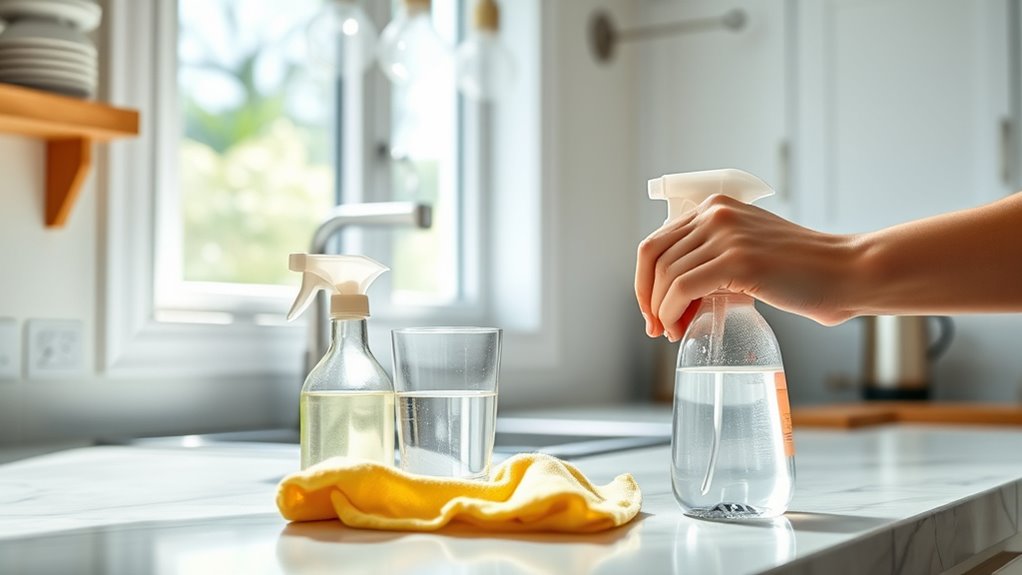
Cleaning your home doesn’t have to harm the environment. One of the most effective ways to reduce your ecological footprint is by being mindful of water and energy use during cleaning. Small changes can make a big difference, so start by choosing biodegradable products whenever possible. These eco-friendly cleaning agents break down naturally in the environment, preventing pollution and protecting aquatic life. Instead of harsh chemical cleaners, opt for solutions made from natural ingredients like vinegar, baking soda, or lemon juice. Not only are these safer for the planet, but they’re also just as effective at cleaning surfaces and removing grime.
Choose biodegradable cleaning products made from natural ingredients like vinegar, baking soda, or lemon juice to protect the environment.
In addition to selecting biodegradable products, using reusable tools is a smart way to cut down on waste and conserve resources. Replace disposable cleaning wipes with washable microfiber cloths or sponges, which can be used repeatedly after washing. Using reusable tools reduces the volume of trash sent to landfills and minimizes the need for constantly purchasing single-use products. When it comes to mops and scrub brushes, choose durable, high-quality options that last longer, decreasing the frequency of replacements. These small shifts help you maintain a clean home while supporting sustainability.
To further minimize water consumption, consider tackling cleaning tasks in a way that conserves this precious resource. For example, fill a basin with water instead of letting the tap run continuously. Use a spray bottle for spot cleaning and light dusting, which reduces the amount of water needed and makes your cleaning more efficient. When washing floors or windows, plan your cleaning in sections so you don’t waste water or energy. Also, try to do laundry and run dishwashers only when they are full. Modern appliances tend to be energy-efficient, but they still consume significant power, so optimizing their use helps lower your energy bill and environmental impact.
Additionally, choosing energy-efficient appliances, such as vacuums and cleaning devices, can significantly reduce your energy consumption over time. By being conscious of your energy use, you can keep your home spotless without wasting power.
eco-friendly microfiber cleaning cloths
As an affiliate, we earn on qualifying purchases.
As an affiliate, we earn on qualifying purchases.
Frequently Asked Questions
Can Using Natural Cleaning Products Reduce Water and Energy Consumption?
Yes, using natural cleaning products can reduce water and energy consumption. Natural cleaning routines often rely on biodegradable ingredients that work effectively with less rinsing or scrubbing, saving water. These products typically require fewer harsh chemicals, which means you can often clean more efficiently without using extra energy for heated water or extensive scrubbing. Overall, switching to natural products streamlines your cleaning process, making it more eco-friendly and conserving resources.
Are There Specific Tools That Help Conserve Water and Electricity During Cleaning?
You can save water and electricity by using water-saving devices, energy-efficient tools, and eco-friendly equipment. These tools help you cut down on water flow, reduce power consumption, and streamline your cleaning process. Look for low-flow faucets, high-efficiency vacuums, and LED-powered gadgets. By choosing these options, you actively conserve resources, lower utility bills, and support a healthier environment—making your cleaning routine both effective and eco-conscious.
How Often Should I Clean to Minimize Resource Use Effectively?
You should aim for a cleaning frequency that balances cleanliness with resource efficiency. Typically, establishing a resource-efficient schedule means cleaning high-traffic areas weekly and less-used spaces biweekly or monthly. This approach helps reduce water and energy use by avoiding unnecessary cleaning sessions. Regular maintenance prevents dirt buildup, making each cleaning more effective and less resource-intensive. Adjust your schedule based on your household’s needs to optimize both cleanliness and conservation.
Do Eco-Friendly Cleaning Methods Work as Well as Traditional Ones?
Eco-friendly cleaning methods work as well as traditional ones when you choose plant-based solutions with biodegradable ingredients. These products effectively clean surfaces, leaving no harmful residues behind. Plus, they’re safer for your family and the environment. By switching to eco-friendly options, you can maintain cleanliness without sacrificing performance, all while reducing your ecological footprint. So, yes, you can clean thoroughly and responsibly at the same time.
What Are the Long-Term Benefits of Eco-Conscious Cleaning Practices?
By adopting eco-conscious cleaning practices, you create sustainable habits that benefit the environment long-term. You reduce your environmental impact by conserving water and energy, which helps protect natural resources. Over time, these practices can also lower your utility bills and decrease your reliance on harmful chemicals. Embracing eco-friendly cleaning not only keeps your space healthy but also contributes to a healthier planet for future generations.
As an affiliate, we earn on qualifying purchases.
Conclusion
By following these simple eco-friendly cleaning tips, you’re not just saving water and energy—you’re saving the entire planet from a potential meltdown! Imagine your cleaning habits becoming so powerful, they could singlehandedly turn the tide on climate change. Every small effort counts, so why not become a superhero of sustainability? With each eco-conscious choice, you’re making a difference that’s so enormous, it could make the Earth breathe a sigh of relief. Now, go save the world, one clean swipe at a time!
biodegradable natural cleaning products
As an affiliate, we earn on qualifying purchases.
As an affiliate, we earn on qualifying purchases.
As an affiliate, we earn on qualifying purchases.
Fall Picks
fall essentials
As an affiliate, we earn on qualifying purchases.