
TL;DR
A homeowner installing cabinets on an insulated mudroom exterior wall is weighing whether to leave the cabinet backs open or seal the built-in finish. The details provided do not establish that condensation will occur; the outcome depends on air leakage, wall moisture control, indoor humidity, and the gap behind the cabinets.
A homeowner preparing to install mudroom cabinets on an exterior wall is seeking a way to limit the risk of trapped moisture and mold without changing the room’s layout. In the homeowner’s description in a question published by Green Building Advisor, the wall has 2-by-8 framing, mineral-wool insulation and an interior vapor-control layer; the available details do not establish whether condensation will form behind the cabinets.

Get cleaning gear delivered free with Prime
- Fast, free delivery on millions of items
- Prime Video, Amazon Music and more included
- Member-only deals all year
According to the homeowner’s account in the Green Building Advisor question, the cabinets cannot be moved to another wall because of the floor plan. There is a small gap behind the cabinets; trim and molding would mostly close off that space, while openings at the top and bottom would remain. The homeowner also reports that a register beneath the floor cabinets supplies heating and cooling to the room.
The wall assembly described by the homeowner includes Rockwool insulation, an Intello membrane, drywall and flat interior paint. On the exterior, the home has black metal siding over a rainscreen. The homeowner is deciding whether to remove the cabinets’ waxed particle-board backs to allow more air exchange, or keep the backs and finish the installation with trim and filler strips.
The question reports no site inspection, indoor humidity readings, climate information or measurements of the cavity, and it does not report existing dampness, mold or damage. The information supplied does not establish that opening the cabinet backs or sealing the visible edges would by itself prevent moisture problems.
Cabinets on exterior walls manage moisture risk
Cabinet placement alone does not establish that condensation will occur. The actual risk depends on wall and site conditions that have not been assessed.
What shapes the risk
Moisture depends on several conditions described in the homeowner’s question.
Humidity and leakage
Indoor humidity and air leakage can affect whether moisture accumulates.
Assembly performance
Insulation and a vapor-control layer do not confirm how this particular wall performs.
Access and airflow
The gap and remaining top and bottom openings may affect inspection and air exchange; their effect is unknown.
The described wall
These are details from the homeowner’s account, not findings from an inspection.
Before finishing the cabinets
The available details do not show whether opening the backs or sealing the edges would prevent moisture problems.
Ask the installer or a qualified building professional to assess the assembly, planned gap, and access for inspection.
Investigate dampness, staining, condensation, or a musty odor before covering the cavity.
Consider accessible trim or a removable panel if it suits the design; monitor humidity and signs of moisture.
Moisture Risks Behind Built-Ins
Building-science guidance cited in the homeowner’s Green Building Advisor question raises the possibility that cabinets against an exterior wall can make it harder to inspect and dry the wall surface. That makes moisture issues potentially less visible, but condensation and mold are not automatic results of installing cabinetry. Whether moisture accumulates depends on conditions such as indoor humidity, the wall’s temperature, air leakage and how the wall assembly manages water vapor.
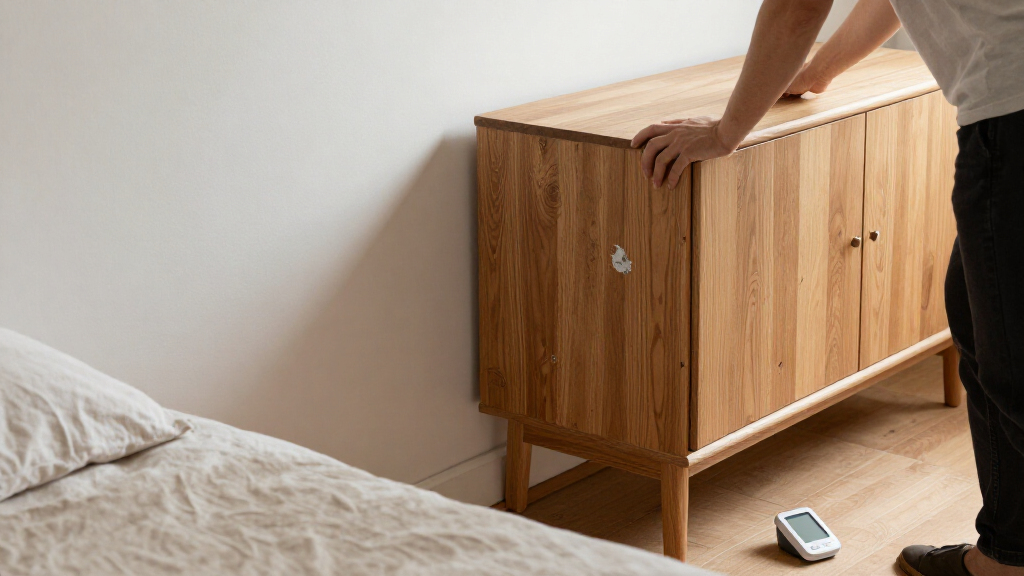
The installation choice also affects whether the homeowner can monitor the space. Leaving openings may improve access or airflow under some conditions, while a tightly fitted built-in can limit visibility. The homeowner reports a room register beneath the floor cabinets, but that fact alone does not show that air circulates behind the cabinets; the register’s position and the cabinet openings matter. A finish decision should follow an assessment of the wall and cavity rather than rely on the general warning that prompted the question.
Products Worth Considering

Hisense 40-Inch QD4SR Series Hi-QLED FHD Roku Smart TV

Dyson Gen5 Outsize Cordless Vacuum

Bose SoundLink Max Portable Bluetooth Speaker, IP67 Waterproof and Dustproof, Up to 20 Hours of Battery Life, Black
As an affiliate, we earn on qualifying purchases.
The Wall Assembly Described
The homeowner describes a relatively deep framed wall insulated with mineral wool, with an Intello membrane on the interior side and a ventilated rainscreen behind the metal siding. These are details from the homeowner’s Green Building Advisor question. Their presence alone cannot confirm how this particular wall performs: installation quality, continuity of the membrane, exterior water management and local weather conditions also affect the assembly.
The homeowner says the concern began after reading a building-science post advising against cabinets on exterior walls because moisture could become trapped behind them. That warning is a general claim, not a finding from an inspection of this home. The question’s details provide a starting point—especially the wall layers, cabinet gap and heating register—but not enough information to diagnose a condensation risk or prescribe a specific cabinet modification.
What the Available Details Cannot Show
As described in the Green Building Advisor question, it is not clear whether the wall or cabinet cavity is getting wet, whether indoor humidity is high, or whether the air barrier and vapor-control layer are continuous. The local climate, wall orientation, exterior exposure, cabinet dimensions and exact size of the gap are also unspecified. No measurements or inspection results are reported.
The question also does not establish whether removing the particle-board backs would materially improve drying in this layout. The remaining top and bottom openings may permit some exchange, but their effect cannot be determined from the description. Nor does the account establish that sealing the trim would trap moisture; that depends on the wall and cavity conditions.
Checks Before the Cabinets Are Finished
Before closing the installation with trim, the homeowner can ask the cabinet installer or a qualified building professional to review the wall assembly and the planned gap. That review should focus on signs of existing moisture, the continuity of interior air and vapor controls, exterior water management and whether the cabinet backs or edges obstruct inspection. If dampness, staining or a musty odor is present, those conditions warrant investigation before the cavity is covered.
During and after installation, keeping indoor humidity in a reasonable range and watching for condensation or musty smells can help identify a developing problem, though monitoring does not replace diagnosing a leak or moisture source. The homeowner can also preserve a way to inspect the cavity, such as accessible trim or a removable panel, if appropriate for the design. The Green Building Advisor question reports no final installation choice or later performance outcome, so the best approach remains dependent on an evaluation of the actual wall and site conditions.
Source: Green Building Advisor, homeowner question
Key Questions
Will cabinets on an exterior wall always cause condensation?
No. Condensation is not established by cabinet placement alone. Indoor humidity, wall temperature, air leakage and the wall assembly all affect whether moisture accumulates.
Should the homeowner remove the cabinet backs?
The homeowner’s Green Building Advisor question does not provide evidence that removing the backs is necessary or sufficient to prevent moisture. The choice should be made after considering the cavity, wall assembly and ability to inspect behind the cabinets.
Does the heating register mean air will circulate behind the cabinets?
Not necessarily. The homeowner reports a register below the floor cabinets, but the question does not establish that air reaches or moves through the gap behind the cabinets.
What signs should prompt further investigation?
Staining, damp materials, condensation or a musty odor are reasons to inspect the area and identify the moisture source before covering it. The homeowner’s question does not report any of these signs.
Source: greenbuildingadvisor.com