TL;DR
A homeowner who fitted radiator reflectors behind most radiators on external walls in November 2022 says the home has felt comfortable at 18–19°C, compared with a previous thermostat setting of 21°C. The account does not measure energy-bill savings or isolate the reflectors’ effect from other efficiency measures.
A homeowner who installed radiator reflectors in November 2022 says they have been able to keep the thermostat at 18–19°C rather than 21°C while remaining comfortable, but they have not measured how much the change saved on bills. Their four-year account offers a practical example of the product’s potential, while stressing that results depend on a home’s insulation and other heating habits.

Get cleaning gear delivered free with Prime
- Fast, free delivery on millions of items
- Prime Video, Amazon Music and more included
- Member-only deals all year
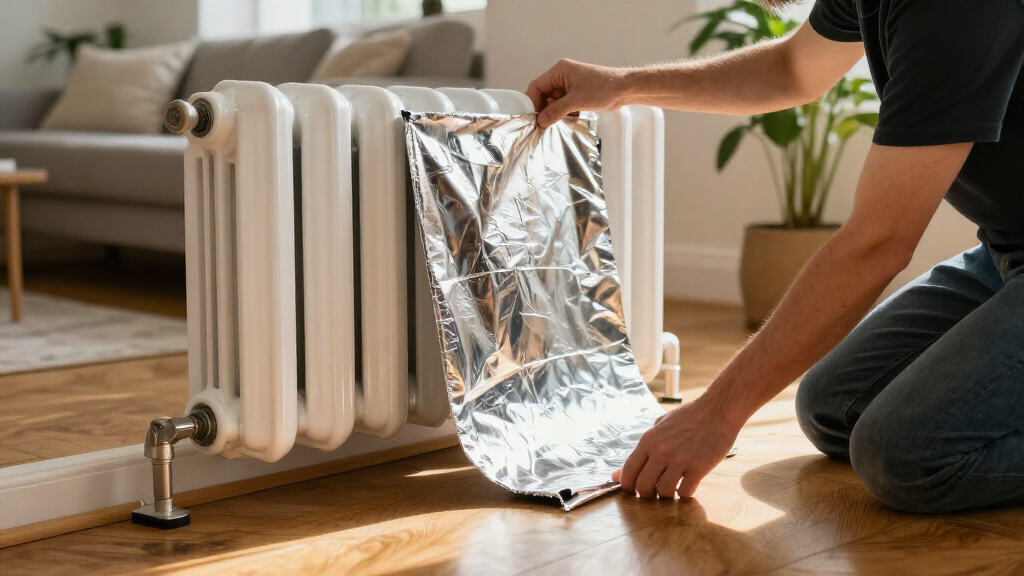
The homeowner fitted Radflek reflectors behind most radiators on external walls. They left them off a bathroom towel rail and a ground-floor designer radiator because the panels would have been too visible. They also say there is little reason to put a reflector behind a radiator on an internal wall, where heat escaping through the wall would remain inside the home. A wall adjoining an attached garage may be a more relevant location.
Before installation, the homeowner says the thermostat was regularly set to 21°C. In the winters since, they have found 18–19°C comfortable. That is a reported change in their own household, not a controlled test of the reflectors. The account describes several energy-saving measures used over the same period, including replacing a conservatory roof with an insulated alternative, draught-proofing and limiting how long windows are left open.
The homeowner says the wall behind a reflector feels cold when checked carefully, which they take as a sign that the panel is helping keep heat from passing into the wall. They also recommend keeping radiators in good working order: they bleed them each autumn, check for uneven warmth and dust them regularly. Their advice is to use purpose-made reflector products rather than kitchen foil, which they describe as thinner and more prone to tearing. The account cites the Energy Saving Trust for the view that ordinary foil does not provide the same insulating properties as purpose-designed reflectors.
Four winters with radiator reflectors What one household reports
The homeowner says they stayed comfortable at a lower thermostat setting after installation. Their account does not measure energy or bill savings.
Where they fitted panels
The homeowner focused on radiators against outside walls, where heat may escape outdoors.
- Most radiators on external walls
- Walls adjoining an attached garage
- Internal walls, where heat stays inside
- Towel rail and designer radiator, for visibility
Keep radiators working well
Reflectors cannot make up for a radiator that heats unevenly.
The homeowner bleeds their radiators before winter.
Look for cold spots and uneven heating.
Keep radiator surfaces clear of dust.
What the account can show
Several home changes happened over the same period, so the reflectors’ individual effect is unclear.
Comfort at a lower setting
The homeowner says 18–19°C felt comfortable in winters after installation.
Energy and bills
No meter readings, bill comparisons or measured savings are provided.
More than reflectors
The home also got an insulated conservatory roof and draught-proofing.
A Lower Thermostat, Without Measured Savings
The account matters to households weighing relatively low-cost ways to manage heating, particularly where radiators sit against uninsulated external walls. A lower thermostat setting can reduce heating demand, but this report cannot establish that reflectors alone made the difference: the homeowner changed several aspects of the home and reports comfort rather than meter readings or bill comparisons.
The article also cites British Gas as saying that lowering a thermostat by one degree can cut an energy bill by 10%. That figure is presented as general guidance, not a measurement of this household’s results. The homeowner’s experience suggests a possible route to feeling comfortable at a lower setting, but readers should not treat it as a guaranteed saving or assume the same temperature change will suit every home.
For renters or owners seeking a reversible option, the account notes that some reflector panels attach to radiators with clips rather than being stuck to the wall. Whether that arrangement fits a particular radiator, and whether it produces a worthwhile difference, depends on the product and the property.
Products Worth Considering

Bose Lifestyle Ultra Wireless Home Speaker, White Smoke

Philips Hue Play Gradient Light Tube, Large, Black

Roborock Qrevo S Pro Robot Vacuum and Mop with Multifunctional Dock
As an affiliate, we earn on qualifying purchases.
Where the Reflectors Were Installed
The reported installation took place in November 2022, behind most radiators fixed to outside walls in a home described as nearly 60 years old. The homeowner says the property is not as well insulated as some newer builds, but also does not lose as much heat as some older houses. That description is relevant because the proposed benefit depends on heat otherwise passing through the wall behind a radiator.
The account draws a distinction between an external wall and an internal one. In the homeowner’s explanation, heat passing through an internal wall stays within the home, while heat lost through a poorly insulated outside wall does not. It also recommends checking radiator performance: reflectors cannot compensate for cold spots or a radiator that is not heating evenly.
The report is a personal account, not a comparative trial. It provides no before-and-after energy bills, household energy-use figures, product cost, or measurements of heat loss. Its observations are therefore useful as an example of one household’s experience, rather than proof of a predictable outcome across homes.
“Each winter since I installed the reflectors, I was comfortable with the thermostat set at 18-19°C.”
— The homeowner, in the account
How Much Energy Was Actually Saved
The account does not state how much the household’s energy use or bills changed, nor does it provide a comparison period, tariff details or meter readings. It is not possible to determine from the report how much of the reported comfort at a lower thermostat setting came from the reflectors rather than the insulated conservatory roof, draught-proofing, changes in ventilation or other measures.
It is also unclear how the panels would perform in homes with different wall construction, heating systems or insulation. The homeowner expects smaller benefits in a well-insulated newer property, but offers no measurements to quantify that difference. The referenced energy-bill percentages are general claims attributed to British Gas and should not be read as savings demonstrated by this installation.
Check Walls, Radiators and Bills
The account describes no planned test or follow-up measurement. Readers considering reflectors can first identify which radiators sit on external or otherwise poorly insulated walls, then check that the radiators heat evenly and select a product suited to the installation. Any expected benefit should be treated as uncertain until assessed against the home’s own energy use and comfort.
A meaningful household comparison would record energy consumption and thermostat settings before and after installation while keeping other conditions as consistent as possible. Without that information, the homeowner’s four-year experience remains a personal report of comfort and practice, rather than a measured estimate of financial savings.
Key Questions
What did the homeowner report after four years?
They said they were comfortable with the thermostat at 18–19°C in winters after installation, compared with a previous regular setting of 21°C. They did not report a measured bill saving.
Where were the reflectors fitted?
Behind most radiators attached to external walls. The homeowner skipped a towel rail and a designer radiator for visibility reasons and said internal walls were a lower priority.
Will radiator reflectors save every household the same amount?
No. The reported benefit may depend on wall insulation, the radiator’s location and the property’s heating performance. The account offers no controlled comparison or measured savings.
Did the homeowner recommend kitchen foil?
No. They recommended purpose-made radiator reflectors, saying ordinary kitchen foil is thinner, tears more easily and does not have the same insulating properties. The account attributes that last point to the Energy Saving Trust.
Source: idealhome.co.uk