TL;DR
A homeowner in the Twin Cities area is concerned that MemBrain installed behind a fiberglass shower is exposed to the shower-side cavity rather than covered by drywall. The concern about winter moisture moving toward cold sheathing is plausible as a question, but the available details do not establish that the assembly will fail or identify a remedy.
A homeowner rebuilding a 1980s rambler in the Twin Cities area after mold remediation says MemBrain was installed behind a fiberglass shower on an exterior wall but was not covered with drywall. The homeowner is asking whether moisture could pass through the membrane toward cold exterior sheathing in winter; the details provided do not establish that this will happen or confirm the assembly’s performance.

Get cleaning gear delivered free with Prime
- Fast, free delivery on millions of items
- Prime Video, Amazon Music and more included
- Member-only deals all year
The homeowner describes a main-level wall rebuilt after mold remediation. The reported assembly, from outdoors inward, consists of vinyl siding, a weather-resistive barrier identified as Tyvek, OSB sheathing, 2-by-6 framing, R-23 mineral-wool batts, MemBrain and drywall. The homeowner says the builder used caulk and expanding foam for air sealing and that MemBrain was recommended in place of polyethylene sheet.
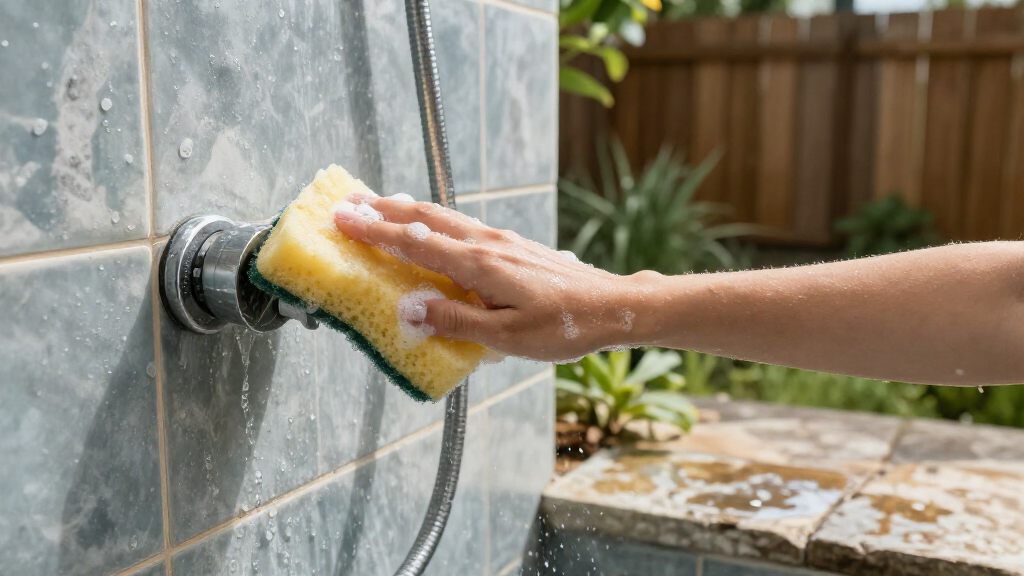
The concern is a one-piece fiberglass shower that meets an exterior wall. Its narrow, non-plumbing end sits against that wall. According to the homeowner, MemBrain is taped at the edges but is left open to the cavity behind the shower rather than covered by drywall. The homeowner also reports a plumbing opening below the shower, accessed from the laundry room beneath it.
The homeowner asks whether moisture entering the space behind the shower could move through MemBrain toward the exterior wall during winter and condense on cold sheathing. That is a question, not a reported finding: no moisture measurements, inspection results, product specifications, wall details beyond the post, or diagnosis of current damage are provided.
MemBrain Behind a Shower A Detail to Review
A homeowner in the Twin Cities area questions an uncovered membrane behind a fiberglass shower on an exterior wall. The account does not establish that the wall will fail or that demolition is needed.
The reported wall layers
The homeowner describes this assembly from outdoors inward:
Vinyl siding, a weather-resistive barrier identified as Tyvek, and OSB sheathing.
2-by-6 framing with R-23 mineral-wool batts.
MemBrain and drywall, with the membrane reportedly left uncovered behind the shower.
What is known—and unknown
- Fiberglass shower meets an exterior wall.
- MemBrain is reportedly taped at the edges and open to the cavity behind the shower.
- A plumbing opening below the shower is accessed from the laundry room.
- Whether moisture is present or damage has occurred.
- Whether water or humid air can enter the cavity.
- Whether the installation meets product requirements.
Why the concern remains unresolved
Winter moisture movement toward cold sheathing is a question raised by the homeowner, not a confirmed finding.
No diagnosis provided
There are no moisture readings, inspection results, or confirmed damage in the account.
Key information is missing
Product instructions, shower sealing details, and construction records are not included.
Demolition is not determined
The account does not establish that opening the finished shower is necessary or that leaving it as-is is safe.
A practical next step
Clarify how the membrane and shower details were built before deciding whether to disturb the enclosure.
The issue matters because a shower enclosure can conceal part of an exterior wall, making it difficult to inspect for leaks or moisture after the bathroom is finished. If water enters the hidden cavity, the condition of the wall depends on factors not established in the post, including how the shower is sealed, how air and vapor move through the assembly, and whether the wall can dry.
The homeowner says correcting the uncovered membrane now would require significant demolition. That makes the decision practical as well as technical: disturbing a completed enclosure has costs, while leaving a potentially vulnerable detail unexamined could make later moisture problems harder to detect. The information available does not show that either outcome is inevitable, and it does not support a definitive repair recommendation.
Products Worth Considering

Shark Pet Cordless Stick Vacuum IX141

Dyson Ball Animal 2 Total Clean Upright Vacuum Cleaner, Blue

Roborock Qrevo S Pro Robot Vacuum and Mop with Multifunctional Dock
As an affiliate, we earn on qualifying purchases.
The Rebuild and Its Wall Layers
The home is described as being in Climate Zone 6A, which the homeowner says they believe applies to the Twin Cities area. The exterior main-level walls were reportedly stripped to the studs during mold remediation and rebuilt. The homeowner says the project is still in progress and that the construction process has not been perfect, though they feel generally comfortable with it.
In the reported design, MemBrain takes the place of polyethylene on the interior side of insulated framing. The question centers on a change in how that layer is finished at the shower: the homeowner says it was treated like traditional poly but left without drywall in the area behind the fiberglass unit. The post does not include installation instructions, product documentation, the exact location of membrane seams, or details about the shower’s waterproofing and connections to the wall.
““My concern is that I know MemBrain is intended to be covered with drywall.””
— The homeowner
Key Installation Details Are Missing
The post does not establish whether moisture is currently present behind the shower, whether the enclosure or plumbing opening allows water or humid air into the cavity, or whether the reported membrane installation complies with the product’s requirements. It also does not provide inspection findings, construction drawings, or a professional assessment of the completed wall.
Without those details, the specific risk cannot be determined from the account alone. The homeowner’s concern about winter moisture movement should not be treated as a confirmed diagnosis, and the absence of reported damage does not prove the assembly is free of risk. No response from the builder or a building-science professional is included.
Inspection Before Choosing a Repair
The homeowner’s next step is not stated. A qualified building-envelope professional could review the wall and shower details, product documentation, and any available construction records before the homeowner decides whether opening the assembly is warranted. The builder can also be asked to explain how the membrane was intended to function behind the enclosure and how the shower and plumbing penetration were sealed.
Any assessment should distinguish between a potential detail concern and evidence of an active moisture problem. The post gives no timeline for further inspection, repair, or a final decision, so the condition of the wall remains unresolved.
Key Questions
What is the homeowner concerned about?
The homeowner says MemBrain behind a fiberglass shower on an exterior wall was left uncovered by drywall and asks whether moisture could move toward cold sheathing during winter.
Has condensation or wall damage been confirmed?
No. The account reports a concern, but provides no inspection, moisture readings, or confirmed damage behind the shower.
What wall assembly did the homeowner describe?
From outdoors inward: vinyl siding, Tyvek, OSB, 2-by-6 framing with R-23 mineral-wool batts, MemBrain, and drywall. The homeowner says the membrane is left uncovered in the area behind the shower.
Does the account establish whether the installation is acceptable?
No. It does not include the relevant product instructions, full construction details, or an independent professional assessment. The specific performance of the assembly remains undetermined.
What should happen before the homeowner decides on demolition?
The homeowner could ask the builder to document the installation and seek a review from a qualified building-envelope professional. The account does not establish that demolition is necessary or that leaving the wall as-is is safe.
Source: greenbuildingadvisor.com