To control algae in your catch basin, you should increase water flow to prevent stagnation, reduce nutrients, and disrupt algae growth. Using UV disinfection can destroy algae DNA, preventing them from reproducing and building up. Combining higher flow with UV treatment creates an effective, chemical-free approach to keep your basin cleaner longer. If you want to explore more strategies for managing algae and maintaining your system’s health, keep exploring these solutions.
Key Takeaways
- Increasing water flow prevents stagnation, reducing algae growth by limiting nutrients and disrupting algae colonies.
- UV light destroys algae DNA, effectively preventing cellular reproduction and algae proliferation.
- Proper flow management and UV treatment together create an environmentally friendly, chemical-free algae control system.
- Regular removal of debris and sediment maintains optimal flow, preventing nutrient accumulation that feeds algae.
- Installing or upgrading inlet/outlet structures enhances flow circulation, minimizing stagnant zones where algae thrive.
Understanding Algae Growth in Catch Basins

Why does algae thrive in catch basins? It’s mainly because these areas provide the perfect environment for algae to grow. The stagnant water, combined with sunlight exposure, creates ideal conditions for photosynthesis. When water isn’t moving, nutrients like nitrogen and phosphates build up, fueling algae growth. Warm temperatures also boost algae proliferation, especially during summer months. Catch basins often trap organic debris, which decomposes and releases more nutrients into the water. If you notice green or slimy patches, it’s a clear sign algae is thriving. Without proper management, algae can quickly overrun the basin, clogging drains and reducing water flow. Proper water circulation helps prevent algae buildup and maintains healthy water flow. Understanding these factors helps you recognize why algae takes hold and prepares you for effective control strategies.
The Role of Water Flow in Controlling Algae
Increasing water flow in catch basins helps limit algae growth by preventing stagnant pockets. When water moves constantly, algae have less chance to settle and multiply. Maintaining good flow is essential to keeping basins clean and algae-free. Properly managed water flow can also aid in preventing blockages and reduce maintenance needs.
Increased Flow Limits Growth
When water flow in catch basins is increased, it can markedly limit algae growth by disrupting its ability to establish stable colonies. Faster flow prevents algae from settling and attaching to surfaces, reducing their spread. By maintaining higher flow rates, you ensure that nutrients and algae cells are continually flushed away, impeding growth. Consider this table to see how flow impacts algae control: algae growth.
Prevents Stagnant Pockets
Water flow plays a crucial role in preventing stagnant pockets within catch basins, which are prime breeding grounds for algae. When water moves consistently, it disrupts areas where algae could settle and multiply. Stagnant zones lack oxygen and nutrients, making them ideal for algae growth. By maintaining steady flow, you ensure these pockets are flushed out regularly, reducing the chance for algae to establish itself. Proper flow also helps carry away organic debris that feeds algae, further limiting growth. Installing flow-enhancing devices or ensuring proper water movement can make a significant difference. Regularly monitoring and adjusting flow rates keeps the catch basin active, preventing stagnation and creating an environment less favorable for algae to thrive. Maintaining adequate water circulation is essential for effective algae control and overall catch basin health. This proactive approach is key to effective algae control.
Benefits of Increasing Flow for Algae Management
Have you considered how boosting flow in a catch basin can effectively control algae growth? Increasing flow offers several benefits:
- It reduces stagnant areas where algae thrive.
- Faster water movement limits the nutrients algae need to flourish.
- Higher flow rates prevent sediment buildup that can harbor algae.
- Consistent flow improves oxygen levels, discouraging algae dominance.
- Kia Tuning techniques can be applied to enhance system components for better flow management.
How UV Light Disinfects and Prevents Algae Buildup
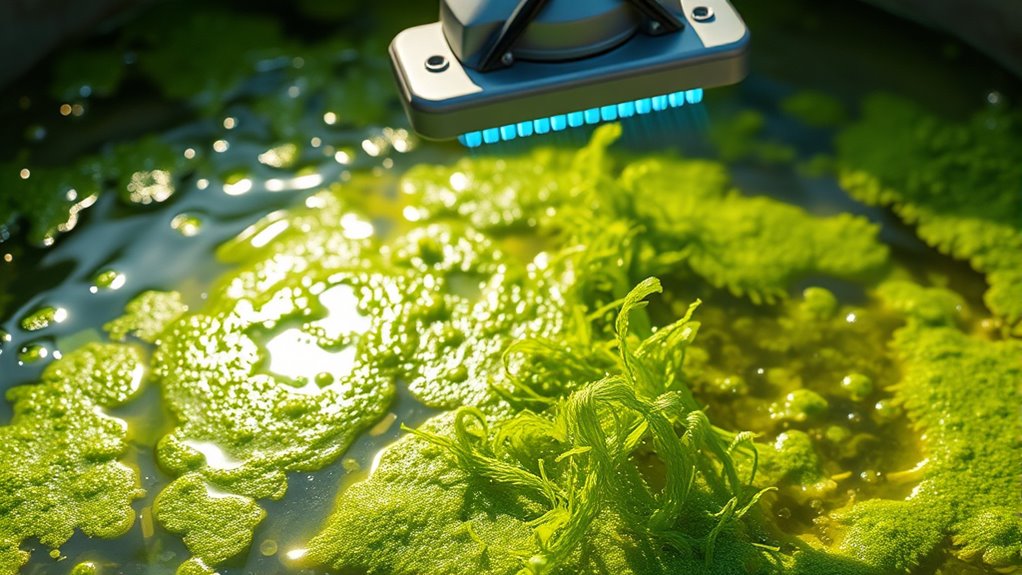
UV light effectively disinfects catch basins by destroying algae cells and preventing their growth. When exposed to UV radiation, the DNA of algae cells absorbs the light, disrupting their cellular functions and rendering them incapable of reproduction. This process halts algae proliferation before it can form thick mats or blooms. UV treatment is a chemical-free, environmentally friendly method that offers immediate results, reducing algae levels quickly. Because UV light targets cells directly, it minimizes the risk of resistant algae strains developing. As a result, your catch basin stays clearer longer, with less algae buildup over time. Regular UV disinfection keeps algae in check, promoting healthier water flow and reducing maintenance needs in the long run. In addition, incorporating best oils for deep frying on keto diet can improve the effectiveness of UV treatments by reducing the presence of organic residues that might shield algae cells.
Implementing Flow Enhancement Strategies
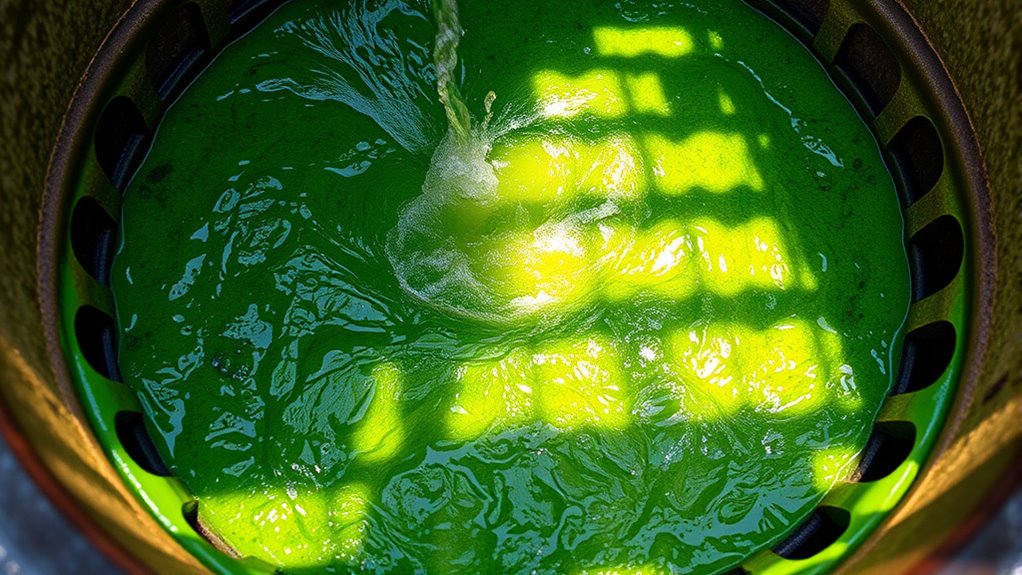
Enhancing flow within catch basins is essential for preventing algae buildup and maintaining efficient water discharge. When flow improves, it reduces stagnation, limits algae growth, and prevents sediment accumulation. To implement effective flow enhancement strategies, you should:
- Regularly inspect and clear debris that obstructs water movement.
- Install or upgrade inlet and outlet structures to promote smoother flow.
- Adjust or add flow diversion devices to ensure uniform water distribution.
- Consider using flow regulators or baffles to prevent short-circuiting and dead zones.
- Be aware that cookie management can influence the ability to monitor and optimize flow system performance.
Integrating UV Technology Into Drainage Systems
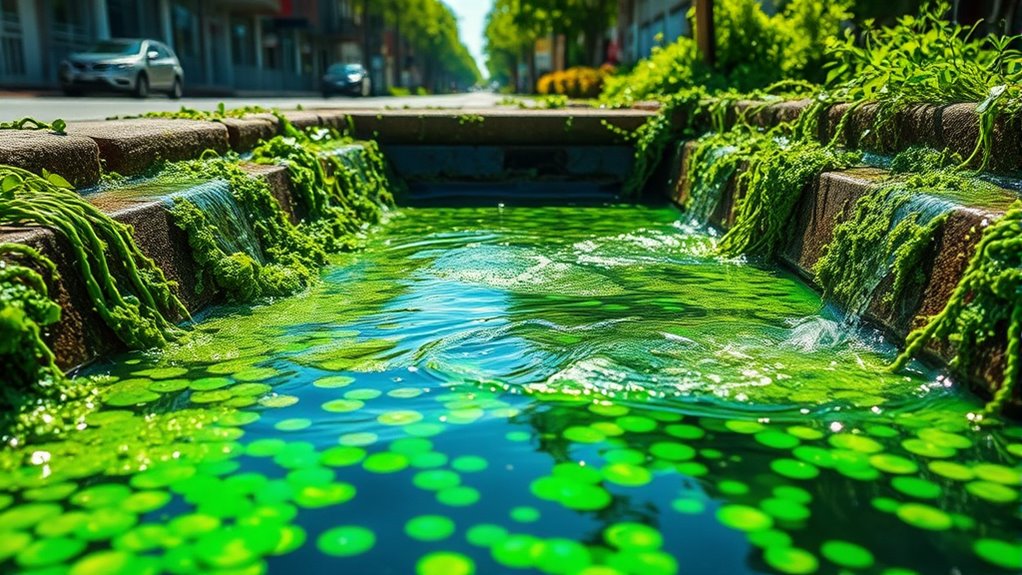
Integrating ultraviolet (UV) technology into drainage systems offers an effective way to control algae growth and improve water quality. UV sterilization uses UV-C light to disrupt the DNA of algae, preventing reproduction and reducing their presence. By installing UV units within catch basins or flow paths, you can target algae directly at the source, minimizing the need for chemical treatments. UV systems are compact, energy-efficient, and require minimal maintenance once set up. They operate continuously, providing a constant defense against algae blooms caused by sunlight and nutrients. When integrated properly, UV technology can markedly reduce algae buildup, improve water clarity, and support healthier stormwater management. This approach offers an environmentally friendly alternative to chemical controls, promoting cleaner water in your drainage infrastructure. Vetted
Maintenance Tips for a Cleaner Catch Basin
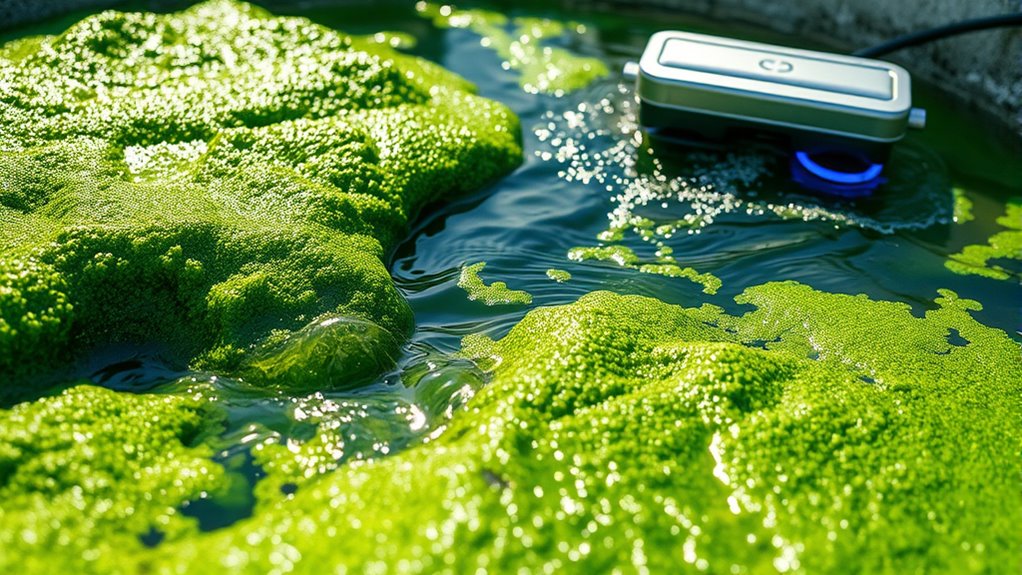
Regular maintenance is essential to keep your catch basin functioning effectively and prevent blockages. You should schedule regular inspections and cleanings to remove accumulated debris and algae. Here are four key tips:
- Remove debris and sediment regularly to prevent buildup.
- Check for and clear any obstructions in the inlet and outlet pipes.
- Flush the basin with water to eliminate algae and organic matter.
- Inspect the basin for signs of damage or corrosion and repair promptly.
- Incorporate routine maintenance practices to ensure the longevity and efficiency of your catch basin.
Frequently Asked Questions
How Often Should Flow and UV Treatments Be Applied for Optimal Algae Control?
You should apply flow and UV treatments weekly to keep algae growth under control. Consistent treatment prevents algae from establishing and spreading, maintaining cleaner catch basins. Adjust the frequency based on algae levels; if you notice rapid growth, increase treatments accordingly. Regular maintenance ensures ideal results, reduces odor, and prevents blockages. Stay vigilant and stick to a weekly schedule for the best algae control and a healthier catch basin environment.
Are There Environmental Impacts of Using UV Light in Catch Basins?
Using UV light in catch basins is like shining a flashlight in a dark room—generally safe but with some concerns. It can produce small amounts of ozone, which might affect nearby plants or animals if not properly managed. However, when used correctly, UV treatment poses minimal environmental risks. Always follow manufacturer guidelines to guarantee safety and effectiveness, protecting your ecosystem while keeping algae at bay.
Can Algae Develop Resistance to UV Disinfection Over Time?
Algae can develop resistance to UV disinfection over time, especially with repeated exposure. When UV light is used continuously, some algae may adapt by forming protective layers or repair mechanisms, reducing UV effectiveness. To prevent this, you should rotate disinfection methods, combine UV with other treatments, and maintain proper flow to minimize algae survival chances. This approach keeps your catch basin cleaner and more resistant to algae resistance.
What Are the Cost Implications of Implementing Flow and UV Solutions?
Implementing flow and UV solutions can be a cost-effective way to control algae, but you’ll face initial setup expenses for equipment and infrastructure upgrades. Ongoing costs include maintenance, energy, and replacement parts. Over time, these investments may reduce costs associated with algae-related damage and maintenance of traditional treatments. While upfront costs are higher, the long-term savings and improved water quality often justify the investment for your catch basin system.
How Do Climate Variations Affect Algae Growth and Treatment Effectiveness?
Climate shifts turn your catch basin into a restless ocean, where warmer temperatures fuel algae blooms and cold snaps slow their growth. These variations challenge your treatment efforts—UV light may falter in murky, nutrient-rich waters, while increased flow can flush away algae before treatment takes effect. To stay ahead, adapt your strategies, considering seasonal changes and temperature fluctuations, so algae don’t take over your basin like an unwelcome tide.
Conclusion
By boosting water flow and adding UV light, you can turn your catch basin into a formidable fortress against algae. These simple yet powerful strategies starve algae of nutrients and zap their growth at lightning speed, keeping your drainage system cleaner than ever. Don’t let algae take over—take control today and transform your catch basin into an unstoppable force of cleanliness. With these tips, you’ll outsmart algae and keep your drainage system thriving like never before.