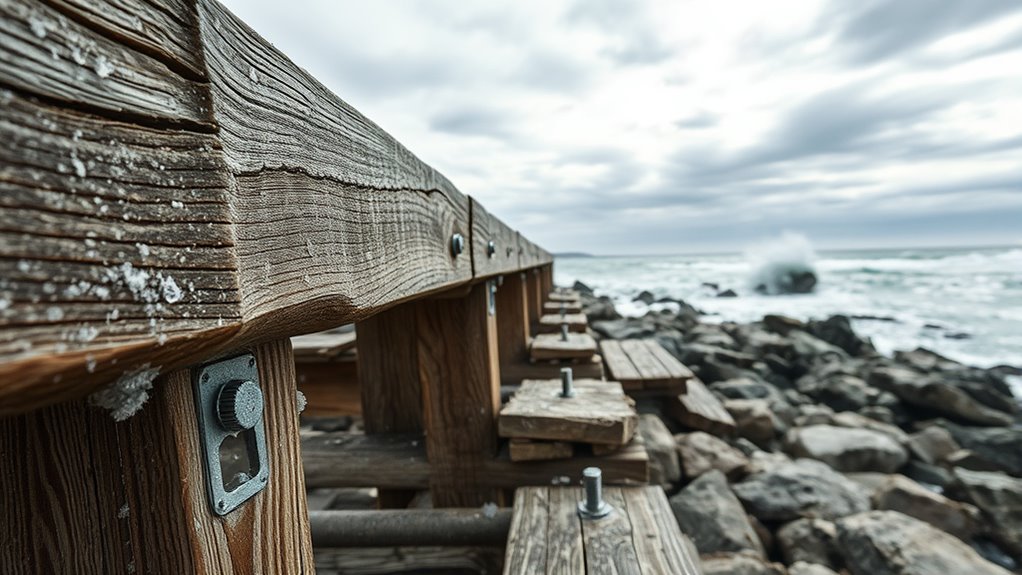

When working at coastal sites, you need to take into account how salt spray accelerates corrosion and damages materials like steel and concrete, while strong winds exert force that can cause structural stress. Choosing corrosion-resistant materials such as stainless steel or treated concrete, applying protective coatings, and designing with aerodynamic shapes help improve resilience. Understanding these factors enables you to build durable structures, and exploring further will reveal key strategies for safeguarding your projects against these harsh conditions.
Key Takeaways
- Select corrosion-resistant materials like stainless steel, aluminum alloys, or treated concrete for durability in salt spray zones.
- Use protective coatings such as epoxy or zinc-rich primers to shield surfaces from salt and moisture damage.
- Design structures with aerodynamic shapes and reinforced materials to withstand wind loads effectively.
- Elevate structures above flood levels and incorporate flexible foundations to enhance resilience against storm surges.
- Regular maintenance, inspections, and proper surface treatments help prolong lifespan and mitigate salt spray and wind effects.
The Impact of Salt Spray on Building Materials
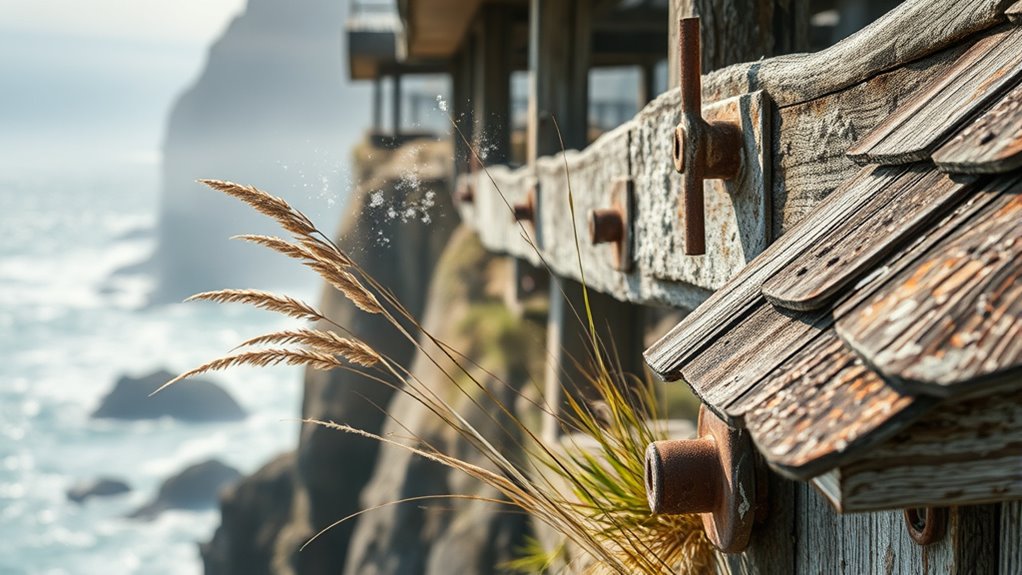
Salt spray from the ocean can markedly accelerate the deterioration of building materials near coastal areas. When salt particles settle on surfaces, they cause corrosion, especially in metals like steel and iron. Over time, this corrosion weakens structural integrity and leads to rust, which can cause cracking and spalling of concrete or brickwork. Salt also penetrates porous materials, trapping moisture inside and promoting further deterioration. You’ll notice materials may start to peel, flake, or lose their original appearance faster than inland structures. This process is relentless, especially with continuous exposure to salty air and humidity. To combat this, you need to choose durable, corrosion-resistant materials and apply protective coatings that can withstand harsh coastal conditions. Additionally, understanding the impact of environmental factors can help in selecting appropriate materials and maintenance strategies to extend the lifespan of coastal structures.
How Wind Loads Affect Coastal Structures
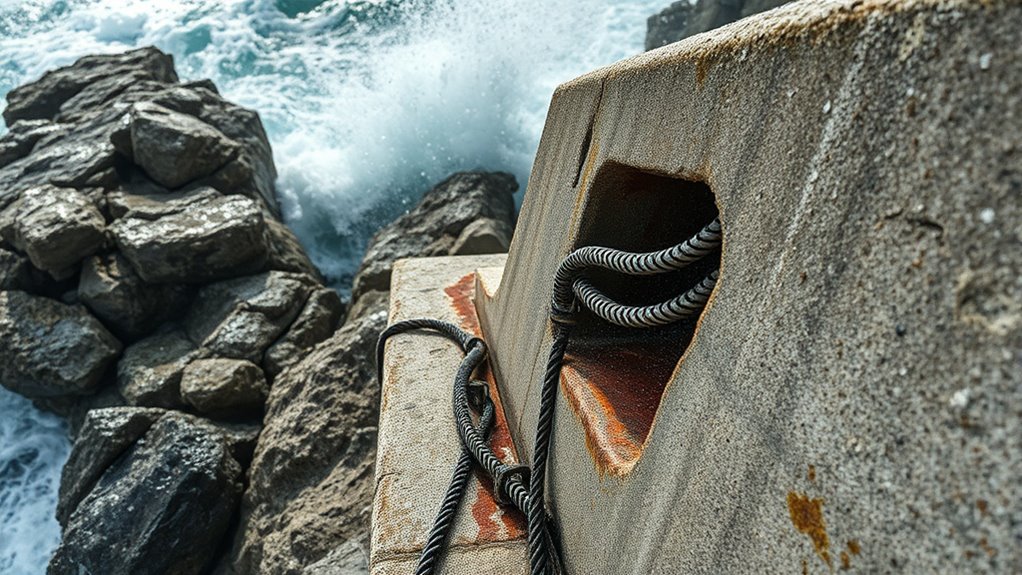
Wind loads are a critical factor to take into account when designing coastal structures, as strong and persistent winds can exert significant pressure and force on buildings and infrastructure. These forces can cause structural deformation, fatigue, or failure if not properly addressed. You need to consider wind speed, direction, and gusts to ensure stability. Proper design measures, like aerodynamic shaping and reinforced materials, help minimize wind effects. Understanding local wind patterns allows for better planning and safety. The table below summarizes key wind load considerations:
| Factor | Impact |
|---|---|
| Wind Speed | Determines force exerted on structures |
| Gusts | Cause sudden, high-pressure loads |
| Direction | Affects structural alignment |
| Duration | Influences material fatigue |
Selecting Corrosion-Resistant Materials for Coastal Environments
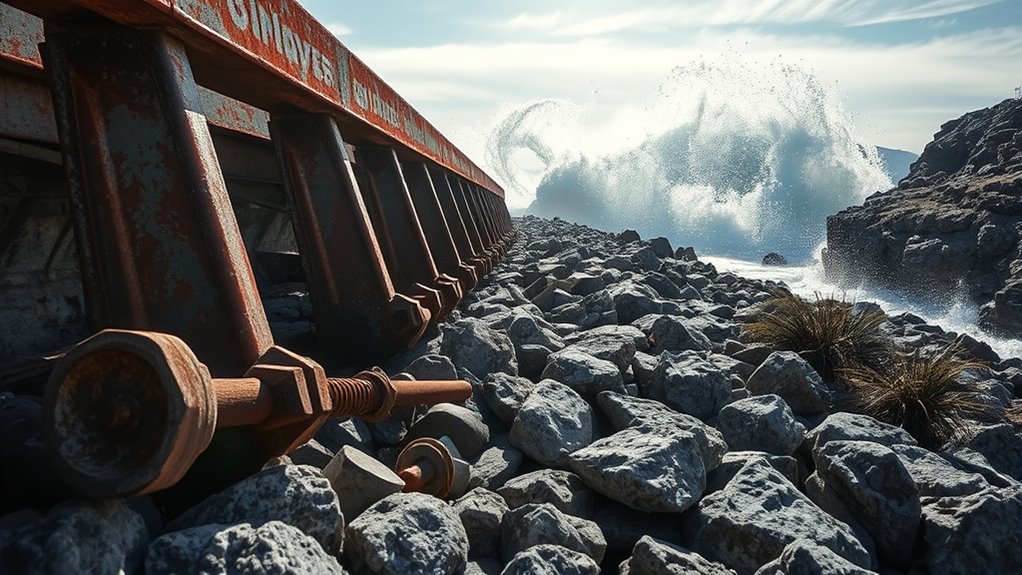
When designing coastal structures, selecting materials that resist corrosion is essential to guarantee longevity and safety. Coastal environments expose materials to salt spray, humidity, and wind-driven moisture, accelerating deterioration. You should prioritize corrosion-resistant options like stainless steel, aluminum alloys, or concrete with protective admixtures. These materials naturally withstand harsh conditions better than standard steel or wood. For added durability, consider materials with high corrosion resistance and low maintenance needs. Avoid using unprotected steel or untreated wood, as they corrode quickly in salt-laden air. Choosing the right materials from the start reduces maintenance costs and prolongs the lifespan of your structure. Remember, selecting corrosion-resistant materials is a critical step in ensuring your coastal project remains safe, functional, and durable over time.
Protective Coatings and Treatments for Enhanced Durability
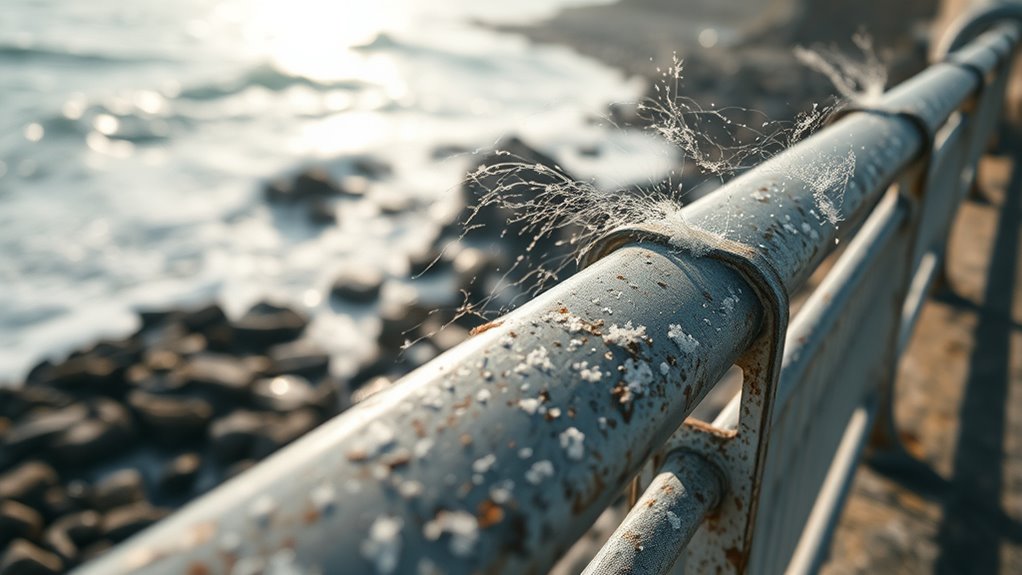
Protective coatings and treatments play a crucial role in enhancing the durability of coastal structures by creating a barrier against aggressive environmental elements. They shield surfaces from salt spray, moisture, and wind-driven debris that accelerate corrosion and deterioration. You should select coatings that are specifically formulated for salt-rich environments, such as epoxy paints, elastomeric coatings, or zinc-rich primers. Regular maintenance and inspections ensure these treatments remain effective over time. Applying protective layers correctly, with proper surface preparation, maximizes their lifespan. Additionally, treatments like sealants or corrosion inhibitors can be used to supplement coatings, offering extra defense against moisture ingress. The choice of coating technology impacts the longevity and performance of protective layers in harsh conditions. By investing in high-quality protective coatings and routine upkeep, you extend the service life of your coastal structures, reducing repair costs and ensuring safety.
Design Strategies for Resilient Coastal Construction
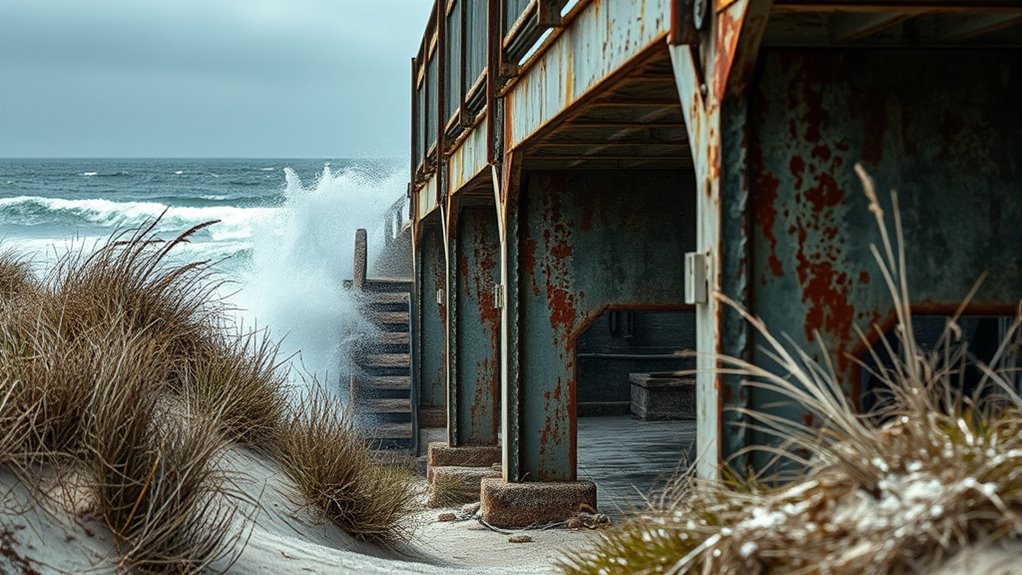
Designing resilient coastal structures requires a strategic approach that anticipates and withstands harsh environmental conditions. You should select durable materials resistant to salt corrosion, like galvanized steel or treated concrete. Incorporate aerodynamic shapes to reduce wind load impact and improve stability. Elevate buildings above flood levels to prevent water damage, and design flexible foundations that absorb seismic or storm surges. Use continuous sealants and protective coatings to prevent salt penetration. Incorporate redundancy in structural elements to ensure safety if one component fails. Regular maintenance and inspections are essential to identify wear early. Collaborate with engineers and environmental experts to tailor designs to specific site conditions. Implementing effective drainage systems can help manage water flow and reduce flood risks. By integrating these strategies, you guarantee your coastal structures remain resilient against the relentless forces of nature.
Frequently Asked Questions
How Does Salt Spray Influence the Longevity of Different Construction Materials?
Salt spray accelerates corrosion and material degradation, especially in metals like steel and aluminum, reducing their lifespan. It causes rust and pitting, weakening structural integrity over time. For concrete and masonry, salt can lead to cracking and spalling. To combat this, you should use corrosion-resistant materials, apply protective coatings, and perform regular maintenance. These steps help guarantee your structures last longer despite the harsh salty environment.
What Are the Most Effective Ways to Mitigate Wind Damage in Coastal Buildings?
You can mitigate wind damage in coastal buildings by installing wind-resistant windows and doors, reinforcing structural elements like roofs and walls, and using aerodynamic designs to reduce wind pressure. Regular maintenance guarantees that any vulnerabilities are addressed promptly. Additionally, anchoring the building securely to its foundation and incorporating flexible materials help absorb shocks, preventing structural failure. These strategies help your coastal property withstand strong winds effectively.
Which Materials Are Best Suited for High-Salt, High-Wind Coastal Environments?
Think of materials as your coastal fortress’s armor. You’re best off choosing stainless steel, treated concrete, and specially coated wood, which stand strong against salt spray and wind. These materials resist corrosion and decay, maintaining their strength over time. Avoid untreated metals and porous woods, as they weaken quickly. By selecting durable, corrosion-resistant materials, you guarantee your building’s resilience amidst the relentless coastal elements.
How Do Local Climate Variations Affect Material Selection at Coastal Sites?
You need to contemplate local climate variations because they directly impact your material choices. For example, higher humidity and salt exposure require corrosion-resistant materials like stainless steel or treated wood. If wind is stronger, opt for durable, wind-resistant options. You should also account for temperature fluctuations, which can cause expansion or contraction, affecting material longevity. Understanding these variations helps you select materials that withstand your specific coastal environment effectively.
Are There Innovative Technologies to Enhance Coastal Structure Resilience?
A stitch in time saves nine, so investing in innovative technologies can greatly boost coastal structure resilience. You can utilize advanced materials like self-healing concrete, which repairs cracks automatically, or incorporate smart sensors that monitor structural health in real-time. These innovations help you detect issues early, adapt to changing conditions, and extend the lifespan of your structures, ensuring safety and longevity amid the challenging coastal environment.
Conclusion
By understanding salt spray, wind load, and material choices, you can craft coastal constructions that withstand the elements. Prioritize protection with proper coatings, precise design, and durable materials to defeat deterioration. Remember, resilient, robust, and reliable design decisions deliver durability and diminish damage. Don’t forget: smart selections, strong strategies, and steadfast solutions are essential for surviving the seaside’s harsh, hazardous, and humbling conditions. With careful planning, your coastal creations can conquer the challenge of the churning coast.