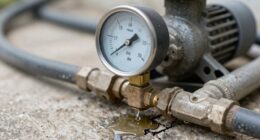
To keep your infinity pool safe and pristine, you need to automate ORP, pH, and water level control. ORP sensors monitor oxidation levels, ensuring sanitizer effectiveness; pH sensors maintain water balance for comfort and equipment safety; water level sensors prevent overflows or low levels. Connecting these sensors to a smart system allows real-time adjustments and remote management. Continue exploring to discover how integrating these controls simplifies maintenance and boosts pool performance.

Get cleaning gear delivered free with Prime
- Fast, free delivery on millions of items
- Prime Video, Amazon Music and more included
- Member-only deals all year
Key Takeaways
- Continuous monitoring of ORP and pH sensors ensures real-time water chemistry adjustments for safe, clear infinity pool water.
- Automated water level control prevents overflows, maintains aesthetic appeal, and reduces water waste through sensor-driven regulation.
- Proper sensor calibration, placement, and maintenance are essential for accurate readings and system reliability.
- Integration of ORP, pH, and level controls enables remote management, improving efficiency and early detection of water quality issues.
- Regular system updates, cleaning, and troubleshooting optimize automation performance and extend equipment lifespan.
automatic pH and ORP pool controller
As an affiliate, we earn on qualifying purchases.
As an affiliate, we earn on qualifying purchases.
Understanding ORP and Its Role in Pool Maintenance

Understanding ORP, or Oxidation-Reduction Potential, is essential for effective pool maintenance because it measures the pool water’s ability to oxidize contaminants. When you monitor ORP levels, you’re evaluating how well your pool’s sanitizer is working. Higher ORP readings indicate that the water can effectively break down impurities, bacteria, and algae, keeping your pool clean and safe. If the ORP drops, it suggests the sanitizer isn’t active enough, risking water quality issues. You can use ORP sensors to automate sanitization processes, ensuring consistent water quality without manual testing. Maintaining the right ORP level helps you avoid over- or under-sanitizing, saving money and effort. Proper ORP management ensures your infinity pool stays clear, healthy, and inviting for every swim. Monitoring ORP levels is a reliable way to optimize sanitation, as it reflects the water’s capacity to neutralize harmful substances.
infinity pool water level sensor
As an affiliate, we earn on qualifying purchases.
As an affiliate, we earn on qualifying purchases.
The Importance of Ph Levels in Infinity Pools

Keeping your pool’s pH levels balanced is essential for proper maintenance and safety. When pH gets too high or low, it can cause damage to your pool’s surfaces and equipment. Ensuring correct pH helps you prevent costly problems and keeps your infinity pool running smoothly. Proper water chemistry is crucial for maintaining the longevity and performance of your pool components.
Maintaining Optimal Balance
Maintaining essential pH levels in infinity pools is critical for ensuring water clarity, safety, and comfort. When pH is balanced, your pool water remains clear and inviting, preventing cloudiness and algae growth. Proper pH also protects your skin and eyes from irritation and helps sanitizer work effectively. To keep pH within the ideal range of 7.2 to 7.6, regular testing is necessary. Automated systems can help monitor and adjust pH levels continuously, reducing manual effort and ensuring consistent water quality. If pH drifts too high or low, it can lead to scaling or corrosion of pool components. Staying on top of pH balance not only enhances your swimming experience but also prolongs the lifespan of your pool equipment. Essential oils with calming and antimicrobial properties, such as lavender or tea tree, can be used in spa areas to improve overall relaxation and hygiene. Consistent monitoring and adjustments are key to maintaining excellent water chemistry.
Preventing Pool Damage
Proper pH levels are essential to prevent damage to your infinity pool’s structure and equipment. When pH drifts too low or high, it can cause corrosion, scaling, and cloudy water, leading to costly repairs. Maintaining a balanced pH helps protect your pool’s surfaces and prolongs the lifespan of pumps and filters. To keep your pH in check, consider this quick reference:
| pH Range | Effect on Pool Components |
|---|---|
| 7.2 – 7.4 | Ideal for equipment safety and clarity |
| Below 7.2 | Corrosive water risks damaging surfaces |
| Above 7.4 | Scaling and cloudiness may develop |
Regular testing and automation ensure your pool stays within the safe pH range, preventing damage and saving you money. Additionally, understanding the water chemistry involved can help you better maintain the balance and prevent issues before they arise.
pool automation system with remote control
As an affiliate, we earn on qualifying purchases.
As an affiliate, we earn on qualifying purchases.
How Automated Level Control Ensures Optimal Water Balance
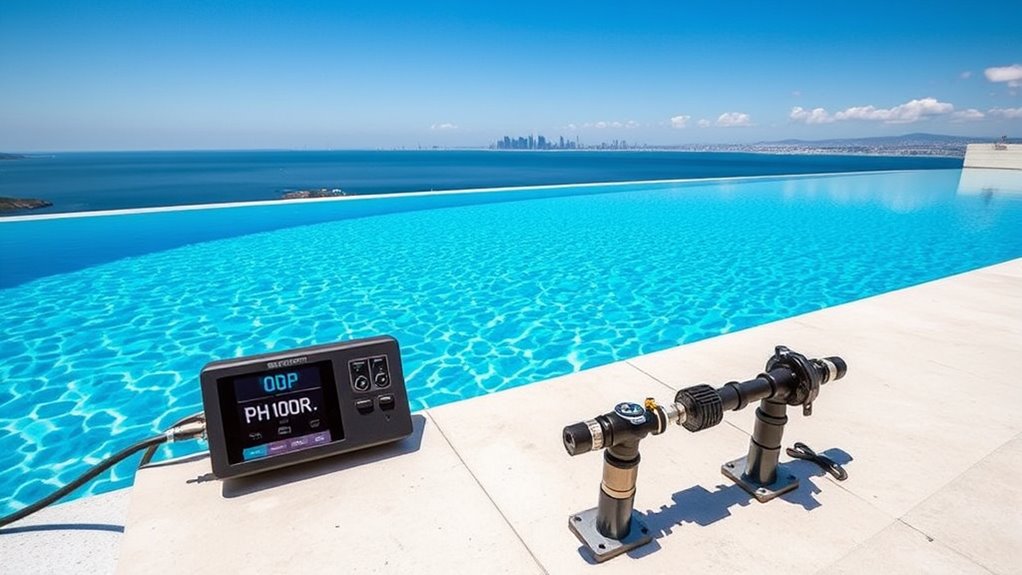
Have you ever wondered how automated level control systems keep water levels just right? They constantly monitor your pool’s water height and make adjustments to maintain balance. Here’s how they work:
Automated systems continuously monitor and adjust your pool’s water level for perfect balance.
- Detect fluctuations using reliable sensors
- Send signals to the control system
- Activate pumps or valves to add or drain water
- Continuously fine-tune levels for stability
Adding to their efficiency, these systems often incorporate water quality sensors to help maintain proper chemical distribution and clarity. This process prevents overflows, reduces water waste, and keeps the water at the ideal height for both safety and aesthetics. By automating these adjustments, you avoid manual checks and potential errors. Consistent water levels help maintain proper chemical distribution, reduce equipment strain, and ensure your infinity pool remains visually stunning and functional. Automated level control keeps your water balanced effortlessly, so you can enjoy a pristine pool with minimal maintenance.
As an affiliate, we earn on qualifying purchases.
Choosing the Right Sensors for Your Pool Automation System
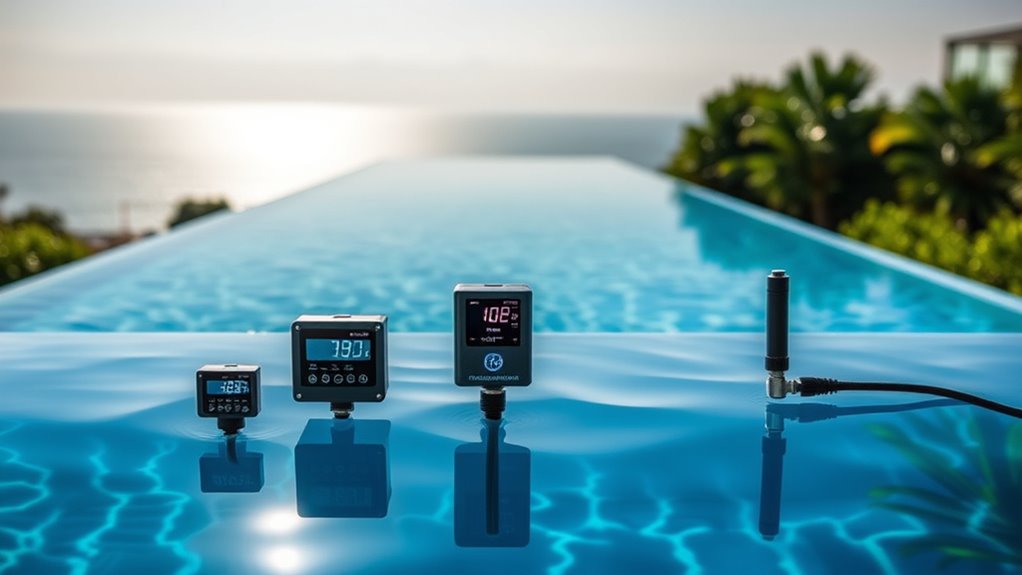
Choosing the right sensors for your pool automation system is vital for reliable performance. You should consider sensor compatibility, durability, and accuracy to guarantee the system works seamlessly. Additionally, evaluate the costs and maintenance needs to make a smart, long-term investment. Incorporating sensors with proper filtration technology can further enhance the system’s effectiveness and ensure cleaner, healthier pool water.
Sensor Compatibility Tips
Selecting the right sensors for your pool automation system is essential to guarantee accurate readings and reliable operation. Compatibility ensures seamless communication between sensors and the control unit, preventing malfunctions. To optimize performance, consider these tips:
- Check that sensor connectors match your automation system’s ports.
- Verify the communication protocol (e.g., 4-20mA, RS485) is supported.
- Ensure the sensor’s voltage and power requirements align with your system.
- Confirm the sensor’s measurement range suits your pool’s conditions.
- Be aware that understanding sensor compatibility principles helps in selecting the most effective sensors for your setup.
Durability and Accuracy
Are your pool sensors built to withstand the elements while providing accurate readings? Durability is essential since sensors face sun, rain, chemicals, and temperature fluctuations. Look for models with waterproof, corrosion-resistant casings that protect internal components. Accuracy is equally important; sensors should deliver precise data to maintain ideal water quality. Choose sensors with high-quality sensing elements and proven calibration stability. Regularly verify sensor performance to guarantee ongoing reliability. Investing in durable, accurate sensors minimizes false readings and reduces maintenance interruptions. Remember, sensors that resist environmental stressors and provide consistent data help you maintain a safe, beautiful infinity pool with minimal hassle. Prioritize quality, resistance, and precision to keep your automation system running smoothly year-round. Additionally, consult water quality guidelines to ensure your sensors meet recommended standards for optimal performance.
Cost and Maintenance
Wondering how to balance cost and maintenance when integrating sensors into your pool automation system? The right choice depends on your budget, desired accuracy, and ease of upkeep. Consider these factors:
- Initial Cost: Cheaper sensors may save money upfront but could require more frequent replacements.
- Durability: Invest in sensors designed for water exposure to reduce maintenance and replacements.
- Calibration Needs: Sensors with minimal calibration requirements save time and effort over their lifespan.
- Replacement Frequency: Opt for sensors with longer lifespans to lower long-term costs and maintenance efforts.
Integrating ORP and Ph Sensors for Effective Water Quality Monitoring

To effectively monitor water quality, integrating ORP (oxidation-reduction potential) sensors with pH sensors provides a thorough picture of the water’s chemical balance. This combination allows you to track both the acidity and oxidation levels simultaneously, giving you a holistic view of water health. By connecting these sensors to your automation system, you can receive real-time data and quickly respond to changes. This integration helps prevent problems like algae growth, cloudy water, or corrosion, ensuring your infinity pool stays pristine. Proper placement and calibration are essential for accurate readings. With this setup, you gain precise control over water chemistry, reducing manual testing and adjustments. Overall, combining ORP and pH sensors streamlines water management, keeping your pool safe, clear, and inviting. Speaks 4 Me Online
Automating Chemical Dosage for Consistent Water Chemistry
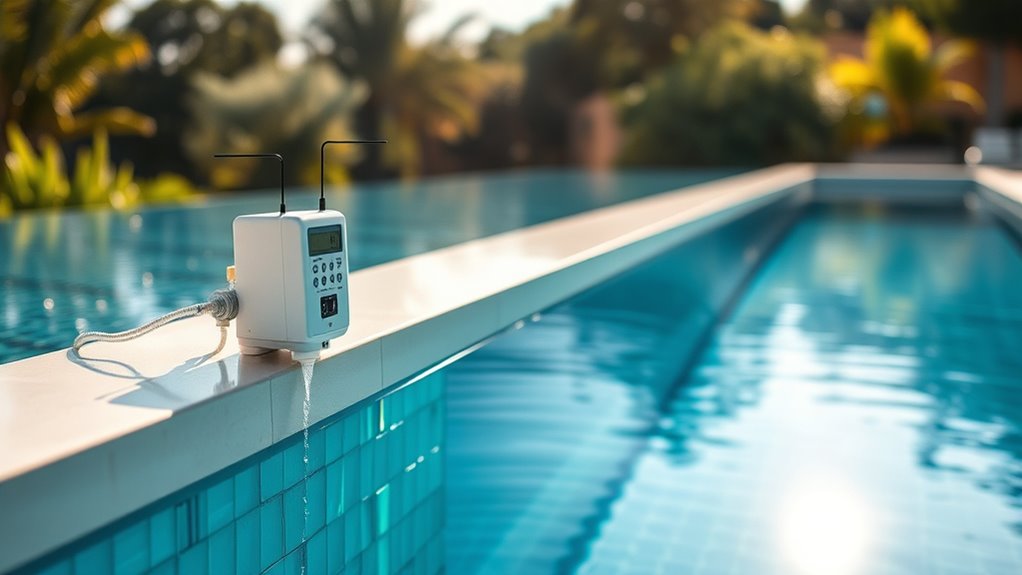
Automating chemical dosage guarantees your water chemistry remains stable by precisely adjusting levels of pH, chlorine, and other essential compounds. This system continuously monitors water parameters and responds in real-time, ensuring ideal conditions. Here’s how it works:
Automated chemical dosing keeps water balanced by real-time monitoring and precise adjustments.
- Sensors detect changes in water chemistry instantly.
- The controller processes data and determines the necessary chemical adjustments.
- Pumps dispense the exact amount of chemicals needed.
- The cycle repeats, maintaining consistent water quality without manual intervention.
Regular calibration of sensors is essential to ensure measurement accuracy and maintain system reliability. This automation reduces the risk of imbalances, prevents algae growth, and minimizes chemical waste. It also saves you time and effort, giving you peace of mind that your infinity pool’s water remains perfectly balanced. Properly automated chemical dosing is a crucial part of modern pool management.
Troubleshooting Common Issues in Pool Automation Systems

When your pool automation system isn’t working properly, it’s important to identify the root cause quickly. Common issues include sensor calibration challenges, wiring and connectivity problems, and software glitches. Understanding these key points helps you troubleshoot effectively and keep your system running smoothly.
Sensor Calibration Challenges
Sensor calibration is a critical step in ensuring your pool automation system functions accurately, but it often presents challenges that can lead to incorrect readings and system errors. Common issues include:
- Dirty or fouled sensors that skew readings and require regular cleaning.
- Incorrect calibration procedures that cause inaccurate measurements.
- Temperature fluctuations impacting sensor accuracy if not compensated.
- Aging sensors that drift over time, needing recalibration or replacement.
These problems can result in improper pH, ORP, or level control, affecting water quality and system performance. To avoid these issues, always follow the manufacturer’s calibration instructions carefully, keep sensors clean, and perform regular checks. Proper calibration guarantees your automation system maintains ideal pool conditions.
Wiring and Connectivity Issues
Wiring and connectivity issues are common culprits behind malfunctioning pool automation systems, often causing erratic operation or communication failures. If your system isn’t responding correctly, start by inspecting all wiring connections. Loose or corroded terminals can disrupt signals, so tighten or replace them as needed. Ascertain wires are properly routed, avoiding sharp bends or damage that could cause shorts. Check for damaged insulation or frayed wires, which can lead to intermittent faults. Confirm that communication cables are securely connected to controllers, sensors, and power sources. Use a multimeter to verify voltage levels and continuity. Sometimes, a simple reset or disconnecting and reconnecting connections can resolve issues. Regularly inspecting wiring and connections helps prevent future problems and keeps your automation system running smoothly.
Software and Programming Glitches
Software and programming glitches can disrupt your pool automation system’s performance even when wiring is solid. These issues often stem from incorrect settings, outdated firmware, or coding errors. To troubleshoot, start by:
- Checking for software updates and installing the latest firmware.
- Reviewing your programming settings for errors or conflicts.
- Resetting the system to factory defaults, then reprogramming it.
- Consulting the user manual or manufacturer support for specific error codes.
Benefits of Remote Monitoring and Control for Infinity Pools

Have you ever wished you could adjust your infinity pool’s temperature or lighting from anywhere? Remote monitoring and control make that feasible. With a smartphone app or web portal, you can manage your pool’s chemical levels, pump operation, and lighting without being on-site. This flexibility ensures your pool is always ready for use, whether you’re at work or on vacation. It also helps you catch issues early, like low pH or high ORP, before they escalate. Plus, remote control saves time and energy by allowing you to optimize system performance effortlessly. You gain peace of mind knowing you can make adjustments instantly, ensuring your infinity pool stays pristine, safe, and perfectly comfortable at all times.
Maintenance Tips to Keep Your Automation System Running Smoothly
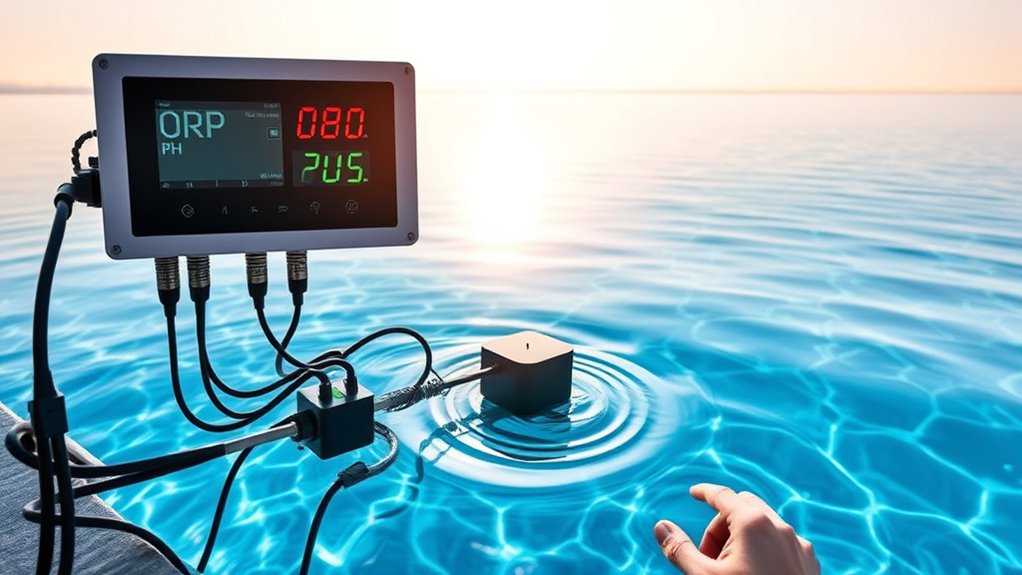
Regular maintenance is essential to keep your automation system functioning reliably and efficiently. To guarantee smooth operation, follow these key tips:
Routine maintenance ensures your automation system runs smoothly and reliably.
- Check sensor calibration regularly to maintain accurate readings.
- Clean sensors and probes to prevent buildup that can interfere with measurements.
- Inspect wiring and connections for corrosion or damage, and tighten or replace as needed.
- Update firmware and software to benefit from improvements and security patches.
Future Trends in Infinity Pool Automation Technology

Advancements in automation technology are shaping the future of infinity pool management, making systems more intelligent, responsive, and energy-efficient. Expect smarter sensors that monitor water quality, temperature, and levels in real-time, automatically adjusting settings to maintain ideal conditions. Integration with IoT devices will allow you to control your pool remotely via smartphone apps, giving you convenience and peace of mind. Machine learning algorithms will analyze usage patterns, optimizing energy consumption and reducing operational costs. Additionally, eco-friendly automation features will focus on sustainability, minimizing chemical use and water waste. As technology evolves, you’ll see more seamless, intuitive systems that simplify pool maintenance, enhance safety, and create a luxurious, effortless swimming experience. The future of infinity pool automation promises smarter, greener, and more personalized management.
Frequently Asked Questions
How Often Should I Calibrate My Pool’s ORP and Ph Sensors?
You should calibrate your pool’s ORP and pH sensors at least once a month to guarantee accurate readings. Regular calibration helps maintain proper water chemistry, preventing issues like algae growth or corrosion. If you notice inconsistent readings or after performing maintenance, calibrate more frequently. Always follow the manufacturer’s instructions for calibration procedures, and consider testing with standard solutions to verify sensor accuracy and prolong their lifespan.
Can Automation Systems Detect and Alert for Chemical Imbalances Automatically?
Yes, automation systems can detect and alert you for chemical imbalances automatically. They continuously monitor your pool’s ORP, pH, and other parameters, analyzing data in real-time. When an imbalance occurs, the system sends alerts via notifications or alarms, so you can take prompt action. This automation reduces manual testing and guarantees your pool maintains ideal water quality, keeping it safe and inviting for swimmers.
What Safety Features Are Integrated Into Modern Infinity Pool Automation Systems?
Imagine your infinity pool’s automation system detects a sudden drop in water level, triggering an automatic shut-off valve. Modern systems often include safety features like leak detection, emergency shut-off, and real-time alerts. These features prevent overflows, equipment damage, and guarantee user safety. You can also integrate alarms for chemical imbalances or pump failures, giving you peace of mind knowing your pool remains safe and well-maintained at all times.
How Does Ambient Temperature Affect Sensor Accuracy and Water Chemistry?
Ambient temperature impacts sensor accuracy and water chemistry by causing fluctuations that can lead to misreadings. When temperatures rise or fall considerably, sensors may become less precise, affecting pH, ORP, and water level readings. You should regularly calibrate sensors and monitor temperature conditions to maintain ideal water balance. Using temperature-compensated sensors and ensuring proper insulation helps improve accuracy and prevent chemistry imbalances in your infinity pool.
Are There Eco-Friendly or Energy-Saving Options in Pool Automation Technology?
Are eco-friendly and energy-saving options in pool automation worth exploring? Absolutely. You can install solar-powered automation systems that harness sunlight, reducing electricity use. Smart timers and sensors help optimize pump operation, saving energy without sacrificing performance. Additionally, choosing energy-efficient pumps and LED lighting lowers your pool’s carbon footprint. Isn’t it rewarding to enjoy a beautiful infinity pool while also protecting the environment? These options make your pool both sustainable and cost-effective.
Conclusion
By embracing these automation essentials, you subtly elevate your infinity pool experience, ensuring every dip remains pristine and inviting. With thoughtful sensor choices and regular upkeep, you gently steer clear of potential hiccups, allowing your oasis to flourish effortlessly. As technology continues to evolve, you’ll find yourself seamlessly blending convenience with sophistication, creating a tranquil retreat that’s as easy to maintain as it is to enjoy. Your pristine paradise awaits, effortlessly refined and exquisitely managed.
Halloween Picks
halloween
As an affiliate, we earn on qualifying purchases.