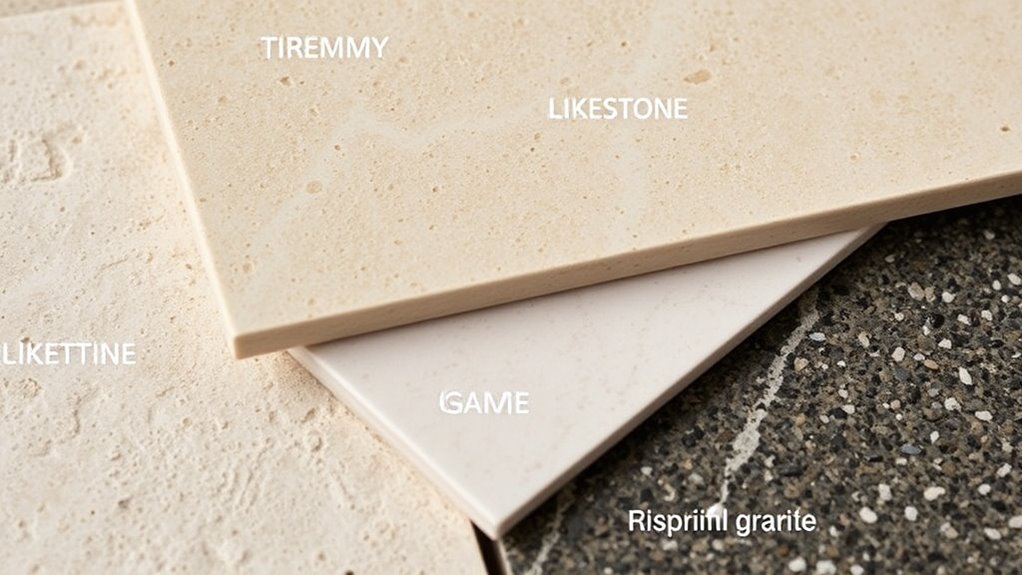

When choosing a durable coping material, granite stands out with its toughness, resistance to scratches, and minimal maintenance, making it ideal for high-traffic areas. Travertine offers an earthy, rustic look but needs regular sealing to prevent stains, while limestone provides a softer, elegant aesthetic but also requires careful care. Each has unique style options, but granite’s resilience guarantees your coping lasts longer over time. Keep exploring to discover which material best suits your needs.
Key Takeaways
- Granite offers the highest durability and scratch resistance, making it ideal for high-traffic and outdoor applications.
- Travertine and limestone are softer and porous, requiring regular sealing to maintain their appearance and prevent damage.
- All three materials can be long-lasting with proper maintenance, but granite generally needs less upkeep over time.
- Sealing and gentle cleaning extend the lifespan and preserve the aesthetic appeal of travertine and limestone surfaces.
- Granite’s dense composition provides consistent color and resistance, ensuring a durable, lasting finish for coping and surfaces.
Durability and Wear Resistance

When it comes to durability and wear resistance, granite stands out as the most robust option among travertine, limestone, and granite. You’ll find that granite’s dense, hard composition makes it highly resistant to scratches, chips, and heavy foot traffic. Unlike travertine and limestone, which are softer and more porous, granite can withstand daily wear without deteriorating quickly. This resilience means your surfaces stay intact longer, requiring less maintenance and fewer repairs. If durability is your priority, especially for high-traffic areas like kitchens or outdoor spaces, granite offers superior longevity. Its toughness ensures it remains looking new and functional over time, making it a smart investment for any space where durability matters most. Additionally, color consistency in granite helps maintain a uniform appearance even after years of use.
Aesthetic Appeal and Style Options

Aesthetic appeal and style options vary considerably among travertine, limestone, and granite, allowing you to achieve different looks based on your preferences. Travertine offers a warm, earthy appearance with natural veining and a matte finish, ideal for creating a rustic or Mediterranean vibe. Limestone presents a softer, more refined look with subtle textures and neutral tones, perfect for elegant and timeless interiors. Granite boasts a bold, varied pattern with vibrant colors and a polished surface, making it suitable for modern, striking designs. Each material can be honed or polished to enhance its natural beauty, giving you versatile options to match your style. Your choice depends on whether you prefer a natural, understated charm or a vivid, polished statement piece. Additionally, material versatility plays a significant role in how these stones can complement various design themes and indoor aesthetics.
Maintenance and Longevity

Maintaining the beauty of travertine, limestone, and granite requires understanding their durability and care needs, as these factors considerably influence their longevity. Travertine needs regular sealing to prevent stains, and gentle cleaning to avoid etching. Limestone is softer and more porous, so it demands consistent sealing and careful cleaning with pH-neutral products. Granite, being harder, is more resistant to scratches and stains but still benefits from periodic sealing to maintain its appearance. Daily maintenance involves wiping spills immediately and avoiding harsh chemicals. Proper care extends each material’s lifespan, keeping your surfaces looking new for years. While granite generally lasts longer with less maintenance, travertine and limestone can also be durable if properly cared for. Regular upkeep ensures your investment remains attractive and functional over time.
Frequently Asked Questions
Which Material Is Most Eco-Friendly for Long-Term Use?
You should choose limestone for the most eco-friendly long-term use. It’s a natural, abundant material that requires minimal processing, reducing environmental impact. Limestone also absorbs CO2 over time, helping to improve air quality. Unlike granite and travertine, limestone’s lower energy footprint makes it a sustainable choice. Plus, its durability ensures you won’t need frequent replacements, making it a smart, eco-conscious investment for your space.
How Do They Perform in High-Moisture or Outdoor Settings?
Did you know that granite is considered the most durable for outdoor use? It performs exceptionally well in high-moisture environments, resisting water absorption and weathering. Travertine and limestone, however, are more porous and can absorb moisture, leading to potential damage over time. If you want a coping material that withstands outdoor conditions, granite is your best bet for longevity and minimal maintenance.
Are There Specific Sealants Recommended for Each Material?
You should choose sealants specifically designed for each material. For travertine and limestone, opt for penetrating sealants that block moisture and prevent staining, like silane or silicone-based products. Granite benefits from breathable, high-quality sealers that protect against spills and stains while allowing vapor to escape. Always follow the manufacturer’s instructions, reapply as recommended, and test a small area first to confirm compatibility and effectiveness.
What Are the Cost Differences Over the Lifespan?
You’ll find that granite usually costs more upfront but lasts longer with minimal maintenance, saving you money over time. Limestone is generally more affordable initially but may require more frequent repairs or resealing, adding to costs. Travertine falls somewhere in between, with moderate initial costs and maintenance needs. Over the lifespan, granite tends to be the most cost-effective, especially if you factor in durability and low upkeep.
Can These Stones Be Repaired if Damaged?
Yes, these stones can be repaired if damaged. Travertine and limestone are more porous, so chips or cracks might need filling with matching epoxy or grout, and polishing can restore their look. Granite, being tougher, often requires professional repair for chips or deep cracks, but surface damage can usually be polished out. Regular maintenance helps prolong their lifespan and keeps repairs minimal.
Conclusion
So, whether you choose travertine’s charm, limestone’s elegance, or granite’s toughness, just remember—you’re basically inviting a never-ending battle of “Will it survive my daily chaos?” Each has its quirks, but hey, who needs flawless when you can have character, right? Just pick the one that suits your style—and your patience level—because in the end, your choice will be forever etched in your home’s story. Or at least until the next DIY disaster.