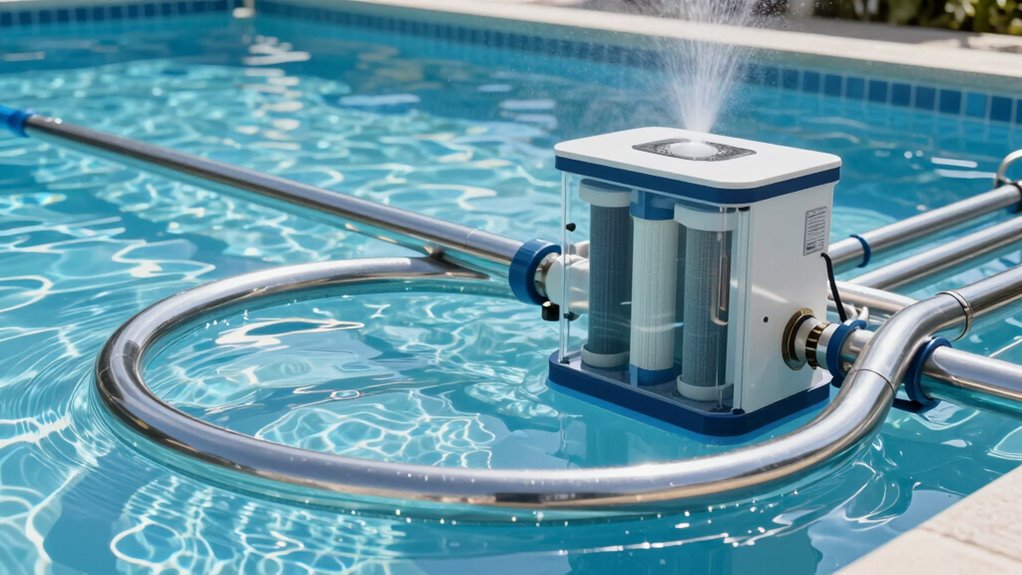
To prevent algae, focus on good circulation that keeps water moving and prevents stagnation, making it harder for algae spores to settle. Use effective filtration to remove debris and reduce nutrients that fuel growth, including biological, chemical, and UV options. Incorporate safe sanitizers and beneficial bacteria to disrupt algae lifecycles naturally. Proper setup and regular maintenance are key. Keep exploring to discover how these strategies work together to keep your water clear and healthy.
Key Takeaways
- Consistent water circulation prevents stagnation, reduces algae spores settlement, and enhances oxygenation for aquatic health.
- Biological, chemical, and UV filtration systems remove organic waste, excess nutrients, and algae spores to maintain water clarity.
- Proper equipment placement and maintenance ensure effective flow and filtration, disrupting algae growth cycles.
- Using beneficial bacteria and safe sanitizers helps compete with algae for nutrients and control their lifecycle naturally.
- Routine water testing, manual removal, and system upkeep are essential for early detection and prevention of algae outbreaks.
Why Algae Growth Is a Common Water Problem
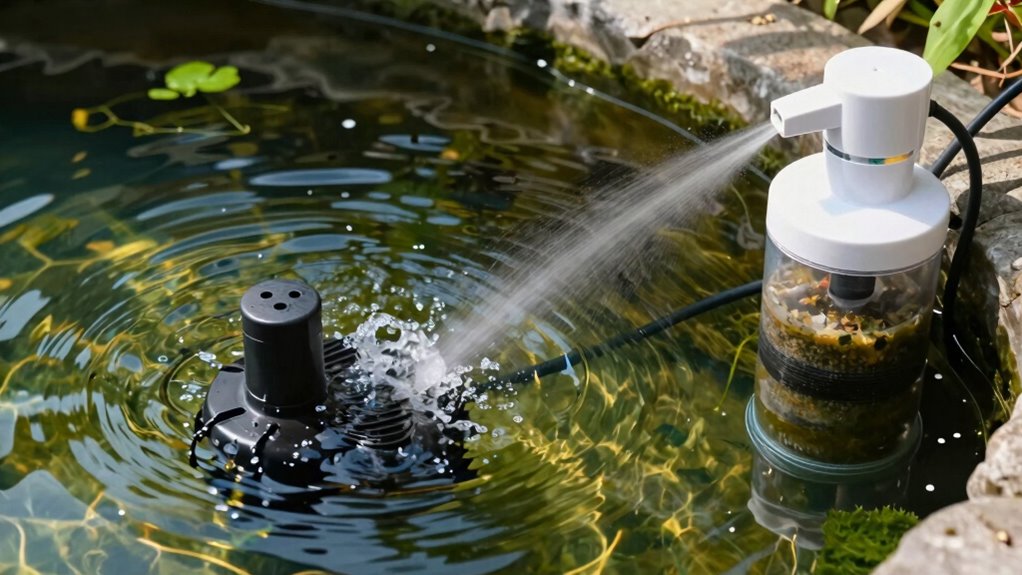
Have you ever wondered why algae growth is such a persistent water problem? It all comes down to the algae lifecycle and nutrient imbalance. Algae thrive when conditions are right, especially when nutrients like nitrogen and phosphorus are abundant. These nutrients fuel algae’s rapid growth, allowing it to spread quickly across the water’s surface. Once algae establish themselves, they form dense mats that block sunlight and disrupt aquatic ecosystems. Nutrient imbalance often results from runoff or improper maintenance, creating the perfect environment for algae to flourish. Understanding this cycle helps you recognize why algae can take over so fast. Controlling nutrient levels is essential to prevent the start of this cycle and keep your water clear and healthy. Additionally, implementing effective circulation and filtration strategies can significantly reduce algae growth by minimizing stagnant areas where nutrients accumulate. Proper water flow prevents nutrient buildup and helps maintain a balanced aquatic environment, making it harder for algae to take hold. Regular testing and monitoring are vital components of a comprehensive water quality strategy to detect and address nutrient imbalances before algae become problematic. Maintaining a steady water circulation system also supports beneficial organisms that naturally compete with algae, further helping to control their growth.
How Circulation Helps Stop Algae From Taking Over
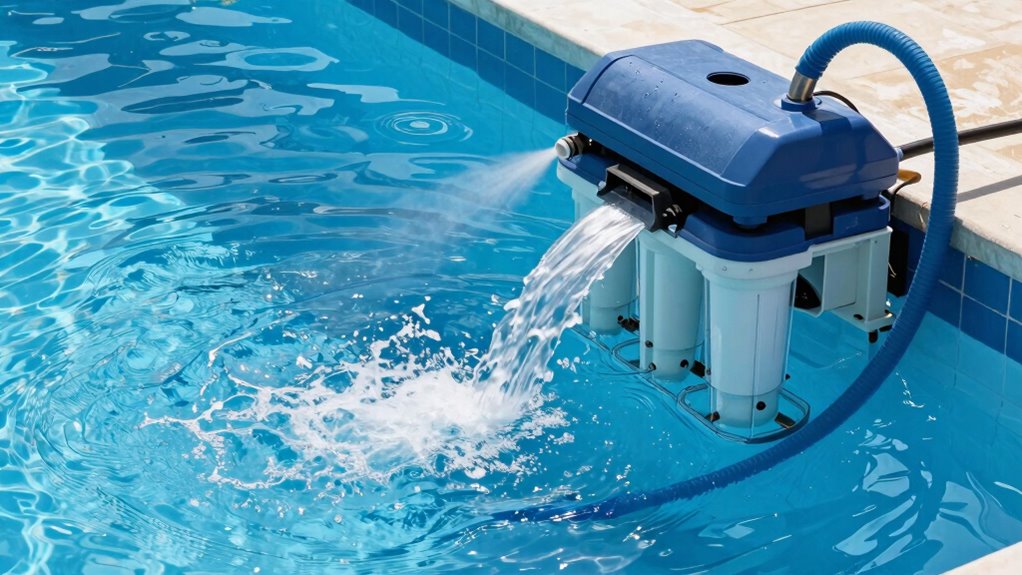
Did you know that improving water circulation is one of the most effective ways to combat algae growth? When water moves consistently, it prevents stagnant areas where algae can thrive. Incorporate aquarium plants, which naturally promote water movement, enhancing circulation and reducing dead spots. Water aeration also plays a vital role by increasing oxygen levels and encouraging healthy water flow. Strong circulation disrupts algae’s ability to settle and multiply, keeping the water clear and balanced. Plus, good flow helps distribute nutrients evenly, making it harder for algae to monopolize resources. Maintaining proper water movement can also be achieved through the use of circulation pumps and other equipment designed to promote healthy flow. Additionally, water flow dynamics are essential to understanding how circulation impacts algae control and aquatic health. Copper cookware sets are also known for their antimicrobial properties, which can contribute to a cleaner environment. By maintaining proper circulation through plants and aeration, you create an environment that’s less friendly to algae, supporting a healthier, cleaner aquatic ecosystem. Proper water circulation not only prevents algae but also promotes overall aquatic ecosystem health. Proper water circulation patterns can optimize nutrient distribution and minimize dead zones where algae might develop.
Choosing the Right Filtration to Keep Water Clear
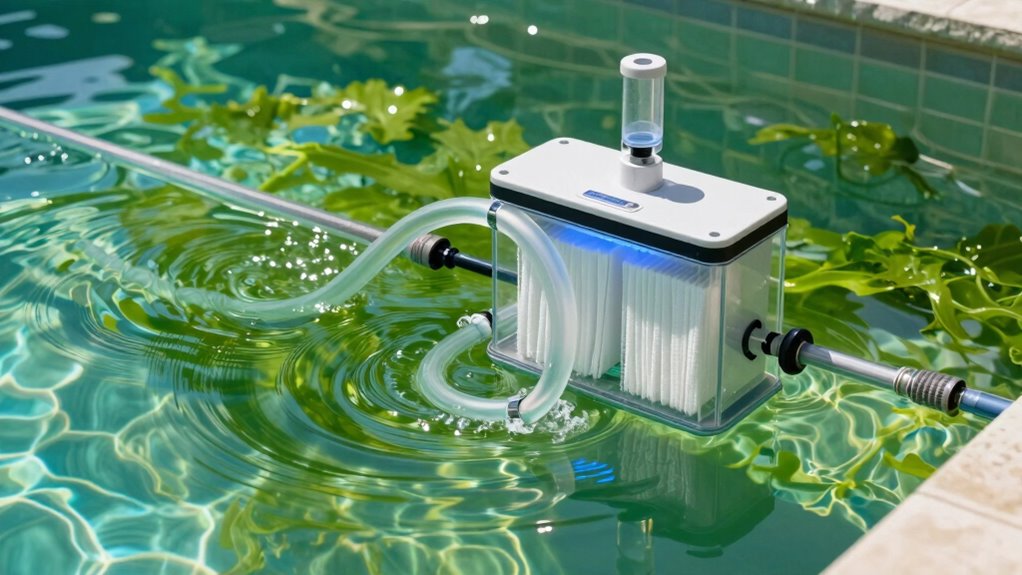
Choosing the right filtration system is essential for maintaining clear, healthy water in your aquatic environment. Biological filtration plays a key role by breaking down harmful waste products, like ammonia and nitrites, preventing algae growth caused by nutrient buildup. It creates a balanced ecosystem that supports aquatic life and keeps water transparent. Proper water flow is also vital, as it ensures oxygenation and optimal filtration performance. Flat Iron Bike technology demonstrates how efficient energy use can be achieved in compact systems, emphasizing the importance of effective filtration. Additionally, water chemistry management is crucial for overall water quality and algae prevention. Maintaining appropriate nutrient levels helps reduce excess nutrients that fuel algae growth. Chemical treatment can also be effective in controlling algae, but it should complement your filtration system rather than replace it. Proper filtration guarantees water flows smoothly, removes debris, and maintains ideal water chemistry. Water quality is a key factor in preventing algae, so selecting a filter that suits your tank’s specific needs is essential. When selecting a filter, consider your tank size, biological load, and maintenance requirements. Combining biological filtration with appropriate chemical treatments helps keep your water clear, reducing algae problems and promoting a healthy, vibrant aquatic environment.
Safe and Effective Sanitizers for Algae Control
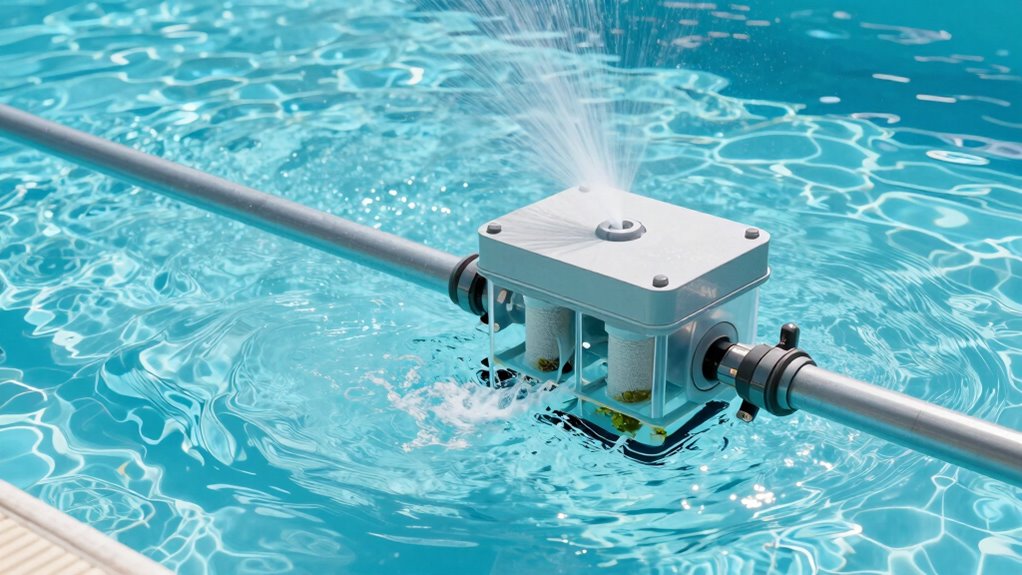
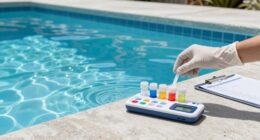
Once you’ve established a solid filtration system, maintaining water quality often involves using sanitizers that are both safe for aquatic life and effective against algae. Biological controls, such as beneficial bacteria, can naturally reduce algae by competing for nutrients, minimizing the need for chemical treatments. When chemical treatments are necessary, choose sanitizers specifically designed for aquatic environments, ensuring they won’t harm fish or plants. Always follow manufacturer instructions carefully to avoid over-treating, which can upset your pond or aquarium’s balance. Incorporating eco-friendly transportation options like folding electric bikes with throttle can also reduce pollution and nutrient runoff that contribute to algae growth. Additionally, understanding the importance of proper circulation and filtration helps in maintaining a consistently clean water environment. Proper maintenance of circulation and filtration systems enhances water quality and reduces algae buildup. Using appropriate water testing kits regularly can help monitor water parameters and prevent algae outbreaks before they start. Combining safe sanitizers with biological controls creates a balanced approach, reducing algae growth without relying solely on harsh chemicals. This strategy helps keep your water clear and healthy, supporting a thriving aquatic ecosystem.
How to Set Up Your Pond or Aquarium for Algae Prevention
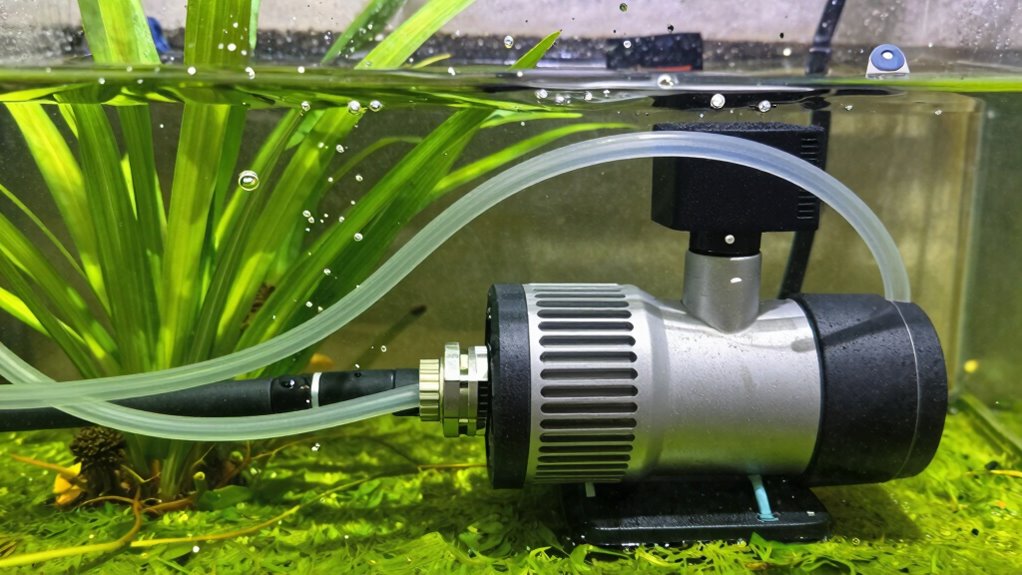
To prevent algae growth, make sure your pond or aquarium has proper water circulation to keep nutrients moving. An effective filtration system will also help remove excess waste and maintain water quality. Proper water chemistry is essential for creating a healthy environment that discourages algae from taking hold. Additionally, maintaining optimal water flow rates can prevent stagnant areas where algae are more likely to develop. Incorporating sustainable textile care practices, such as using eco-friendly materials for pond liners or filtration components, can further reduce environmental impact and promote a healthier ecosystem. Ensuring ecosystem balance through natural plantings and beneficial bacteria can also help suppress algae proliferation.
Proper Water Circulation
Proper water circulation is essential for preventing algae growth in your pond or aquarium. Good water flow ensures nutrients and waste are evenly distributed, reducing areas where algae can thrive. To achieve this, you need to establish effective circulation patterns that promote consistent movement throughout the water. Avoid stagnant zones by positioning pumps or aerators strategically, creating a gentle, continuous flow. This not only prevents dead spots but also helps oxygenate the water, supporting healthy aquatic life. Consistent circulation discourages algae spores from settling and multiplying. Remember, the goal is to maintain a steady, gentle water movement that keeps nutrients in suspension and prevents the buildup of organic debris, which are both critical in algae prevention.
Effective Filtration Systems
A well-designed filtration system is vital for preventing algae growth in your pond or aquarium. Biological filtration plays a key role by breaking down organic waste that fuels algae. Make sure your filter media supports beneficial bacteria to maintain water quality. Incorporate UV sterilization into your setup to target free-floating algae spores and pathogens directly. UV sterilizers help clarify water and reduce algae blooms without introducing chemicals. Regularly clean and maintain your filtration system to keep it functioning efficiently. Proper flow rates are essential—too slow, and waste accumulates; too fast, and beneficial bacteria may not establish properly. By combining biological filtration with UV sterilization, you create a robust defense against algae, keeping your pond or aquarium clear and healthy.
Selecting the Best Equipment for Algae-Free Water
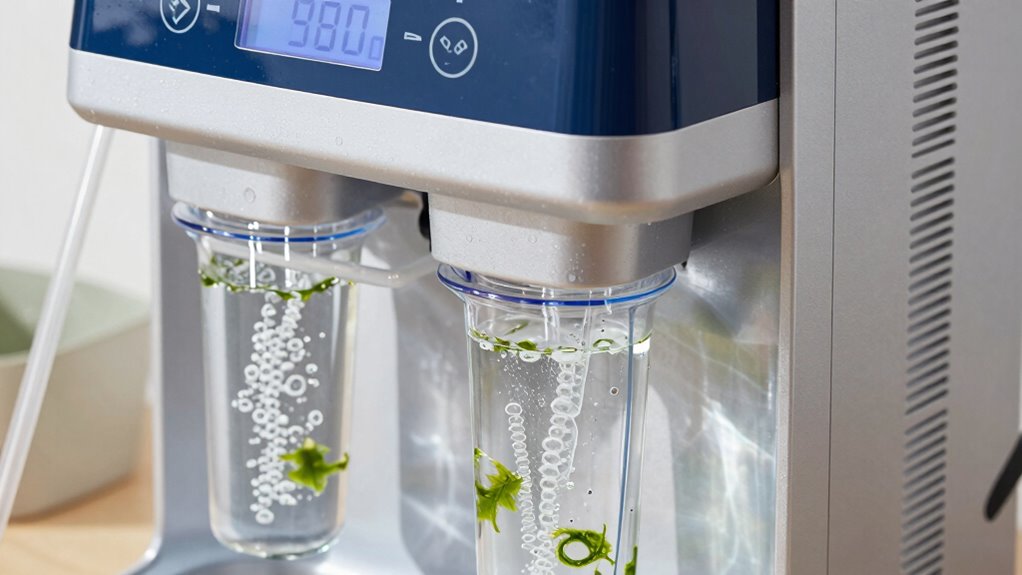
Choosing the right equipment is essential for maintaining algae-free water, so you need to prioritize compatibility and efficiency. Consider how your devices work together and weigh maintenance needs against costs to make a smart investment. Making informed choices now will save you time and money while keeping your water clear.
Equipment Compatibility and Efficiency
Selecting the right equipment is crucial for maintaining algae-free water, as compatibility and efficiency directly impact the success of your anti-algae strategy. You need equipment with high durability to withstand constant operation and harsh conditions, ensuring long-term reliability. Energy efficiency is equally important, as it reduces operational costs and minimizes environmental impact. When choosing pumps, filters, and sanitizers, verify they are compatible with each other to prevent inefficiencies or damage. Properly matched equipment ensures ideal circulation, filtration, and sanitizer delivery, maximizing algae control. Avoid mismatched or low-quality components, as they can hinder performance and lead to frequent replacements. Investing in durable, energy-efficient equipment suited to your system’s specifications guarantees consistent, effective algae prevention and saves you money over time.
Maintenance and Cost Considerations
To keep algae at bay while managing costs, you need equipment that balances performance with affordability. Effective maintenance is essential, so incorporate routine inspections into your schedule to identify issues early. Budget planning helps you allocate funds for replacement parts, upgrades, and servicing without surprises. Choose equipment with durable components to reduce long-term costs and minimize downtime. Regular cleaning of filters, circulation systems, and sanitizers ensures *guarantees* optimal operation and prevents algae buildup. Consider the total cost of ownership, including energy consumption and maintenance needs, to avoid overspending. Investing in reliable, easy-to-maintain equipment may have higher upfront costs but saves money and effort over time. This approach keeps your water algae-free while aligning with your financial and maintenance goals.
Maintenance Tips to Keep Algae at Bay
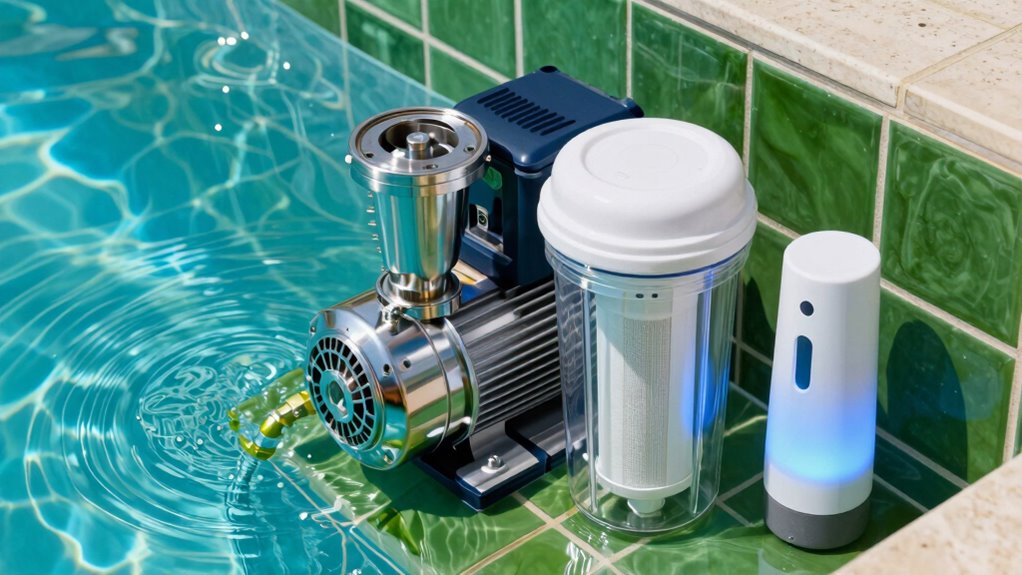
Regular maintenance is indispensable for preventing algae from taking over your water features. Understanding the algae lifecycle helps you target its growth stages, making it easier to keep it in check. Consistently monitor and adjust water chemistry to maintain proper pH levels and nutrient balance, as imbalances encourage algae growth. Clean your filters regularly to remove debris and prevent nutrient buildup that feeds algae. Guarantee proper circulation, so water moves evenly and doesn’t stagnate, creating conditions ideal for algae. Scrub surfaces and remove dead plant material or debris promptly. Using a sanitizer or algaecide can provide an additional layer of defense, but it’s crucial to keep water chemistry stable. These routine practices disrupt the algae lifecycle, helping you keep your water clear and healthy.
Troubleshooting Common Algae Problems
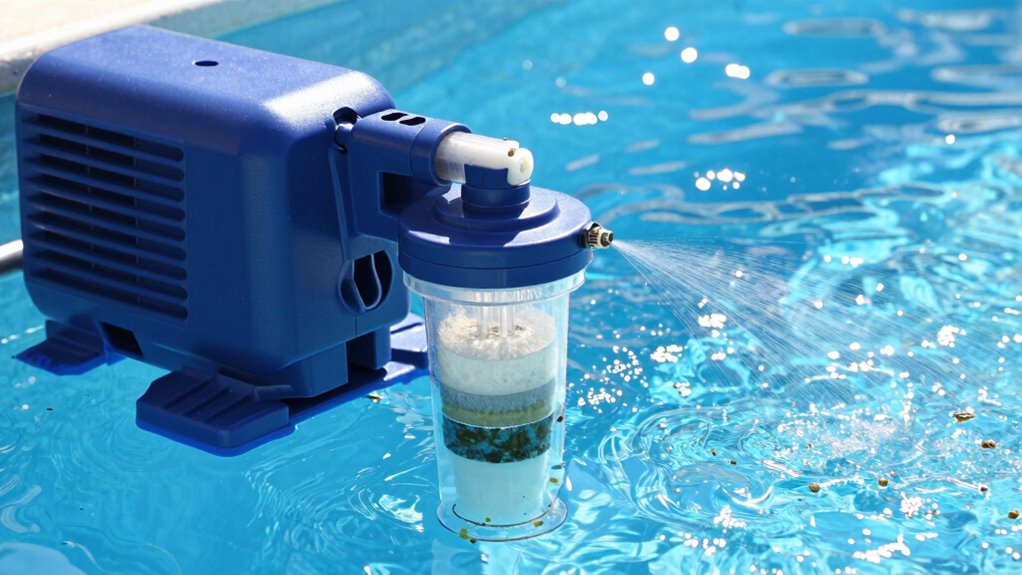
When algae problems arise, quick identification and targeted action are essential to prevent the situation from worsening. An algae bloom often causes water discoloration, turning your water green, yellow, or brown. To troubleshoot, first check your filtration system—if it’s clogged or underperforming, algae can thrive. Verify that your circulation is strong enough to prevent stagnant areas where algae can grow. Ensure your sanitizer levels are correct; insufficient sanitizer allows algae to take hold. If water discoloration persists despite these measures, manually remove visible algae and adjust your chemical treatment plan. Consistent maintenance, proper circulation, and balanced sanitization are key to preventing recurring algae issues. Addressing these factors promptly helps keep your water clear and healthy.
Final Tips for a Clean, Healthy Water Environment
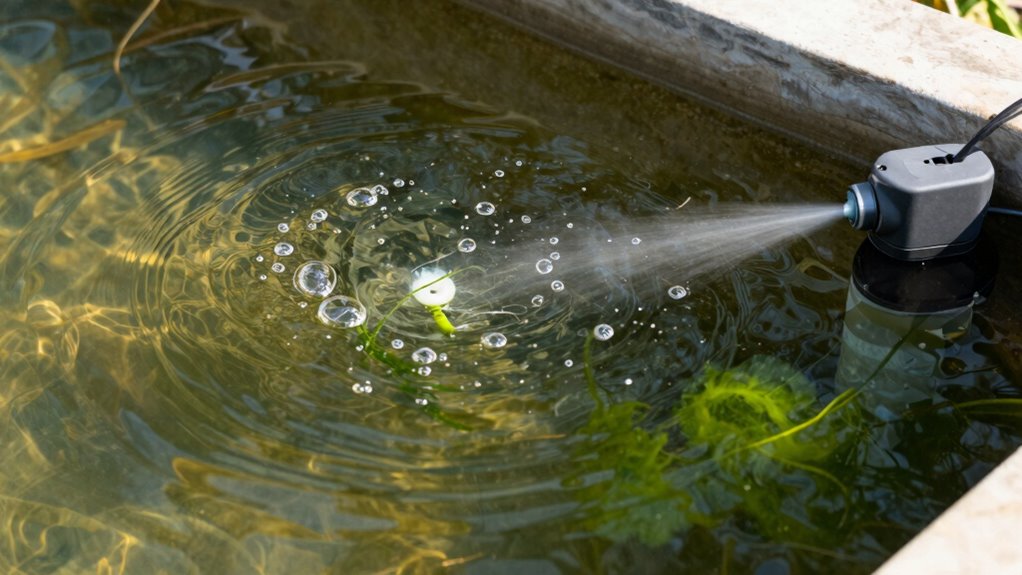
Keeping your water clean and healthy requires ongoing attention beyond troubleshooting algae issues. Regular water testing helps you monitor pH, chlorine levels, and other key parameters, ensuring ideal conditions for your aquatic environment. Incorporate aquatic plants, which naturally absorb nutrients that algae thrive on, to promote a balanced ecosystem. Maintain a consistent circulation and filtration routine, as these minimize stagnant areas where algae can develop. Be diligent with sanitizers, applying them as needed to keep harmful bacteria at bay. Remember, a proactive approach—checking water quality regularly and adjusting your system—prevents problems before they start. With attentive care, you’ll create a vibrant, algae-free environment that supports healthy aquatic life and keeps your water crystal clear.
Frequently Asked Questions
How Does Water Temperature Influence Algae Growth?
You should know that warmer water speeds up thermal regulation, which accelerates algae metabolism. When water temperature rises, algae grow more quickly, making it harder to control. Conversely, cooler water slows down algae activity, giving your circulation, filtration, and sanitizer strategies a better chance to keep algae in check. Maintaining ideal water temperature helps prevent rapid algae growth and keeps your aquatic environment healthier.
What Role Does Pond or Tank Size Play in Algae Control?
Think of your pond or tank as a vast canvas—its size influences how easily algae can paint its green streaks. Larger pond dimensions or tank volume require more robust circulation, filtration, and sanitization to keep algae at bay. Smaller bodies are easier to manage, but bigger ones need a strategic approach to guarantee proper water flow and nutrient control. Adjust your anti-algae measures accordingly to protect your aquatic masterpiece.
Are There Eco-Friendly Sanitizers Suitable for Algae Prevention?
Yes, there are eco-friendly sanitizers suitable for algae prevention, like biodegradable sanitizers that are safe for the environment. You can opt for natural algae control methods, such as using beneficial bacteria or plant-based solutions, which help inhibit algae growth without harmful chemicals. These options are effective and eco-conscious, allowing you to maintain a healthy pond or tank while minimizing ecological impact.
How Often Should Circulation and Filtration Systems Be Cleaned?
You should clean your circulation and filtration systems every 4 to 6 weeks as part of your maintenance routines. Regular cleaning prevents buildup that can reduce efficiency, helping extend the system’s lifespan. If you notice algae or debris, clean more frequently. Proper maintenance guarantees your system runs smoothly, keeps algae at bay, and prolongs its effective use, saving you money and effort in the long run.
Can Plant Selection Help Naturally Reduce Algae Formation?
Yes, selecting aquatic plants can naturally reduce algae formation. Aquatic plants absorb excess nutrients, such as nitrogen and phosphorus, which algae thrive on. Plant benefits include competing for these nutrients and providing shade that limits algae growth. By incorporating water-loving plants like water lilies or submerged species, you create a healthier ecosystem and minimize algae problems without relying solely on chemical treatments.
Conclusion
Maintaining algae-free water is easier than you think. Did you know that proper circulation, filtration, and sanitation can reduce algae growth by up to 80%? By following these basics, you’ll keep your pond or aquarium clear and healthy. Regular upkeep and quick troubleshooting help prevent algae outbreaks before they start. Stay consistent, and you’ll enjoy vibrant, clean water—making your aquatic environment a true oasis for both you and your aquatic life.