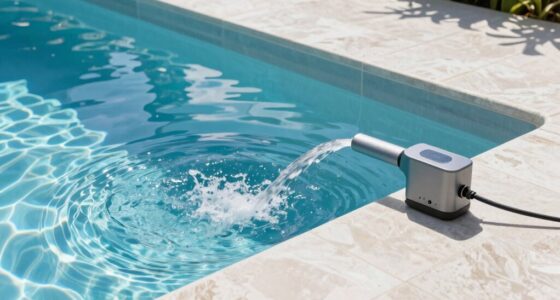
To avoid pool cover pump burnout, make sure you select the right pump size for your pool and cover, and avoid running it continuously. Proper setup is vital—place the pump on a stable surface near the lowest point to promote efficient drainage, and keep electrical connections secure and protected from water or debris. Regularly inspect and maintain your pump, address any unusual noises or electrical issues promptly, and use surge protectors. By following these steps, you’ll keep your pump running smoothly longer; explore more tips to protect your investment.
Key Takeaways
- Regularly inspect and maintain the pump to detect unusual noises, electrical issues, and debris buildup early.
- Properly position the pump on a stable, flat surface near the lowest point of the cover for optimal drainage.
- Use surge protectors, secure connections, and ensure proper wiring to prevent electrical surges and burnout.
- Avoid running the pump continuously; operate it only when necessary to prevent overheating and excessive wear.
- Select a pump with appropriate size, flow rate, and weather-resistant features tailored to your pool cover’s needs.
Why Do Pool Cover Pumps Burn Out, and How Can You Prevent It?
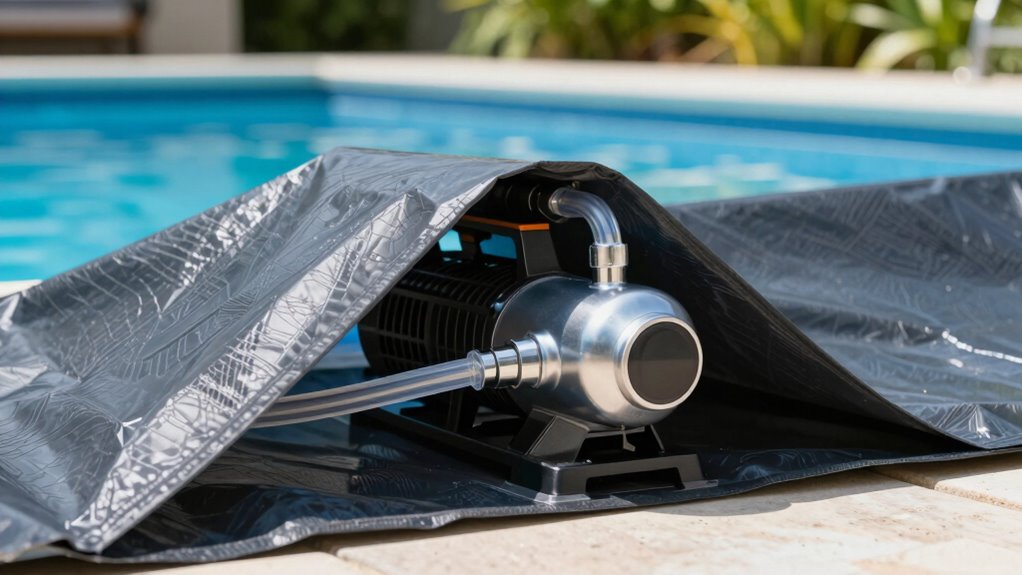
Pool cover pumps can burn out when they run continuously or are subjected to electrical issues, which often happens if they’re not properly maintained. Excessive pump noise can signal strain or impending failure, as the motor works harder than it should. High power consumption also indicates inefficiency, increasing the risk of overheating and burnout. When pumps run constantly without breaks, they generate extra heat and wear down faster. Electrical issues, such as faulty wiring or power surges, can cause sudden failures. To prevent this, regularly inspect your pump for unusual noises, ensure proper wiring, and avoid running the pump longer than necessary. Proper maintenance reduces strain, keeps power consumption in check, and prolongs your pump’s lifespan. Additionally, being aware of electrical safety best practices can help prevent unexpected failures and ensure your pump operates smoothly. Incorporating regular inspections can help catch potential issues early and maintain optimal performance. Monitoring electrical components can also help identify early signs of failure before complete breakdown occurs. Regularly checking thermal performance can prevent overheating and extend the life of your pump. Furthermore, understanding the manufacturer’s guidelines for operation can prevent misuse and potential damage.
How to Choose the Right Pool Cover Pump Size and Features
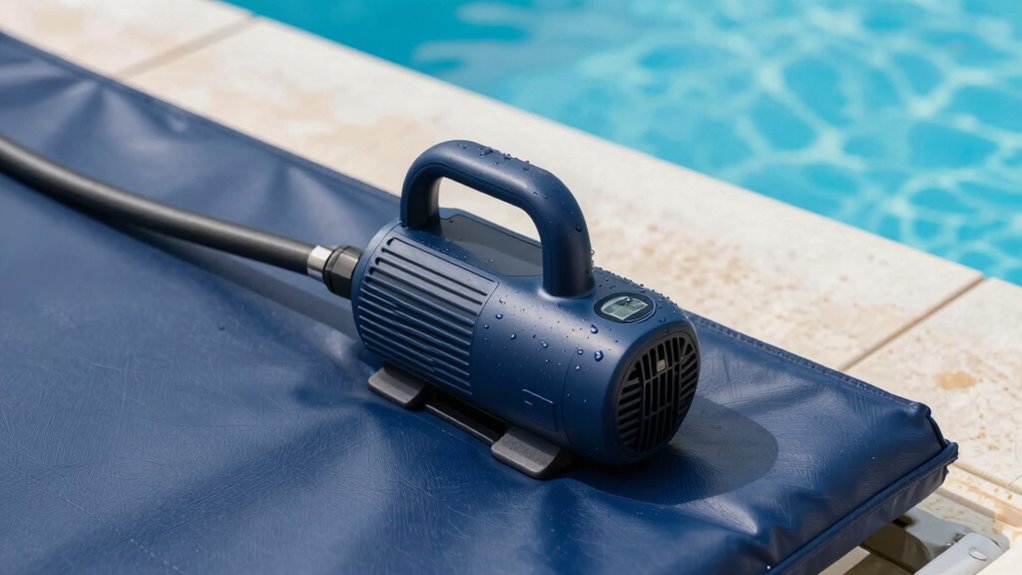
Choosing the right pool cover pump depends on matching its capacity and flow rate to your pool’s size and cover. Make certain the features you select are compatible with your setup and built to last. Properly evaluating these points ensures effective performance and longevity. Additionally, selecting a pump with long-term durability can prevent frequent replacements and ensure consistent operation over time. When considering different models, look for those that incorporate high-quality materials to withstand exposure to water and weather elements. Being aware of maintenance requirements also helps prolong the lifespan of your pump and maintain optimal performance. Understanding hydraulics can help optimize pump efficiency and prevent unnecessary strain on the system. Furthermore, investing in a pump with energy-efficient operation can reduce your overall energy costs and environmental impact.
Pump Capacity and Flow
Selecting the right pool cover pump depends largely on its capacity and flow rate, which determine how effectively it removes excess water. An appropriately sized pump prevents overworking your system and ensures efficient operation. A pump with too low a flow rate may struggle during heavy rain, while an oversized pump can cause unnecessary power consumption and louder pump noise. Consider the typical volume of water you need to move and choose a pump that matches that demand without overtaxing your power supply. Look for models with adjustable flow settings to fine-tune performance and reduce noise levels. Keeping power consumption in check helps lower energy costs and prevents burnout. Additionally, understanding the importance of somatic therapy can help create a balanced approach to maintenance and self-care. Recognizing energy-efficient appliances can further enhance your system’s longevity and reduce operational costs. Ensuring your pump has proper maintenance features can extend its lifespan and improve overall efficiency. Proper power protection measures, such as surge protectors, can also safeguard your equipment from electrical damage. Incorporating routine inspections can help identify potential issues early and maintain optimal performance. Ultimately, balancing capacity, flow rate, noise, and efficiency ensures your pump operates smoothly and reliably, protecting your pool and extending the life of your equipment.
Feature Compatibility and Durability
When evaluating a pool cover pump, focusing on feature compatibility and durability guarantees it meets your specific needs and withstands regular use. Check that the pump’s materials are compatible with your pool cover and environment to prevent damage. Material compatibility ensures the pump won’t degrade when exposed to chlorine, salt, or UV rays. Prioritize models with corrosion resistance, especially if you live in a humid or coastal area, as this extends the pump’s lifespan. Look for features like weatherproof construction and sturdy housings that can handle outdoor conditions. A durable pump with the right features reduces maintenance and replacements, saving you time and money. Additionally, considering how the pump’s design aligns with the overall whole-home water system can improve efficiency and longevity. Incorporating corrosion-resistant materials into your selection process further ensures the pump’s durability in challenging environments. Understanding the horsepower of your pump can also help prevent burnout by matching it appropriately to your pool’s size and cover requirements. Moreover, selecting a pump with the right flow rate helps optimize performance while preventing strain on the motor. To ensure optimal performance, also look into energy efficiency features that can save on operational costs over time.
Setting Up Your Pool Cover Pump Safely and Efficiently
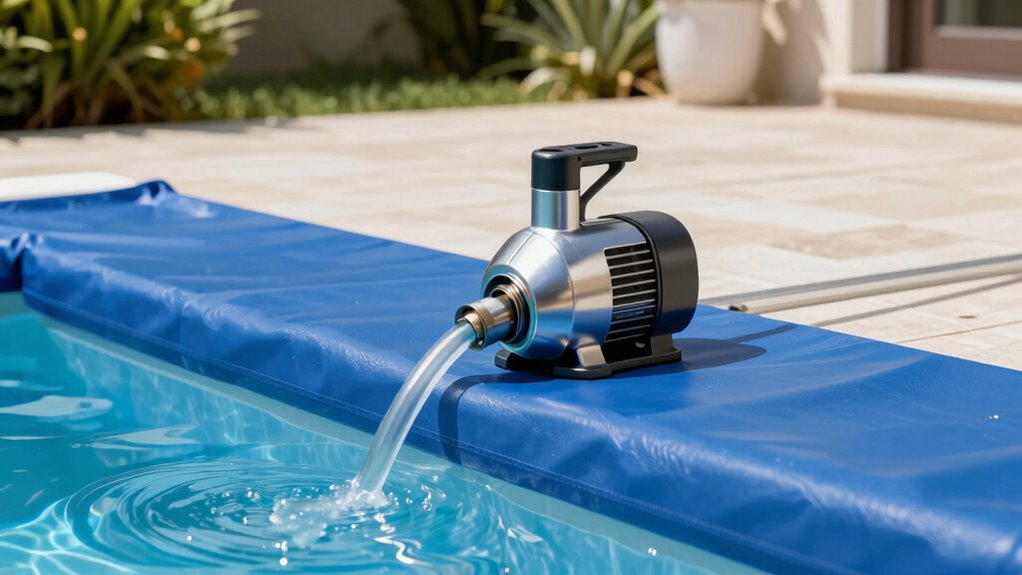
To set up your pool cover pump safely and efficiently, start by placing it on a flat, stable surface away from water runoff. Make sure your electrical connections are secure and grounded to prevent shocks. Regularly inspect the pump and cords to guarantee everything remains in good working condition. Consider modern safety standards when installing your pump to ensure proper protection and compliance. Additionally, adhering to proper electrical practices can help prevent potential hazards during operation. Ensuring proper electrical grounding is essential for safety and to prevent electrical faults.
Proper Pump Placement
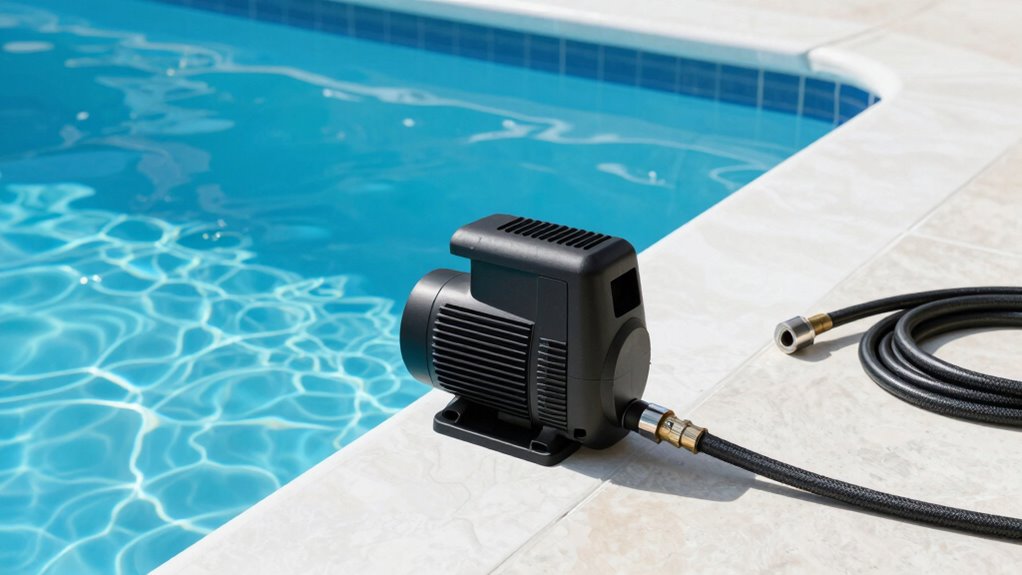
Proper pump placement is essential for efficient and safe removal of water from your pool cover. Position the pump on a flat, stable surface close to the cover’s lowest point to maximize drainage. Keep the pump away from areas prone to flooding or debris, which can cause clogging or damage. Placing the pump in a shaded spot helps reduce pump noise and prevents overheating, extending its lifespan. Ensure the pump’s outlet is directed toward a safe drainage area to avoid water pooling or damage. Proper placement improves energy efficiency by minimizing the distance the pump needs to work. Avoid placing the pump on uneven ground or soft soil, as it can tip or shift during operation, leading to potential safety hazards and inefficient water removal.
Secure Electrical Connections
Ensuring your pool cover pump’s electrical connections are secure is crucial for safe and reliable operation. Start by inspecting the electrical wiring to confirm it’s properly connected and free of damage or corrosion. Use waterproof connectors and weatherproof outlets to prevent moisture from causing shorts or malfunctions. To protect your pump from power surges, install a surge protector on the electrical circuit. A power surge can damage the motor or cause it to shut down unexpectedly, so safeguarding your setup is essential. Always unplug the pump when performing any electrical work, and avoid using extension cords that aren’t rated for outdoor use. Properly secured and protected electrical connections not only improve efficiency but also considerably reduce the risk of electrical hazards.
Regular Maintenance Checks
Regular maintenance checks are essential to keep your pool cover pump running smoothly and safely. You should regularly inspect the pump’s electrical cord and connections for signs of wear or damage. Confirm the automatic shutoff feature functions correctly, preventing the pump from overworking or overheating. Check that the pump is free of debris and obstructions, which can cause overheating or a power surge. Test the automatic shutoff to verify it activates during irregular conditions. Protect against power surges by installing a surge protector, especially during storms. Regularly clean filters and vents to maintain peak performance. By staying vigilant with these checks, you’ll avoid burnout, extend the pump’s lifespan, and ensure safe, reliable operation during the swimming season.
How to Monitor Your Pool Cover Pump During Use
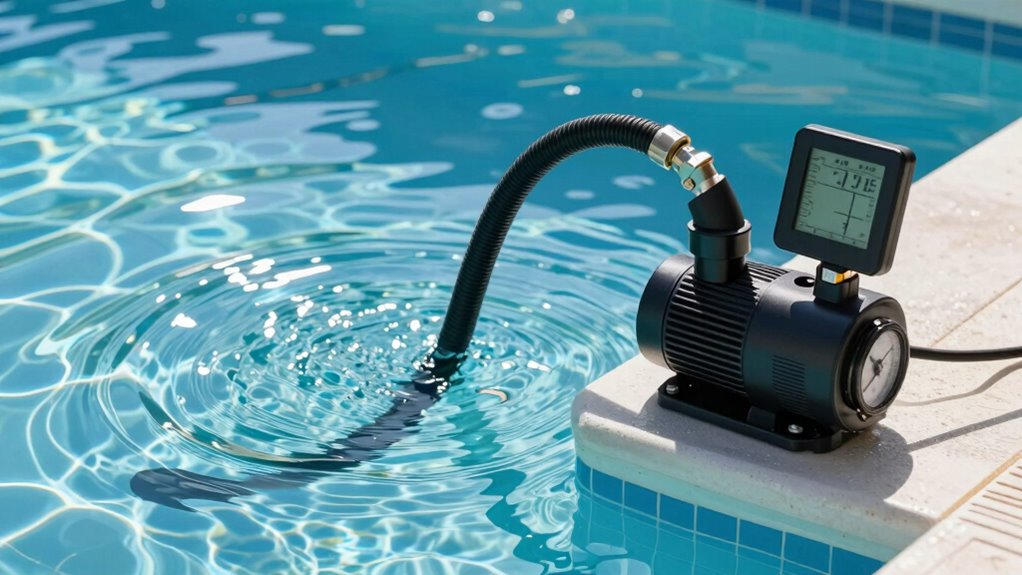
Monitoring your pool cover pump during operation is essential to prevent overflow or damage. Start by checking the sensor calibration regularly; an improperly calibrated sensor can cause false readings, leading to unnecessary shutdowns or overworking the pump. Keep an eye on the power supply as well—ensure cords are secure and free from damage, and that the outlet provides consistent voltage. Listen for unusual noises or vibrations, which could indicate a problem. Use a digital monitor if available to track real-time performance and detect irregularities early. Regularly inspecting these aspects helps you respond quickly to issues, keeping your pump running efficiently and extending its lifespan. Staying vigilant during operation reduces the risk of burnout and ensures your pool stays protected.
Maintaining and Cleaning Your Pool Cover Pump for Longevity
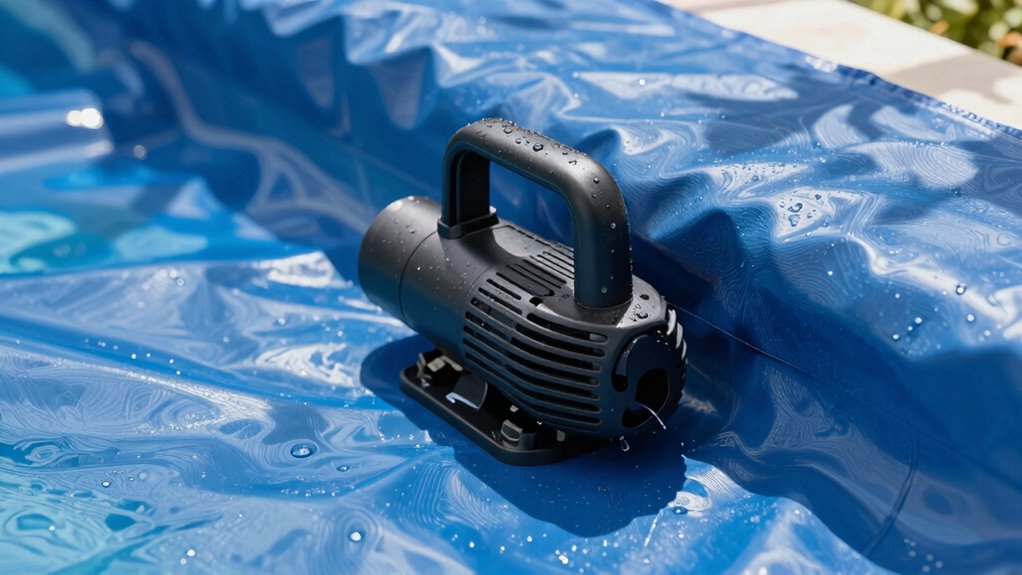
Keeping your pool cover pump in top condition requires consistent maintenance and cleaning. Regularly inspect the pump for debris and dirt buildup, which can hinder performance and cause overheating. Clean the intake and filter to ensure smooth operation. Check that the automatic shutoff feature works properly—it prevents the pump from running dry or overworking, especially after a power surge. Power surges can damage internal components or trigger the shutoff prematurely, so consider installing a surge protector. Test the pump periodically to confirm it turns off automatically when appropriate. Maintaining these components clean and functioning ensures your pump runs efficiently and lasts longer. Proper maintenance reduces the risk of burnout and keeps your pool cover protected during the off-season.
Troubleshooting Common Pool Cover Pump Problems That Cause Burnout
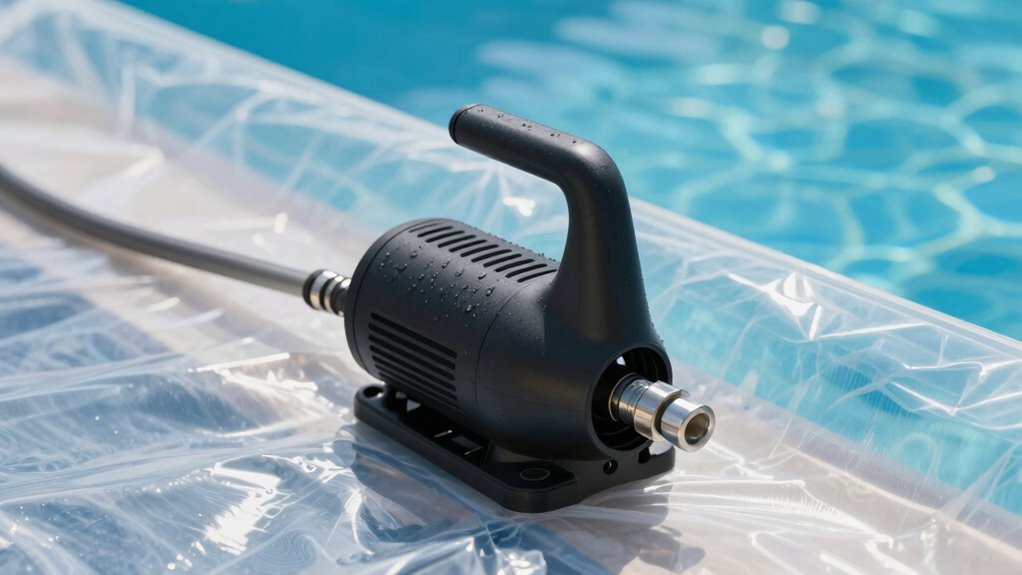
Even with proper maintenance, pool cover pumps can still experience issues that lead to burnout. One common problem is unusual pool cover pump noises, which often signal a mechanical issue or debris obstruction. If your pump sounds louder or irregular, check for clogs or worn parts. Additionally, improper pump storage tips, like storing the pump in freezing temperatures or damp conditions, can cause motor failure. To troubleshoot, review the table below for common problems and solutions:
| Issue | Cause | Solution |
|---|---|---|
| Excessive pump noises | Debris or worn bearings | Clean the pump and replace bearings |
| Pump not turning on | Electrical connection issues | Check wiring and reset circuit |
| Pump runs but no water | Blocked intake or outlet | Clear obstructions |
| Overheating | Poor ventilation or low fluid level | Improve airflow, add water |
Tips to Use Your Pool Cover Pump Smartly and Extend Its Lifespan

To maximize your pool cover pump’s lifespan, it’s essential to use it wisely and follow proper maintenance practices. First, regularly check the chemical balance of your pool water; unbalanced chemicals can corrode parts and shorten your pump’s life. Second, keep an eye on pump noise—excessive sounds may indicate strain or debris blocking airflow. Third, clean the pump’s filter and inlet screen often to prevent clogs that cause overheating. Fourth, avoid running the pump continuously; instead, operate it in short, controlled intervals to reduce wear. By maintaining proper chemical levels and listening for unusual pump noise, you help prevent burnout and extend your pump’s lifespan. Smart usage and routine checks keep your pool cover pump working smoothly season after season.
Frequently Asked Questions
Can Using an Extension Cord Damage My Pool Cover Pump?
Using an extension cord can damage your pool cover pump if you don’t select the right one. Extension cord hazards include overheating, electrical shorts, and inadequate power delivery, which can lead to pump failure. Also, during pump power outages, an extension cord might not provide consistent power, risking damage. To avoid these issues, always use a heavy-duty, outdoor-rated extension cord and verify it matches your pump’s power requirements.
What Are the Signs That Indicate My Pump Is Overheating?
Pumping problems often present warning signs, so pay attention. If your pump produces persistent noise, smells like burning rubber, or runs longer than usual, it’s likely overheating. These symptoms indicate your pump needs prompt maintenance and overheating prevention. Regularly check for overheating signs, keep vents clear, and make certain proper water flow. Acting swiftly can prevent damage, extend your pump’s lifespan, and keep your pool cover working perfectly without burnout.
How Does Ambient Temperature Affect Pump Burnout Risks?
Ambient temperature critically affects your pump burnout risk. When temperatures fluctuate or rise, your pump works harder, increasing the chances of overheating. High humidity levels can trap heat around the motor, further elevating burnout risk. To protect your pump, make certain proper ventilation, avoid operating in extreme heat, and monitor temperature changes closely. Keeping your pump cool and well-ventilated helps prevent burnout caused by temperature fluctuations and humidity.
Is It Safe to Leave My Pool Cover Pump Running Overnight?
Imagine a silent guardian watching over your pool overnight—it’s tempting to leave your pump running, but it’s safer to turn it off. Continuous operation risks pump burnout and compromises power safety. Regular pump maintenance is key to preventing overheating and electrical issues. By turning off your pool cover pump when not in use, you safeguard your equipment and ensure safe, efficient operation, giving you peace of mind come morning.
Are There Specific Brands Known for Longer-Lasting Pool Cover Pumps?
Some brands are known for pump durability and have a strong reputation for longevity. You should look into brands like Meyco, Intex, and XtremepowerUS, which are praised for their quality and reliability. These brands typically produce pumps that last longer, helping you avoid frequent replacements. By choosing a pump from a reputable brand, you guarantee better performance and durability, saving you time and money in the long run.
Conclusion
Now that you know how to prevent pool cover pump burnout, imagine the peace of mind you’ll have, knowing your pump runs smoothly season after season. But don’t get complacent—hidden issues can still lurk beneath the surface. Stay vigilant, follow these tips, and keep an eye on your pump’s performance. With the right care, your pool cover pump will be ready to face whatever the weather throws at it—are you prepared to protect your investment?