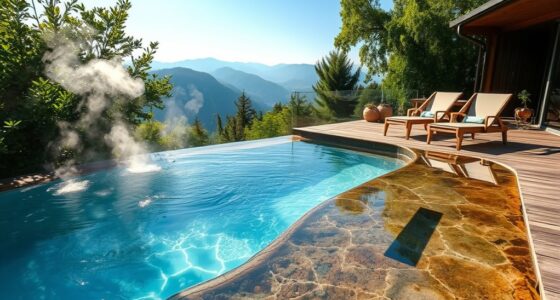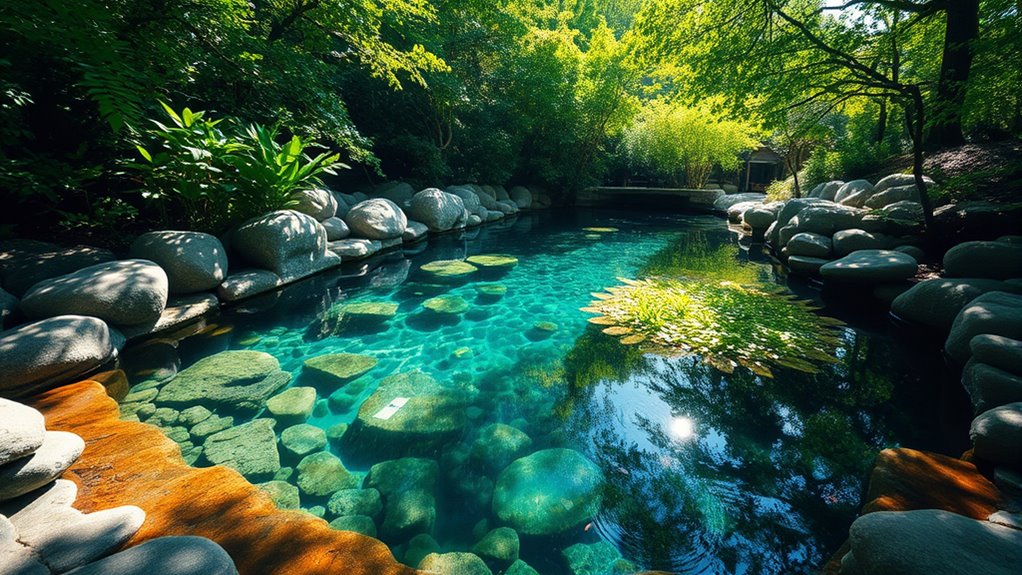
Natural pools use biological processes and ecological balance to keep water clean without chemicals. You’ll see bio-filtration zones where beneficial microorganisms break down organic matter, while aquatic plants absorb excess nutrients and filter water naturally. Proper circulation and regular water testing help maintain the right environment for these natural systems to thrive. If you want to discover how to create a sustainable, chemical-free swimming experience, there’s much more to explore below.

Get cleaning gear delivered free with Prime
- Fast, free delivery on millions of items
- Prime Video, Amazon Music and more included
- Member-only deals all year
Key Takeaways
- Natural pools utilize biological processes and ecological balance instead of chemicals to maintain water cleanliness.
- Bio-filtration zones with beneficial microorganisms break down organic waste, ensuring clear water naturally.
- Aquatic plants absorb nutrients, reduce algae growth, and enhance water quality and aesthetic appeal.
- Regular water monitoring and circulation support optimal conditions for microorganisms and plants.
- Maintaining ecological balance creates a sustainable, chemical-free swimming environment promoting ecological harmony.
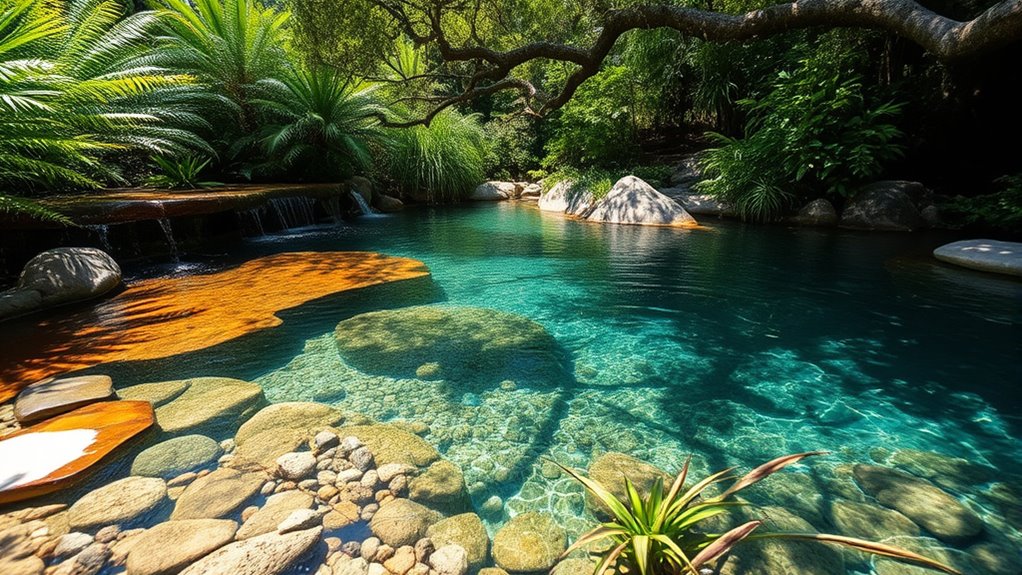
Have you ever wondered how natural pools stay clean without harsh chemicals? It all comes down to understanding water chemistry and maintaining a delicate ecological balance. Unlike traditional pools that rely heavily on chlorine and other disinfectants, natural pools use biological processes to keep the water clear and safe. This approach mimics nature’s own filtration systems, creating a self-sustaining environment where clean water is a natural byproduct. When you dive into a natural pool, you’re experiencing a harmonious blend of biology and chemistry working together seamlessly.
Natural pools stay clean through water chemistry and ecological balance, using biological processes instead of harsh chemicals.
The key to this system is the bio-filtration zone, which acts as a living filter. It’s typically separated from the swimming area by a barrier, but the water continuously circulates between the two. In this zone, beneficial microorganisms thrive, breaking down organic matter like leaves, dirt, and even bacteria that would otherwise cloud the water. These tiny creatures play an essential role in maintaining water chemistry, ensuring that harmful substances don’t build up to unsafe levels. Instead, they convert contaminants into harmless compounds, keeping the water fresh and inviting.
Achieving and maintaining ecological balance is indispensable for the success of a natural pool. You need to carefully select plants and microorganisms that work well together, creating a thriving ecosystem. Aquatic plants like reeds and water lilies absorb nutrients from the water, reducing the chances of algae overgrowth. These plants not only filter the water naturally but also add to the beauty and serenity of your swimming environment. By fostering this balance, you minimize the need for chemical treatments and gain a pool that’s healthier for both you and the environment.
Monitoring water chemistry is indispensable, but it’s a different process than in traditional pools. Instead of testing and adjusting chlorine levels, you check parameters like pH, oxygen levels, and nutrient concentrations. When these factors stay within ideal ranges, the microorganisms and plants can do their job effectively. Proper circulation is also essential—pumps and skimmers ensure that water flows smoothly through the bio-filtration zone, preventing stagnation and promoting oxygenation. With consistent care, your natural pool remains clear, balanced, and inviting without the use of chemicals.
Understanding the importance of ecological balance is crucial for maintaining a healthy natural pool, as it ensures the microorganisms and plants can function optimally. The secret to chemical-free swimming lies in understanding how water chemistry interacts with the ecology of your pool. By nurturing a healthy microbial and plant life, you create a balanced ecosystem that sustains itself. The result is a clean, vibrant swimming environment that’s safe for your skin, friendly to the environment, and free of the harsh chemicals found in traditional pools. It’s a sustainable way to enjoy nature’s purity while reducing your ecological footprint.
Frequently Asked Questions
How Long Does It Take to Build a Natural Pool?
Building a natural pool usually takes about 8 to 12 weeks, depending on your pool construction and design complexity. You’ll need time for excavation, installing the bio-filtration system, and landscaping. Keep in mind, timeline estimates can vary based on site conditions and contractor schedules. To guarantee smooth progress, discuss your project details with your builder early, and plan for any potential delays to meet your desired completion date.
Are Natural Pools Suitable for Large Families or Public Areas?
Sure, natural pools are perfect for large families or public spaces—if you don’t mind sharing your swim with frogs and aquatic plants. They’re generally suitable for family sizes and public accessibility, but keep in mind, maintenance and space requirements grow with the crowd. You’ll want to plan for a larger, well-designed pond to ensure everyone’s comfortable and the ecosystem stays balanced. So, yes, they can handle it—just be prepared!
What Is the Maintenance Frequency for Bio-Filtration Systems?
You should check your bio-filtration system weekly to guarantee peak filtration efficiency. Regular maintenance involves cleaning or replacing filters, removing debris, and monitoring water flow. Follow the maintenance schedule recommended by the manufacturer, usually every one to three months, depending on pool size and usage. Consistent upkeep keeps your natural pool healthy, clear, and free of chemicals, ensuring enjoyable, chemical-free swimming for you and your family.
Can Natural Pools Be Used Year-Round in Colder Climates?
Like a hardy evergreen, your natural pool can thrive year-round with proper care. In colder climates, you’ll need to make seasonal adjustments, such as covering the pool during freezing months and maintaining the bio-filtration system carefully. Climate considerations are key: insulate the pond and keep the biological filters active to prevent freezing. With these steps, you can enjoy chemical-free swimming all year, no matter the weather.
How Effective Are Natural Pools at Controlling Algae Growth?
Natural pools are quite effective at controlling algae growth thanks to their filtration efficiency and biological balance. You’ll find that healthy ecosystems, proper plant selection, and regular maintenance keep algae in check without chemicals. To enhance algae control, verify your bio-filtration system is functioning well and your pool’s ecosystem remains balanced. With consistent care, you’ll enjoy a clear, chemical-free swimming experience year-round.
Conclusion
Imagine diving into a crystal-clear pond, where nature’s own magic keeps the water pristine—no chemicals needed. Natural pools and bio-filtration systems let you enjoy chemical-free swimming while nurturing the environment. By choosing these eco-friendly options, you become part of a vibrant ecosystem, like a drop in a vast, invigorating ocean. So go ahead, embrace nature’s way of keeping your swim pure and pure joy will follow, as invigorating as a gentle breeze.
Evergreen bestsellers Picks
bestsellers
As an affiliate, we earn on qualifying purchases.