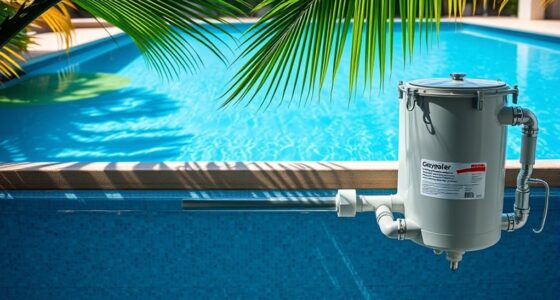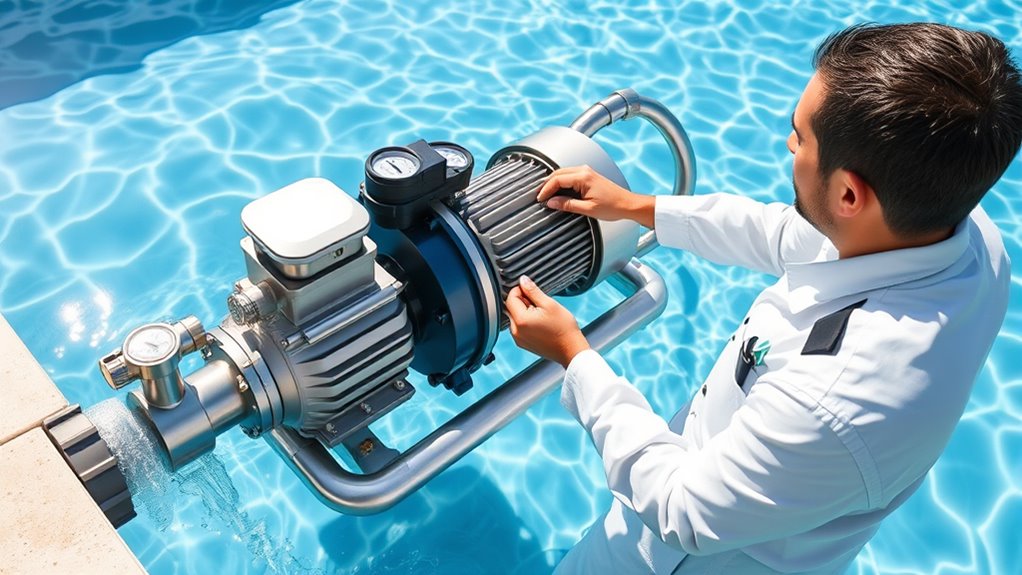
Every two weeks, you should check your infinity pool’s pump filtration system to keep water clear and components running smoothly. Start by inspecting the filter pressure gauge, ensuring it’s within the recommended 10-20 psi range. Clean or backwash the filter if pressure is high, and check for blockages in the skimmer, pump strainer, and pipes. Monitoring these tasks regularly helps prevent breakdowns—discover more tips to keep your pool pristine.

Get cleaning gear delivered free — and shop member deals
- Fast, free delivery on millions of items
- Access to Prime Big Deal Days deals on October 6–7
- Prime Video, Amazon Music and more included
Key Takeaways
- Inspect the filter pressure gauge every two weeks, ensuring it stays within the recommended 10-20 psi range.
- Backwash or clean the filter if pressure exceeds the recommended level to maintain optimal flow.
- Check for obstructions or debris in the skimmer, pump strainer, and pipes to prevent flow issues.
- Record pressure and flow rate readings to monitor system performance and detect early signs of trouble.
- Inspect and replace worn or damaged filter media or pump components to ensure continuous, efficient filtration.
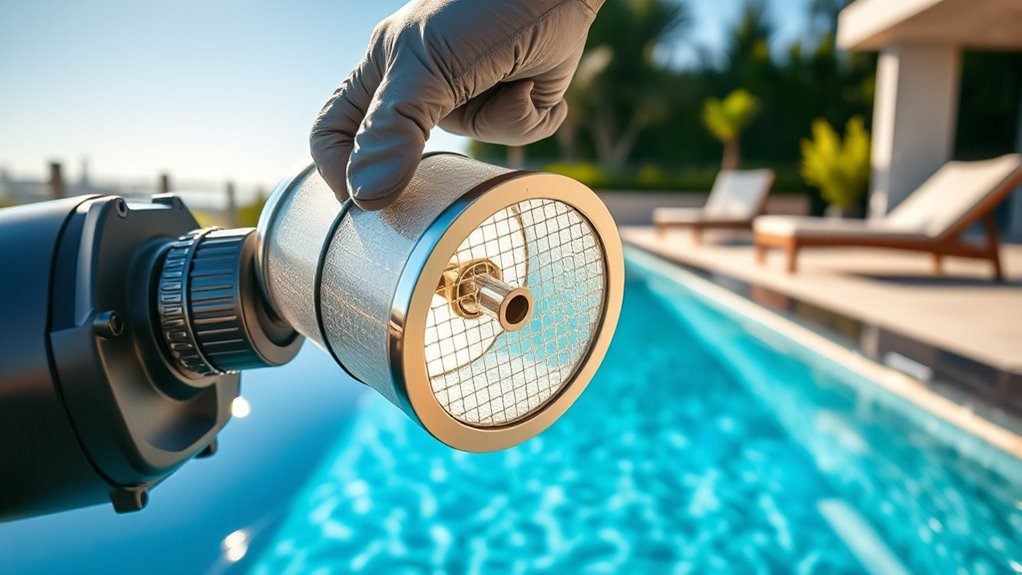
Regularly checking your pump filtration systems is essential to guarantee they operate efficiently and prevent costly breakdowns. When it comes to maintaining your infinity pool, paying close attention to filter pressure and flow rate is vital. These two indicators help you determine whether your filtration system is functioning properly or if it needs attention. If the filter pressure rises above the recommended level, it usually signals that your filter is clogged or dirty, restricting water flow and reducing cleaning efficiency. Conversely, a low flow rate might indicate a problem such as a blockage, pump issue, or insufficient water supply. Monitoring these metrics regularly allows you to catch issues early before they escalate into costly repairs or damage.
Regularly monitor filter pressure and flow rate to ensure your pool operates efficiently and avoids costly repairs.
To keep your filtration system in top shape, start by checking the filter pressure gauge bi-weekly. Ideally, you’ll know the manufacturer’s recommended pressure range, which often falls between 10 and 20 psi. If you notice a steady increase in pressure beyond this range, it’s time to clean or backwash your filter. Doing so restores proper water flow, ensuring your pool stays crystal clear. Likewise, if the flow rate seems sluggish, verify the filter pressure first, but also inspect for obstructions in the skimmer, pump strainer, or pipes. Sometimes, debris or algae buildup can hinder water circulation, so cleaning these parts can improve flow.
Understanding hydraulics and how water flows through your system can help you troubleshoot issues more effectively. Adjustments to your system may also be necessary. For example, if the filter pressure remains high even after cleaning, check for issues like a damaged or worn-out filter cartridge or media. Replacing or repairing these parts can restore ideal performance. Maintaining proper flow rate not only keeps your pool water clean but also prolongs the lifespan of your pump and filter components. When flow rate drops considerably, your pump may be working harder than it should, increasing energy costs and risking equipment failure.
In addition to bi-weekly checks, keep a log of filter pressure and flow rate readings. This record helps you identify patterns or recurring problems, so you can address them proactively. Remember, consistent testing and maintenance of your filtration system prevent dirt, debris, and algae from accumulating, which could otherwise lead to algae blooms or cloudy water. By staying vigilant with these simple bi-weekly tasks, you ensure your infinity pool remains a pristine, inviting oasis. Properly maintained filtration systems save you money and effort in the long run, allowing you to enjoy your pool year-round without interruption.
infinity pool filter pressure gauge
As an affiliate, we earn on qualifying purchases.
As an affiliate, we earn on qualifying purchases.
Frequently Asked Questions
How Do I Identify Signs of Filtration System Failure?
You can spot signs of filtration system failure by noticing cloudy or green water, which indicates poor filtration. Check for unusual noises or a drop in water flow, signaling a clogged or broken filter. Regularly inspect your pool chemicals and filter types to guarantee proper functioning. If the pump struggles to circulate water or if pressure gauges show abnormal readings, it’s time to clean or replace your filter to keep your infinity pool crystal clear.
What Are Common Causes of Filtration System Blockages?
Sometimes, your filtration system faces a little hiccup from pool debris like leaves or dirt, which can cause clogs. Common causes include overgrown vegetation nearby, inadequate skimming, or buildup of oils and lotions. To keep things flowing smoothly, focus on clog prevention by regularly removing debris, trimming surrounding plants, and ensuring your skimmer is functioning well. These simple steps help maintain ideal filtration and prevent blockages before they start.
Is Professional Maintenance Necessary for Pump Filtration Systems?
Yes, professional maintenance is necessary for your pump filtration system. Regular check-ups guarantee proper chemical balancing, preventing issues like algae growth and equipment damage. Professionals can also recommend equipment upgrades to improve efficiency and longevity. They’ll identify potential problems early, saving you money and hassle in the long run. Trusting experts keeps your infinity pool running smoothly, ensuring crystal-clear water and ideal filtration performance at all times.
How Can I Improve Filtration Efficiency Over Time?
You should keep an eye on your filtration system to get the most out of it—sometimes, a little tinkering makes all the difference. To improve efficiency, regularly clean or replace your filter media and guarantee your flow rate stays optimized. Over time, these steps prevent clogs and maintain proper water circulation, helping your infinity pool stay pristine longer and reducing strain on your system. Consistent care is the key.
What Safety Precautions Should I Take During Inspection?
When inspecting your pool’s filtration system, always wear safety gear like gloves and goggles to protect against chemicals and debris. Make certain you know emergency procedures in case of electrical shocks or equipment malfunctions. Turn off the power before opening the system, and keep a fire extinguisher nearby. If unsure, consult a professional. Prioritizing safety helps prevent accidents and keeps your infinity pool running smoothly.
As an affiliate, we earn on qualifying purchases.
Conclusion
Think of your infinity pool’s filtration system as the heartbeat of your oasis. When you check it bi-weekly, you’re gently tuning this heartbeat, ensuring it pulses strong and steady. Skipping these checks is like ignoring a warning sign on a ship’s compass—you risk losing your way. Stay vigilant, keep the flow smooth, and your pool remains a tranquil paradise, always ready to welcome you home. Your attentive care keeps the magic alive.
skimmer and pump strainer cleaning kit
As an affiliate, we earn on qualifying purchases.
As an affiliate, we earn on qualifying purchases.
As an affiliate, we earn on qualifying purchases.
Fall Picks
fall essentials
As an affiliate, we earn on qualifying purchases.