Saltwater pools generate chlorine naturally through electrolysis, which can increase corrosion risks for vanishing-edge components like metal fittings and pumps. While salt offers a softer, more natural water feel, it can cause gradual damage if not properly maintained, especially without corrosion-resistant materials or regular upkeep. Chlorine pools require manual chemical addition but tend to be less corrosive long-term. To protect your investment and keep your pool pristine, understanding these differences is essential—learn more to make the best choice.

Get cleaning gear delivered free — and shop member deals
- Fast, free delivery on millions of items
- Access to Prime Big Deal Days deals on October 6–7
- Prime Video, Amazon Music and more included
Key Takeaways
- Saltwater pools generate continuous chlorine through electrolysis, which can increase corrosion of metal components in vanishing-edge pools.
- Salt tends to cause more gradual, persistent corrosion compared to chlorine, especially if chemical balance and materials are not properly maintained.
- Proper use of corrosion-resistant materials and protective coatings can mitigate salt-induced damage in vanishing-edge systems.
- Imbalanced pH levels accelerate corrosion in both salt and chlorine pools, impacting the longevity of pool components.
- Regular inspection and maintenance are essential to prevent and manage corrosion risks associated with either salt or chlorine systems.
corrosion resistant pool fittings
As an affiliate, we earn on qualifying purchases.
As an affiliate, we earn on qualifying purchases.
Understanding the Chemistry of Saltwater and Chlorine Pools
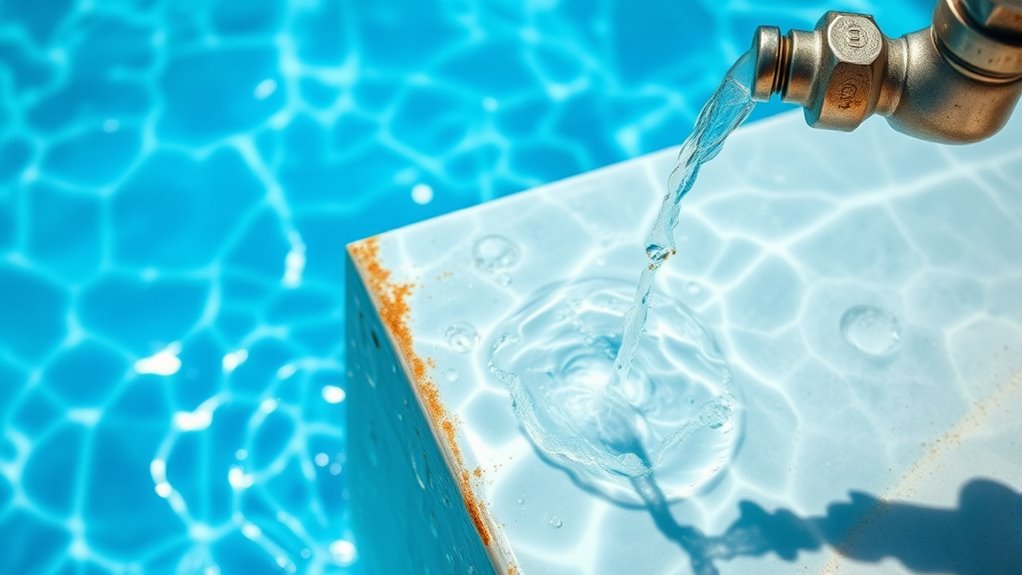
Understanding the chemistry behind saltwater and chlorine pools helps you grasp how they keep water clean and safe. In a saltwater pool, salt (sodium chloride) dissolves in the water, creating a natural source of chlorine through electrolysis. This process produces chlorine molecules that sanitize the water by killing bacteria and algae. In traditional chlorine pools, you add chlorine directly, which releases free chlorine to disinfect. Both systems rely on chlorine’s ability to break down organic contaminants and maintain water clarity. The key difference is that saltwater pools generate chlorine continuously, often resulting in a softer, more gentle water experience. Additionally, the corrosion risks associated with salt can be higher for certain materials in pool equipment. Understanding how these chemicals interact and balance helps you manage pool maintenance effectively and appreciate the ongoing cleaning process that keeps your pool inviting.
As an affiliate, we earn on qualifying purchases.
Corrosion Factors in Vanishing-Edge Pool Components
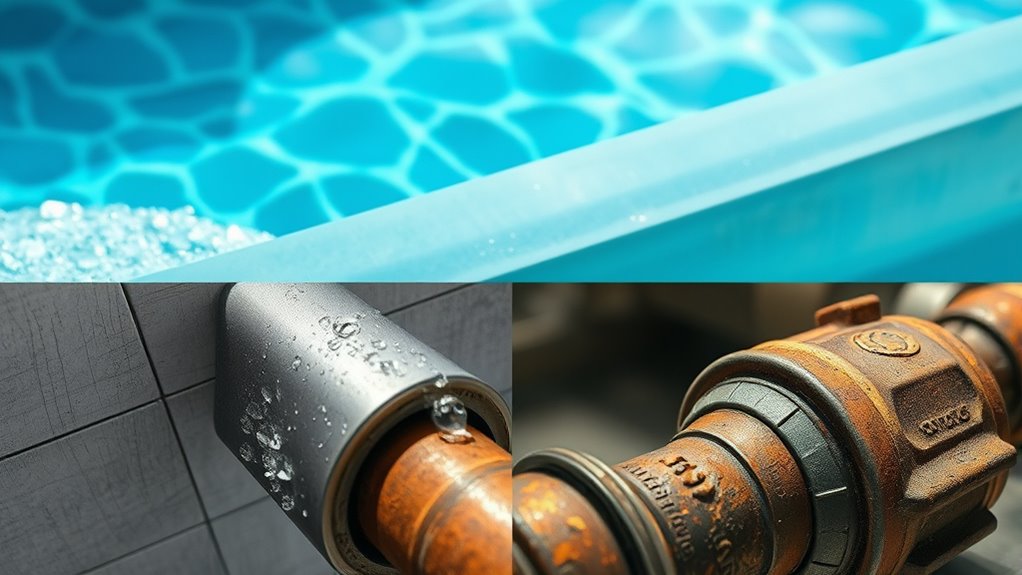
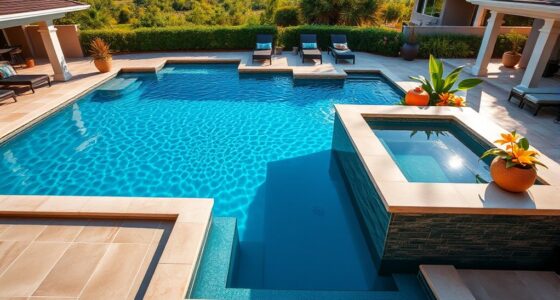
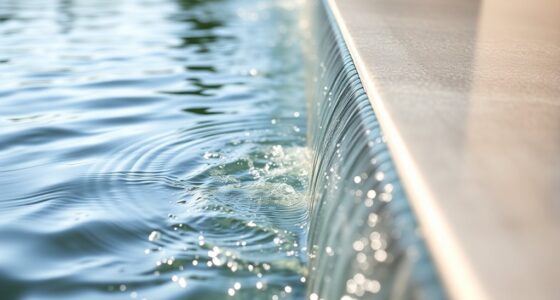
Vanishing-edge pools are visually stunning but pose unique challenges when it comes to corrosion. The constant exposure to water, chemicals, and environmental elements accelerates wear on pool components. To understand corrosion risks, consider these key factors:
- Material quality—low-grade metals corrode faster under harsh conditions.
- pH levels—imbalanced water increases metal deterioration.
- Water circulation—poor flow causes localized corrosion spots.
- Environmental exposure—UV rays, humidity, and airborne salts intensify corrosion.
Additionally, understanding the 16PF personality traits can help identify individuals who may be more attentive to maintenance and corrosion prevention efforts. These factors interact, making some pool parts more vulnerable. Components like metal hardware, fittings, and structural supports are particularly at risk. Recognizing these influences helps you maintain your vanishing-edge pool’s integrity and avoid costly repairs. Proper maintenance and material choices are essential to mitigate corrosion in this complex environment.
vanishing edge pool maintenance tools
As an affiliate, we earn on qualifying purchases.
As an affiliate, we earn on qualifying purchases.
Impact of Salt and Chlorine on Pool Equipment and Surfaces

Salt and chlorine, while both effective disinfectants, impact pool equipment and surfaces differently, especially in a vanishing-edge setting. Saltwater pools tend to cause more gradual corrosion on metal components like pumps, filters, and fittings due to ongoing salt exposure. Over time, this can weaken metal parts and lead to leaks or failures. Surfaces such as stone or tile may also experience etching or discoloration from salt deposits, especially if not properly maintained. Chlorine pools, on the other hand, can cause bleaching or deterioration of certain materials if levels are too high or if maintenance lapses. While chlorine is less corrosive than salt over the long term, improper use can still damage delicate surfaces and equipment, emphasizing the need for careful monitoring and maintenance in vanishing-edge pools. Additionally, proper maintenance plays a crucial role in minimizing these risks and prolonging the lifespan of your pool components.
As an affiliate, we earn on qualifying purchases.
Mitigating Corrosion Risks in Salt and Chlorine Systems
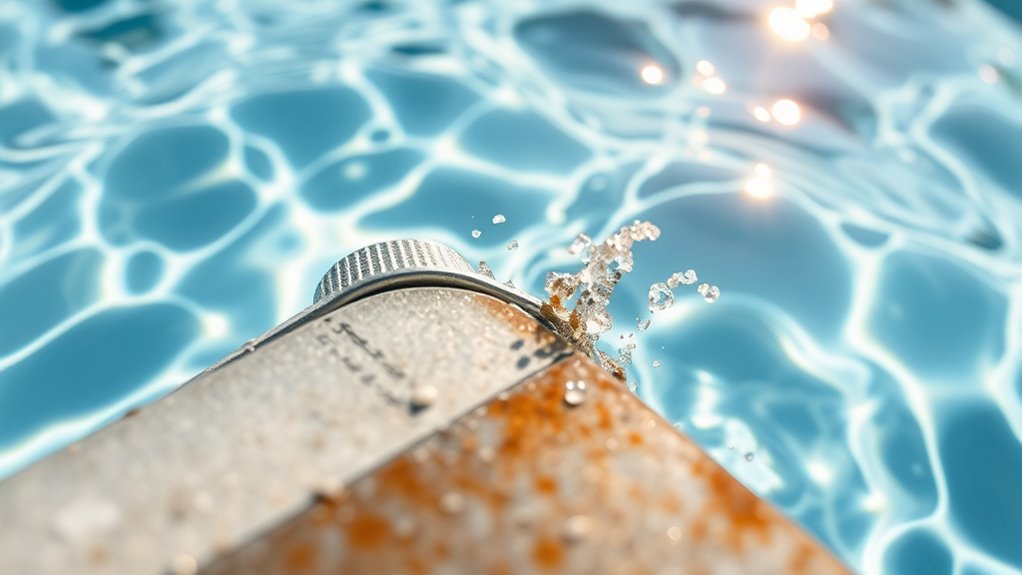
To reduce the risk of corrosion in your pool system, implementing proactive maintenance and choosing appropriate materials are key. Regularly inspect equipment for early signs of corrosion and address issues promptly. Use corrosion-resistant materials like stainless steel, PVC, or composite components when possible. To further protect your system, consider these steps:
- Maintain proper chemical balance, especially pH and alkalinity levels.
- Use corrosion inhibitors designed for salt or chlorine pools.
- Seal or coat metal surfaces with protective, corrosion-resistant finishes.
- Install sacrificial anodes, such as zinc, to divert corrosion away from essential parts.
- Consult comprehensive water treatment options, including whole-house filtration systems, to help control mineral content and reduce corrosive elements in your pool water.
Making an Informed Choice: Protecting Your Pool Investment
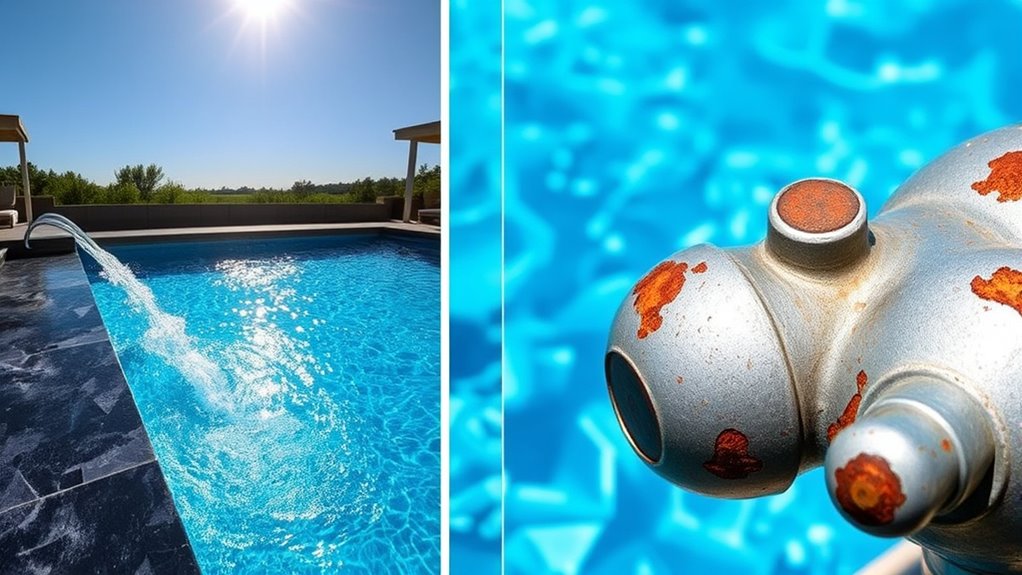
Choosing the right water treatment system is essential to safeguarding your pool investment and ensuring long-lasting performance. You need to weigh the pros and cons of salt and chlorine systems, considering factors like maintenance, costs, and corrosion risks. Salt systems often offer a softer, more natural feel and reduce chemical handling, but they can accelerate corrosion if not properly managed. Chlorine systems are straightforward and typically less expensive upfront, yet they require regular chemical additions and may cause skin irritation. To make an informed choice, assess your pool’s location, your maintenance capacity, and your budget. Consulting with a pool professional can help you select the best system, minimizing long-term issues and protecting your investment from premature deterioration. Additionally, understanding personal finance management principles can help you budget for potential repairs caused by corrosion and system upgrades over time.
Frequently Asked Questions
How Does Water Ph Affect Corrosion in Salt and Chlorine Pools?
You’ll see that water pH considerably impacts corrosion in both salt and chlorine pools. If pH drops too low (acidic), it accelerates metal corrosion, damaging pool equipment and surfaces. Conversely, high pH (alkaline) can cause scaling and reduce sanitizer effectiveness. Maintaining a balanced pH of around 7.4 to 7.6 helps minimize corrosion risks, ensuring your pool stays durable and safe while preventing damage caused by improper pH levels.
Are There Specific Materials More Resistant to Salt-Induced Corrosion?
Think of your pool like a battle zone, where some materials are like soldiers with armor. Stainless steel, titanium, and fiberglass stand strong against salt-induced corrosion, much like a knight deflects arrows. These materials resist rusting and deterioration better than standard metals. Using them can extend your pool’s lifespan, saving you money and stress. Choosing the right material makes you the hero of your backyard oasis, protecting your investment for years to come.
Can Pool Cover Types Influence Corrosion Rates in Vanishing-Edge Pools?
Yes, pool cover types can influence corrosion rates in vanishing-edge pools. Solid, non-permeable covers like safety or thermal covers reduce exposure to salt and chlorinated water, minimizing corrosion risks. Conversely, mesh covers often allow water vapor and salts to seep through, increasing exposure and potential damage. Choosing the right cover for your pool’s environment and maintenance routine helps protect materials from corrosion and extends the lifespan of your pool components.
What Maintenance Practices Best Prevent Corrosion in Salt and Chlorine Systems?
You should regularly inspect and clean your pool equipment to prevent corrosion. Use a high-quality, corrosion-resistant pool cover and maintain proper chemical balance, especially pH and alkalinity levels. Rinse salt cells and chlorinator parts frequently, and avoid overuse of harsh chemicals. Keep salt and chlorine levels within recommended ranges, and address any leaks or signs of rust immediately. Consistent maintenance helps protect your system and prolongs equipment lifespan.
How Often Should Pool Components Be Inspected for Early Corrosion Signs?
Think of your pool as a delicate garden; regular inspections act like tending to your plants. You should check your pool components at least once every three to six months for early signs of corrosion. Focus on metal parts, joints, and hidden crevices, where trouble often begins. Catching corrosion early is like catching weeds before they overrun your garden—saving you time, money, and preserving your pool’s beauty and function.
Conclusion
Ultimately, choosing between salt and chlorine for your vanishing-edge pool depends on understanding how each affects your equipment. While some say salt is gentler, it can still cause corrosion if not managed properly. The key is regular maintenance and monitoring. Don’t assume one is risk-free—stay informed, weigh the pros and cons, and invest in quality materials. That way, you’ll enjoy your stunning pool without surprises or costly repairs down the line.
Fall Picks
fall essentials
As an affiliate, we earn on qualifying purchases.