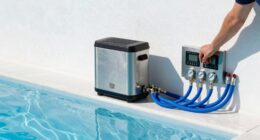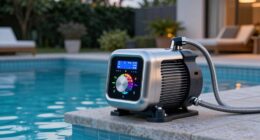
Salt pools generate chlorine through electrolysis, but to keep your water safe and clear, you need to manage more than just salt levels. You’ll also have to monitor and adjust pH, alkalinity, and calcium hardness regularly. Proper water chemistry prevents issues like cloudiness, algae, or equipment damage. Maintaining a healthy saltwater pool involves ongoing testing, balancing, and equipment care—you’ll discover essential tips to keep your pool in top shape down the line.
Key Takeaways
- You must regularly test and adjust pH, alkalinity, and calcium hardness to maintain water balance.
- Salt levels need to be monitored and kept within the recommended range for proper salt cell function.
- Ongoing cleaning and inspection of the salt chlorinator and filtration system are necessary.
- Additional chemicals may be required to balance water chemistry, such as pH adjusters and algaecides.
- Proper disposal and environmental practices are essential for maintaining a safe, eco-friendly pool.
What Does a Salt Pool Do to Your Water Chemistry?
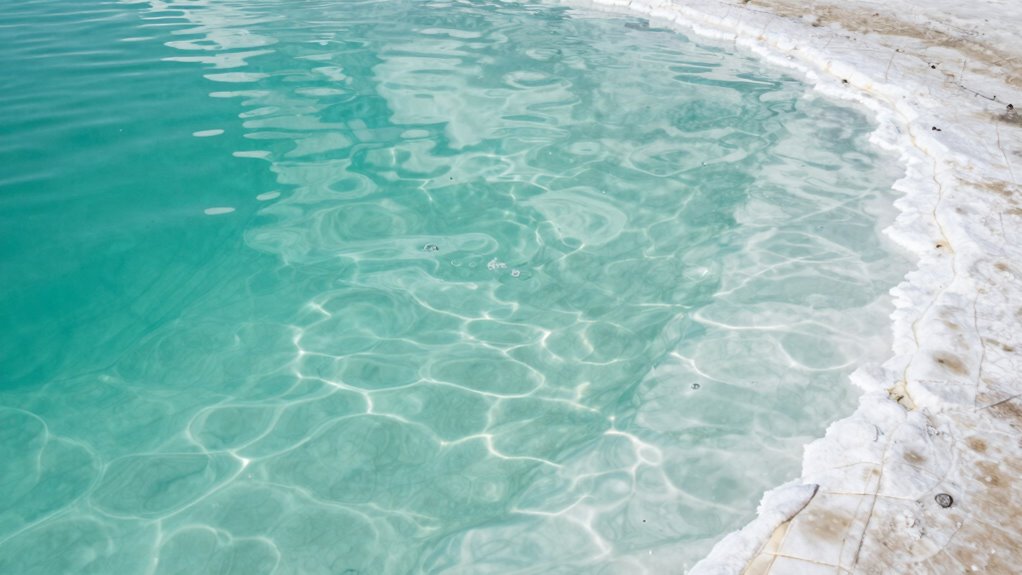
A salt pool works by converting salt into chlorine through a process called electrolysis, which continuously produces sanitizer to keep your water clean. This process affects your water chemistry, especially the salt chemistry, since maintaining proper salt levels is vital for effective chlorination. As chlorine is generated, it interacts with other elements in your water, making pH balance essential. If your pH gets too high or too low, chlorine becomes less effective, leading to potential algae growth or cloudy water. Regular testing helps you monitor salt concentration and pH levels, ensuring the electrolysis process works efficiently. Properly balancing these factors keeps your pool water safe, clear, and comfortable for swimming while preventing damage to equipment and surfaces.
Understanding Why Salt Generation Isn’t Enough
While generating salt through electrolysis produces chlorine, it doesn’t automatically guarantee your pool water stays balanced and safe. Relying solely on salt generation ignores other critical aspects of water chemistry. First, you need to manage alkalinity; if it’s too high or low, your water can become corrosive or cloudy. Second, maintaining proper calcium hardness prevents scaling or etching on pool surfaces and equipment. Third, regular testing and adjustments are essential because salt chlorine generation doesn’t control pH, alkalinity, or calcium levels. Without attention to these factors, your pool can develop issues like algae buildup, cloudy water, or equipment damage. Additionally, understanding the importance of water chemistry balance can help you maintain a healthy pool environment. Proper chemical testing and adjustments are crucial to ensure all parameters stay within ideal ranges. Salt generation is just one piece of the puzzle—proper alkalinity management and calcium hardness are equally essential for a safe, balanced pool. Recognizing the role of chemical testing can help ensure all critical factors are kept in check for optimal water quality.
How to Monitor and Adjust Your Salt Pool’s Water Chemistry
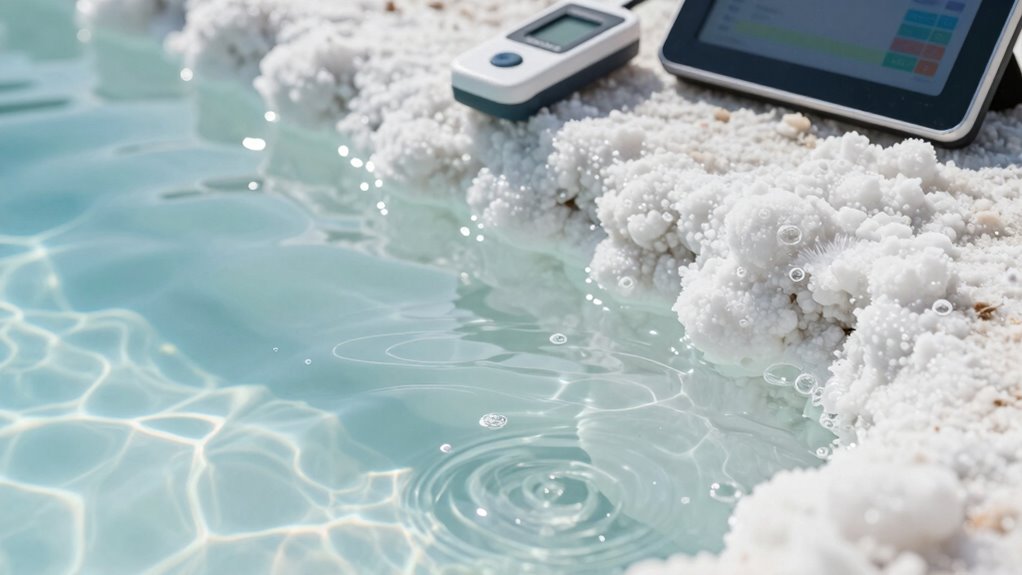
Monitoring and adjusting your salt pool’s water chemistry is essential to keep your pool safe and inviting. Regular water testing helps you track key parameters like pH, alkalinity, and salt levels. Use a reliable test kit or digital meter to get accurate readings. When testing, focus on ensuring the salt level is within the recommended range for your salt cell, typically between 2700 and 3400 ppm. If the salt is too low, add salt gradually; if it’s too high, dilute the water. Adjust pH and alkalinity as needed to prevent corrosion or scaling, which can damage your salt cell. Proper water circulation ensures even distribution of chemicals and prevents stagnation. Consistent monitoring and timely adjustments guarantee your salt cell functions efficiently, keeping your water clean, balanced, and safe for swimming. Maintaining proper water chemistry is crucial for the longevity of your equipment and the quality of your swimming experience. Additionally, understanding the effects of imbalanced water chemistry can help you prevent costly repairs and ensure optimal pool performance. Regularly testing your water also helps you identify potential issues early, saving time and money in the long run. Remember that chemical balance directly impacts the effectiveness of your sanitizer and overall pool health.
Key Maintenance Tasks Beyond Salt Cell Cleaning
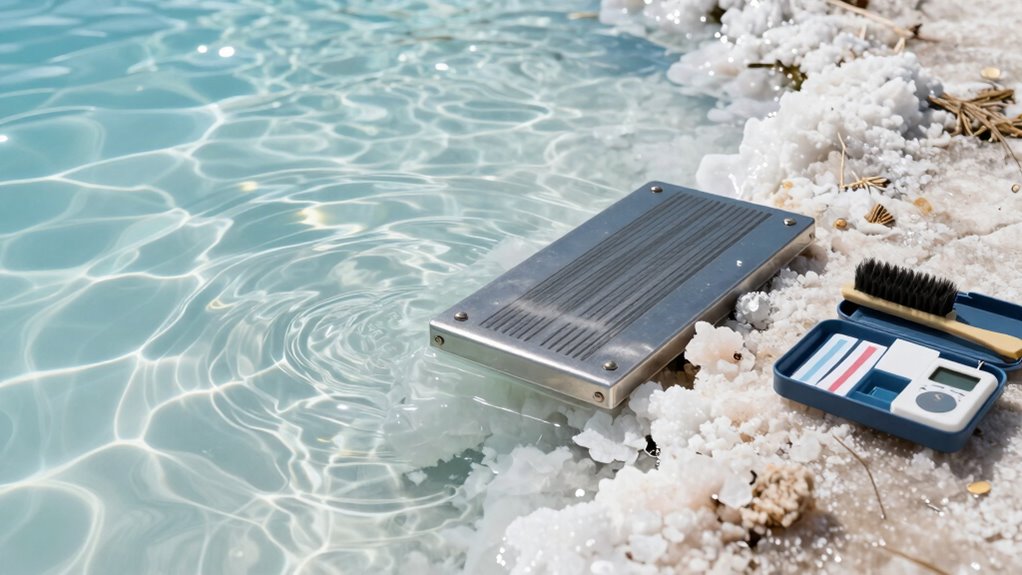
Keeping your salt pool in top shape requires more than just cleaning the salt cell. You need to regularly check and adjust your water chemistry to prevent issues and ensure safe swimming. Additionally, routine pool inspections help catch problems early before they become costly repairs. Proper gear maintenance also plays a crucial role in extending the lifespan of your pool system. Regularly inspecting your pool equipment can help identify worn or malfunctioning parts that need attention. Monitoring water chemistry regularly is essential to maintain a balanced and safe swimming environment. Staying informed about commercial kitchen equipment can provide insights into durable and efficient tools that may also benefit pool maintenance. For example, understanding reliable tools used in other industries can help you select better equipment for your pool care needs.
Water Chemistry Balance
Maintaining proper water chemistry balance is essential for the health of your salt pool and its equipment. You need to keep an eye on salt levels and pH balancing to prevent damage and ensure crystal-clear water. Here are key tasks:
- Regularly test salt levels to keep them within the recommended range, usually around 2700-3400 ppm.
- Adjust pH levels, aiming for a comfortable 7.2–7.6, to optimize sanitizer efficiency and prevent scaling or corrosion.
- Monitor alkalinity and stabilizer levels to sustain overall water stability and prevent sudden pH swings.
- Understanding water chemistry balance helps you better maintain a safe and inviting swimming environment.
- Familiarity with chemical adjustments allows you to respond quickly to changes and maintain optimal water quality.
- Being aware of potential contaminants in water aids in developing effective maintenance routines to keep your pool safe and clear.
- Regularly inspecting your salt cell and other components ensures the long-term durability of your pool system.
- Consistent monitoring and adjustments can help prevent damage from imbalanced water chemistry, extending the lifespan of your equipment.
Regular Pool Inspections
Regular pool inspections are essential for spotting issues early and ensuring your saltwater system runs smoothly. During inspections, check your pool cover for tears or signs of wear, as a damaged cover can let debris and algae in, making algae prevention harder. Look for buildup of dirt, leaves, or algae on the water surface and sides, which can indicate circulation problems. Inspect the salt cell and filtration system for blockages or corrosion, and ensure all equipment operates correctly. Regularly testing water chemistry helps prevent imbalances that foster algae growth. Addressing small issues promptly keeps your pool cleaner and reduces the risk of costly repairs. Consistent inspections help maintain a safe, clear, and inviting saltwater pool environment. Additionally, monitoring your filtration and suction system ensures proper water flow and debris removal, which is crucial for maintaining water clarity and sanitation.
Troubleshooting Water Clarity and Safety in Salt Pools
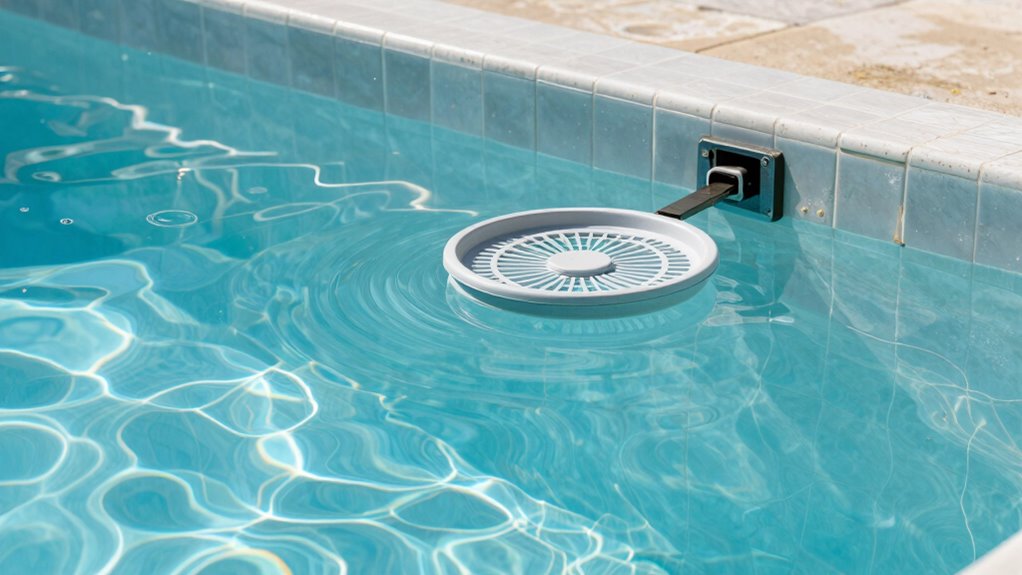
When water in your salt pool appears cloudy or has safety concerns, quick troubleshooting is crucial to restore clarity and guarantee swimmer safety. Start by checking your salt cell maintenance; a dirty or scaling cell can reduce chlorine production, leading to cloudy water. Next, test your chlorine levels—if they’re too low, sanitize effectively, but if too high, balance the chemicals to prevent irritation. Proper chlorine level management is essential for safe swimming conditions. Additionally, understanding the chemical balance in your pool helps prevent issues like algae growth and skin irritation. Finally, ensure proper filtration and circulation; debris or stagnant water can cause cloudiness and unsafe conditions. Regularly inspect and clean your salt cell, monitor chlorine levels closely, and keep your filtration system functioning well. Addressing these issues promptly keeps your salt pool safe, clear, and inviting for swimmers. Additionally, staying informed about eco-friendly disposal tips can help you reduce environmental impact and promote sustainable practices around your pool maintenance.
Hidden Costs and Equipment Care for Saltwater Pools
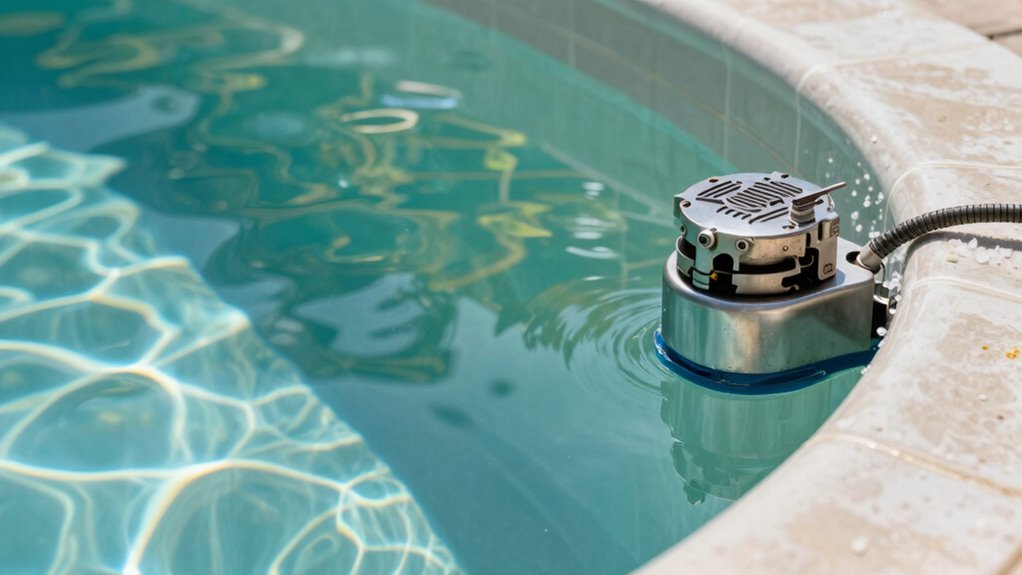
While saltwater pools often seem more cost-effective and easier to maintain, they come with hidden expenses that can catch you off guard. You’ll need a durable pool cover to protect against debris and reduce evaporation, which adds to initial costs. Additionally, pool lighting requires special fixtures compatible with saltwater environments to prevent corrosion, leading to higher installation and maintenance expenses. Over time, salt can cause corrosion on metal components, requiring regular inspections and replacements. The salt cell also needs periodic cleaning and eventual replacement, which isn’t cheap. These hidden costs mean you should budget for equipment care beyond just the salt system. Proper maintenance of pool cover and lighting ensures longevity, but it’s essential to understand these ongoing expenses before committing to a saltwater setup.
Is a Salt Pool Right for Your Home?
Deciding if a salt pool is right for your home depends on your lifestyle, budget, and maintenance preferences. Consider these factors:
- If you want a more natural feel, a salt pool requires less chemical balancing but still needs regular monitoring.
- Investing in a pool cover can help reduce evaporation and keep debris out, saving you time and effort.
- Solar heating is a cost-effective way to extend your swimming season, but ensure your pool’s size and exposure suit this option.
Salt pools generally have lower ongoing chemical costs, but they do require equipment care and regular salt level checks. If you’re comfortable with some added maintenance and want to enjoy softer water, a salt pool could be a great fit for your home.
Frequently Asked Questions
How Often Should I Test My Salt Pool’s Water Chemistry?
You should test your salt pool’s water chemistry at least twice a week. Focus on maintaining proper pH balance and salt level to keep your pool safe and comfortable. Regular testing helps you catch imbalances early, preventing issues like corrosion or cloudy water. Use a reliable test kit to monitor these levels, and adjust chemicals as needed to make sure your pool stays balanced and enjoyable.
What Are Signs My Salt Pool Needs Additional Chemical Treatment?
Did you know that over 50% of pool issues stem from pH imbalance or algae growth? If you notice cloudy water, a strong chlorine smell, or algae on the walls, your salt pool likely needs extra chemicals. A sudden drop in chlorine levels, increased algae, or persistent cloudiness signal that you should test and balance your water chemistry. Regular maintenance helps prevent these problems and keeps your pool sparkling clean.
Can Salt Pools Cause Skin or Eye Irritation?
Yes, salt pools can cause skin or eye irritation if the pool salt levels are too high or if the salt cell isn’t maintained properly. When you neglect salt cell maintenance, chlorine production may become inconsistent, leading to imbalance. Regularly check your pool salt levels and verify your salt cell is clean. Proper maintenance keeps your water balanced, reducing irritation and making your swimming experience more comfortable.
How Does Weather Affect Salt Pool Maintenance?
Weather fluctuations can considerably impact your salt pool maintenance. Hot, sunny days increase evaporation and chlorine demand, so you’ll need to make seasonal adjustments to your chemical levels. Cooler or rainy weather can dilute chemicals and reduce sanitizer need, but it also promotes algae growth. Regularly test your water and adjust your salt and chlorine levels accordingly to keep your pool balanced, regardless of changing weather conditions.
Are There Environmental Impacts of Salt Pool Operation?
Think of your salt pool as a gentle ripple in a pond—its environmental footprint is small but real. You might worry about salt discharge into nearby soil or water, which can affect local ecosystems. While salt pools use fewer chemicals, they still contribute to environmental impacts through salt runoff. Being mindful of proper maintenance minimizes these effects, helping you enjoy your pool responsibly without harming the environment.
Conclusion
Remember, maintaining a salt pool isn’t just about keeping the salt level steady; you’re actively managing your water’s chemistry. Did you know that improper balance can lead to skin irritation or equipment damage? It’s like tending a delicate garden—you need to monitor, adjust, and care for it regularly. With about 10 million salt pools across the U.S., staying informed helps you enjoy clear, safe water without surprises. Keep up with your maintenance, and your salt pool will serve you well for years.