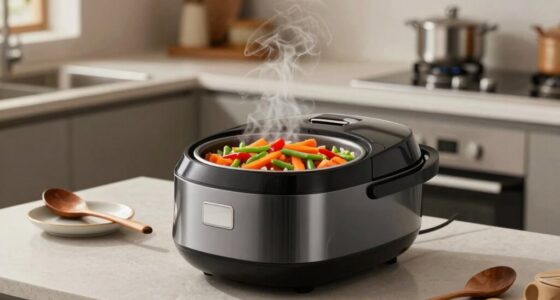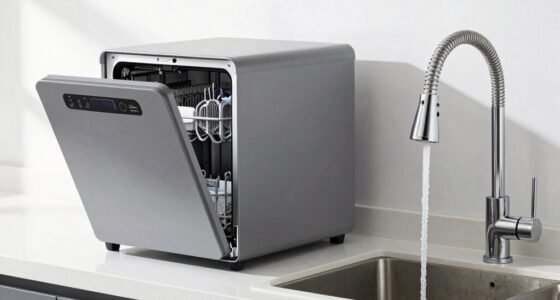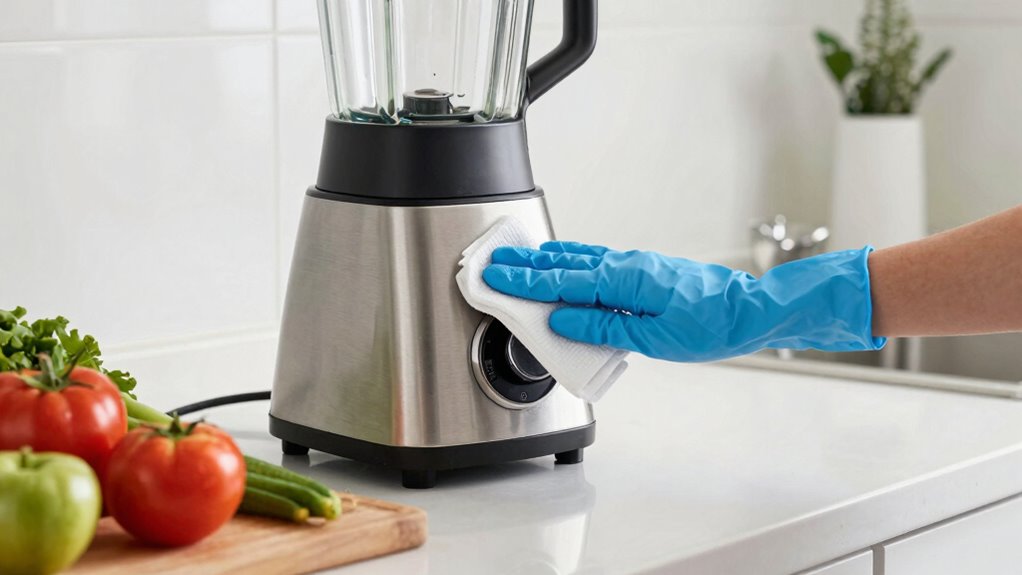

To prevent cross-contamination with multi-use appliances, clean them thoroughly after each use with hot, soapy water or disinfectants, especially when switching from raw meats to fruits or vegetables. Make sure all surfaces are properly disinfected and dried completely before storing in a clean, dry space away from raw ingredients. Regularly inspect and maintain your appliances to prevent bacteria buildup. Following these steps will keep your kitchen safer—continue to discover more helpful tips as you go.

Get cleaning gear delivered free with Prime
- Fast, free delivery on millions of items
- Prime Video, Amazon Music and more included
- Member-only deals all year
Key Takeaways
- Clean appliances thoroughly after each use, especially when switching between raw meats and produce.
- Use hot, soapy water or disinfectants to properly sanitize all surfaces.
- Store appliances in a dry, clean area away from raw ingredients.
- Dry appliances completely before storage to prevent mold and bacteria growth.
- Regularly inspect and maintain storage areas to minimize germ buildup and cross-contact risks.
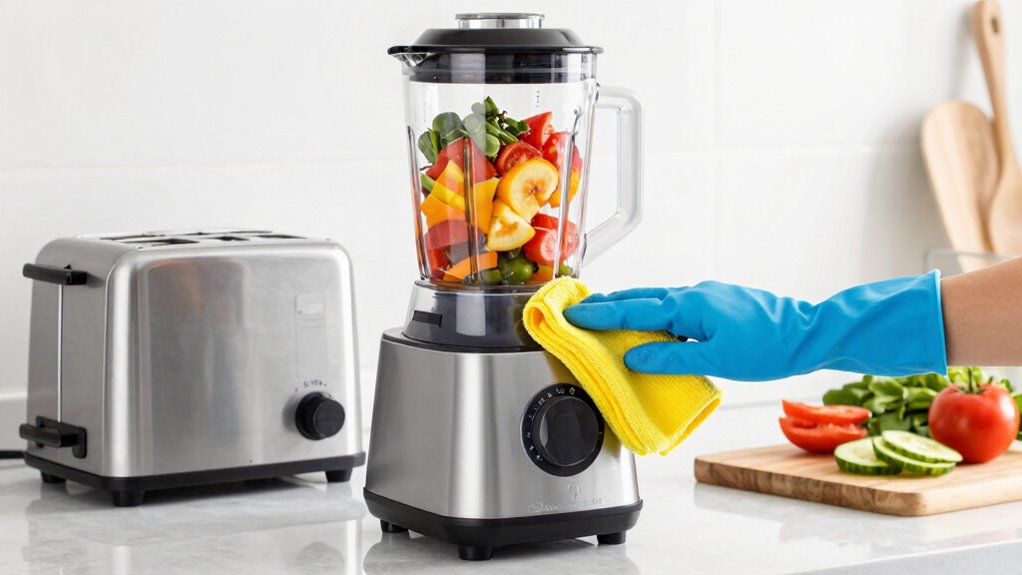
Multi-use appliances are convenient tools that can handle a variety of tasks in your kitchen, but they also pose a risk of cross-contamination if not used properly. To minimize this risk, understanding how often to clean your appliances and how to store them safely is essential. Cleaning frequency plays an important role in preventing bacteria and other germs from transferring between different food types. You should clean your appliances thoroughly after each use, especially when switching from raw meats to fruits or vegetables. Even if the appliance looks clean, residual bacteria can remain, so regular cleaning with hot, soapy water or appropriate disinfectants is necessary. This habit guarantees that no harmful microorganisms linger that could contaminate your next meal. Additionally, using proper cleaning techniques can ensure all surfaces are effectively sanitized, further reducing contamination risks. Proper sanitization methods are crucial for maintaining a safe and healthy kitchen environment, especially when using multi-use appliances.
In addition to cleaning, how you store your multi-use appliances makes a significant difference in maintaining food safety. Proper appliance storage involves keeping your devices in a clean, dry place away from raw ingredients or clutter that could harbor germs. Avoid leaving appliances out on countertops for extended periods, especially if they haven’t been cleaned thoroughly. Instead, store them in cabinets or designated storage drawers, ensuring they’re dry before putting them away. Moisture can promote mold and bacteria growth, so drying appliances completely before storage is a good practice. Regularly inspecting and maintaining your storage areas can also help prevent germ buildup and keep your appliances in optimal condition. Proper storage practices are essential for preventing the spread of germs and maintaining appliance longevity. Incorporating proper storage techniques can further reduce the risk of cross-contact with contaminated items, especially in busy kitchens. Taking these precautions can significantly reduce the risk of cross-contamination and ensure your appliances remain safe to use.
Products Worth Considering

Shark IQ Robot Self-Empty XL Robot Vacuum with Home Mapping, Self-Cleaning Brushroll, and Wi-Fi, Black

Dyson Big Ball Multi Floor Canister Vacuum, Yellow

Philips Hue Starter Kit with Bridge Pro and 4 Retrofit LED Recessed Downlights
As an affiliate, we earn on qualifying purchases.
Frequently Asked Questions
Can I Share Appliances Between Raw and Cooked Foods?
You shouldn’t share appliances between raw and cooked foods to prevent cross-contamination. Always use separate utensils and clean appliances thoroughly after handling raw items. Maintaining good kitchen hygiene is essential—wash surfaces, cutting boards, and appliances with hot, soapy water before switching tasks. By following these steps, you protect yourself and others from foodborne illnesses, ensuring safe, hygienic food preparation every time.
How Often Should I Sanitize My Appliances?
You should sanitize your appliances after every use, especially when switching between raw and cooked foods. Establish a regular cleaning schedule to keep them hygienic, and incorporate appliance maintenance routines to guarantee they function properly. Always clean thoroughly with hot soapy water or appropriate disinfectants, paying attention to crevices. Doing this consistently minimizes cross-contamination risks, keeping your food safe and your appliances in good shape.
Are There Specific Cleaning Products Recommended?
When it comes to cleaning products, you want to choose wisely. For effective appliance maintenance, opt for mild, food-safe cleaners like vinegar, baking soda, or specialized sanitizers recommended by manufacturers. Stick to a consistent cleaning schedule, and regularly inspect your appliances for residue or buildup. This careful approach minimizes cross-contamination risks. Remember, the right cleaning products combined with diligent maintenance can keep your appliances safe and hygienic, preventing unwanted surprises.
Should I Use Different Appliances for Different Food Types?
Yes, you should use different appliances for different food types to prevent cross-contamination. When it comes to food storage and appliance maintenance, dedicating specific tools for raw meats, vegetables, or cooked foods minimizes bacteria transfer. Regularly cleaning and sanitizing each appliance also helps. This practice guarantees safe food handling, keeps your kitchen hygienic, and reduces the risk of foodborne illnesses. Always label and store foods properly to further prevent mix-ups.
What Are the Signs of Cross-Contamination in Appliances?
You’ll notice signs of cross-contamination in appliances if you see lingering food residues, unusual odors, or discoloration after cleaning. Food safety relies on proper hygiene practices, so regularly inspect and thoroughly clean your appliances between uses. Be alert for sticky or greasy spots, and guarantee all surfaces are sanitized to prevent bacteria transfer. Staying vigilant helps you maintain safe, hygienic food prep environments and reduces contamination risks.
Conclusion
By following these simple tips, you can keep your kitchen safe and prevent cross-contamination with your multi-use appliances. Regularly cleaning and properly maintaining each device reduces bacteria transfer and keeps your food safe. Did you know that nearly 48 million people get sick from foodborne illnesses each year? Staying vigilant might seem small, but it makes a big difference. Keep your appliances clean, practice good hygiene, and enjoy cooking with peace of mind!