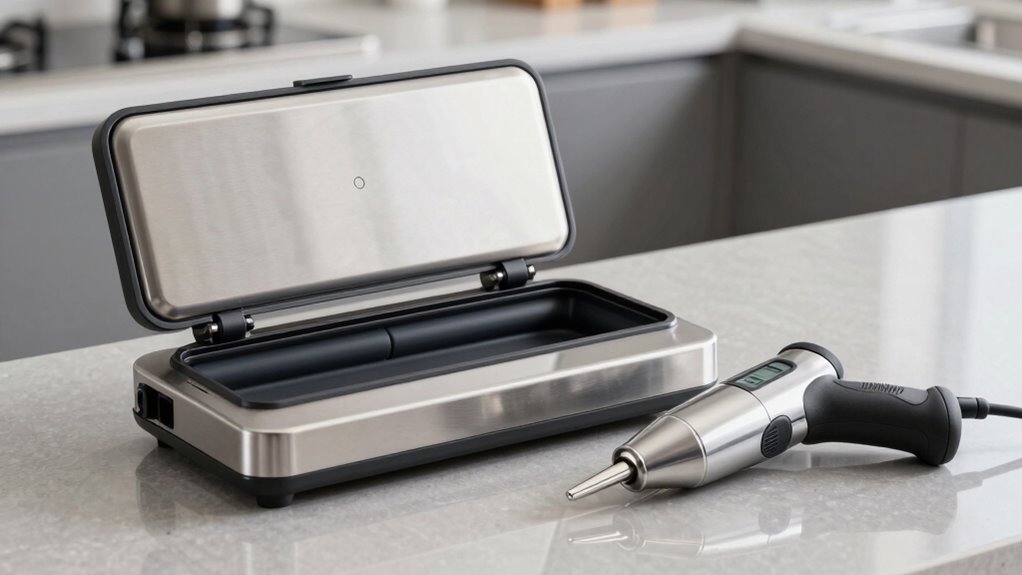
Chamber vacuum sealers and suction sealers each serve different food storage needs. If you want to preserve delicate, bulky, or moisture-rich foods for the long term, a chamber sealer is your best bet, as it removes air from the entire chamber for a tighter seal. Suction sealers are more affordable and perfect for quick, everyday use with small quantities. To make the right choice, discover how each type fits your kitchen and preservation style.
Key Takeaways
- Chamber sealers are ideal for high-volume, long-term storage of delicate, moist, or bulky foods in a controlled environment.
- Suction sealers are best suited for quick, everyday sealing of small to medium items, especially in household settings.
- Chamber models remove air from the entire chamber, providing stronger seals and better preservation for liquids and fragile foods.
- Suction sealers rely on pump technology to evacuate air from bags, making them more affordable and space-efficient for casual use.
- Both types complement each other; chamber sealers excel in professional or bulk applications, while suction sealers suit occasional home use.

VEVOR Chamber Vacuum Sealer 320W Sealing Power 12.6 Inch Sealing Length
- High Vacuum Power: 100KPa vacuum removes air effectively
- Strong Dual Lock Seal: 10mm wide seal strip with 320W heater
- Large Chamber Capacity: Accommodates big and small items
As an affiliate, we earn on qualifying purchases.
As an affiliate, we earn on qualifying purchases.
How Do Chamber Vacuum Sealers Work?
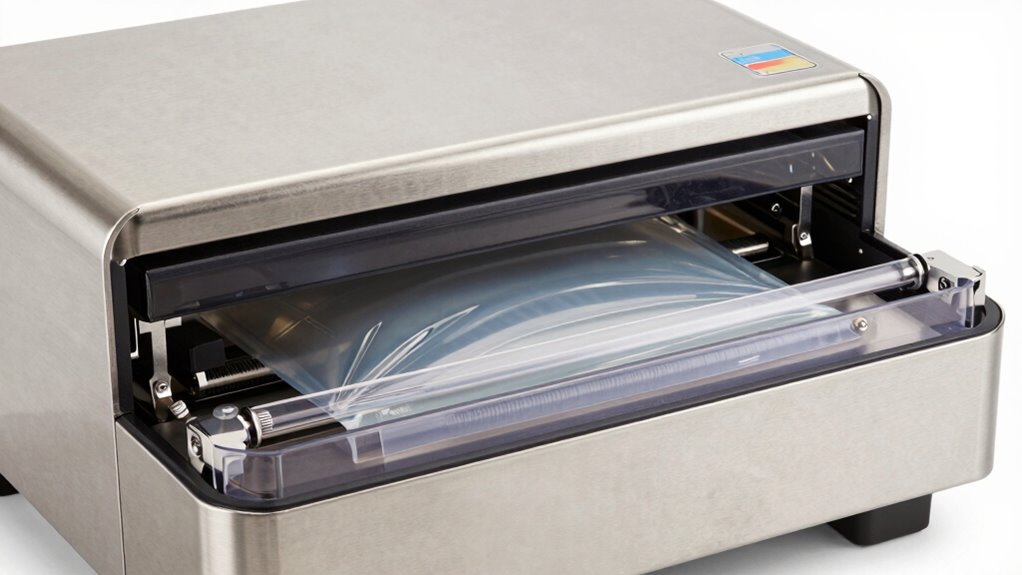
Ever wondered how chamber vacuum sealers efficiently remove air from packaging? Many vacuum sealing myths suggest they’re overly complicated, but advancements in sealing technology have made them highly effective. Inside, the food is placed in a bag, which then sits inside the chamber. The lid closes, and the machine evacuates air from the entire chamber, not just the bag. This process ensures a tighter seal and reduces the risk of air pockets. As the chamber reaches a vacuum, the machine seals the bag with heat, locking out air and moisture. Modern sealing technology advancements have improved speed, consistency, and durability. Unlike external vacuum sealers, chamber models provide a more thorough vacuum, making them ideal for preserving food longer and handling bulk packaging efficiently.
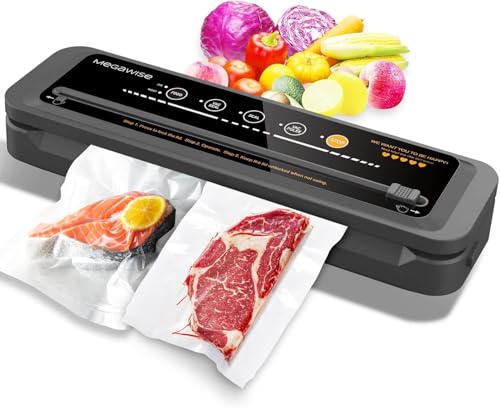
MegaWise Vacuum Sealer Machine | 80kPa Suction Power | Vac Seal Machine
- High Suction Power: 80kPa vacuum with copper motor pump
- Versatile Food Compatibility: Works with moist and dry foods
- Liquid Removal Mode: Removes liquids up to 10ml for meats and fish
As an affiliate, we earn on qualifying purchases.
As an affiliate, we earn on qualifying purchases.
What Are Suction Vacuum Sealers, and How Do They Differ?
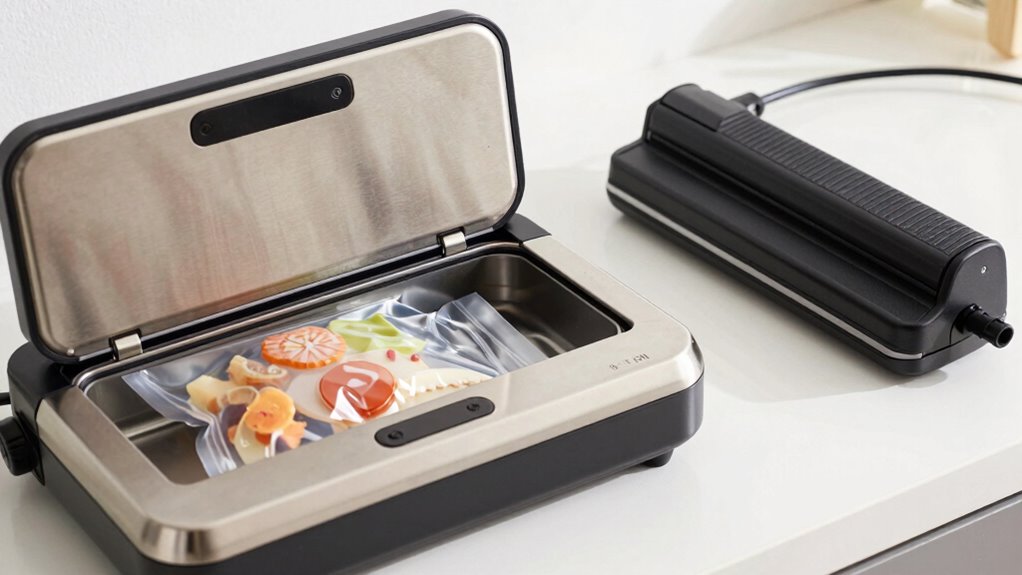
Suction vacuum sealers use a simple pumping process to remove air and seal your food, making them easy to operate and maintain. They come with different sealing mechanisms tailored for various food types and storage needs. Understanding how they work helps you choose the right model for your kitchen. Additionally, selecting the appropriate sealing mechanism can enhance the longevity and freshness of your stored items. The effectiveness of the seal also depends on the contrast ratio, which influences how well the sealed package preserves the food’s quality over time. Incorporating free floating principles into your storage system can further improve airflow and reduce spoilage. Moreover, being aware of the material compatibility of your sealer ensures optimal performance and food safety.
Sealing Mechanism Types
Suction vacuum sealers operate by removing air from the packaging through a built-in pump, creating a tight seal around your food. Their sealing mechanism relies on a heat sealer that melts the open end of the vacuum bag, forming an airtight closure. This process is generally quick, offering fast sealing speeds to save you time. When choosing a model, consider vacuum bag compatibility, as some sealers work better with specific bag types or thicknesses. The sealing mechanism is straightforward, making these sealers ideal for everyday use. They excel at maintaining freshness and preventing freezer burn. However, their sealing speed can vary depending on the machine’s power, so select one that matches your volume needs. Overall, this mechanism is simple, efficient, and suitable for most household storage tasks.
Ideal Food Applications
Suction vacuum sealers are a popular choice for those who want an efficient, straightforward way to extend the freshness of their food. They excel in food storage, especially for everyday items like meats, produce, and leftovers. These sealers are ideal for small to medium quantities, making them perfect for home kitchens focused on kitchen efficiency. They quickly remove air and seal bags, helping prevent freezer burn and spoilage. Suction sealers work well with various bag types, offering versatility for different food items. However, they’re best suited for foods that don’t require deep compression or specialized packaging. If you want simple, reliable preservation for regular use, suction vacuum sealers are a practical option that enhances food storage and keeps your kitchen running smoothly. Additionally, choosing the right sealing method can help minimize microplastics in dust, contributing to a healthier indoor environment.
Operation and Maintenance
To understand how suction vacuum sealers operate and differ from other types, it’s important to know that these devices work by removing air from specially designed bags or containers and then sealing them airtight. Their vacuum sealer features often include adjustable sealing times, pulse modes, and roll storage. To keep your sealer performing well, follow simple maintenance tips like cleaning the sealing bar regularly, checking for bag leaks, and ensuring the vacuum pump is free of debris. Proper operation involves placing the bag correctly, selecting the right vacuum setting, and avoiding overfilling. Regular maintenance not only prolongs the device’s life but also guarantees airtight seals. Additionally, understanding the sealing process helps optimize the efficiency and longevity of your vacuum sealer. By understanding these key points, you’ll maximize efficiency and keep your vacuum sealer functioning smoothly.
VEVOR Chamber Vacuum Sealer 320W Sealing Power 12.6 Inch Sealing Length
- High Vacuum Power: 100KPa vacuum removes air effectively
- Strong Dual Lock Seal: 10mm wide seal strip with 320W heater
- Large Chamber Capacity: Accommodates big and small items
As an affiliate, we earn on qualifying purchases.
As an affiliate, we earn on qualifying purchases.
Are Chamber Vacuum Sealers Suitable for Home Use?
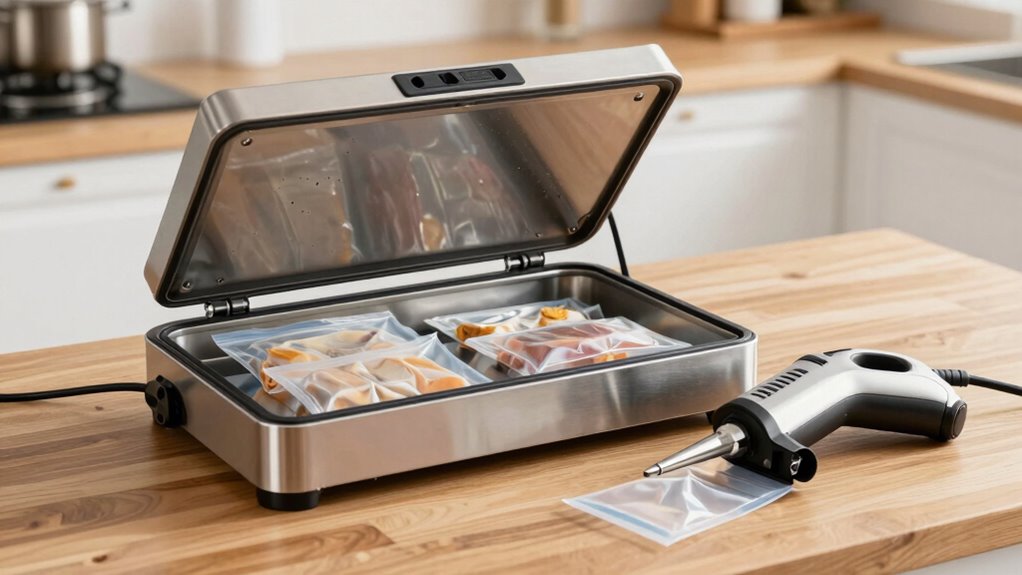
Chamber vacuum sealers can be suitable for home use, but they come with certain considerations. Their size, cost, and complexity mean they’re often better for serious home cooks or small-scale preservation. While sealing technology advances have made them more user-friendly, maintaining your vacuum sealer properly is essential for longevity and performance. Proper maintenance practices can extend the lifespan of your equipment and ensure consistent results. Additionally, understanding home kitchen equipment can help determine if this investment aligns with your needs. For those interested in optimizing their preservation methods, integrating automotive engine upgrades principles—like choosing the right *performance parts*—can inspire efficient and effective equipment choices. Proper storage solutions are also vital for ensuring your sealed items stay fresh over time, maximizing your investment. Considering the environmental impact of your equipment can help you make more sustainable choices and reduce waste.
MegaWise Vacuum Sealer Machine | 80kPa Suction Power | Vac Seal Machine
- High Suction Power: 80kPa vacuum with copper motor pump
- Versatile Food Compatibility: Works with moist and dry foods
- Liquid Removal Mode: Removes liquids up to 10ml for meats and fish
As an affiliate, we earn on qualifying purchases.
As an affiliate, we earn on qualifying purchases.
When Should You Use a Chamber Vacuum Sealer Instead of a Suction Sealer?
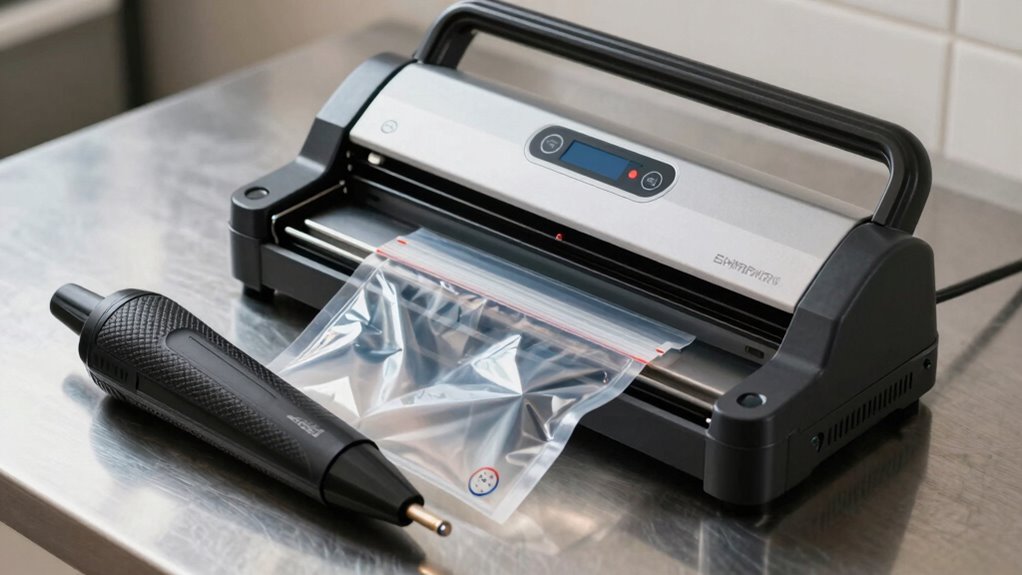
You should consider a chamber vacuum sealer when you need longer food preservation, especially for large quantities or delicate items. If you frequently seal high volumes or irregularly shaped objects, a chamber model offers better efficiency and consistency. Think about your sealing needs—if they’re extensive or require top-quality preservation, it’s time to choose a chamber sealer over a suction one. Additionally, herbal wellness practices such as herbal baths and spice storage benefit from the superior sealing capabilities of chamber vacuum sealers, ensuring freshness and potency over extended periods. Recognizing the importance of proper maintenance can also extend the lifespan and performance of your vacuum sealing equipment. Moreover, understanding the benefits of chamber sealing can help you make an informed decision about which system best suits your needs.
Food Preservation Longevity
Wondering when to choose a chamber vacuum sealer over a suction sealer? If you’re aiming to extend the shelf life of your food and prioritize food safety, a chamber sealer is often the better choice. Chamber sealers remove more air and can handle liquids without risking leaks, which helps preserve food longer. This increased vacuum strength slows down bacterial growth and oxidation, keeping your items fresh for weeks or even months longer than traditional suction sealers. If you store large quantities or want to maximize preservation, chamber sealers provide a more reliable and consistent seal. In short, when longevity and food safety are your top priorities, opting for a chamber vacuum sealer makes a significant difference.
Item Size and Shape
Large or oddly shaped items often require a chamber vacuum sealer because its spacious chamber can accommodate bulky objects that wouldn’t fit comfortably in a standard suction sealer. If your items have irregular shapes or are fragile, a chamber sealer offers better protection and uniform vacuuming. Its design minimizes the risk of crushing delicate items or leaving air pockets, especially with odd-shaped objects. Consider using a chamber sealer when:
- You’re sealing large cuts of meat or whole poultry
- Items have irregular or uneven shapes
- Fragile foods like baked goods need gentle handling
- You’re sealing multiple smaller items together for organization
- The product research indicates that chamber sealers are more suitable for certain item types.
The chamber’s capacity and controlled environment ensure your items’ shape and fragility are preserved, making it it ideal for delicate or bulky objects that need careful handling. Additionally, the vacuum environment within the chamber helps maintain consistent sealing quality for sensitive items, especially when sealing large or irregularly shaped objects. Moreover, the controlled environment of a chamber sealer reduces the risk of contamination and spoilage during sealing. An added benefit is that the air removal process in chamber sealers is often more thorough, which is critical for preserving certain foods.
Sealing Frequency and Volume
When sealing high volumes of items or frequently performing repetitive sealing tasks, a chamber vacuum sealer often becomes the better choice over a suction sealer. Its larger volume capacity allows you to process multiple bags at once without interruption, increasing efficiency. If your sealing frequency is high—such as in commercial settings or bulk storage—you’ll benefit from the durability and faster cycle times of a chamber sealer.
| Sealing Frequency | Volume Capacity | Ideal Use Case |
|---|---|---|
| Daily or frequent | Large, multiple | Commercial kitchens, food prep |
| Occasional | Moderate | Home use, small batches |
| Rare | Small | Occasional storage needs |
| Continuous | Very large | Industrial-scale operations |
What Foods Benefit Most From Chamber Vacuum Sealing?
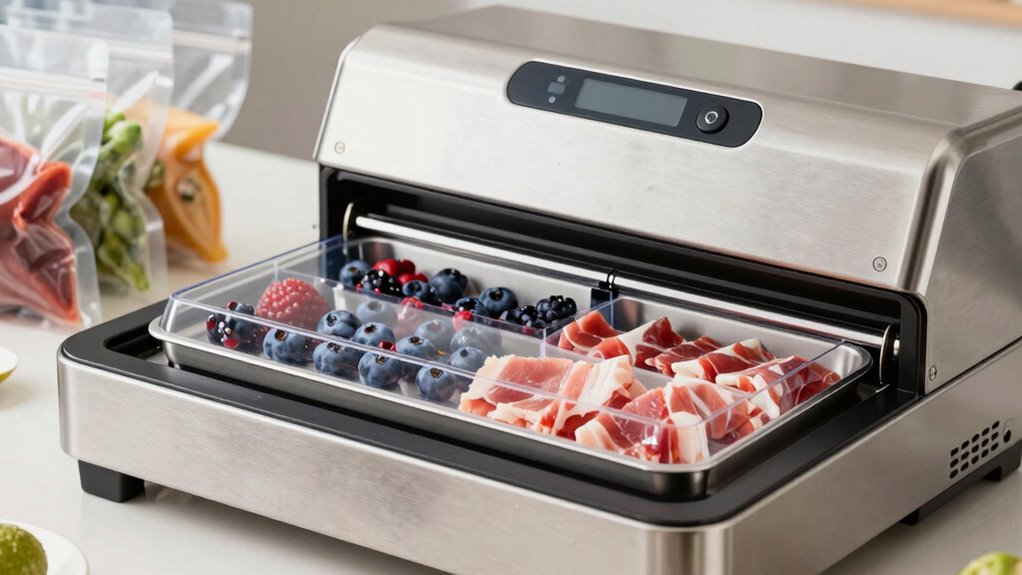
Chamber vacuum sealers excel at preserving foods that are prone to freezer burn or spoilage, making them ideal for long-term storage. Their vacuum packaging ensures that air is thoroughly removed, markedly extending food shelf life. You’ll find them especially useful for delicate or moisture-rich items. Consider vacuum sealing:
Chamber vacuum sealers are perfect for long-term storage of delicate, moisture-rich foods.
- Meat and poultry, preventing freezer burn and maintaining freshness
- Berries and soft fruits, keeping their flavor and texture intact
- Cheeses, avoiding mold and spoilage during storage
- Cooked dishes or soups, preserving leftovers without freezer burn
These foods benefit most because chamber sealers provide a tight, consistent seal that maximizes food storage quality. Whether for bulk purchases or preserving seasonal harvests, they help you keep food fresher longer and reduce waste. Proper vacuum sealing techniques are essential for achieving the best preservation results. Additionally, air removal efficiency plays a crucial role in ensuring optimal storage conditions, especially for moisture content in sensitive foods. An understanding of food preservation principles can further enhance your sealing outcomes and prevent spoilage.
What Are the Main Benefits and Drawbacks of Suction Sealers?
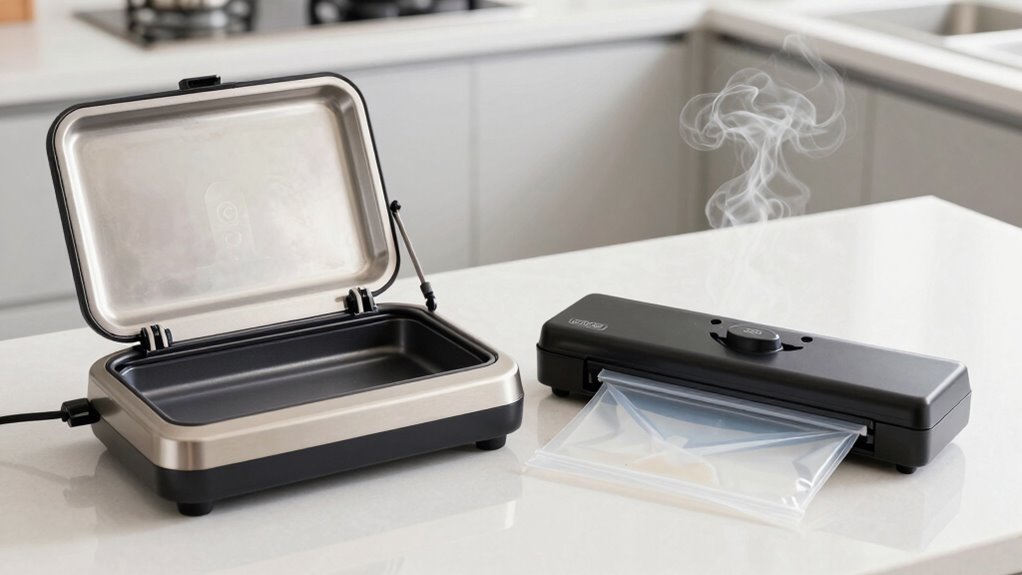
Suction sealers are popular for their affordability and ease of use, making them a practical choice for everyday food preservation. Their main benefit is simplicity—just place your food in a bag, seal, and you’re done. They also work quickly and are great for small-scale needs. However, some vacuum sealing myths suggest they’re less effective for long-term storage, but sealing technology advancements have improved their performance. Drawbacks include limited bag sizes and less effectiveness with liquids, which can cause leaks. They also often require manual adjustment for different foods. Overall, suction sealers are convenient for daily use but may fall short for heavy-duty preservation tasks. Additionally, understanding the sealing mechanism can help users optimize their sealing results.
How Do Cost, Size, and Maintenance Influence Your Choice?
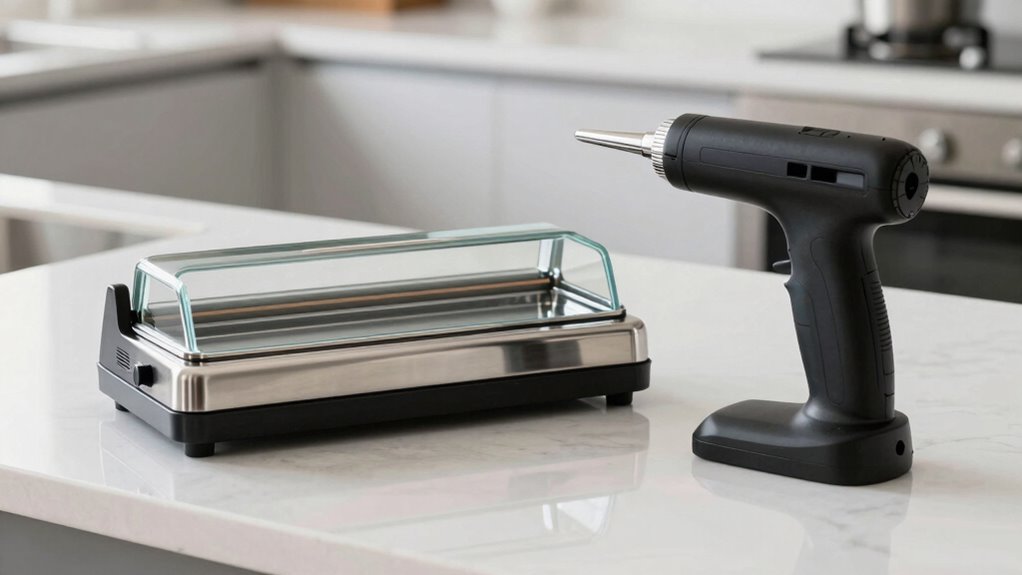
Your choice of vacuum sealer is heavily influenced by how much you’re willing to spend, the available space, and how much maintenance you’re prepared for. A clear cost comparison helps determine whether a chamber or suction sealer fits your budget. Size impacts storage and portability—compact models save space but may lack advanced features. Maintenance tips include regular cleaning to prevent malfunctions and checking seals for durability. Consider these factors to avoid surprises down the line. For instance, chamber sealers tend to be more expensive but offer better durability and efficiency for large volumes. Suction sealers are more affordable and compact, ideal for everyday use. Balancing cost, size, and maintenance needs ensures you pick the right machine for your food preservation goals.
Can You Use Both Types of Sealers for Different Food Preservation Needs?
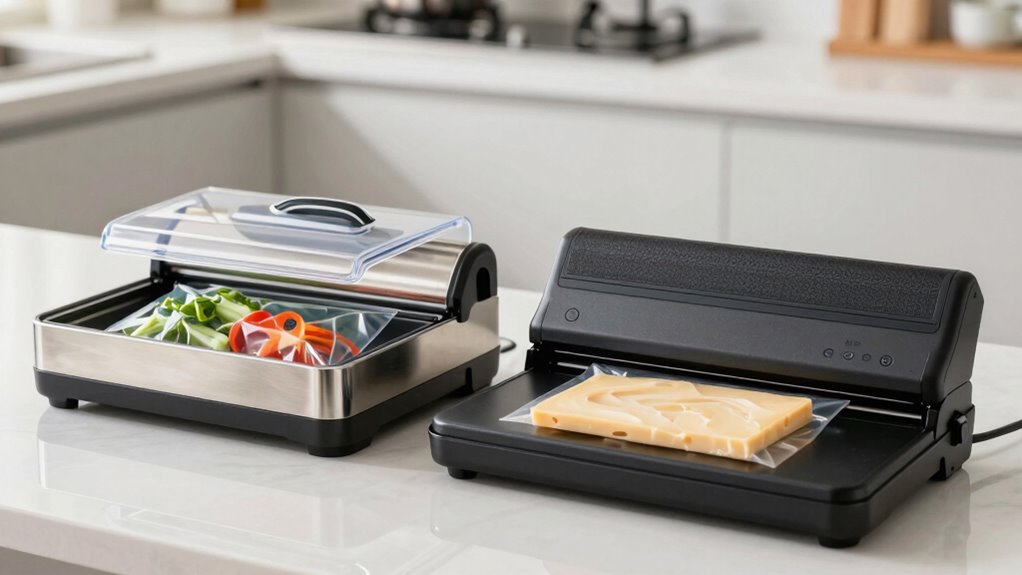
Using both types of vacuum sealers can be highly effective for different food preservation needs, as each offers unique advantages. Suction sealers are great for quick, everyday food storage, providing efficient packaging for snacks, leftovers, or small portions. They’re ideal for home use because of their affordability and ease of use. Chamber sealers, on the other hand, excel in professional or bulk food storage, offering superior packaging efficiency for meats, cheeses, or liquids. You can absolutely use both to optimize your food storage strategy, depending on your needs. Combining them allows you to handle a variety of foods more effectively, reducing waste and extending freshness. This flexibility guarantees you’re always prepared, regardless of what you’re sealing.
What Common Mistakes Should You Avoid When Vacuum Sealing?
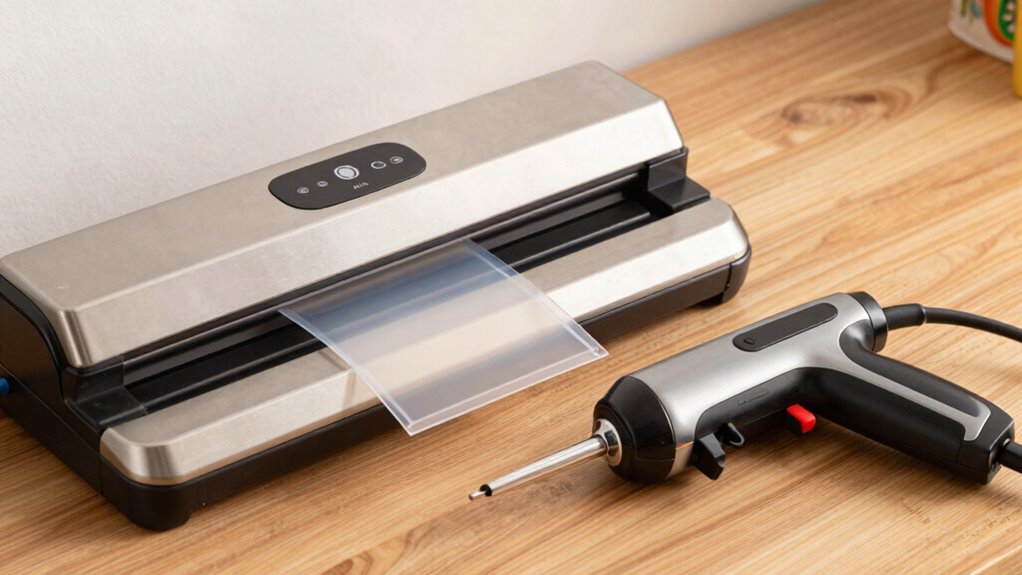
Vacuum sealing can substantially extend your food’s freshness, but it’s easy to make mistakes that undermine its effectiveness. Common sealing technique errors can lead to spoiled food or wasted effort. First, don’t fall for vacuum sealing myths, like thinking all foods require the same sealing approach—different foods need different methods. Second, guarantee your bags are properly sealed; leaks from sealing errors are a frequent issue. Third, avoid overfilling bags, which prevents a proper seal. Fourth, don’t forget to remove excess air before sealing, as trapped air can cause freezer burn. Being aware of these pitfalls helps you avoid common mistakes and get the most out of your vacuum sealer. By sidestepping these errors, you’ll preserve food longer and prevent unnecessary waste.
Which Vacuum Sealer Offers the Best Value for Your Budget and Needs?
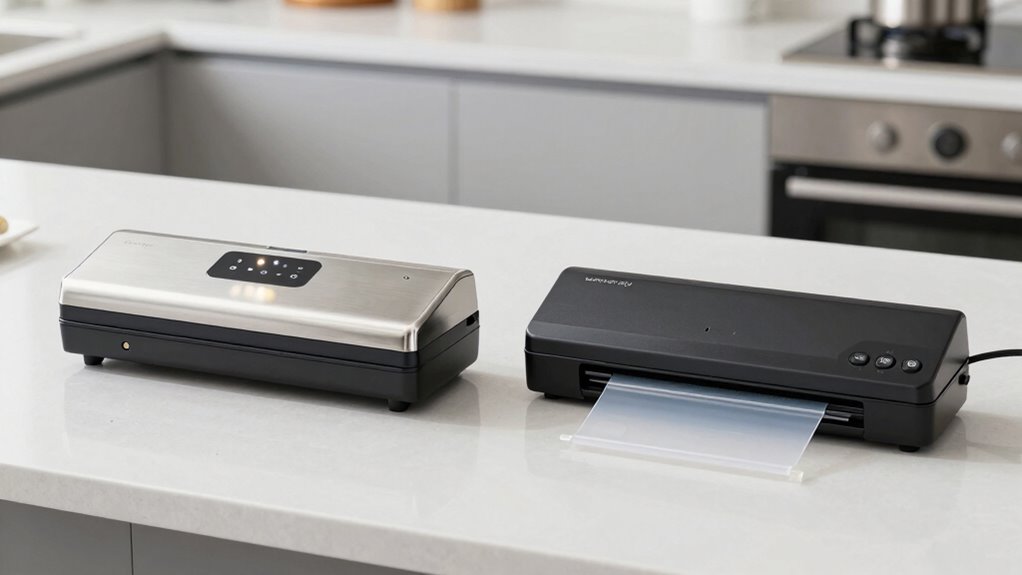
To find the best vacuum sealer for your budget and needs, you need to take into account your financial limits and the long-term costs involved. Focus on seal quality and durability to ensure your investment lasts, and look for extra features that add versatility. Balancing these points helps you choose a sealer that offers the best value without sacrificing performance.
Budget Compatibility and Cost
Are you trying to find a vacuum sealer that fits your budget without sacrificing quality? When taking into account budget compatibility, it’s essential to weigh your needs against the cost comparison of different models. Lower-end suction sealers are budget-friendly but may lack advanced features, while chamber sealers tend to cost more upfront but save money long-term with their efficiency.
Key points to consider:
- Initial purchase price versus long-term savings
- Maintenance and replacement costs
- Frequency of use impacting value
- Features that match your food preservation needs
Seal Quality and Durability
When choosing between chamber and suction sealers, evaluating their seal quality and durability helps determine which offers the best value for your budget and needs. Seal integrity is vital, as it ensures your food stays fresh and protected from air and moisture. Chamber sealers typically provide stronger sealing strength, resulting in more durable seals that last longer under repeated use. Suction sealers may have slightly less robust seals but still deliver reliable performance for everyday needs. Consider how often you’ll use your sealer; if durability and seal integrity are top priorities, a chamber sealer might be worth the investment. Ultimately, the best choice balances your sealing demands with your budget, guaranteeing you get lasting quality without overspending.
Versatility and Functionality
Choosing the right vacuum sealer depends heavily on your specific needs and how you’ll use it. When evaluating versatility and functionality, consider how each type aligns with your tasks. Vacuum sealing myths can lead you to believe only certain models are capable, but sealing technology trends show both chamber and suction sealers have expanded features.
- Chamber sealers handle liquids and delicate foods better, making them ideal for commercial use.
- Suction sealers are more compact and perfect for everyday household tasks.
- Some models include adjustable settings, giving you control over sealing times and air removal.
- Features like double sealing and pulse options add flexibility, especially if you store a variety of food types.
Ultimately, your choice depends on balancing your budget with your needs for durability, convenience, and adaptability.
Frequently Asked Questions
Can Chamber Vacuum Sealers Handle Liquids Without Mess?
Yes, chamber vacuum sealers handle liquids better and can seal liquids without mess. They’re designed for liquid handling, allowing you to seal foods with high moisture content safely and efficiently. Unlike suction sealers, which struggle with liquids and risk spills, chamber sealers create a vacuum inside a sealed chamber, preventing liquids from being sucked into the machine. This makes them ideal for sealing liquids securely without mess.
Are Chamber Vacuum Sealers More Energy-Efficient Than Suction Models?
Sure, chamber vacuum sealers are more energy-efficient than suction models, saving you power consumption and your electric bill. They use less energy because they’re designed for continuous, heavy-duty use, unlike their smaller, more wasteful cousin. So, if you’re tired of watching your energy bills grow faster than your food stash, upgrading to a chamber sealer means better energy efficiency and less guilt about your eco-impact. Who knew sealing could be so smart?
How Long Does a Typical Chamber Vacuum Sealer Last?
A typical chamber vacuum sealer lasts around 5 to 10 years, depending on how well you maintain it. Regular maintenance frequency, like cleaning seals and checking parts, can markedly extend its durability. You should also monitor for wear and tear, replacing parts as needed. With proper upkeep, your machine remains reliable and efficient, ensuring you get the most out of your investment over its lifespan.
Do Chamber Sealers Require Special Bags or Accessories?
Ever wonder if you need special bags for your chamber sealer? Yes, you do. These machines often require specific, high-quality bags that guarantee a proper seal and ideal preservation. Plus, check the accessories compatibility to make sure your sealer works seamlessly with the supplies. Using the right special bags and accessories guarantees longevity, prevents leaks, and keeps your food fresh longer. Are you ready to invest in the proper supplies?
Can Suction Sealers Be Used for Sous Vide Cooking?
Yes, you can use suction sealers for sous vide cooking, but with some caution. Regular suction sealers aren’t designed for high temperatures, so they might not be the best option for long-term immersion in hot water. If you want to vacuum seal for sous vide, look for a sealer that creates airtight, heat-safe bags specifically designed for sous vide cooking. This guarantees safety and ideal vacuum sealing during your cooking process.
Conclusion
Choosing between chamber and suction sealers is like selecting the right key for a lock—each opens new possibilities. By understanding their differences, you unbolt the door to fresher food, less waste, and smarter storage. Whether you’re sealing a buffet or a single snack, your decision shapes the future of your kitchen. Embrace the tool that fits your needs, and watch your food’s life extend like a well-tended garden—bountiful and thriving.