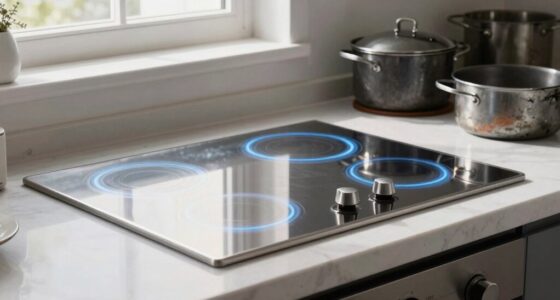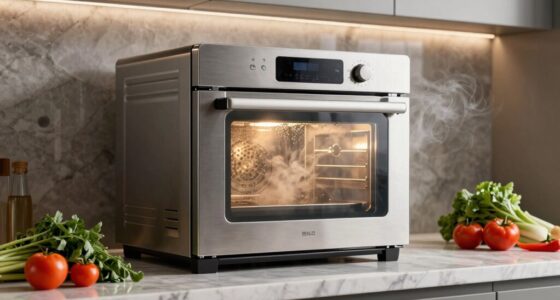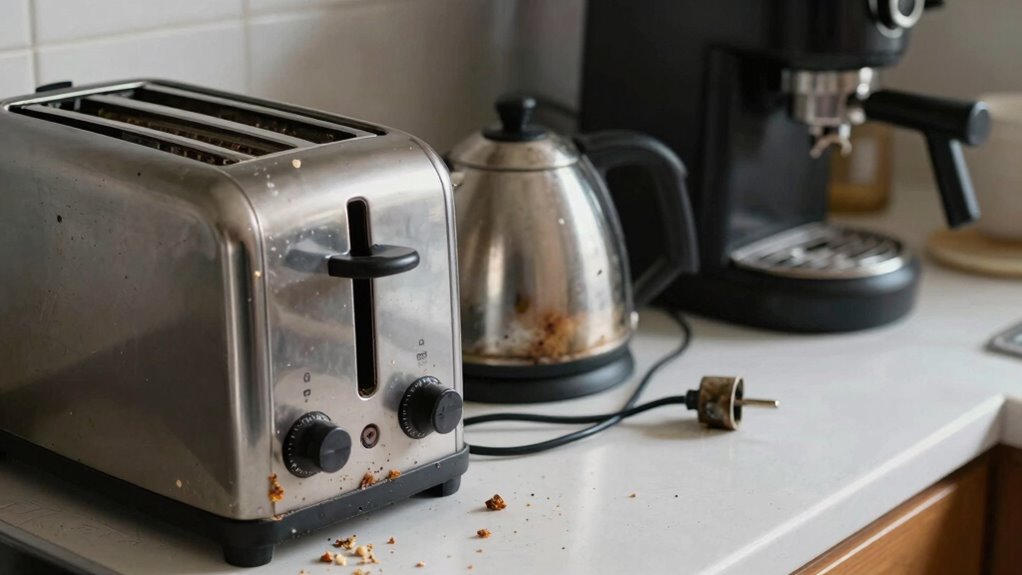
Hidden fire risks in your everyday countertop appliances often go unnoticed, but they can be dangerous. Faulty wiring, damaged cords, or dust buildup inside devices like toasters and coffee makers can cause overheating, sparks, or short circuits. Ignoring signs of wear or malfunction increases your fire risk. Proper maintenance and regular inspections are key, but there’s more to uncover about how these hidden hazards can threaten your safety every day.
Listen free for 30 days with Audible
Thousands of audiobooks and originals — cancel anytime.
As an affiliate, we earn on qualifying purchases.
Key Takeaways
- Internal wiring issues or damaged cords can cause electrical faults and hidden fire hazards in appliances.
- Accumulated dust, grease, and food debris inside appliances increase overheating and risk of sparks.
- Old or worn-out appliances with degraded components are more prone to internal failures and fires.
- Overloading outlets or using outdated appliances can lead to electrical overloads and hidden fire risks.
- Ignoring signs of electrical problems, such as sparks or unusual smells, can conceal potential fire hazards.
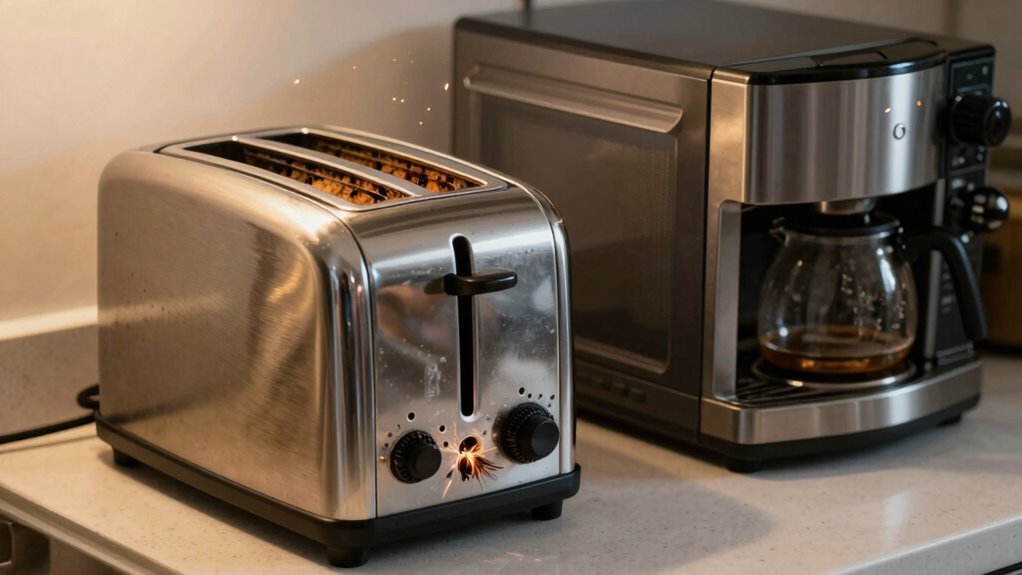
Have you ever contemplated that your everyday countertop appliances might pose hidden fire risks? Many people overlook the potential dangers lurking in devices like blenders, toasters, or coffee makers. These appliances are part of your daily routine, but if you’re not careful, they can become fire hazards. One of the main issues is electrical malfunctions, which often stem from internal wiring problems, faulty switches, or damaged cords. When electrical components fail, they can overheat, spark, or cause shorts that ignite nearby materials. The danger increases if you’re unaware of the signs of electrical problems, such as frequent tripping of circuit breakers, sparks, or unusual smells.
Countertop appliances can pose hidden fire risks due to electrical malfunctions and internal damage.
Improper maintenance plays a significant role in elevating fire risks. Over time, dust, grease, and food debris can accumulate inside appliances, especially in areas like vents and coils. If you don’t regularly clean and inspect your devices, these buildups can interfere with their operation, causing overheating or electrical faults. For example, a toaster with crumbs lodged inside might short-circuit or spark, especially if the crumb tray isn’t cleaned regularly. Similarly, a blender with frayed cords or worn-out switches can malfunction during use, increasing the risk of fire. Neglecting routine maintenance also means missing early signs of wear, such as cracked cords or loose connections, which could lead to dangerous situations if left unaddressed. Additionally, understanding the importance of electrical safety standards can help you recognize when an appliance is no longer safe to use. Regularly checking for appliance age and internal condition is crucial because older devices are more prone to electrical malfunctions. Furthermore, staying aware of wiring issues can help prevent unexpected hazards, especially in older homes with outdated electrical systems. Regularly updating your knowledge about electrical safety can also help you identify potential risks before they become serious hazards.
Another factor to think about is the age of your appliances. Older devices are more prone to electrical malfunctions because their wiring and internal components degrade over time. If you’re using appliances that haven’t been updated or replaced in years, you might unknowingly be putting yourself at greater risk. In addition, using appliances with damaged or frayed cords, or plugging multiple devices into a single outlet without proper surge protection, can overload circuits and cause sparks or fires. To reduce these risks, it’s essential to practice good maintenance habits and be vigilant about electrical issues. Regularly inspect cords for damage, clean appliances thoroughly, and replace outdated or malfunctioning devices promptly. Avoid overloading outlets, and consider hiring a professional to check your wiring if you notice recurring electrical problems. By staying proactive, you help ensure your countertop appliances remain safe to use and protect your home from the potentially devastating consequences of overlooked fire hazards.
appliance fire safety inspection kit
As an affiliate, we earn on qualifying purchases.
As an affiliate, we earn on qualifying purchases.
Frequently Asked Questions
Are Countertop Appliances Prone to Causing Fires When Unused?
Countertop appliances can cause fires even when unused if you neglect proper maintenance. Dust, debris, or electrical faults can create fire hazards over time. To prevent this, always unplug appliances when not in use, clean them regularly, and check for frayed cords or damage. Following fire prevention tips and routine countertop appliance maintenance guarantees safety, reducing the risk of accidental fires caused by dormant appliances.
How Can I Tell if My Appliance Is Overheating?
Like a vintage radio, your appliance can suddenly act up. To tell if it’s overheating, check its appliance temperature regularly. Watch for overheating indicators like strange smells, excessive heat, or discolored surfaces. If it feels unusually hot or emits smoke, turn it off immediately. Keeping an eye on these signs helps prevent potential fires and keeps your countertop safe. Always unplug appliances when not in use to minimize risks.
What Safety Features Do Modern Countertop Appliances Have?
Modern countertop appliances come equipped with safety features like automatic shut-off, overheating protection, and cool-touch exteriors, enhancing appliance durability and user safety. You’ll also find safety certifications like UL or ETL, which guarantee the appliance meets strict safety standards. These features work together to prevent fires, electrical faults, and accidents, giving you peace of mind while using your appliances daily. Always check for these safety elements before purchasing.
Can Faulty Wiring Inside Appliances Lead to Fires?
Faulty wiring inside appliances is like a ticking time bomb, capable of causing fires if overlooked. Electrical faults, such as frayed cords or loose connections, can generate sparks or heat, igniting nearby materials. For fire safety, always inspect your appliances regularly, avoid overloading outlets, and replace damaged cords promptly. Addressing electrical faults quickly helps prevent potential fires and keeps your home safe.
Are DIY Repairs Safe for Preventing Appliance Fires?
DIY repair safety is essential when you’re tackling appliance issues. While minor fixes might seem straightforward, improper repairs can compromise the appliance’s safety and increase fire risk. To guarantee effective appliance fire prevention, it’s best to know your limits and consult professional repair services when needed. This way, you reduce the chances of accidental fires and keep your home safe. Always prioritize safety over shortcuts in DIY repairs.
kitchen appliance cleaning brush set
As an affiliate, we earn on qualifying purchases.
As an affiliate, we earn on qualifying purchases.
Conclusion
Remember, those everyday countertop appliances are like silent guardians—until they ignite a blaze. Picture a peaceful kitchen suddenly engulfed in flames, all because of overlooked fire risks. Stay vigilant: unplug devices when not in use, keep flammable items away, and regularly inspect your appliances. By doing so, you’re not just protecting your home—you’re safeguarding your family’s safety, turning your kitchen into a calm, safe sanctuary rather than a potential inferno waiting to happen.
electric appliance cord repair kit
As an affiliate, we earn on qualifying purchases.
As an affiliate, we earn on qualifying purchases.
As an affiliate, we earn on qualifying purchases.
Flea & tick season Picks
flea and tick prevention
As an affiliate, we earn on qualifying purchases.