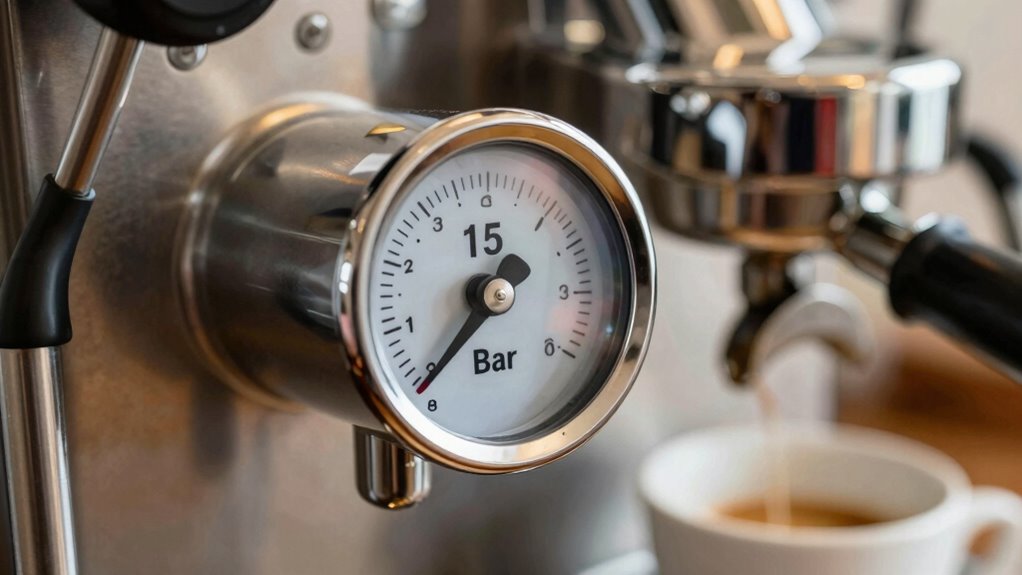

The “15 Bar” label on your espresso machine often overstates its capability and can be misleading. While pressure matters, more isn’t always better—most good espresso is brewed at around 9 to 10 bars. Higher pressure can cause over-extraction and bitterness, and many machines claim high pressure without actually delivering it consistently. To get better coffee, focus on proper calibration, stable pressure, and technique. If you want to understand why, keep exploring the real meaning behind “15 Bar.”
Key Takeaways
- The “15 Bar” label often refers to the machine’s maximum pressure, not the optimal brewing pressure.
- Most high-quality espresso is brewed at 9-10 bars, not the maximum 15 bars indicated.
- Proper calibration and stable pressure during extraction are more important than the pressure number itself.
- Excessive pressure above 15 bars can cause over-extraction and bitterness, harming espresso quality.
- Focus on technique, calibration, and machine maintenance for better espresso than just chasing a high pressure rating.
What Does ’15 Bar’ Actually Mean in Espresso Machines?
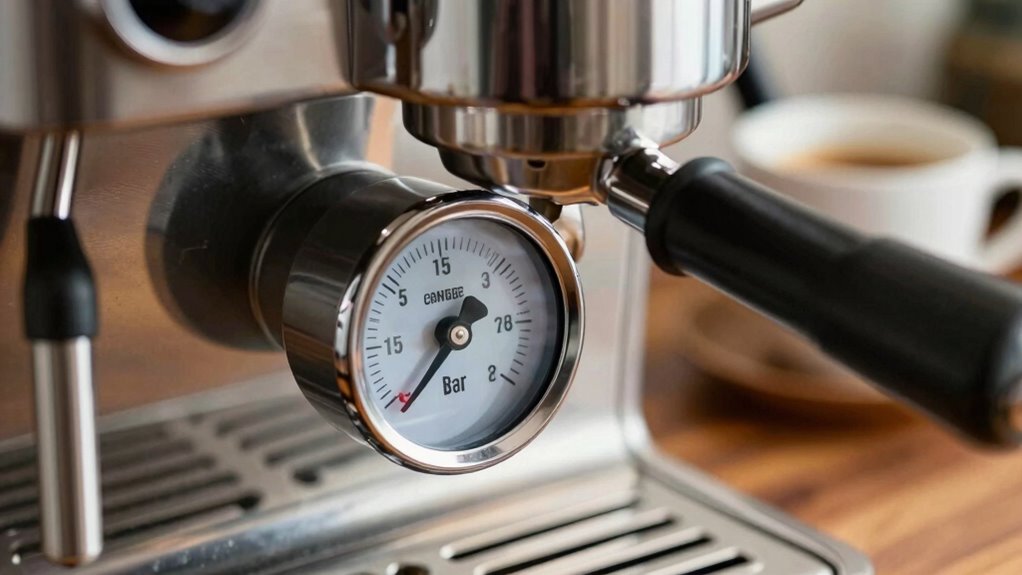
When you see a “15 Bar” label on an espresso machine, it refers to the pressure the machine can generate during brewing. This pressure is critical for extracting flavors efficiently, but it also depends on pressure durability—how well the machine maintains consistent pressure over time. Proper machine calibration ensures that the indicated pressure matches the actual force applied, which is essential for brewing quality. If your machine isn’t calibrated correctly, the “15 Bar” label can be misleading, giving a false sense of brewing power. Reliable pressure levels are necessary for maximum extraction, but just having a high bar rating doesn’t guarantee great espresso. Instead, focus on how well your machine maintains pressure stability and how it’s calibrated for consistent results. Pressure consistency plays a vital role in achieving optimal espresso extraction, and understanding pressure calibration can help you make better coffee. Additionally, pressure stability can be influenced by factors such as machine age and maintenance, which can affect overall brewing performance. Recognizing the importance of pressure durability can help you select a machine that delivers consistent espresso quality over time. Regular maintenance and proper calibration are essential to ensure your machine performs at its best and that the pressure indicator accurately reflects the brewing conditions.
Is 15 Bar of Pressure Really Necessary for Good Espresso?
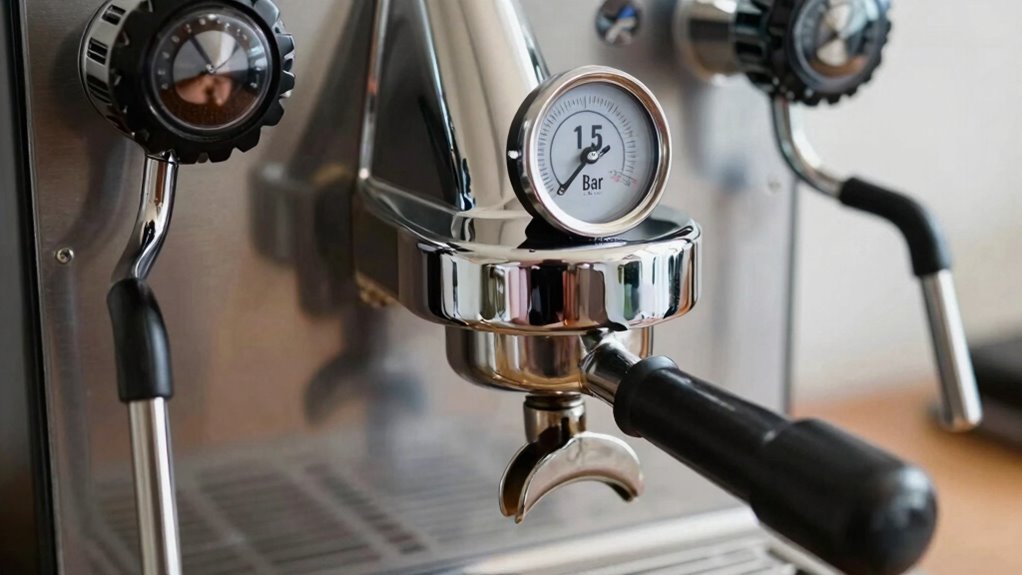
You might think that 15 bars of pressure are essential for great espresso, but is that really true? Understanding how pressure levels impact the quality can help you decide what’s necessary. Let’s explore the realistic standards and what actually makes a good shot. In fact, many experts emphasize the importance of proper extraction techniques over simply reaching a specific pressure threshold. Additionally, the quality of the coffee grounds and water temperature play crucial roles in achieving optimal flavor.
Pressure Levels Explained
Many espresso machines advertise a 15-bar pressure rating, leading people to assume higher pressure automatically means better espresso. But pressure levels are more nuanced than that. The key is proper machine calibration; without it, high pressure can be misleading. Here’s a quick look at common pressure myths:
| Pressure Level | Effect on Espresso | Calibration Tips |
|---|---|---|
| 9 Bar | Ideal for most brews | Regularly check gauges |
| 15 Bar | Often unnecessary | Adjust for consistency |
| Over 15 Bar | Can cause over-extraction | Avoid excessive pressure |
| Under 9 Bar | Weak flavor | Ensure proper grind size |
Understanding pressure helps you brew better espresso without falling for myths. Virtue and insight remind us to approach such technical details with patience and clarity.
Impact on Espresso Quality
While a 15-bar pressure rating is often touted as essential for brewing authentic espresso, higher pressure doesn’t automatically guarantee better flavor. Pressure dynamics play a pivotal role in how water interacts with coffee grounds, affecting extraction and taste. Excessive pressure can lead to over-extraction, resulting in bitter or harsh flavors, while insufficient pressure might cause under-extraction and weak coffee. Crema development is also influenced by pressure, but it’s not just about reaching 15 bars; it’s about maintaining ideal pressure throughout the brewing process. Proper pressure management ensures a balanced extraction, enhancing flavor complexity and aroma. Additionally, understanding pressure control is crucial for optimizing espresso quality, as it directly impacts the consistency and balance of your brew. Achieving the right pressure involves more than just setting a machine; it requires precise adjustments that respond to variables like grind size and tamping. For consistent results, mastering pressure consistency is essential, as fluctuations can significantly alter the final taste. Moreover, pressure regulation systems can help maintain stable pressure levels, ensuring optimal extraction every time. Incorporating feedback mechanisms into espresso machines can further improve pressure stability and overall brew quality.
Realistic Pressure Standards
Although a 15-bar pressure rating is commonly advertised on espresso machines, it’s worth questioning whether this standard is truly necessary for making good espresso. In reality, pressure dynamics are complex, and higher pressure doesn’t automatically mean better extraction. Many baristas find that optimal brewing efficiency occurs between 9 and 10 bars, where pressure helps extract flavors without over-extracting bitter compounds. Pushing beyond this can lead to uneven extraction, bitterness, and a loss of nuanced flavors. Instead of obsessing over the number, focus on controlling other factors like grind size, tamping, and brew time. These elements influence pressure stability and overall quality more than chasing a specific pressure reading. Ultimately, realistic pressure standards prioritize consistency and flavor clarity over arbitrary benchmarks.
How Does Pressure Impact the Flavor and Quality of Your Espresso?
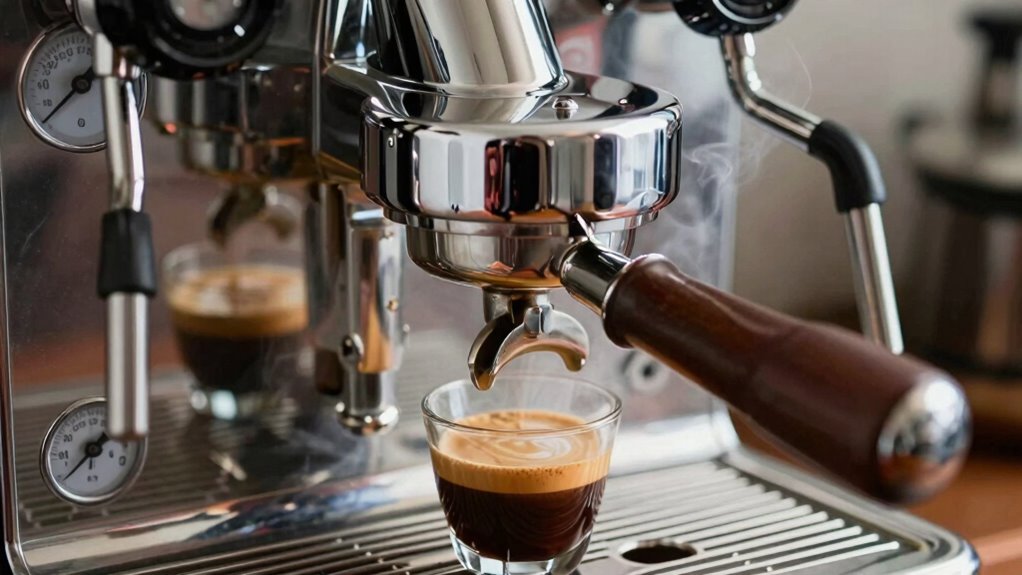
The pressure during extraction directly affects the balance of flavors in your espresso. Too much or too little pressure can upset flavor preservation, making your coffee taste off. Understanding how pressure impacts these dynamics helps you brew a richer, more consistent shot every time. Proper pressure regulation ensures that your espresso retains its optimal flavor profile and quality. Additionally, maintaining the correct pressure aligns with traditional brewing practices that emphasize precision and consistency in coffee preparation. Mastering these techniques can also extend the lifespan of your espresso machine, ensuring it operates efficiently over time. Regular device maintenance is essential to keep pressure controls functioning accurately and to prevent buildup that could affect extraction quality. Properly calibrated pressure settings are crucial for achieving the desired flavor extraction and overall coffee experience.
Extraction Pressure Balance
Extraction pressure plays a crucial role in shaping the flavor and overall quality of your espresso. Maintaining pressure stability during extraction ensures that water flows evenly through the coffee grounds, promoting extraction consistency. If pressure fluctuates, you might end up with under-extracted or over-extracted espresso, leading to sour or bitter flavors. A balanced pressure environment allows you to achieve ideal extraction, highlighting the coffee’s nuanced aromas and rich body. Consistent pressure also prevents channeling, where water bypasses coffee grounds, causing uneven extraction. By monitoring and controlling pressure, you help your espresso machine produce a more uniform shot. This balance is essential for developing complex flavors and ensuring each shot meets your expectations for quality and taste.
Flavor Preservation Dynamics
Maintaining proper pressure during extraction directly influences how well the espresso’s flavors are preserved and expressed. Pressure stability guarantees that the coffee grounds are evenly saturated, preventing over- or under-extraction that can lead to flavor loss. Consistent pressure helps retain the delicate aromatic compounds and balanced taste, enhancing overall flavor retention. If pressure fluctuates, you risk extracting bitter or sour notes, diminishing the espresso’s quality. A stable pressure environment allows the full spectrum of flavors to develop harmoniously, resulting in a richer, more vibrant cup. Additionally, pressure fluctuations can cause inconsistencies in brewing, making it harder to achieve the perfect shot. By focusing on Pressure stability, you ensure that the espresso preserves its intended flavor profile, offering a more satisfying and authentic coffee experience. Proper pressure regulation is crucial for maintaining optimal extraction conditions and achieving consistent results. Moreover, understanding the significance of pressure in espresso brewing can help you better calibrate your machine for superior taste.
What’s the Difference Between Pump Pressure and Extraction Pressure?
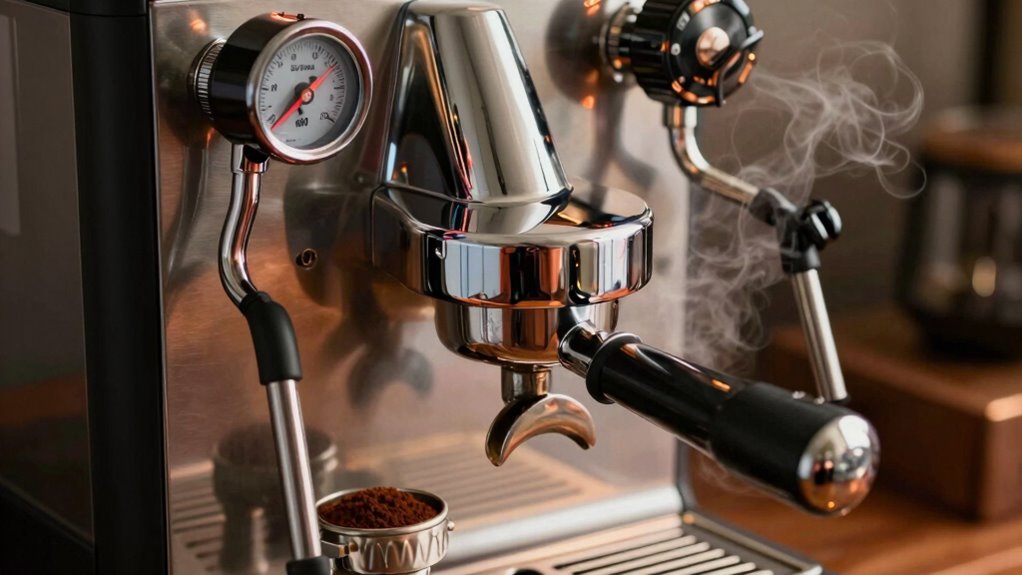
Understanding the difference between pump pressure and extraction pressure is essential for making great espresso. Pump pressure refers to the force exerted by your machine’s pump mechanics, typically measured in bars. Extraction pressure, on the other hand, is the actual pressure applied during brewing, which influences flavor extraction. Variability in pressure can affect your shot quality, making it either too bitter or too sour. SWIFT/BIC codes are used internationally to identify banks during electronic transfers, ensuring your funds are sent securely and accurately. Additionally, fluctuations in ear wax odor can sometimes signal underlying health issues that might influence your overall well-being.
Does Using More Than 15 Bar Make Your Espresso Better?
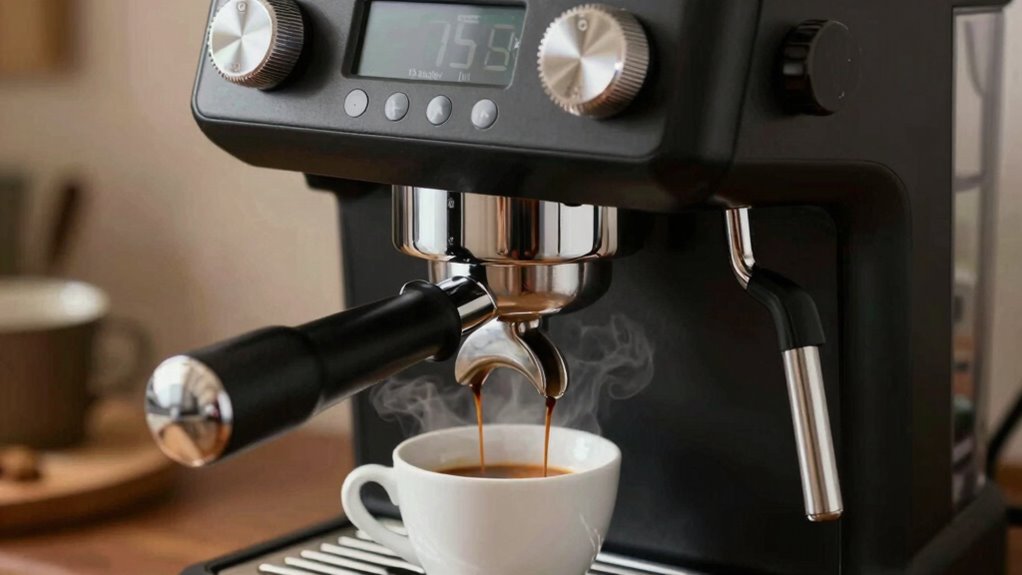
Many espresso machines are advertised as operating at 15 bars of pressure or more, leading some to believe that higher pressure automatically results in better espresso. However, exceeding 15 bars doesn’t guarantee improved quality. In fact, pushing beyond this limit can compromise pressure consistency, making your shots less stable and harder to control. Additionally, higher pressure can strain your machine’s components, reducing its durability over time. Instead of chasing more pressure, focus on proper grind size, tamping, and extraction time. These factors have a more significant impact on flavor than simply increasing pressure. Remember, the goal isn’t maximum pressure but consistent, ideal pressure that ensures you get the best espresso possible without risking damage to your equipment.
How Can You Tell if an Espresso Machine Will Brew Good Coffee?
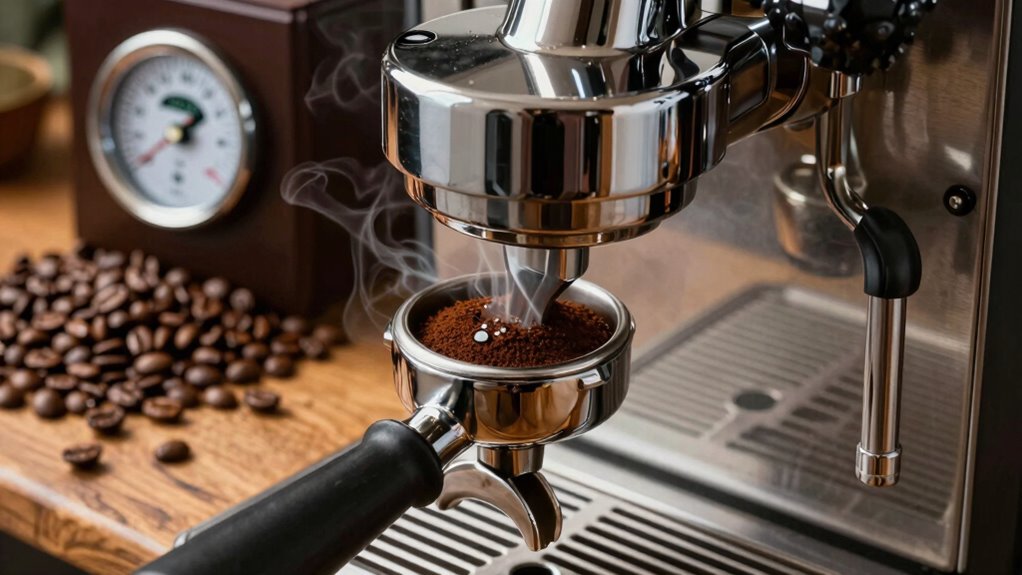
To determine if an espresso machine will brew good coffee, pay close attention to its build quality and features. A solid machine maintains consistent brew temperature, which is crucial for extracting flavors. Check if it offers precise temperature control and stable pressure during extraction. Also, assess the tamping technique required—machines that allow uniform tamping help ensure even extraction.
- Look for a machine with good insulation to keep brew temperature steady
- Ensure it has a reliable pressure gauge for monitoring extraction
- Choose one that facilitates consistent tamping for better flavor
- Confirm it has quality components that reduce heat loss and maintain stability
What Should You Focus on When Choosing an Espresso Machine?
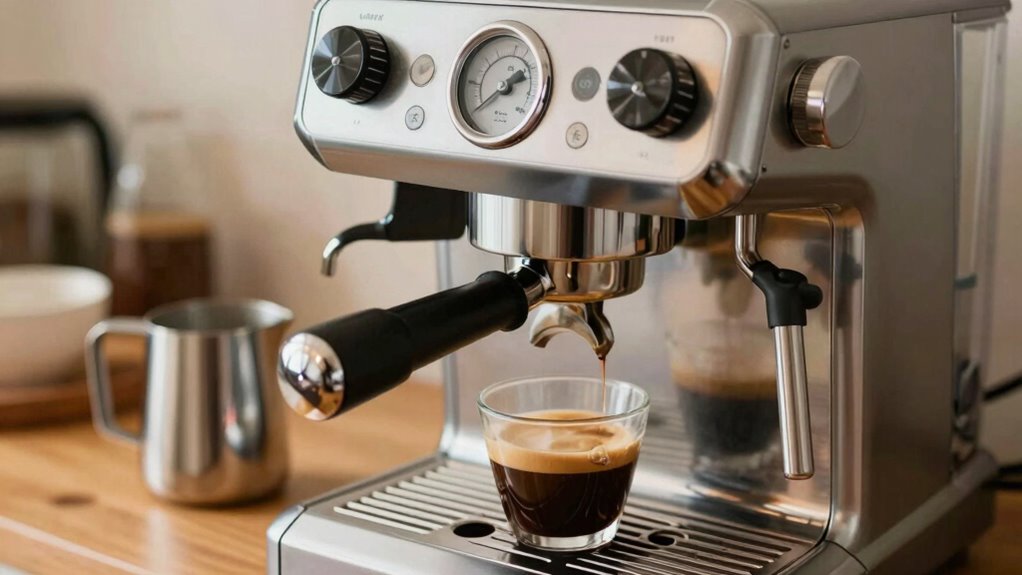
When choosing an espresso machine, focus on its core features that impact your brewing experience. Bar pressure is often misunderstood; rather than relying solely on 15 bar, prioritize machines that deliver stable pressure during espresso extraction. The key is consistent pressure, which ensures ideal extraction and flavor. Look for machines with good temperature control and a reliable pump system, as these influence how well your coffee develops its aroma and body. Pay attention to the boiler type and size, since they affect heat stability and steam quality. Ease of use and maintenance also matter—choose a machine that fits your skill level and routine. Ultimately, a well-designed machine with proper pressure control guarantees better espresso extraction, translating into richer, more balanced coffee.
How Can You Make Consistent, High-Quality Espresso at Home?

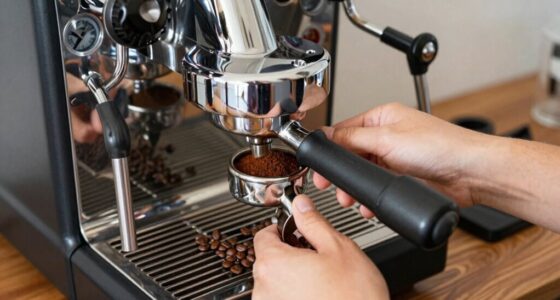
Achieving consistent, high-quality espresso at home requires attention to detail and proper technique. You need to control key factors like pressure and brewing temperature. Use a pressure gauge to monitor pressure levels during extraction, ensuring it stays steady around the ideal range. Maintain a stable brewing temperature, ideally between 195°F and 205°F, for ideal extraction.
To improve your results:
- Adjust grind size to achieve proper extraction flow
- Use a scale to measure coffee dose accurately
- Preheat your machine and cups to stabilize temperature
- Consistently monitor your pressure gauge for fluctuations
These steps help you produce espresso with balanced flavor, consistency, and quality every time.
What Pressure Metrics Are Most Important for Great Espresso?

Monitoring the right pressure metrics is essential for brewing excellent espresso. The key factors include stable brew pressure, which ensures flavor extraction, and pump pressure safety, preventing damage to your machine. Consistent pressure maintains machine durability and ensures longevity. Focus on the pressure during extraction, typically around 9 bars, rather than just the maximum pressure your machine can handle.
| Pressure Metric | Why It Matters |
|---|---|
| Brew Pressure | Affects flavor extraction |
| Pump Pressure Safety | Protects machine from overpressure |
| Stability During Extraction | Ensures uniform results |
| Pre-Infusion Pressure | Softens coffee for better extraction |
| Max Pressure Limit | Prevents damage, improves pressure safety |
Frequently Asked Questions
Can Pressure Levels Vary Between Different Espresso Machine Brands?
Yes, pressure levels can vary between different espresso machine brands. You might notice pressure inconsistencies due to brand variations, as each manufacturer designs machines with different specifications and components. Some brands prioritize higher pressure for richer flavor, while others focus on stability and consistency. Always check your machine’s specifications and consider how brand differences could affect your brewing process and the quality of your espresso.
What Is the Ideal Pressure for Different Types of Coffee Beans?
You’ll want different pressures for different beans, but don’t expect your machine to magically modify itself. For light roasts, aim for around 9 bars to ensure perfect bean extraction, while darker roasts can handle 9-10 bars. Prioritize pressure consistency to avoid uneven extraction, which ruins the flavor. Remember, it’s not about the number on the machine, but how well you dial in that pressure for each bean type.
How Does Altitude Affect Espresso Brewing Pressure?
Altitude effects can impact your espresso brewing pressure because higher elevations have lower atmospheric pressure. You might need to adjust your machine’s pressure settings to compensate and guarantee proper extraction. By increasing pressure adjustment, you help counteract the reduced ambient pressure, resulting in a richer, well-balanced shot. Always test and tweak your machine at different altitudes to achieve ideal brewing conditions and maintain consistent espresso quality.
Are There Health Risks Associated With High-Pressure Espresso Machines?
You shouldn’t worry about health risks from high-pressure espresso machines when you prioritize pressure safety. Manufacturers design these machines with built-in safety features to prevent accidents, so they’re safe to use regularly. However, excessive pressure can strain machine durability over time. As long as you follow the instructions and maintain your machine properly, you can enjoy your espresso without concern, knowing you’re safe and your equipment stays in top shape.
How Often Should I Calibrate My Machine’s Pressure Settings?
You should calibrate your espresso machine’s pressure settings every 3 to 6 months to guarantee peak performance. Regular calibration maintains pressure gauge accuracy, so you get consistent shots. If you notice inconsistent extraction or gauge inaccuracies, it’s time to recalibrate sooner. Consistent calibration frequency helps you identify issues early, prolongs your machine’s lifespan, and guarantees you always brew with the right pressure for perfect espresso.
Conclusion
Think of your espresso machine like a trusted guide on a coffee adventure. The truth about “15 bar” is that more pressure isn’t always better—it’s about how you use it. Focus on the quality of your beans, grind size, and extraction time. With a little knowledge, you’ll brew espresso that’ll make your taste buds dance, just like a perfectly choreographed dance. Remember, great coffee is about precision, not just pressure.