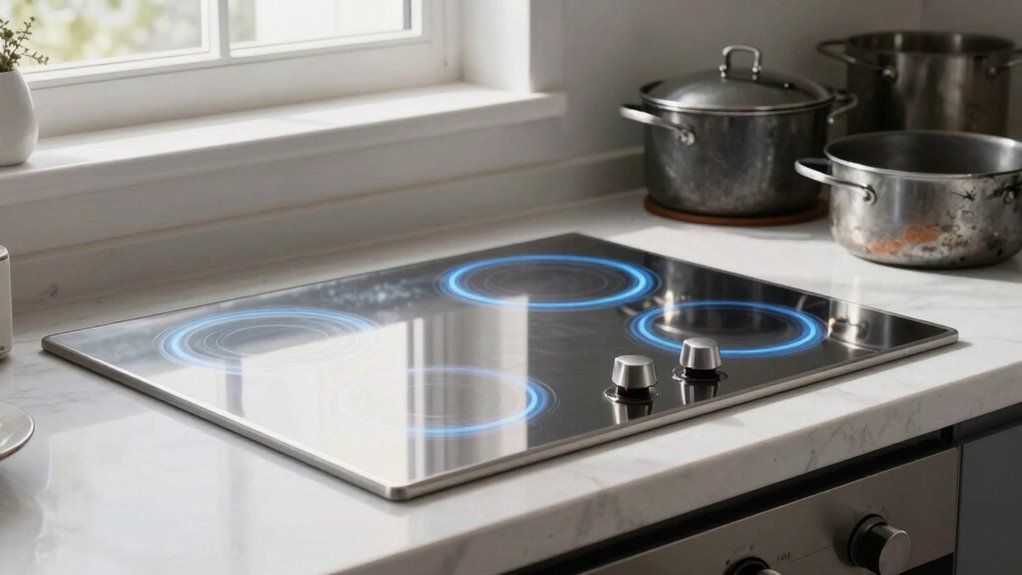
Many induction buyers overlook how unstable power supply can affect their cooktop’s performance. Fluctuating voltage can cause uneven heating, hotspots, or even shut down the appliance unexpectedly. Poor electrical setups, outdated wiring, or insufficient circuit capacity often go unnoticed but lead to safety risks and higher energy costs. Ensuring a dedicated, properly wired circuit is essential for reliable performance and safety. Keep exploring to discover how you can prevent these common power issues and optimize your cooking experience.

Get cleaning gear delivered free — and shop member deals
- Fast, free delivery on millions of items
- Access to Prime Big Deal Days deals on October 6–7
- Prime Video, Amazon Music and more included
Key Takeaways
- Many buyers overlook the impact of home wiring quality on induction cooktop performance.
- Power fluctuations often go unnoticed but cause uneven heating and safety hazards.
- Inadequate electrical circuits lead to inconsistent power delivery and appliance shutdowns.
- Upgrading electrical infrastructure is essential for stable power and optimal induction cooking.
- Proper electrical setup enhances safety, efficiency, and lifespan of induction cooktops.
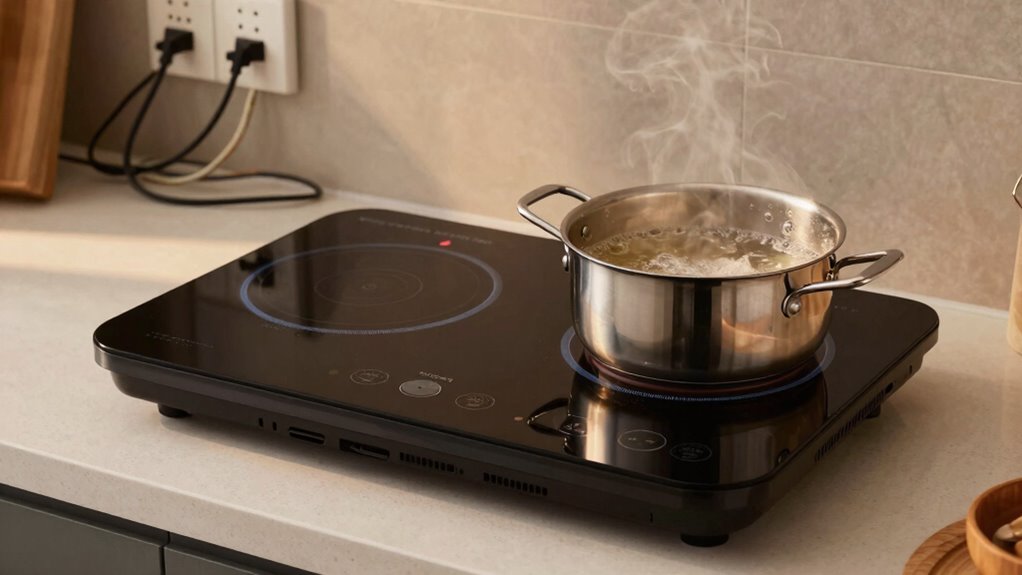
Many induction buyers encounter a common issue: their appliances don’t receive consistent power, leading to performance problems. This inconsistency can cause your induction cooktop to fluctuate in heat, making it difficult to cook precisely and safely. While most people focus on features like sleek design or brand reputation, they often overlook the importance of stable power supply, which directly impacts energy efficiency and cooking safety. When power delivery isn’t steady, your appliance may draw more energy than necessary, reducing overall efficiency and increasing your energy bills. Additionally, uneven power can create hotspots or cold spots on the cooktop, risking food undercooking or overcooking, which compromises your safety and the safety of your family.
Consistent power is essential for safe, efficient, and precise cooking with your induction cooktop.
Understanding the root of this power problem means realizing that your kitchen’s electrical system plays a critical role. Many induction buyers don’t consider whether their wiring can support the high power demands of an induction cooktop. If your electrical circuit isn’t capable of providing a consistent and sufficient current, your appliance’s performance will suffer. This can happen if you use an extension cord not rated for high wattage or if your home’s wiring is outdated. In such cases, the induction cooktop may frequently shut off or struggle to reach the desired temperature. These issues aren’t just inconvenient—they can lead to unsafe electrical conditions or damage to your appliance. Ensuring your electrical system is properly configured can prevent power fluctuations and optimize your cooking experience. Regularly inspecting and upgrading your electrical wiring can help support the high power demands of modern induction cooktops and prevent these issues. Recognizing the importance of electrical capacity in your home is essential for a reliable cooking setup. Moreover, understanding electrical load balancing can further ensure your system is prepared for high power appliances.
To solve this, you need to guarantee your electrical system meets the cooktop’s specifications. Many induction models require a dedicated circuit with proper voltage and amperage. Upgrading your wiring or installing a dedicated outlet can make a significant difference, enabling your appliance to operate at maximum energy efficiency. When power supply is stable, your cooktop uses electricity more effectively, conserving energy and reducing waste. This not only saves you money but also helps the environment by lowering unnecessary power consumption.
Cooking safety is also enhanced when your induction cooktop receives consistent power. Fluctuations can cause unexpected shutdowns or erratic heating, which pose safety hazards, especially if you’re distracted or multitasking. Ensuring a steady power supply keeps your appliance working reliably, reducing the risk of accidental burns, fires, or damage to your cookware. In the end, paying attention to your electrical setup is one of the most overlooked yet critical steps in maximizing your induction cooktop’s performance, energy efficiency, and safety. By addressing this power issue early, you’ll enjoy a safer, more efficient cooking experience every time.
induction cooktop power supply upgrade
As an affiliate, we earn on qualifying purchases.
As an affiliate, we earn on qualifying purchases.
Frequently Asked Questions
How Do Induction Cooktops Compare to Traditional Gas Stoves?
Induction cooktops heat faster and use less energy compared to traditional gas stoves, making them more efficient. You’ll notice quicker cooking speeds because induction directly transfers energy to the cookware. Plus, they’re safer since the surface stays cooler. If you want efficient energy consumption and rapid cooking, induction is a great choice. Gas stoves still offer visual flame control, but induction’s speed and efficiency often outweigh that advantage.
What Safety Features Are Common in Induction Cooktops?
Imagine you’re cooking, and suddenly, the cooktop detects overheating—safety sensors activate instantly, shutting off power to prevent accidents. Common safety features include safety sensors that monitor temperature and prevent overheating, and child lock functions to keep little hands from activating or changing settings. These features give you peace of mind, knowing your induction cooktop is designed to prioritize safety, especially in households with children or busy environments.
Can Induction Cooktops Be Used With All Types of Cookware?
Induction cooktops require compatible cookware, specifically those made with magnetic materials like cast iron or certain stainless steels. Always check for magnetic compatibility before use, as non-magnetic cookware like aluminum or glass won’t work. To guarantee proper performance, test your cookware with a magnet—if it sticks, it’s suitable. So, not all cookware works on induction, but with the right magnetic compatibility, you can enjoy efficient, fast cooking.
How Energy-Efficient Are Induction Cooking Systems?
Induction cooking systems are remarkably energy-efficient, using about 85-90% of energy directly for cooking. This means you consume less energy overall, reducing your environmental impact while saving money on utility bills. Unlike traditional methods, induction heats cookware instantly, minimizing wasted heat. If you’re environmentally conscious, you’ll appreciate the efficiency of induction, which not only speeds up cooking but also helps lower your home’s overall energy consumption.
What Maintenance Is Required for Induction Cooktops?
You should regularly clean your induction cooktop with a soft, damp cloth to prevent buildup and maintain efficiency. Check the power calibration periodically to guarantee it’s functioning correctly, especially if you notice uneven heating. Avoid abrasive cleaners that can damage the surface. Keeping up with these cleaning routines and power calibration helps your cooktop perform at its best, extending its lifespan and ensuring safe, efficient cooking every time.
dedicated circuit for induction stove
As an affiliate, we earn on qualifying purchases.
As an affiliate, we earn on qualifying purchases.
Conclusion
Many induction buyers overlook the power problem, risking underperformance and frustration. Did you know that nearly 40% of users report dissatisfaction because their cooktops don’t meet their needs? By understanding your power requirements upfront, you can avoid costly mistakes and enjoy efficient cooking. Don’t let this hidden issue catch you off guard—being informed guarantees you select the right induction cooktop, making every meal a success and saving you time and money in the long run.
high wattage electrical outlet for induction cooktop
As an affiliate, we earn on qualifying purchases.
As an affiliate, we earn on qualifying purchases.
induction cooktop voltage stabilizer
As an affiliate, we earn on qualifying purchases.
As an affiliate, we earn on qualifying purchases.
Fall Picks
fall essentials
As an affiliate, we earn on qualifying purchases.