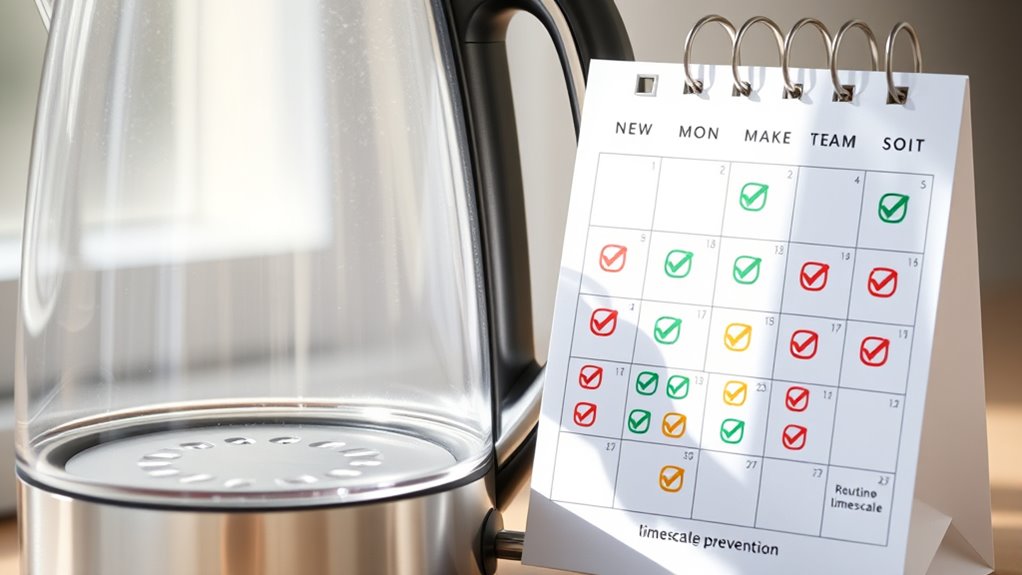

To prevent limescale in your kettle, create a simple maintenance schedule based on your water hardness. Descale every 4 to 6 weeks using vinegar or lemon juice, especially if you notice white deposits. Consider installing a water softener or using filtered water to reduce mineral buildup. Consistent cleaning and softening methods extend your kettle’s lifespan and improve performance. Keep an eye on deposits, and discover more tips to keep your kettle in top shape.
Key Takeaways
- Schedule descaling every 4 to 6 weeks, depending on water hardness and usage frequency.
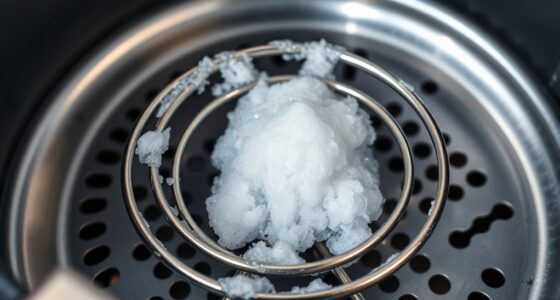
- Regularly inspect for white deposits and descale promptly to prevent buildup.
- Use natural agents like vinegar or lemon juice for easy, effective descaling sessions.
- Install a water softener or filter to reduce mineral content and minimize limescale formation.
- Keep reminders and maintain a routine to ensure consistent kettle cleaning and long-term maintenance.

Have you ever noticed that your kettle starts to develop a white, chalky build-up over time? That’s limescale, and it’s a common issue, especially in areas with hard water. The good news is that you can prevent most of this buildup with simple maintenance routines. Regularly descaling your kettle using effective techniques is key, and understanding water softening methods can make a *meaningful* difference in reducing limescale formation. When you focus on these strategies, you’ll extend your kettle’s lifespan and improve its efficiency.
Prevent limescale buildup with simple descaling and water softening techniques to extend your kettle’s lifespan.
To start, incorporating descaling techniques into your routine is *essential*. You don’t need harsh chemicals or complicated tools—just a bit of vinegar or lemon juice can do the trick. For instance, once a month, fill your kettle halfway with equal parts water and white vinegar. Bring it to a boil, then turn it off and let it sit for about 20 minutes. Afterward, pour out the mixture and rinse thoroughly with clean water. Repeat if necessary, especially if the build-up is stubborn. Lemon juice works similarly; its natural acidity breaks down limescale effectively. These simple methods are eco-friendly, inexpensive, and easy to perform regularly.
But beyond descaling, water softening plays a *key* role in preventing future limescale issues. Hard water contains high levels of minerals like calcium and magnesium, which are the main culprits behind limescale buildup. Installing a water softening system, such as a water softener or using water conditioners, can *considerably* reduce these minerals in your tap water. Alternatively, using filtered or softened water for your kettle minimizes mineral deposits. If you’re in a rental or can’t install a system, consider using bottled or pre-softened water for your daily needs. This proactive approach not only reduces limescale but also helps your kettle operate more efficiently, saving energy and prolonging its lifespan.
Additionally, understanding the offensive tactics used in ethical hacking can help you recognize vulnerabilities before malicious actors do. Maintaining a regular cleaning schedule is *important*. Set a reminder to descale your kettle every 4 to 6 weeks, depending on your water hardness. Keep an eye out for white deposits around the spout or inside the kettle, which signal it’s time for cleaning. Also, consider installing a water softening device if hard water is a persistent problem in your home. By combining these descaling techniques with water softening, you’ll prevent the buildup before it even starts, ensuring your kettle stays in top shape. Consistent maintenance might seem small, but it pays off in the long run by preventing costly repairs or replacements and ensuring your hot drinks taste fresh and pure every time.
Frequently Asked Questions
How Often Should I Descale My Kettle for Optimal Performance?
You should descale your kettle every 1 to 3 months for peak performance, depending on your water quality. If you have hard water, descaling more frequently is essential because mineral buildup impacts heating efficiency and kettle lifespan. Regular descaling prevents limescale from accumulating, ensuring your kettle heats quickly and lasts longer. Keep an eye on performance and water clarity to adjust your descaling frequency accordingly.
Can Using Filtered Water Reduce Limescale Buildup?
Using filtered water can indeed reduce limescale buildup in your kettle. Water purification removes minerals that cause limescale, lowering mineral content and preventing deposits. By choosing filtered water, you help maintain your kettle’s performance and extend its lifespan. Keep in mind, though, that some mineral content may remain, so regular descaling is still recommended for ideal results. Overall, filtered water is a smart choice for limescale reduction.
What Are the Signs That My Kettle Needs Descaling?
You’ll notice your kettle needs descaling if you see scale buildup on the element or inside the spout. Reduced water heating efficiency, strange noises, or longer boiling times also signal mineral deposits from poor water quality. If your kettle takes longer to boil or produces uneven heat, it’s time to descale. Regular maintenance helps keep your appliance functioning smoothly and extends its lifespan, especially if you have hard water in your area.
Are There Natural Descaling Methods Safer Than Chemical Solutions?
Think of natural remedies as gentle gardeners tending to your kettle’s health. You can use vinegar or lemon juice, which safely dissolve limescale without harsh chemicals. These methods are generally safer and eco-friendly, but safety considerations matter—always dilute properly. Unlike chemical solutions, natural remedies reduce exposure to fumes and residues, making them a safer choice for your household and the environment. Give it a try, and your kettle will thank you!
How Do Different Water Types Affect Limescale Formation?
Different water types markedly influence limescale formation due to their mineralization and pH levels. Hard water, high in minerals like calcium and magnesium, promotes quick limescale buildup, especially if pH levels are alkaline. Soft water, with lower mineral content and neutral pH, reduces limescale risk. Understanding your water’s mineralization and pH helps you anticipate and prevent limescale, making maintenance easier and more effective.
Conclusion
By following this simple maintenance calendar, you can easily prevent limescale buildup and keep your kettle in top shape. Did you know that limescale can reduce your kettle’s efficiency by up to 15%? That means more energy, longer boiling times, and higher bills. Taking a few minutes each month to descale saves you money and extends your kettle’s lifespan. Stay proactive, and enjoy hot drinks without the hassle of stubborn limescale!