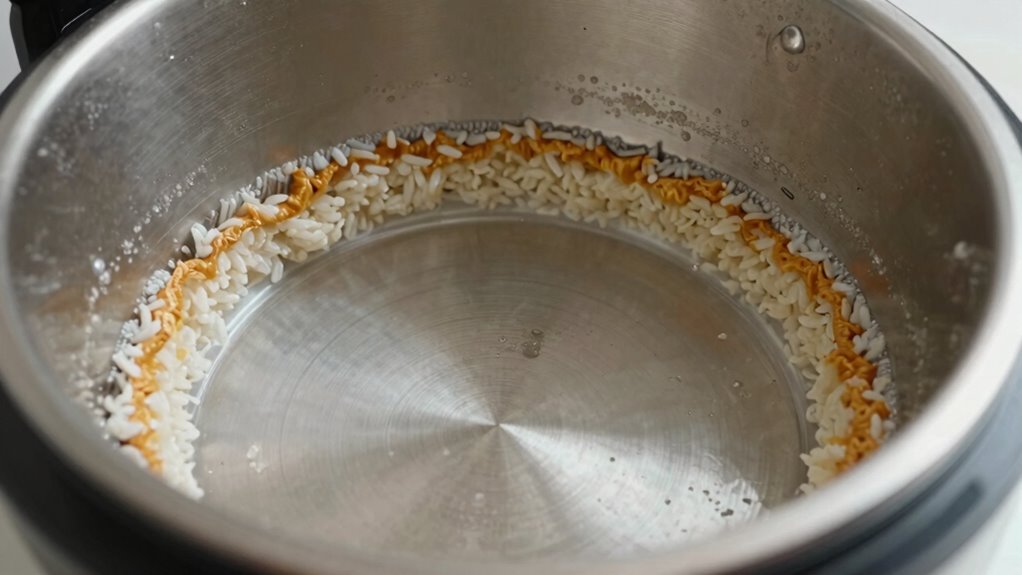

Your rice cooker leaves a crusty ring because high temperatures and uneven heating cause moisture to evaporate quickly, leaving starch residue that sticks to the inner wall as it dries. Excess moisture from starchy rice and poor sealing also contribute to buildup. Regularly cleaning your cooker and ensuring proper preparation can help prevent this. For a clearer understanding of how to avoid crusty rings and keep your cooker clean, keep exploring this topic.
Key Takeaways
- Overheating or uneven temperature regulation causes rapid moisture evaporation, leading to crust formation around the inner pot edges.
- Excess surface starch from insufficient rinsing of rice settles at the edges, creating a crusty ring during cooking.
- A poorly sealed lid allows moisture to escape unevenly, promoting crust buildup on the inner wall.
- Lack of regular cleaning and maintenance of heating elements and sensors can cause overheating and crust development.
- Using high-starch rice or too much water increases residue, which can dry out and form a crusty ring.
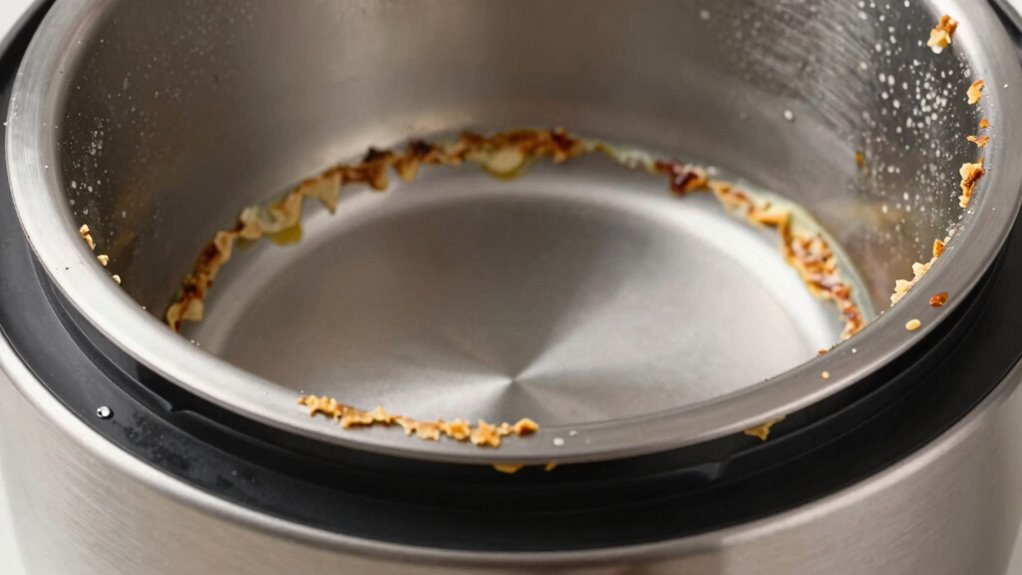
If you’ve noticed a crusty ring forming around the edge of your rice cooker’s inner pot, you’re not alone. This crusty layer often worries users, but understanding its cause can help you prevent or manage it. One primary factor is the cooking temperature. When the rice cooker heats unevenly or runs at a higher temperature than necessary, it causes excess moisture to evaporate quickly, leaving behind a caramelized residue that sticks to the sides. Over time, this buildup becomes the crusty ring you see.
The rice texture also plays a role. If you tend to use too much water or if the rice is particularly starchy, these factors contribute to the formation of that crust. Starch from the rice tends to settle at the edges during cooking, especially when the heat is high or if the cooker’s lid doesn’t seal perfectly. As the moisture evaporates, the starch and residual rice particles dry out and adhere to the inner wall, forming that crusty ring. Ensuring your rice is rinsed thoroughly can reduce the amount of surface starch residue that contributes to buildup. Proper temperature regulation is essential because maintaining the right heat ensures the rice cooks evenly and prevents burning or sticking. Additionally, using quality rice can make a difference in how much residue is left behind after cooking.
Your cooking temperature is essential because maintaining the right heat ensures the rice cooks evenly and prevents burning or sticking. Most rice cookers are designed with sensors or thermostats that regulate temperature, but if these are faulty or dirty, the cooker might overheat. When it runs too hot, it accelerates the evaporation process, intensifying the formation of a crust. Making sure your cooker’s heating element is clean and functioning correctly will help maintain a consistent temperature, reducing the likelihood of crust buildup. Regularly inspecting and cleaning the thermal sensor can help prevent temperature fluctuations.
rice cooker inner pot cleaning brush
As an affiliate, we earn on qualifying purchases.
As an affiliate, we earn on qualifying purchases.
Frequently Asked Questions
Can Using Metal Utensils Damage My Rice Cooker?
Using metal utensils can indeed damage your rice cooker. Metal utensils scratch the non-stick surface, leading to potential peeling or warping. Additionally, scratching can cause cooking temperature variations, which might affect how evenly your rice cooks. To protect your appliance, opt for silicone or wooden utensils, and avoid forcing utensils into the cooker. This way, you keep the surface smooth and guarantee consistent cooking results.
How Often Should I Clean My Rice Cooker to Prevent Crusty Rings?
You should clean your rice cooker after every use to prevent crusty rings and guarantee peak performance. Regular cleaning, including wiping the lid and inner pot, is a key maintenance tip. For thorough cleaning, deep clean weekly or bi-weekly, depending on usage. This cleaning frequency helps eliminate residue buildup, keeps your rice cooker in good shape, and prevents crusty rings from forming. Consistent maintenance makes cooking easier and prolongs its lifespan.
Does the Type of Rice Affect Crust Formation?
Ever wonder if the type of rice affects crust formation? Yes, it does! Different rice varieties have varying starch content, which influences crust development. Short-grain rice, with higher starch, tends to create more crust, while long-grain rice produces less. So, if you’re noticing crusty rings, consider switching rice types or rinsing thoroughly to reduce surface starch. This simple step can help keep your rice cooker cleaner and your rice perfect.
Are There Specific Cleaning Products Recommended for Rice Cookers?
You should use gentle cleaning brushes and natural remedies for your rice cooker. Avoid harsh chemicals that can damage the non-stick surface. Instead, opt for a mixture of vinegar and baking soda or a soft cloth soaked in warm water with a little lemon juice. These natural remedies effectively remove residue without harming your appliance. Regular cleaning with these methods keeps your rice cooker fresh and prevents crusty build-up.
Can Mineral Deposits Contribute to Crusty Rings?
Yes, mineral deposits can contribute to crusty rings in your rice cooker. Mineral buildup occurs from hard water, leaving behind deposits that cause crust formation. When these deposits accumulate, they create uneven surfaces that trap rice and moisture, leading to crusty rings. To prevent this, regularly clean your rice cooker with vinegar or a descaling solution to dissolve mineral deposits, keeping the interior smooth and preventing crust formation.
As an affiliate, we earn on qualifying purchases.
Conclusion
So, next time you see that crusty ring, remember it’s a tiny reminder of your effort and patience—like the faint glow of dawn after a long night. Instead of frustration, see it as a sign you’ve nurtured your rice cooker’s story, a badge of your culinary journey. Embrace it, for within that ring lies the quiet evidence to your dedication—proof that every meal, every moment, is worth savoring.
rice cooker temperature sensor replacement
As an affiliate, we earn on qualifying purchases.
As an affiliate, we earn on qualifying purchases.
As an affiliate, we earn on qualifying purchases.