Single-dose grinders are designed to minimize leftover coffee, but “zero retention” isn’t entirely accurate because some residual grounds always cling to burrs and internal parts. These grinders aim to reduce, not eliminate, leftovers through smart design and materials. Factors like grind size, cleaning habits, and internal construction influence how much coffee stays behind. To discover how to get the freshest brew and lower residuals, explore the details ahead.
Key Takeaways
- “Zero retention” aims to minimize residual coffee but cannot eliminate it completely due to internal crevices and material properties.
- Small amounts of residual coffee are unavoidable but can be significantly reduced with high-quality materials and thoughtful design.
- Proper cleaning and maintenance are essential to keep residual buildup low, enhancing freshness and flavor.
- Design features like floating mechanisms and smooth burr surfaces help reduce leftover grounds but don’t guarantee total removal.
- Understanding “zero retention” helps users manage expectations and focus on maximizing freshness and consistency.
What Are Single‑Dose Coffee Grinders?
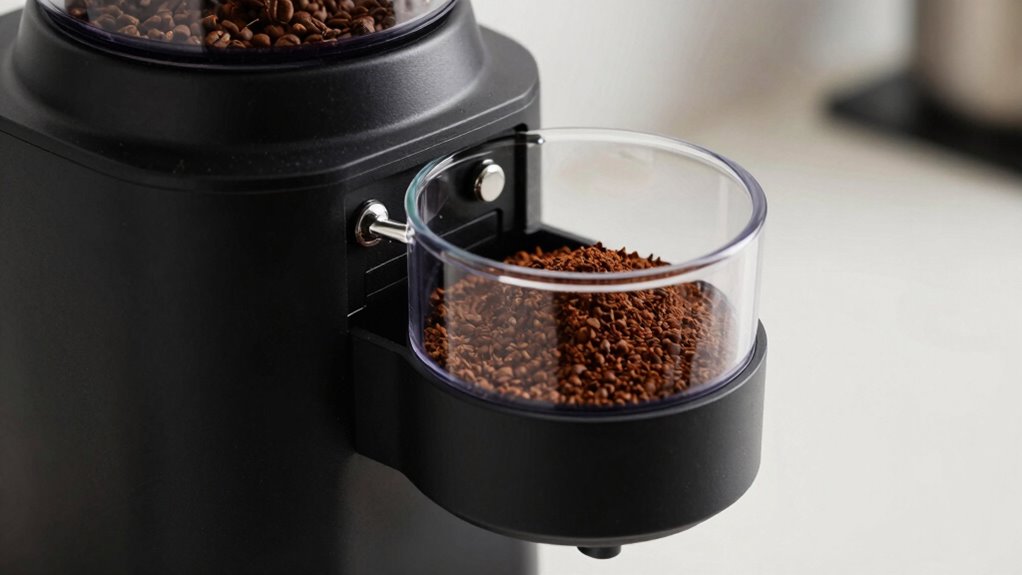
Single-dose coffee grinders are designed to grind just enough beans for a single cup at a time. You’ll notice they produce less grinder noise compared to larger models, making your morning routine quieter. The motor power in these grinders is typically optimized for small quantities, providing efficient grinding without excessive noise or vibration. This focused design also helps preserve the freshness of your coffee, ensuring a richer flavor profile with each brew. Because they only handle a single dose, they reduce waste and prevent over-grinding, which can affect flavor. The compact size and focused motor power make these grinders ideal for those who value precision and convenience. Overall, single-dose grinders give you control over your coffee experience with minimal noise and maximum efficiency, aligning with the trend toward specialized coffee equipment for enthusiasts. Additionally, their efficient design contributes to a more sustainable approach by minimizing waste and energy use.
How Do Single‑Dose Grinders Work?
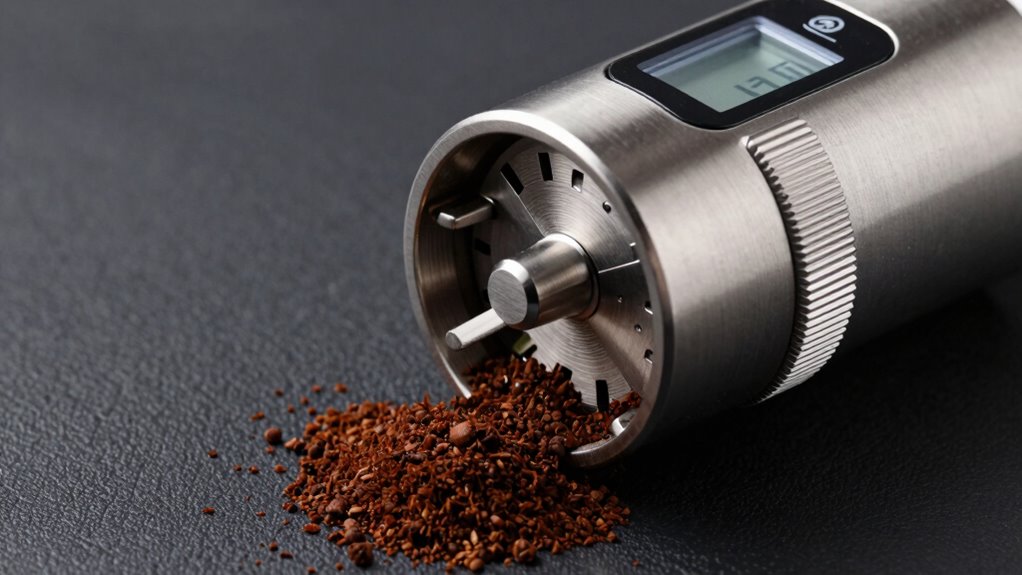
Single‑dose grinders work by using a small hopper or chamber that holds just enough coffee beans for a single serving. When you activate the grinder, it quickly mills the beans into a consistent grind size, often with minimal grinder noise. Because the chamber is small, there’s less leftover coffee, which reduces static and retention. This design minimizes static buildup and ensures a cleaner grind. You’ll find that maintenance routines are straightforward—they often involve regular cleaning to prevent buildup and guarantee peak performance. This also helps keep grinder noise at a manageable level. Unlike larger grinders, single-dose models are designed for quick, precise dosing, making it easier to maintain freshness and control over your brew. Proper upkeep ensures your grinder works smoothly, maintaining grind size consistency and reducing any unwanted noise during operation. Additionally, understanding regional coffee practices can help optimize your brewing results and overall experience.
Why Zero Retention Matters for Coffee Lovers
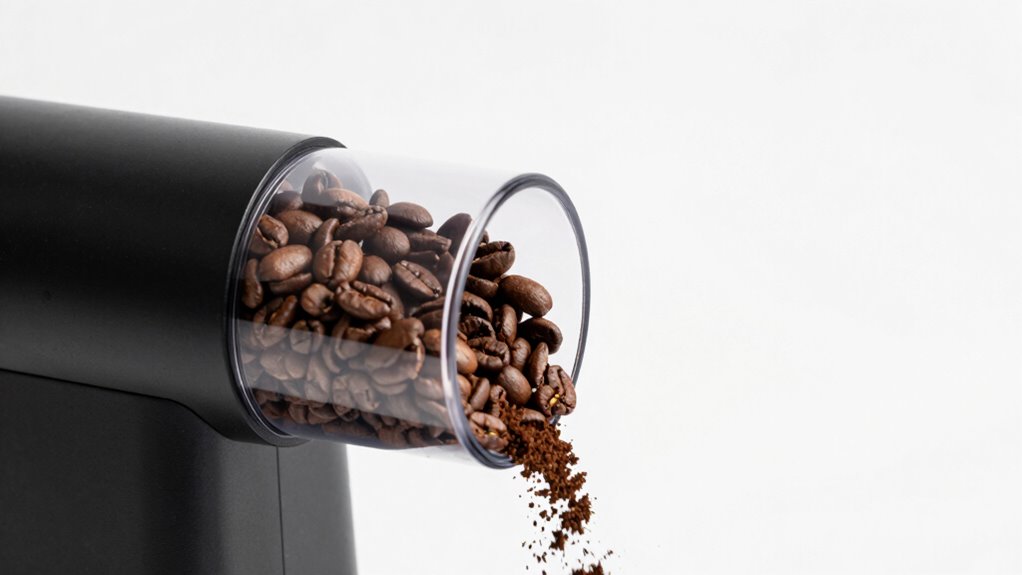
When your grinder has zero retention, your coffee stays fresher from bean to brew. This means you’ll enjoy better flavor and aroma with every cup. Plus, consistent grind size helps you achieve a more balanced and satisfying brew each time. Free Floating mechanisms in grinders contribute to reducing residual coffee, ensuring minimal waste and maximum freshness.
Freshness Preservation Benefits
To preserve the freshest flavors in your coffee, minimizing residual grounds in your grinder is essential. When your grinder retains fewer grounds, you reduce the risk of stale oils tainting new beans, ensuring each brew captures the true aroma and taste. Zero retention helps maintain ideal brew temperature because fresh grounds heat evenly, avoiding uneven extraction caused by old coffee particles. Additionally, with less residual coffee, your grinder operates more quietly, reducing grinder noise and creating a calmer brewing environment. This requirements traceability helps ensure consistent quality and performance over time. This freshness preservation means you get a consistent, vibrant cup every time. By choosing a grinder with minimal retention, you protect your coffee’s nuanced flavors and enjoy a more precise, satisfying experience from start to finish.
Consistent Brew Quality
Zero retention in your grinder plays a crucial role in ensuring consistent brew quality. When your grinder minimizes leftover grounds, each dose remains fresh and unaffected by previous grinds, leading to more uniform extraction. This consistency helps maintain the ideal brew temperature, preventing sudden temperature drops or spikes that can alter flavor. Additionally, zero retention grinders typically operate with less grinder noise, making it easier to dial in your grind size precisely. By reducing residual grounds, you avoid over-extraction or under-extraction caused by stale particles. As a result, your coffee’s aroma, flavor, and body stay consistent shot after shot. Incorporating precise measurement tools can further optimize your brewing process and ensure accuracy. Moreover, understanding grinder calibration can help you fine-tune your equipment for optimal performance. Regular maintenance and cleaning routines also contribute to consistent results and preserve the integrity of your grinder. Proper grinder maintenance ensures longevity and reliable operation, supporting your quest for the perfect cup. This reliability ensures every brew meets your expectations, elevating your overall coffee experience and making your morning routine more satisfying.
Do Zero-Retention Grinders Really Leave No Coffee Behind?
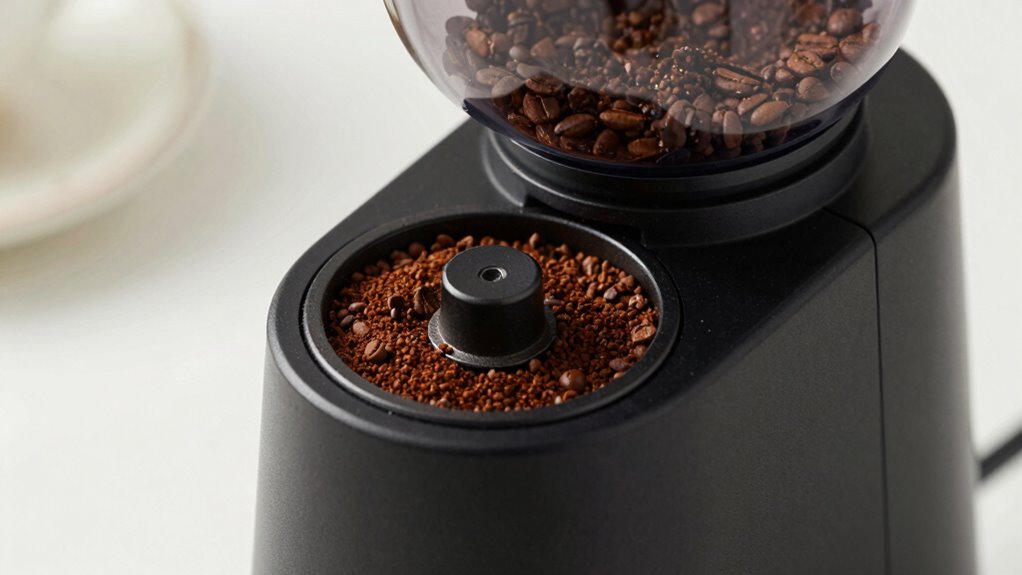
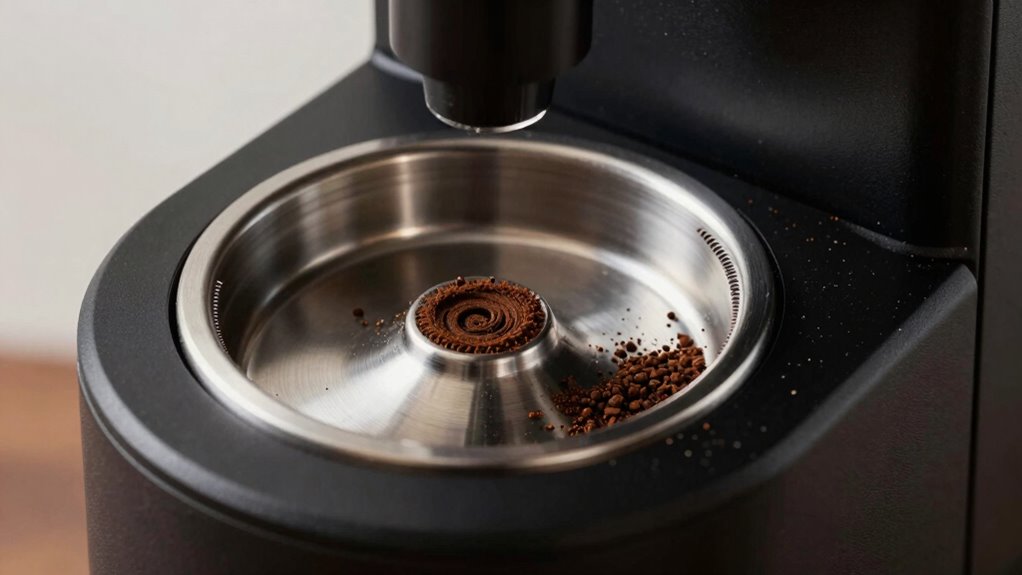
Have you ever wondered if zero-retention grinders truly leave no coffee behind? While their design aims to maximize coffee bean preservation, some residual grounds inevitably remain in the grinder’s chambers. Even with meticulous cleaning, tiny bits can cling to burrs or internal crevices, making complete removal challenging. Residual coffee buildup can impact freshness and flavor, especially if you switch beans frequently. Additionally, many zero-retention grinders are designed to operate quietly, reducing grinder noise levels, which can make cleaning and maintenance less disruptive. However, their focus on minimizing residue doesn’t mean they eliminate all leftover coffee. The design limitations of even advanced grinders can sometimes trap small particles, making it difficult to achieve perfect cleanliness. Natural beauty of the grinder’s components can sometimes trap small particles, making it difficult to achieve perfect cleanliness. Moreover, understanding the material properties of the grinder parts can help in assessing how easily residues are retained and cleaned away. Recognizing the manufacturing quality of the grinder can also influence how effectively it minimizes leftover coffee. So, while they come close, it’s unlikely you’ll find a grinder that leaves absolutely nothing behind, no matter how advanced the design.
Design Features That Reduce Coffee Residue
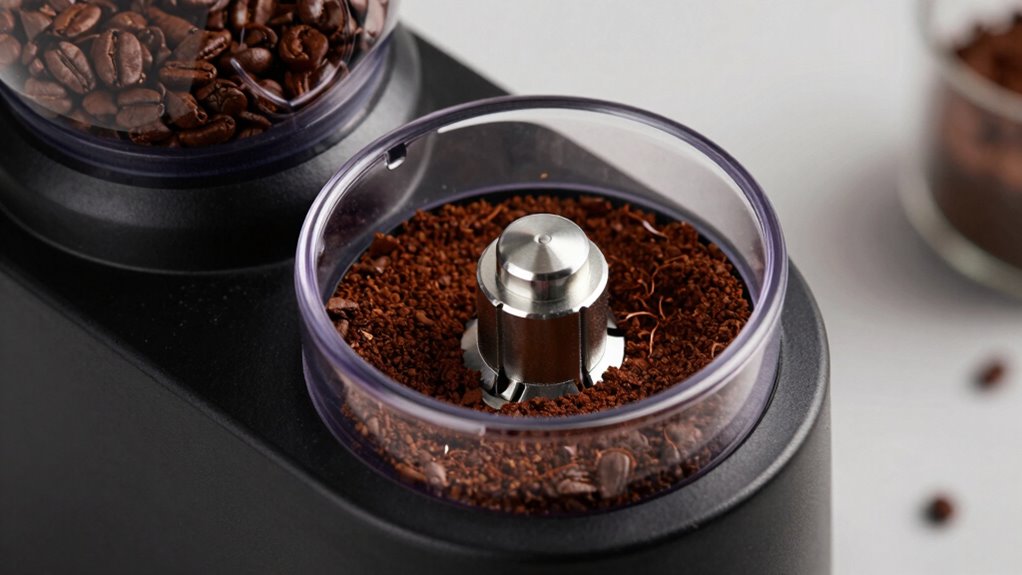
Design features that reduce coffee residue focus on streamlining the grinding process and minimizing areas where grounds can stick. By simplifying the grinder’s internal structure, manufacturers make it easier to perform grinder maintenance and keep residues in check. Features like smooth, sealed chambers and fewer crevices prevent grounds from clinging to surfaces, reducing buildup over time. This not only makes cleaning simpler but also helps preserve the flavor of your coffee by avoiding stale residues mixing with fresh grounds. Precision machining and well-designed burrs contribute to consistent grinding and minimal retention. When your grinder is easier to maintain and residue is kept to a minimum, you’re more likely to enjoy pure, fresh flavors and prolong the lifespan of your equipment. Additionally, incorporating electric motor technology can enhance efficiency and reduce heat buildup, further minimizing residue retention.
What Affects How Much Coffee Stays in Your Grinder?
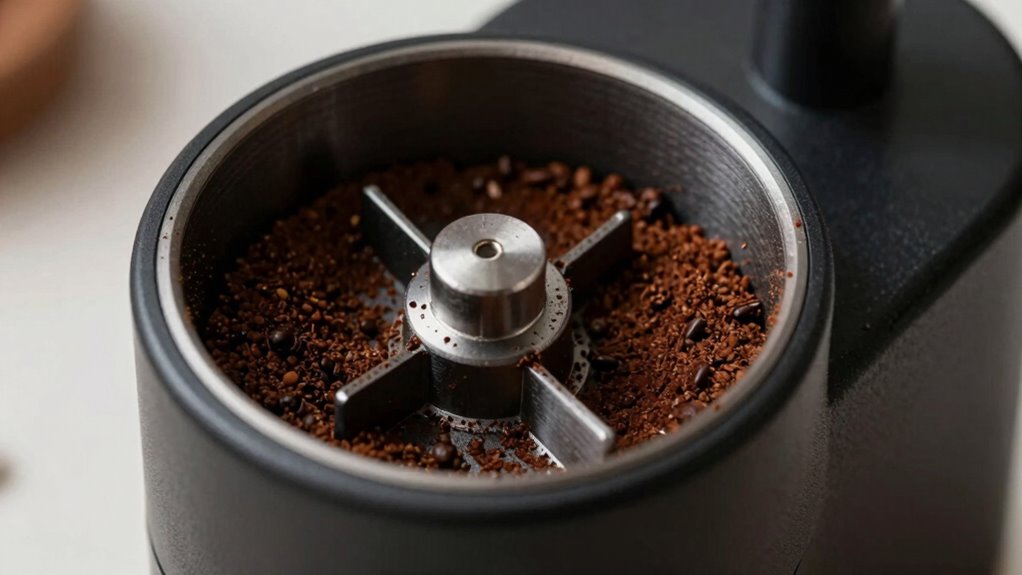
The design and materials of your grinder play a big role in how much coffee remains after grinding. The way your grind is set and its consistency also influence residue retention. Understanding these factors helps you minimize waste and get the freshest brew every time. Additionally, utilizing accessibility features like Guided Access can help users operate their devices more precisely during grinding, reducing errors and spillage. Moreover, selecting a vetted grinder with optimal construction can further reduce coffee retention and improve overall performance. Recognizing the importance of material durability can also ensure your grinder maintains its efficiency over time, further reducing residual coffee buildup. Carefully considering grinder design can lead to better cleaning and less leftover coffee.
Grinder Design and Material
Your grinder’s design and material play a crucial role in how much coffee remains stuck inside after grinding. A well-designed grinder minimizes retention by reducing corners and crevices where grounds can hide. Material choice also impacts retention: stainless steel and ceramic parts tend to be smoother and easier to clean. Additionally, grinder aesthetics influence your choice, with sleek designs often indicating quality and attention to detail. A reputable brand reputation assures you of precision engineering that cuts down on leftover coffee. Understanding material surface finish can help you select a grinder that minimizes residual grounds and enhances your brewing experience. Considering cleaning and maintenance routines can further reduce coffee retention over time.
Grind Size and Consistency
Grind size and consistency directly influence how much coffee remains in your grinder after each use. If your grind isn’t uniform, larger particles may stay behind, trapping coffee and increasing retention. Consistent grind size ensures each dose flows smoothly through the burrs, reducing leftover coffee. Brew temperature also plays a role—if it’s too high or too low, it can cause uneven extraction, highlighting the importance of precise grind uniformity. When your grind is consistent, it minimizes clumping and residue buildup, making cleanup easier and reducing waste. Adjusting grind size carefully helps optimize extraction and prevents excess coffee from sticking in your grinder. Overall, achieving uniform grind size and maintaining appropriate brew temperature improve your grinder’s efficiency and help you get the most out of each dose.
How to Choose a Grinder to Minimize Retention
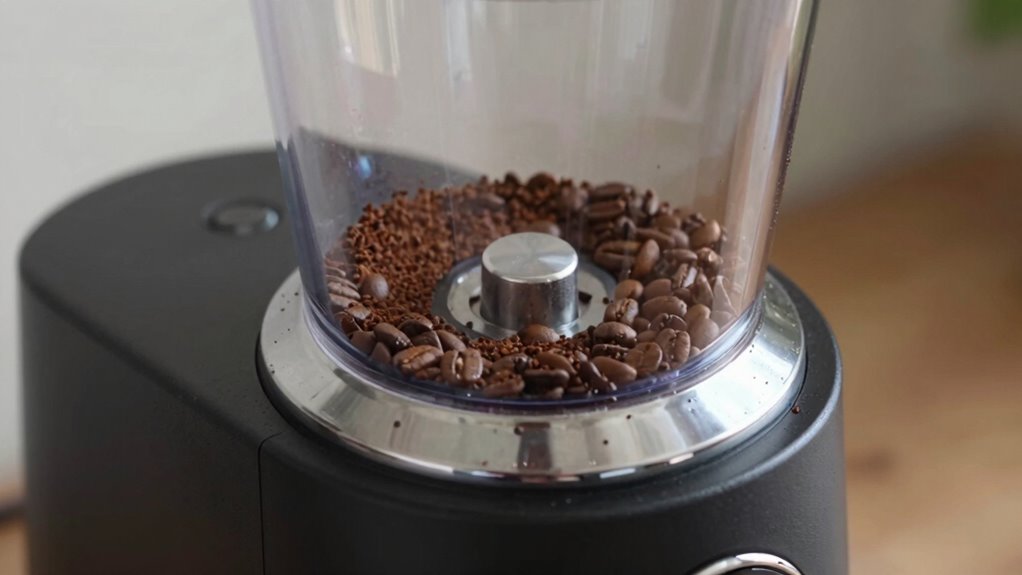
Choosing a grinder that minimizes retention starts with understanding how different designs and features affect how much material gets stuck inside. Look for grinders with conical burrs or flat burrs designed for easy cleaning, which reduce leftover grounds. Consider models with minimal internal crevices, as these trap fewer coffee particles. Proper coffee bean storage also plays a role; keeping beans fresh and dry prevents clumping that can increase retention. Additionally, select a grinder that’s easy to disassemble for routine grinder maintenance—regular cleaning prevents buildup and ensures consistent performance. By focusing on these factors, you’ll reduce residual coffee inside your grinder, leading to fresher grounds and a more consistent brew. The right choice makes a noticeable difference in minimizing retention and maintaining perfect grind quality.
Tips to Keep Your Grinder Clean and Improve Coffee Freshness
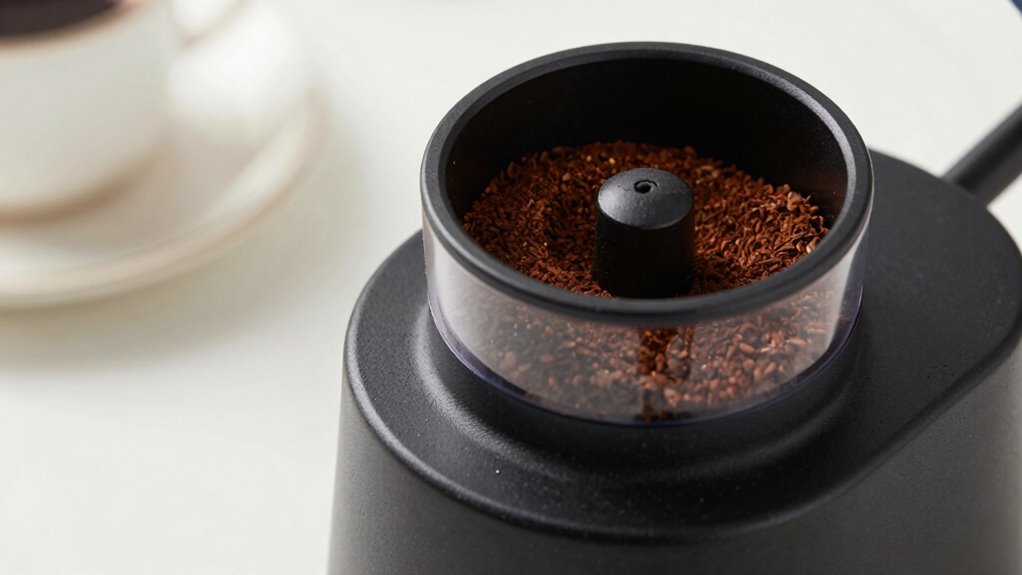
Regularly cleaning your grinder is essential for maintaining peak performance and ensuring your coffee stays fresh. Proper grinder maintenance prevents old coffee residues from affecting flavor and helps preserve the grinder’s longevity. Stick to a consistent cleaning schedule—ideally weekly or after every few uses—to remove built-up oils and debris. This keeps your grinder functioning smoothly and enhances the taste of each brew.
- Use a brush or coffee grinder cleaning tablets to remove stubborn residues
- Disassemble and clean burrs and hopper regularly
- Wipe down exterior surfaces to prevent dust accumulation
Following these tips ensures your grinder stays in top shape, ultimately improving coffee freshness and flavor. Regular maintenance is a simple step toward better brewing results.
Frequently Asked Questions
Can Zero-Retention Grinders Improve Overall Coffee Flavor?
Yes, zero-retention grinders can improve overall coffee flavor by reducing leftover grounds that can cause stale or cross-flavor contamination. Regular grinder cleaning guarantees that no residual coffee impacts flavor preservation. By minimizing retention, you get fresher grounds with each brew, enhancing the taste and aroma of your coffee. Keep your grinder clean and choose a zero-retention model for the best, most consistent flavor in every cup.
Are There Any Disadvantages to Zero-Retention Grinders?
You might think zero-retention grinders are perfect, but they come with their quirks. Maintenance concerns can skyrocket because tiny bits get stuck, making cleaning a nightmare. Plus, the cost considerations are hefty—these grinders often cost a fortune and need extra care. So, while they seem ideal, be prepared for more frequent upkeep and bigger expenses. It’s like buying a sleek sports car that demands constant attention and a fat wallet!
How Does Grinder Material Influence Residue Buildup?
Grinder material considerably influences residue buildup, as it affects residue adhesion. Metal grinders, like stainless steel, tend to resist residue sticking better than plastics or acrylics, making cleanup easier. Ceramic grinders also offer smooth surfaces that reduce residue adhesion. Choosing a grinder with a non-porous, durable material helps prevent buildup, ensuring your grinder stays cleaner with less effort and maintains ideal performance over time.
Does Grind Size Affect Retention Rates?
Yes, grind size affects retention rates. Finer grinds tend to stick more due to increased surface area, making it harder to clear residue completely. To manage this, you need to focus on maintaining grind consistency, which helps minimize buildup. Regular maintenance, like cleaning your grinder thoroughly, guarantees residues don’t accumulate, preserving performance. Adjusting grind size for your preferred brew method can also reduce retention, making each dose more precise and consistent.
Are Zero-Retention Grinders Suitable for All Brewing Methods?
Zero-retention grinders aren’t suitable for all brew methods because their design is tailored for specific uses like pour-over or espresso. You need to contemplate brew method compatibility before choosing one. Also, regular grinder maintenance is essential to keep performance consistent, especially with zero-retention models that require clean parts for ideal operation. If you switch between brew methods often, a different grinder might better suit your needs.
Conclusion
Imagine your morning routine as a fresh canvas, each grind releasing a burst of aroma that fills your space. With a zero-retention grinder, no coffee is left behind, ensuring every scoop is pure, vibrant flavor. When you choose the right grinder and keep it clean, you’re painting a masterpiece of freshness every day. Say goodbye to stale residues—embrace the clarity and richness of a perfectly brewed cup, every single time.