
To stop your microwave from smelling weird, start by unplugging it and removing the turntable. Wipe the interior with a damp cloth using mild soap, paying special attention to door seals, walls, and crevices. Place a bowl of vinegar or lemon water inside and run it on high for a few minutes to loosen grime and neutralize odors. Keep the microwave dry and clean regularly, and follow tips on long-term upkeep to keep odors at bay. If you want to learn more, continue exploring effective techniques.

Get cleaning gear delivered free — and shop member deals
- Fast, free delivery on millions of items
- Access to Prime Big Deal Days deals on October 6–7
- Prime Video, Amazon Music and more included
Key Takeaways
- Regularly clean interior surfaces, including door seals and edges, with a damp cloth and mild soap to prevent odor buildup.
- Use natural deodorizers like vinegar or lemon water, running the microwave on high to neutralize smells.
- Keep a box or bowl of baking soda inside the microwave when not in use to absorb lingering odors.
- Ensure proper ventilation and dry the microwave interior thoroughly after cleaning to prevent mold and bacteria growth.
- Schedule routine maintenance, including checking for food debris and moisture, to maintain a fresh-smelling microwave.

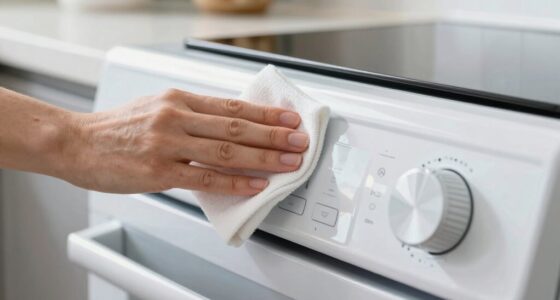
If your microwave has developed a strange odor, it’s likely due to food splatters or lingering residues that haven’t been properly cleaned. Regular microwave cleaning is essential to prevent unpleasant smells from building up. Start by unplugging your microwave and removing the turntable. Wipe down the interior with a damp cloth or sponge to eliminate loose crumbs and splatters. For stubborn stains or dried-on food, use a mixture of mild dish soap and warm water. Be sure to clean the ceiling, walls, and door edges thoroughly, as these areas tend to trap particles that cause odors over time.
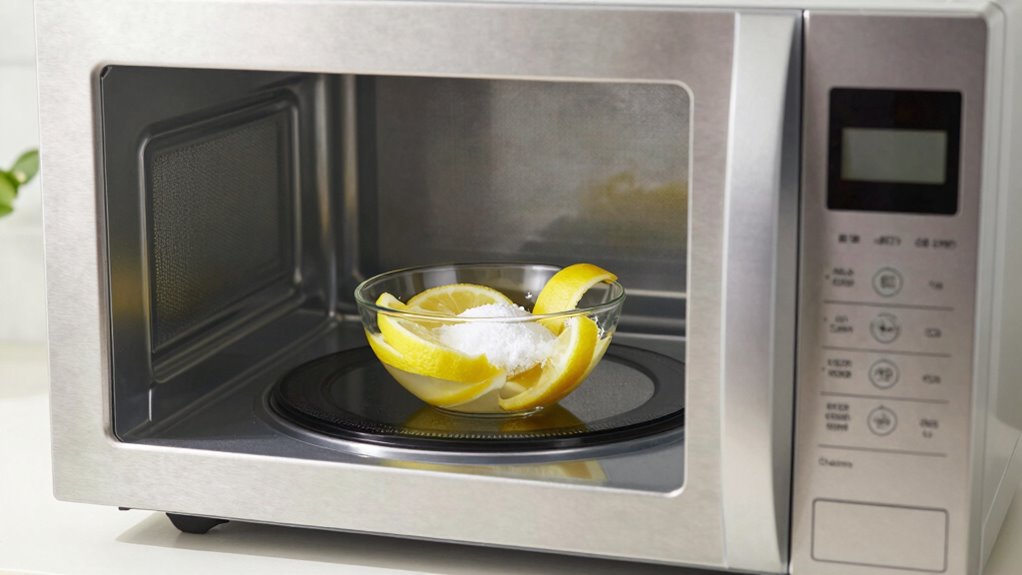
Once the interior is clean, it’s time to tackle odor absorption techniques. One simple method involves placing an open bowl of white vinegar or lemon water inside the microwave and running it on high for about five minutes. The steam created will loosen grime and neutralize smells. After the cycle ends, leave the bowl inside for a few more minutes before opening the door. The vinegar or lemon’s natural deodorizing properties will help absorb lingering odors, leaving your microwave smelling fresher. Proper microwave maintenance is crucial to prevent recurring odors and ensure your appliance stays in good condition. Additionally, maintaining proper ventilation can help reduce moisture buildup that contributes to odors. Regularly inspecting and cleaning the microwave’s door seals can further prevent odor-causing bacteria from developing. Incorporating routine cleaning schedules can significantly reduce the chances of odors returning, making it easier to keep your microwave smelling clean.
Another effective odor absorption technique involves using baking soda. After cleaning your microwave, sprinkle a small amount of baking soda onto a damp cloth and wipe down the interior surfaces. Baking soda is a natural deodorizer that neutralizes odors rather than just masking them. For ongoing freshness, you can also keep an open box of baking soda nearby or place a small bowl of it inside your microwave when not in use. This will help absorb any new odors that might develop.
In addition to these methods, it’s good practice to regularly check and clean the microwave’s exterior and door seals, as grime and food particles can also contribute to bad smells. Using a mixture of equal parts water and vinegar, wipe down the exterior and the door to prevent buildup. Keeping the microwave dry and clean prevents mold and bacteria growth, which can cause persistent odors. Regular maintenance and cleaning are key to maintaining a fresh and safe microwave environment.
As an affiliate, we earn on qualifying purchases.
Frequently Asked Questions
Can Certain Foods Cause Permanent Odors in My Microwave?
Certain foods can cause permanent odors in your microwave if food residue and odor absorption aren’t properly cleaned. Spicy, greasy, or strongly flavored foods leave lingering smells that embed in the microwave’s surfaces. Over time, these odors can become permanent if you don’t regularly clean and ventilate. To prevent this, wipe down your microwave after use, especially if you notice lingering smells, and use natural deodorizers like lemon or baking soda.
How Often Should I Clean My Microwave to Prevent Smells?
You should clean your microwave at least once a week to prevent odors. Regular cleaning, or cleaning frequency, helps eliminate food splatters and spills that cause lingering smells. After each use, wipe down the interior if needed, and do a deep clean with a mixture of water and vinegar or lemon every few days. This routine guarantees odor prevention and keeps your microwave fresh, clean, and odor-free.
Are There Natural Remedies to Eliminate Microwave Odors?
Did you know that natural remedies can effectively eliminate microwave odors? You can try herbal infusions like lemon or mint, which not only freshen but also leave a pleasant scent. Vinegar solutions are another great option; mix equal parts vinegar and water, microwave for a few minutes, then wipe down. These methods are safe, eco-friendly, and cost-effective, helping you keep your microwave smelling fresh without harsh chemicals.
Does the Microwave’s Age Affect Its Tendency to Smell?
Yes, the microwave’s age can affect its tendency to smell because older units often accumulate grime and grease, which cause odors. Regular microwave maintenance, including cleaning and inspecting seals, helps prevent odors from developing. To improve odor prevention, consider deep cleaning your microwave periodically and replacing worn parts. Doing so keeps it fresh, functioning properly, and reduces the chances of persistent smells, regardless of its age.
Can Replacing the Microwave’s Filter Stop Bad Odors?
Replacing the microwave’s filter can help, but it’s like putting a band-aid on a leak—sometimes, it’s not enough. New filters enhance microwave ventilation and absorb odors more effectively, reducing bad smells. However, if odors persist, cleaning the interior thoroughly and using odor absorbers like baking soda might be necessary. Regular filter replacements guarantee your microwave stays fresh, but don’t forget to address other sources of smell too.
As an affiliate, we earn on qualifying purchases.
Conclusion
Think of your microwave as a blank canvas, ready to be refreshed and renewed. By cleaning it regularly and using natural deodorizers, you’re giving it a fresh start—like clearing away the fog to reveal a clear, bright horizon. When you silence those strange smells, you’re not just fixing a appliance; you’re restoring a trusted tool that helps bring your kitchen to life. Keep it clean, and let your microwave shine with a renewed spirit.
baking soda for microwave deodorizing
As an affiliate, we earn on qualifying purchases.
As an affiliate, we earn on qualifying purchases.
As an affiliate, we earn on qualifying purchases.
Evergreen bestsellers Picks
bestsellers
As an affiliate, we earn on qualifying purchases.