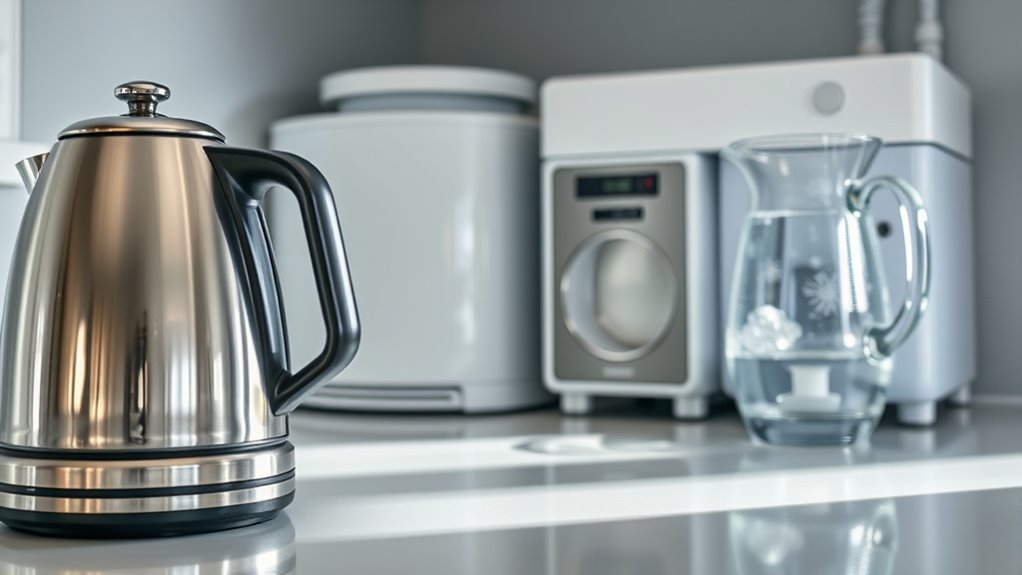

Water softeners protect your appliances like kettles and dishwashers by replacing hard minerals such as calcium and magnesium with sodium or potassium ions. This prevents mineral buildup inside the appliances, which can cause clogs, damage, and decreased efficiency. As a result, your appliances run smoother, use less energy, and last longer. Want to discover more ways softeners keep your appliances in top shape? Keep going to find out!
Key Takeaways
- Water softeners prevent mineral deposits from accumulating inside appliances, maintaining their optimal functionality.
- They reduce clogging of pipes and components, ensuring consistent water flow and performance.
- Softened water enhances heating efficiency by avoiding mineral buildup on heating elements.
- Using softened water decreases residue and soap scum, minimizing cleaning and descaling needs.
- Overall, water softeners extend appliance lifespan and reduce repair and energy costs.
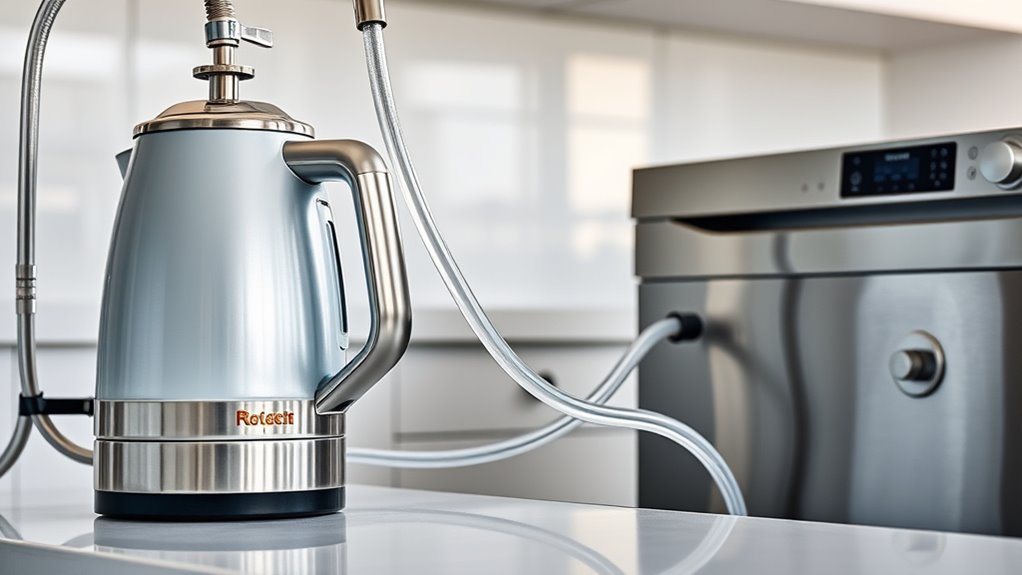
Hard water can cause significant damage to your appliances over time, leading to costly repairs and replacements. When mineral-rich water flows through your appliances, it leaves behind deposits of calcium and magnesium that gradually build up inside. This mineral buildup isn’t just a minor nuisance; it can seriously impair how your appliances function. Over time, these deposits clog pipes, reduce water flow, and force your appliances to work harder, which consumes more energy. This extra effort can cause your kettle, dishwasher, or washing machine to use more power than necessary, decreasing their energy efficiency and increasing your utility bills.
Using a water softener directly tackles this issue by removing or neutralizing those minerals before they can cause harm. A water softener exchanges the calcium and magnesium ions with sodium or potassium ions, resulting in softer water. This means your appliances won’t have to contend with mineral deposits that compromise their performance. As a result, your kettle heats water more efficiently, and your dishwasher cleans dishes effectively without mineral film or buildup. By reducing mineral accumulation, your appliances operate more smoothly and with less strain, extending their lifespan.
A water softener prevents mineral buildup, helping appliances run more efficiently and last longer.
Beyond the mechanical benefits, water softeners also improve energy efficiency. Appliances like dishwashers and kettles rely on heating elements to warm water. When mineral deposits stick to these elements, they act as insulators, forcing the heating element to work harder and consume more energy to reach the desired temperature. A water softener prevents this buildup, ensuring that heat transfers directly to the water without interference. This not only conserves energy but also allows your appliances to perform at their best, saving you money on electricity bills.
Furthermore, by preventing mineral buildup, water softeners help maintain the cleanliness of your appliances. Hard water causes soap scum and mineral deposits that can leave residues on dishes, glasses, and inside the appliances themselves. Softened water reduces these deposits, making cleaning more effective and less reliant on harsh detergents. This means your appliances stay cleaner longer, and you avoid the frequent need for descaling or deep cleaning, both of which can be time-consuming and costly.
In essence, investing in a water softener is a wise way to protect your appliances from the damaging effects of hard water. It keeps mineral buildup at bay, guarantees peak energy efficiency, and helps your appliances run smoothly for years to come. Additionally, high-quality water softeners utilize advanced regeneration processes that maximize mineral removal and prolong their lifespan. By doing so, you save money on repairs, reduce energy consumption, and enjoy better-performing water-using appliances every day.
Frequently Asked Questions
How Often Should I Service My Water Softener?
You should service your water softener at least once a year, following a regular maintenance schedule. Service frequency depends on your water usage and the hardness level, so if you notice issues like reduced softening or salt bridging, consider more frequent checks. Regular maintenance guarantees your softener functions efficiently, prolongs its lifespan, and keeps your appliances protected. Don’t wait too long—staying on top of maintenance helps avoid costly repairs later.
Can Water Softeners Remove All Types of Water Contaminants?
Water softeners primarily use ion exchange to remove minerals like calcium and magnesium, which cause hardness. However, they don’t eliminate all water contaminants, such as bacteria, viruses, or chemicals like chlorine and pesticides. For exhaustive contaminant removal, you might need additional filtration systems like activated carbon filters or UV purifiers. So, while water softeners protect your appliances and improve water quality, they don’t address every type of water contaminant.
Do Water Softeners Require Electricity to Operate?
No, water softeners don’t require electricity to operate, so they don’t depend on electricity for their main function. However, some models with electronic controls or timers do need electricity, which adds to their power consumption. If you’re concerned about electricity dependency, choose a manual or timer-based softener. Keep in mind that even electric models can be energy-efficient, so consider your power consumption needs when selecting a unit.
Are There Health Concerns Associated With Softened Water?
Like a gentle breeze, softened water is safe for you, with minimal health implications. It reduces mineral content, especially calcium and magnesium, which are beneficial for your health. Concerns about health risks are minimal, as softened water meets safety standards. If you’re on a special diet or have health issues, consult your doctor, but generally, softened water supports your health without harm.
How Does Softening Water Affect Soap and Detergent Efficiency?
Softening water improves soap lathering and detergent effectiveness because it removes minerals like calcium and magnesium that hinder these processes. With softened water, you’ll notice soap and detergent work more efficiently, producing more lather and cleaning better. This means you’ll use less soap or detergent for the same cleaning power, saving you money and reducing residue buildup on your appliances and skin.
Conclusion
By installing a water softener, you’re giving your appliances a gentle shield, much like a cozy blanket shields you from the cold. It prevents mineral buildup, helping your kettles, dishwashers, and other devices run smoothly and last longer. With soft water, you’re not just protecting your appliances—you’re ensuring they perform at their best every day. Think of a water softener as a smart investment that keeps your home running effortlessly, just like a well-oiled machine.