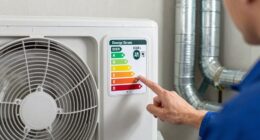

Choosing the best energy recovery ventilator (ERV) for your home involves balancing efficiency, installation complexity, and cost. The ideal ERV maintains fresh air while reducing energy loss, but models vary widely in features and suitability for different homes. The Panasonic Intelli-Balance 100 stands out as the best overall due to its reliable performance in cold climates, while the Broan B230H75RT offers high airflow for larger spaces. However, tradeoffs like higher upfront costs or installation complexity mean you need to weigh what matters most. Keep reading for a detailed breakdown to help you find the perfect fit for your home.
Key Takeaways
- The top models balance energy efficiency with ease of installation and maintenance.
- High airflow capacity is crucial for larger homes, but may come with increased noise levels or cost.
- Ductless options are suitable for smaller spaces or retrofit projects, but may lack the capacity of whole-house systems.
- Smart controls and remote operation add convenience but often come at a premium price.
- Build quality and certification standards like HVI certification are key indicators of long-term durability and performance.


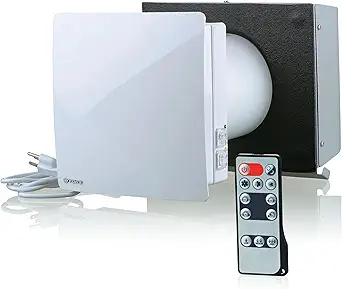


More Details on Our Top Picks
Panasonic Intelli-Balance 100 Energy Recovery Ventilator (ERV), 30-100 CFM, Standard Plug-In, Cold Climate, FV-10VEC2
This model stands out for its ability to operate efficiently in temperatures as low as -22°F, making it ideal for cold climates. Compared to the Broan B230H75RT, it offers more precise airflow control with its Pick-A-Flow selector and adjustable timer, which allows for better customization. Its dual EC/DC motors deliver quiet yet powerful operation, and the ENERGY STAR certification confirms its efficiency. However, the installation instructions are somewhat basic, and DIYers might prefer a model with more comprehensive online guidance. This ERV makes the most sense for those in colder regions who need reliable, energy-efficient ventilation without sacrificing indoor warmth.
Pros:- Operates effectively at temperatures down to -22°F
- Dual DC/ECM motors for quiet, efficient airflow
- Adjustable airflow and timer for customized operation
- ENERGY STAR certified for high efficiency
Cons:- Installation instructions are incomplete, requiring external guidance
- No smart home integration or app control
Best for: Homeowners in cold climates needing reliable, efficient, and customizable ventilation.
Not ideal for: DIYers without experience, as the manufacturer’s instructions are limited and complex installation may require professional help.
- CFM Range:30-100
- Filter Type:MERV 8
- Motor Type:Dual DC/ECM
- Energy Star Certified:Yes
- Power Source:Standard Plug-In
- Mounting Type:Ceiling or Wall
Bottom line: This pick is best for cold climate residents who prioritize energy efficiency and customizable airflow but are comfortable with a more involved installation process.
Awoco 6” Vent Energy Recovery Ventilator (ERV) System Various Speeds 100 CFM with Filter & Control Panel, Energy Saving HVI Certified
Compared with premium options like the Broan B230H75RT, the Awoco ERV offers a competitive price with multiple speed settings and a built-in control panel, making it suitable for various home sizes and needs. Its washable filters and simple installation process provide convenience and cost savings over time. While it lacks some advanced features like app control, it compensates with solid performance and a compact design. The main tradeoff is that it doesn’t have the extensive certification or high-end features of more expensive models, but it delivers reliable ventilation at an attractive price point. It makes the most sense for budget-conscious homeowners seeking flexible airflow options without complex setup.
Pros:- Multiple adjustable speeds for flexible airflow
- Includes washable, reusable filters
- Simple installation with mounting brackets
- HVI certification for quality assurance
Cons:- Lacks app or smart home control
- No advanced diagnostics or self-balancing features
Best for: Homeowners seeking a cost-effective, easy-to-install ERV with adjustable speeds.
Not ideal for: Those desiring smart controls or integration with home automation systems.
- CFM:100
- Filter Type:Washable, Reusable
- Speeds:Various
- Certification:HVI
- Power:60 watts
- Mounting Type:Ceiling
Bottom line: This model is ideal for budget-minded users who want adaptable airflow and straightforward installation without high-tech extras.
Broan B230H75RT AI Series 230 CFM Heat Recovery Ventilator (HRV)
The Broan B230H75RT excels for its rapid setup and VIRTUO technology that automatically verifies and balances airflow, making it a top choice for larger homes. Its LCD display provides real-time diagnostics and easy control, which simplifies installation and ongoing maintenance. The high-capacity 230 CFM delivers ample ventilation, and the inclusion of a MERV 8 filter improves indoor air quality. Compared to the Panasonic FV-10VEC2, it offers a broader installation flexibility with top and side port options. Its main drawback is the higher price and complexity, which may be overkill for smaller residences. This HRV makes sense for those with larger spaces who want a reliable, self-adjusting ventilation system that minimizes setup hassles.
Pros:- Auto-balancing with VIRTUO technology
- Real-time airflow and diagnostic LCD display
- High capacity at 230 CFM
- Universal port options for flexible installation
Cons:- Higher cost and installation complexity
- No ENERGY STAR certification
Best for: Large home owners seeking a high-capacity, auto-balancing HRV with easy diagnostics.
Not ideal for: Small dwellings or users preferring a simple, plug-and-play solution.
- CFM:230
- Filter Level:MERV 8
- Installation Type:Wall, Suspended
- Control:LCD Display
- Power:210 watts
- Warranty:10 years
Bottom line: Best suited for large homes needing a reliable, self-adjusting ventilation system with easy monitoring features.
Aprilaire V22BEC Energy Recovery Ventilator (ERV), 120 CFM Air Exchanger for Homes up to 6,000 Sq. Ft.
The Aprilaire V22BEC offers a robust 120 CFM capacity suitable for larger homes up to 6,000 sq. ft., with balanced air exchange that maintains indoor temperature and humidity. Its simple push-button controls make operation straightforward, and the energy recovery core effectively reduces HVAC loads by preconditioning incoming air. It’s comparable to the Pioneer ECOasis in performance but comes with a slightly larger footprint and more traditional controls. It lacks smart features or app control, but the ease of installation and durability make it a reliable choice. The main tradeoff is its basic control interface, which might not satisfy tech-savvy users. This ERV makes sense for those seeking effective whole-house ventilation without fuss or complex setup.
Pros:- Efficient 120 CFM capacity for large homes
- Balances indoor temperature and humidity
- Simple push-button operation
- Durable, quality construction
Cons:- No smart or app control options
- Larger physical size may require space planning
Best for: Homeowners with larger spaces who prefer a straightforward, durable ventilation system.
Not ideal for: Those wanting smart controls or integrated home automation features.
- CFM:120
- Core Efficiency:Up to 78%
- Control Type:Push Button
- Dimensions:21 x 11.25 x 12.5 inches
- Power:95 watts
- Mounting Options:Wall, Ceiling, Floor
Bottom line: Ideal for large homes seeking reliable, easy-to-use whole-house ventilation with balanced air quality management.
Pioneer ECOasis 50 Ductless Energy Recovery Ventilator
This compact ERV is designed for small rooms or spaces without ductwork, with an impressive 97% heat recovery efficiency and a maximum airflow of 35 CFM, making it perfect for bedrooms, offices, or retrofit situations. Its Wi-Fi control and smartphone app add convenience for adjusting settings remotely, a feature lacking in many other ductless models. The Super-silent operation at just over 32 dB(A) ensures quiet performance, ideal for bedrooms or quiet zones. Compared to larger ducted models like the Broan B230H75RT, this unit excels in silent operation and minimal energy use, consuming just 8W on average. A potential drawback is its limited airflow capacity, unsuitable for larger spaces or whole-house ventilation. It’s best suited for individual rooms where ductless, efficient ventilation enhances comfort and air quality.
Pros:- 97% heat recovery efficiency
- Wi-Fi control and app connectivity
- Super-silent operation at 32.7 dB
- Compact and ductless design
Cons:- Limited airflow at 35 CFM
- Not suitable for large or whole-house applications
Best for: Small rooms or retrofit spaces requiring ductless, energy-efficient ventilation.
Not ideal for: Large or whole-house ventilation needs where higher airflow is necessary.
- CFM:up to 35
- Heat Recovery Efficiency:97%
- Power Consumption:8W
- Control:Wi-Fi App
- Dimensions:21.5 x 11.25 x 12.5 inches
- Noise Level:32.7 dB
Bottom line: This ductless ERV is best for small, quiet spaces needing efficient air exchange with remote control capability.
VENTS-US Frigate ERV 80 R – Whole House Energy Recovery Ventilation System, Up to 100 CFM – Continuous Supply of Fresh Air While Exhausting Equal Amounts of Stale Air
This model stands out for its ability to bring in fresh air and exhaust stale air at up to 100 CFM, making it suitable for maintaining healthy indoor air quality across an entire home. Compared with the Panasonic Intelli-Balance 100, the Frigate ERV offers a slightly higher airflow capacity and built-in control options, which makes it more adaptable for different household sizes. It operates quietly at just 1.4 Sones, ensuring minimal disturbance in bedrooms and offices. The corrosion-resistant steel casing and safety features like thermal overload protection add to its durability. However, its size and installation complexity could be a challenge for smaller or retrofit spaces, and higher power consumption might be a tradeoff for its performance. This pick makes the most sense for homeowners seeking reliable, whole-home ventilation with flexible control options and durable construction.
Pros:- High capacity up to 100 CFM suitable for entire houses
- Quiet operation at 1.4 Sones minimizes noise disturbance
- Flexible control panel supports multiple external devices
Cons:- Size may be difficult to install in compact or tight spaces
- Higher power consumption at 69 watts compared to smaller units
Best for: Homeowners needing a robust, whole-house ventilation system with adjustable settings and durable build quality.
Not ideal for: Small apartments or retrofit installations where space is limited and simpler systems are preferred.
- CFM Capacity:100
- Noise Level:1.4 Sones
- Power Voltage:120 Volts
- Wattage:69 watts
- Installation Type:Split System
- Control Method:Built-in panel with external support
Bottom line: This system is ideal for larger homes where consistent, adjustable ventilation is a priority.
Panasonic WhisperComfort 60 20-50 CFM Ceiling-Wall Energy Recovery Ventilator/Bathroom Exhaust Fan for Balanced Ventilation FV-06VE1
This model makes sense for those seeking a compact, quiet, and energy-efficient solution for smaller spaces such as bathrooms or laundry rooms. Compared to the VENTS-US Frigate ERV, the WhisperComfort offers a lower airflow capacity of 60 CFM, but excels in its quiet operation at just 2.5 Sones and its simple ceiling or wall mount installation. Its high efficiency and low wattage (50 watts) make it suitable for intermittent use in spaces where constant ventilation isn’t needed. The tradeoff is its limited capacity, which isn’t ideal for larger or whole-home applications, and its fixed CFM range may not suit all household needs. This pick makes the most sense for users who prioritize quiet operation, easy installation, and energy efficiency in smaller rooms.
Pros:- Low noise level at 2.5 Sones for quiet operation
- Compact ceiling/wall mount design simplifies installation
- Energy-efficient with only 50 watts power draw
Cons:- Limited airflow capacity of 60 CFM, not suitable for large spaces
- Fixed operation range may not adapt well to different room sizes
Best for: Homeowners wanting a quiet, energy-saving ventilation fan primarily for bathrooms or small rooms.
Not ideal for: Larger homes or whole-house ventilation needs where higher airflow and greater capacity are required.
- CFM Capacity:60
- Noise Level:2.5 Sones
- Power Wattage:50 watts
- Installation Type:Ceiling/Wall Mount
- Control Method:Hardwired Push Button
- Speed Levels:3
Bottom line: This system is perfect for small spaces requiring quiet, efficient ventilation without extensive modifications.
NET.Pro Energy Recovery Ventilators (ERV) and Quiet Household Ventilation, Ventilation Fan, Balanced Air Solution, Long Lasting, Easy to Install, Code Compliant, 255 CFM, 0.75 Sones
The NET.Pro ERV offers a high airflow capacity of 255 CFM, making it well-suited for larger homes up to several thousand square feet. Compared to the VENTS-US Frigate ERV, it provides a more powerful ventilation option for demanding households. Its quiet operation at just 0.75 Sones ensures that high capacity doesn’t come at the expense of noise, which is ideal for continuous use. Its durable, easy-to-install design makes it a strong choice for homeowners seeking long-term performance and compliance with building codes. The main tradeoff is its size and installation complexity, which may be overkill for small homes or retrofit projects. This is best for those who need robust, energy-efficient ventilation for larger living spaces.
Pros:- High airflow capacity of 255 CFM for large homes
- Extremely quiet at 0.75 Sones for continuous operation
- Durable, long-lasting construction with easy installation
Cons:- Size and complexity may be challenging for retrofit or small spaces
- Higher initial cost compared to smaller units
Best for: Large homeowners wanting a powerful, quiet, and energy-efficient ventilation system.
Not ideal for: Small apartments or homes where space and ease of installation are more critical than capacity.
- CFM Capacity:255
- Noise Level:0.75 Sones
- Power Wattage:50 watts
- Installation Type:Ducted
- Control Method:Manual/External
- Efficiency:High
Bottom line: This is the best choice for large homes requiring high-capacity, quiet, and energy-efficient ventilation.
Heat Recovery Ventilator with Ceramic Heat Exchanger, Wall-Mounted Fresh Air System with WiFi/Remote Control for Home, Attic, Garage – Supply, Exhaust & Recirculation Ventilation Fan
This wall-mounted HRV makes sense for users seeking a smart, energy-efficient solution for specific rooms like attics, garages, or small bedrooms. It recovers up to 90% of heat energy using its ceramic heat exchanger, making it highly efficient compared to standard ERVs like the VENTS-US Frigate ERV. The WiFi and remote control features provide convenient operation and energy management, ideal for tech-savvy homeowners. Its airflow capacity of 630 cc/min (~22 CFM) is suitable for small to medium rooms, but not for whole-house ventilation. The quiet operation at 28 dB and detachable magnetic panel for easy cleaning add to its appeal, though its limited capacity and higher price may be drawbacks. This makes the most sense for targeted, efficient room ventilation with smart control.
Pros:- High heat recovery efficiency up to 90%
- WiFi and remote app control for convenience
- Quiet operation at 28 dB
Cons:- Limited airflow capacity (~22 CFM), not for whole house
- Higher cost compared to basic models
Best for: Homeowners wanting smart control and high heat recovery for individual rooms or small spaces.
Not ideal for: Large homes or whole-house ventilation where higher airflow is needed.
- CFM Capacity:22
- Noise Level:28 dB
- Power Wattage:9 watts
- Control Method:WiFi/Remote
- Installation Type:Wall-Mounted
- Heat Recovery:Up to 90%
Bottom line: This system is ideal for those who want smart, energy-efficient ventilation for specific rooms or zones.
VENTS-US TwinFresh Comfo RB1-50-2 – Ductless ERV Through-the-Wall Single Room Ventilation Fan, 30 CFM, Energy Recovery Ventilator with Remote Control and Humidity Sensor
This compact, ductless ERV makes sense for small rooms like bedrooms or offices where ductwork isn’t feasible. It provides up to 30 CFM of fresh, filtered air, and recovers heat or coolness to reduce energy costs, similar to the TwinFresh Comfo RB1-50-2 but in a much smaller form factor. Its remote control and humidity sensor enable easy operation and automatic adjustments, making it suitable for occupied rooms. The ultra-quiet operation at 0.5 Sones makes it ideal for bedrooms or nurseries, though its capacity limits it to smaller spaces. The 2-year warranty and corrosion-resistant exterior are added benefits. The main tradeoff is its limited airflow, so it’s not suitable for larger spaces or whole-home use. This pick is perfect for targeted, quiet, energy-efficient room ventilation without ducting.
Pros:- Very quiet at 0.5 Sones for bedrooms or nurseries
- Ductless, easy to install through wall
- Includes humidity sensor for automatic adjustments
Cons:- Limited airflow capacity of 30 CFM
- Not suitable for larger or multiple rooms
Best for: Small rooms or apartments needing quiet, ductless ventilation with smart features.
Not ideal for: Large open areas or entire homes where higher airflow is necessary.
- CFM Capacity:30
- Noise Level:0.5 Sones
- Power Wattage:7 watts
- Control Method:Remote & Humidity Sensor
- Installation Type:Through-the-Wall
- Humidity Control:Yes
Bottom line: This system is best for small, occupied spaces requiring quiet, automatic ventilation without ductwork.
Broan B210E75RT AI 206 CFM Wall or Ceiling Mounted Energy Recovery Ventilator with Top Ports and Superior HRV Core Performance
This model stands out for its VIRTUO technology, which simplifies installation by automatically verifying and balancing airflow, saving up to 20 minutes versus traditional units like the Broan B210E75RS. Its self-adjusting feature ensures consistent operation across different home types, making it a reliable choice for homeowners who prioritize simplicity. Compared to less advanced models, its superior ERV core performance reaching up to 81% SRE at 32°F demonstrates efficiency in heat recovery. The included LCD screen provides real-time data and diagnostics, which is a plus for tech-savvy users. However, the unit’s size and weight (55 pounds) may require careful mounting, and the absence of automatic shutoff or timer could limit control options. This pick suits larger homes or those seeking a maintenance-friendly, durable ERV that guarantees consistent performance with minimal setup.
Pros:- Auto-balancing and self-adjustment technology for hassle-free setup
- High ERV core efficiency reaching up to 81% SRE
- Real-time diagnostics via integrated LCD display
- Universal top & side port configurations for flexible installation
Cons:- Heavy at 55 pounds, requiring sturdy mounting support
- No automatic shutoff or timer, limiting control over operation
- Size may be less suitable for tight spaces
Best for: Homeowners seeking a high-capacity, dependable ERV with quick, tool-free installation.
Not ideal for: Small apartments or DIY novices who prefer more compact, plug-and-play units with built-in timers.
- Airflow Capacity:210 CFM
- Sensible recovery efficiency:81% at 32°F
- Motors:Energy-efficient ECM PMSM
- Installation options:Top & side ports
- Size:21″ L x 24.8″ W x 21.6″ H
- Mounting:Suspended or wall-mount
Bottom line: Ideal for larger homes or users who want a reliable, easy-to-install ERV with minimal ongoing adjustments.
VENTS-US Twinfresh Expert RW1-50-2 Wifi – Ductless Single Room Energy Efficient Through The Wall Ventilation Fan with Remote & App Control
This ductless, single-room ERV is tailored for spaces up to 500 sq. ft., delivering up to 30 CFM of filtered fresh air while recovering up to 93% of heat and moisture, which helps reduce heating and cooling costs. Its WiFi control via app and remote make it highly convenient for tech-savvy users who want to manage airflow and timers from anywhere, unlike larger, more static units like the Broan B210E75RT. Its quiet operation at 0.6 sones makes it suitable for bedrooms and living areas. The unit’s easy installation through standard exterior walls eliminates complex ductwork, ideal for retrofit projects or small rooms. A tradeoff is its limited airflow capacity, which may not meet the needs of larger homes, and the small size may restrict filter options. This makes it perfect for users seeking an energy-efficient, space-saving solution for individual rooms or small units.
Pros:- Ductless installation for simplicity and retrofitting
- WiFi app control for remote operation and scheduling
- High heat recovery efficiency of up to 93%
- Very low noise at 0.6 sones
Cons:- Limited to about 30 CFM, not suitable for larger rooms
- Requires wall installation, which may not be feasible in all exteriors
- Lower airflow capacity for whole-house ventilation
Best for: Homeowners or renters needing a compact, WiFi-controlled ERV for bedrooms, offices, or small living spaces.
Not ideal for: Large households or open-plan areas requiring high airflow, where this unit’s capacity may be insufficient.
- Airflow Capacity:30 CFM
- Recovery Efficiency:Up to 93%
- Noise Level:0.6 sones
- Control:WiFi app & remote
- Size:Built-in, wall-mounted
- Power Consumption:7.06 watts
Bottom line: Best suited for small rooms or spaces where space-saving, remote control, and energy efficiency matter most.
Broan B210E75RS AI 206 CFM Wall or Ceiling Mounted Energy Recovery Ventilator with Side Ports and Superior ERV Core Performance
This side port model offers the same core performance as the Broan B210E75RT, with up to 81% SRE at 32°F, but adds the installation flexibility of side ports that can be more suitable for certain wall configurations. Its VIRTUO technology ensures quick, auto-balanced setup, making it an attractive choice for homeowners who prefer a versatile mounting option. Like its top port counterpart, it features a built-in LCD for real-time diagnostics and is compatible with modern controls. The robust ERV core performance guarantees high efficiency and durability. Tradeoffs include its size and weight (55 pounds), which require sturdy mounting support, and the absence of timers or automatic shutoff, which could limit fine control. This model is ideal for installations where side port access is preferable or in retrofit situations where wall clearance is limited.
Pros:- Side port configuration for installation flexibility
- Auto-balancing with VIRTUO technology for consistent airflow
- High heat recovery efficiency of 81%
- Real-time diagnostics via LCD display
Cons:- Heavy at 55 pounds, requiring sturdy mounting
- No timer or automatic shutoff features
- Size may limit installation options in tight spaces
Best for: Homeowners with specific wall or ceiling configurations needing flexible port options and high performance.
Not ideal for: Small or portable applications where size and weight might be problematic or where simple plug-and-play is preferred.
- Airflow Capacity:210 CFM
- Sensible recovery efficiency:81% at 32°F
- Motors:Energy-efficient ECM PMSM
- Installation:Side ports & ceiling mount
- Size:21″ L x 24.8″ W x 21.6″ H
- Mounting:Wall or ceiling
Bottom line: Best suited for retrofit or custom installations where port flexibility and high efficiency are priorities.

How We Picked
The products in this roundup were evaluated based on several key factors: performance in maintaining balanced ventilation and energy recovery efficiency, ease of installation and maintenance, build quality and durability, suitability for different home sizes and climates, and overall value for the price. We prioritized models with proven reliability, good user reviews, and features that enhance usability, such as smart controls or flexible mounting options. The ranking reflects a blend of technical performance and practical considerations, ensuring that each pick serves a specific type of buyer—from budget-conscious homeowners to those seeking premium features.Factors to Consider When Choosing Best Energy Recovery Ventilator For Home
Selecting the right energy recovery ventilator involves understanding your home’s specific needs and weighing several important factors. Beyond just airflow capacity, it’s vital to consider climate suitability, installation requirements, and operational costs. Making informed choices can prevent overspending on features you don’t need or ending up with a unit that underperforms in your environment.Size and Capacity
Choosing an ERV with an appropriate airflow capacity is critical. Larger homes require higher CFM ratings to ensure adequate ventilation without noise or inefficiency. Conversely, smaller homes or retrofit projects benefit from compact, ductless models. Oversizing can lead to unnecessary energy consumption, while undersized units may fail to ventilate effectively, so matching capacity to your home’s size is essential.
Climate Compatibility
Some ERVs perform better in certain climates. For cold regions, units with specialized heat exchange cores prevent energy loss and maintain indoor comfort. In milder climates, simpler models may suffice and save money. Understanding your local weather conditions helps select a system that balances efficiency with durability, avoiding issues like freezing or insufficient ventilation.
Installation and Maintenance
Ease of installation varies widely. Ductless or wall-mounted models can be ideal for quick retrofit jobs, while whole-house systems demand more extensive setup. Consider the availability of professional installation and ongoing maintenance costs. Units with accessible filters and straightforward controls reduce long-term hassle and expense.
Smart Features and Controls
Advanced controls, like Wi-Fi connectivity and remote operation, add convenience and allow for better system management. However, these features often come at a higher price and may require additional setup. Decide whether smart capabilities align with your comfort level and budget, or if simple manual controls suffice.
Cost and Energy Efficiency
While higher-priced models often offer superior energy efficiency and durability, they may not be necessary for smaller or less demanding spaces. Evaluate the long-term savings from lower energy bills against the initial investment. Certified models with high HVI ratings typically deliver better performance and lower operational costs.
Frequently Asked Questions
How do I know if my home needs a whole-house ERV or a ductless model?
If your home is large, has multiple rooms, or lacks existing ductwork, a whole-house ERV provides the most comprehensive ventilation. Ductless models are better suited for smaller spaces, retrofit projects, or individual rooms where installing ductwork isn’t practical. Assess your home’s size and existing infrastructure to determine the most suitable type for your needs.
Can I install an ERV myself, or should I hire a professional?
While some ductless or wall-mounted ERVs are designed for DIY installation, most whole-house systems benefit from professional setup. Proper installation ensures optimal performance, prevents air leaks, and complies with safety standards. If you’re unsure about electrical or ductwork requirements, consulting a licensed technician will typically save you time and avoid costly mistakes.
Are smart controls worth the extra cost?
Smart controls can enhance convenience by allowing remote operation and system monitoring, which can help optimize energy use. However, they do come at a higher price point, and their benefits depend on your comfort with technology. If you value automation and remote access, investing in smart features makes sense; otherwise, manual controls may suffice.
What maintenance does an ERV require?
Most ERVs need periodic filter replacement—typically every 6 to 12 months—depending on air quality. Some models have accessible filters and self-diagnostic alerts, simplifying upkeep. Regular maintenance ensures efficient operation, prolongs lifespan, and maintains indoor air quality. Be sure to check the manufacturer’s recommendations for specific maintenance routines.
Is a higher-priced ERV always better?
Not necessarily; higher-cost models often offer better energy efficiency, quieter operation, and advanced features, but may be overkill for smaller or less demanding homes. It’s important to match the product’s capabilities with your home’s size, climate, and your ventilation needs. Sometimes, a mid-range model provides the best balance of performance and value for your specific situation.
Conclusion
For most homeowners seeking a reliable, balanced solution, the Panasonic Intelli-Balance 100 emerges as the best overall choice, offering excellent cold climate performance and energy efficiency. Budget-conscious buyers or those installing in smaller spaces may prefer the Pioneer ECOasis or Vents-US TwinFresh models for their ductless convenience. For larger homes or those prioritizing maximum airflow, the Broan B230H75RT provides ample capacity. If premium features like smart controls are a priority, investing in higher-end units will pay off in convenience. Ultimately, matching your home’s size, climate, and your budget with the right features will lead to the best long-term satisfaction.