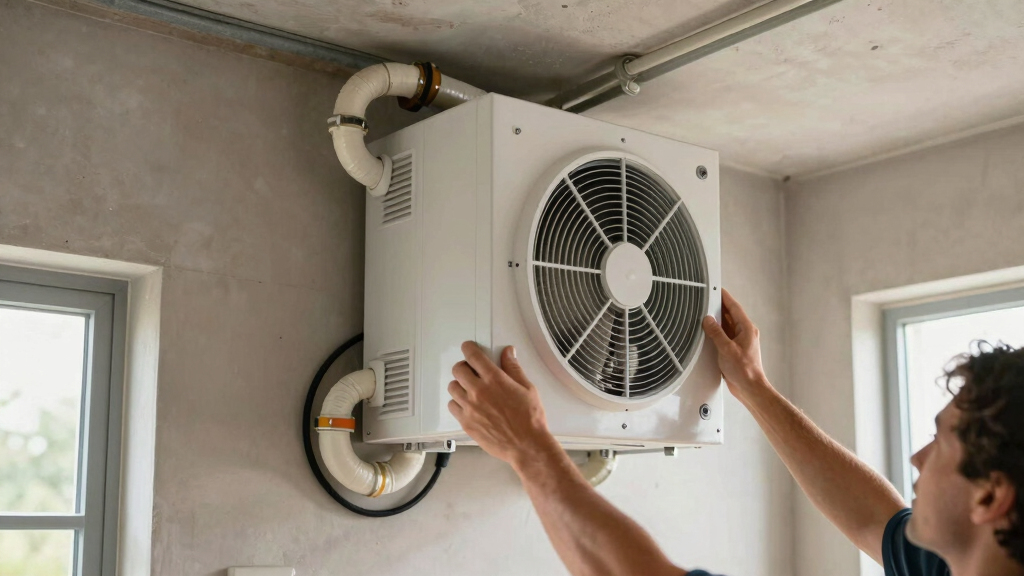
Choosing the best energy recovery ventilator (ERV) for your home depends on your specific needs for air quality, energy efficiency, and installation complexity. The Panasonic Intelli-Balance 100 stands out as the best overall due to its reliable performance and adaptability. For those seeking a budget-friendly option, the Awoco 6” Vent ERV offers solid features at a lower price. Meanwhile, the Broan B210E75RT is better suited for larger spaces or whole-home ventilation. Keep in mind, tradeoffs such as installation complexity, upfront costs, and maintenance requirements vary widely. Continue reading for a detailed comparison to help you find the right fit for your home.
Key Takeaways
- Top-performing models balance energy efficiency with consistent airflow, especially in colder climates.
- Ductless options like Pioneer ECOasis are ideal for smaller or retrofit projects, but may lack capacity for larger homes.
- Features like WiFi control and humidity sensors add convenience but often come with higher price tags.
- Models with higher CFM ratings generally suit larger homes but may consume more energy and require more maintenance.
- The most versatile options tend to be those with easy installation and low noise levels, making them suitable for various home types.




More Details on Our Top Picks
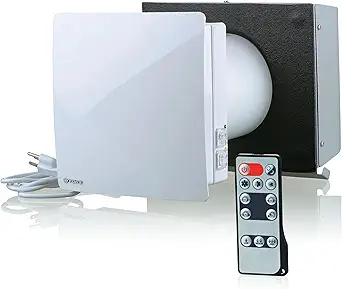
VENTS-US TwinFresh Comfo RB1-50-2 – Ductless ERV Through-the-Wall Single Room Ventilation Fan, 30 CFM, Energy Recovery Ventilator with Remote Control and Humidity Sensor
This model stands out for its simplicity and targeted airflow, making it an excellent choice for individual rooms where ductwork isn’t feasible. Compared with the Broan B210E75RT, the TwinFresh Comfo offers a quieter operation at just 0.2 sones and a more straightforward installation without ducting, ideal for remodeling or tight spaces. Its heat recovery efficiency of up to 88% helps reduce energy costs, especially in colder climates. However, the 30 CFM capacity limits its use to smaller areas, and the lack of smart controls means less integration with home automation. The inclusion of a humidity sensor enhances indoor air quality, and its frost- and condensate-free design ensures reliable year-round operation. This pick makes the most sense for homeowners seeking a low-noise, wall-mounted solution for individual rooms up to 500 sq ft, prioritizing simplicity over high airflow.
Pros:- Very low noise level at 0.2 sones ensures quiet operation
- Ductless installation simplifies retrofits and remodels
- High heat recovery efficiency of up to 88% reduces energy costs
- Built-in humidity sensor for better indoor air quality
Cons:- Limited to 30 CFM, suitable only for small rooms
- No smart home integration or advanced controls
- Requires wall installation, which may not suit all spaces
Best for: Homeowners needing a quiet, easy-to-install ERV for small rooms like bedrooms or home offices.
Not ideal for: Large open-concept spaces or whole-house ventilation, due to its limited 30 CFM airflow.
- CFM Capacity:30
- Recovery Efficiency:Up to 88%
- Operation Noise:0.2 sones
- Installation Type:Wall-mounted, ductless
- Humiditiy Sensor:Yes
- Temperature Range:Down to -4°F
Bottom line: Ideal for individuals seeking a discreet, energy-efficient vent for single rooms where ducting is impractical.
Awoco 6” Vent Energy Recovery Ventilator (ERV) System Various Speeds 100 CFM with Filter, Energy Saving HVI Certified (ERV)
This ERV makes sense for larger spaces due to its 100 CFM capacity and adjustable speeds, providing balanced ventilation for entire homes. Compared with the Fantech VHR 150, the Awoco offers versatile speed settings and a washable filter, which can reduce long-term maintenance costs. Its 6-inch duct connection allows for flexible installation across different home layouts. The inclusion of a humidity sensor helps maintain comfort levels, and its HVI certification confirms reliable performance. On the downside, the system’s 50 dB noise level at higher speeds could be noticeable, and its installation requires proper ducting, which might be more complex than ductless options. The unit’s 24-watt power draw and continuous operation make it a cost-effective choice for those seeking a balance of performance and affordability. This pick suits active households or larger homes where airflow needs exceed 50 CFM.
Pros:- Capable of delivering up to 100 CFM for whole-home ventilation
- Adjustable speeds provide customizable airflow
- Includes washable filters for easy maintenance
- Energy-efficient operation with certification
Cons:- Higher noise level at 50 dB at maximum speed
- Requires ducting and proper installation space
- No smart controls included
Best for: Homeowners with medium to large homes seeking reliable, whole-house ventilation at a reasonable price.
Not ideal for: Small apartments or rooms where minimal airflow is required, as its capacity may be excessive.
- CFM Capacity:100
- Power Consumption:60 watts
- Noise Level:50dB
- Filter Type:Washable 20 PPI
- Control:Adjustable knobs
- Certification:HVI
Bottom line: Suitable for larger homes needing balanced, energy-efficient ventilation with flexible speed control.
Panasonic Intelli-Balance 100 Energy Recovery Ventilator (ERV), 30-100 CFM, Standard Plug-In, Cold Climate, FV-10VEC2
This model specializes in cold climates, with a capacity range of 30-100 CFM and ENERGY STAR certification, making it highly suitable for regions with harsh winters. Unlike the Broan B210E75RT, the Panasonic offers dual DC/ECM motors with a pick-A-Flow selector, giving users precise control over airflow. Its integrated boost function and timer enhance customization, while the included MERV 8 filter improves indoor air quality. The unit’s plug-in design simplifies installation compared to more complex ducted systems. However, it lacks smart home compatibility, and its maximum airflow of 100 CFM might be overkill for smaller spaces. The unit’s frost-resistant features and efficient operation make it a strong choice for cold-weather homes needing flexible ventilation and humidity management. This ERV fits well for climates where energy efficiency and control are priorities.
Pros:- ENERGY STAR certified for efficiency
- Adjustable airflow from 30-100 CFM with pick-A-Flow
- Includes boost function and timer
- Frost-resistant operation down to -22°F
Cons:- No smart home control features
- Maximum airflow of 100 CFM may be excessive for small rooms
- Requires ceiling or wall mounting with installation effort
Best for: Homeowners in cold climates needing reliable, adjustable ventilation with energy savings.
Not ideal for: Warm or humid climates where dehumidification is a priority, as it focuses mainly on heat recovery.
- CFM Range:30-100
- Filter:MERV 8
- Power:84 watts
- Control:Manual with boost/timer
- Frost Resistance:-22°F
- Certification:ENERGY STAR
Bottom line: Excellent for cold climates where energy efficiency and adjustable ventilation are needed without smart controls.
Broan B210E75RT AI 206 CFM Wall or Ceiling Mounted Energy Recovery Ventilator with Top Ports and Superior HRV Core Performance – N/A
This system makes sense for larger homes or whole-house ventilation needs, with its 206 CFM capacity and advanced features like VIRTUO technology for auto-balancing and easy installation. Compared to the Awoco 100 CFM model, it offers significantly higher airflow, suitable for larger spaces or multiple rooms. Its integrated LCD provides real-time data on airflow and diagnostics, simplifying maintenance and adjustments. The unit features a durable ERV core with up to 81% SRE efficiency and optional HEPA filtration, making it a robust choice for comprehensive ventilation. Its universal port options and suspended or wall-mount installation add flexibility. The main tradeoff is its larger size and higher power consumption, making it less suited for small or retrofit projects. This pick is ideal for owners seeking a high-capacity, reliable, and feature-rich whole-house ventilation system.
Pros:- High airflow capacity of 206 CFM
- Auto-balancing and self-adjusting VIRTUO technology
- Real-time diagnostics via LCD display
- High efficiency ERV core with optional HEPA filter
Cons:- Larger physical size, requires more space for installation
- Higher energy use at full capacity
- More complex installation and maintenance
Best for: Large homes or whole-house applications demanding high airflow and automated balance.
Not ideal for: Small apartments or retrofit projects with limited space or budget constraints.
- CFM Capacity:206
- Efficiency:Up to 81% SRE
- Power Consumption:270 watts
- Control:LCD diagnostics, auto-balance
- Filtration:Optional HEPA
- Installation:Wall or ceiling mount, top ports
Bottom line: Best suited for sizable homes needing a high-performance, auto-balancing whole-house ERV system.
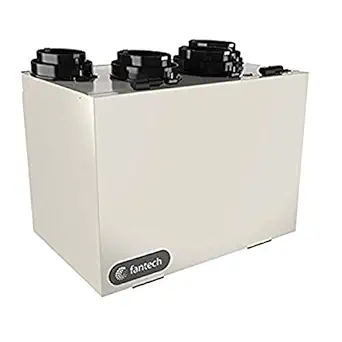
Fantech VHR 150 Heat Recovery Ventilator (HRV) Supply Fan Shutdown Defrost 3 Speed Unit
This HRV excels in high static pressure environments, making it suitable for homes with complex ducting or multiple zones, especially in cold climates. Its 159 CFM airflow at 0.4″ PS supports larger or multi-room setups. The unit’s automatic defrost feature and shutdown defrost mode ensure reliable winter operation, while its external controls allow for flexible integration with existing home systems. Compared to the Panasonic Intelli-Balance, the Fantech offers higher static pressure handling and a dedicated defrost system but is bulkier and more complex to install. Its washable electrostatic filters and durable construction add to its appeal for demanding applications. This model is perfect for homes with extensive ducting or where static pressure management is critical, especially in colder regions.
Pros:- Supports high static pressure applications
- Automatic defrost and shutdown features for winter reliability
- External controls for flexible integration
- Supports airflow up to 159 CFM
Cons:- Bulkier and more complex to install
- Less suitable for small or ductless applications
- No smart controls included
Best for: Homes with complex ductwork or high static pressure needs in cold environments.
Not ideal for: Small, straightforward installations or homes in warm, humid climates.
- CFM:159
- Static Pressure:Supports high static pressure
- Defrost:Automatic and shutdown modes
- Filters:Electrostatic washable
- Controls:External, programmable
- Application:High static, cold climate
Bottom line: Best for larger or ducted homes in cold climates requiring high static pressure management and defrost capability.
VENTS-US Frigate HRV 120s Heat Recovery Ventilator – Whole House Ventilation Fan with Up to 118 CFM and Freeze Protection
This model stands out for its balanced combination of heat recovery efficiency, cold weather resilience, and straightforward three-speed control. Compared to the Broan B210E75RS, which offers higher airflow but less frost protection, the Frigate HRV 120s is better suited for harsh winters where preventing frost buildup is essential. It recovers up to 73% of heat from outgoing air, helping maintain indoor warmth while ventilating. Its corrosion-resistant steel casing and electronic anti-frost system make it reliable in high-humidity environments without sacrificing efficiency. However, its maximum airflow of 118 CFM may be limiting for larger homes or spaces needing higher ventilation rates. The three-speed control simplifies operation, but less flexibility in fine-tuning airflow can be a drawback for some users. Overall, this pick makes the most sense for homeowners in cold climates prioritizing durability and frost protection without high energy costs.
Pros:- Highly effective heat recovery up to 73%, reducing heating costs
- Electronic anti-frost protection for cold climates
- Corrosion-resistant steel casing for durability
Cons:- Limited maximum airflow of 118 CFM may be insufficient for larger spaces
- Three-speed control offers less granularity than variable-speed models
Best for: Homeowners in cold regions seeking reliable, whole-house ventilation with frost protection.
Not ideal for: Large, modern homes requiring higher airflow capacity or more precise control options.
- Maximum airflow:118 CFM
- Heat recovery efficiency:up to 73%
- Power consumption:19 Watts at low speed
- Protection features:Electronic anti-frost system
- Construction:Corrosion-resistant steel casing
- Control:Three-speed switch
Bottom line: This system is best suited for cold climate homes needing reliable frost protection and energy-efficient ventilation.
Panasonic WhisperComfort 60 20-50 CFM Ceiling-Wall Energy Recovery Ventilator/Bathroom Exhaust Fan for Balanced Ventilation FV-06VE1
This pick makes the most sense for smaller spaces or bathrooms, where quiet operation and simple installation are priorities. Its airflow range of 20-50 CFM is ideal for maintaining fresh air without overpowering the room, and its whisper-quiet operation at just 28 decibels ensures minimal disturbance. Compared with the larger Broan B210E75RS with 206 CFM, the WhisperComfort 60 offers less capacity but excels in noise-sensitive environments. Its integrated energy recovery reduces heat loss, helping to keep small rooms comfortable. The model’s compact design and straightforward ceiling or wall mount make installation accessible, especially in retrofit projects. A notable tradeoff is that its airflow might be too limited for larger or multiple rooms. Still, for bathrooms or individual bedrooms, it provides balanced ventilation with minimal noise and energy use.
Pros:- Quiet operation at only 28 decibels
- Energy recovery reduces heat loss in small spaces
- Compact, easy-to-install design
Cons:- Limited airflow range of 20-50 CFM, not suitable for large rooms
- Not designed for whole-house ventilation
Best for: Homeowners needing quiet, energy-efficient ventilation in bathrooms or small bedrooms.
Not ideal for: Large open-concept spaces or homes requiring higher airflow rates.
- Airflow capacity:20-50 CFM
- Noise level:28 dB
- Recovery efficiency:energy recovery in small spaces
- Installation:Ceiling or wall mount
- Size:Compact
- Use case:Bathroom, small bedrooms
Bottom line: This model is perfect for small, quiet spaces where balanced ventilation and energy savings are desired.
Through Wall HEPA Ventilation Fan with WiFi & Remote Control, Ultra Quiet EC Motor Wall Vent, Fresh Air Intake & Air Exchange System for Bedroom, Home Office, Attic
This unit is ideal for bedrooms, home offices, or attics where filtered fresh air and quiet operation are key. Its 350 CFM capacity surpasses many small-room models, providing robust air exchange. Compared to the Panasonic FV-06VE1, which offers lower capacity but is more suited to bathrooms, the Weiworld HEPA Ventilation Fan excels in providing filtered, clean air with a HEPA filter that reduces dust, pollen, and odors. Its WiFi and remote control add convenience, allowing users to adjust modes and fan speeds without physical access. Operating at just 28 decibels, it maintains a peaceful environment, even during high airflow. Its easy wall-mount installation with adjustable ducting makes it flexible for various spaces. The primary tradeoff is its higher power consumption at 8 watts, which might be a concern for continuous operation in energy-conscious homes. Overall, it’s a solid choice for those prioritizing air quality and quiet performance in enclosed rooms.
Pros:- High airflow capacity of 350 CFM for effective air exchange
- HEPA filtration reduces dust, pollen, and odors
- Ultra-quiet operation at 28 decibels
Cons:- Higher power use (8 watts) for continuous operation
- Designed primarily for single enclosed spaces, not whole-house
Best for: Homeowners seeking filtered, high-capacity air exchange with remote control for bedrooms or offices.
Not ideal for: Whole-house ventilation or spaces requiring minimal noise at very low airflow.
- Airflow capacity:350 CFM
- Noise level:28 dB
- Filtration:HEPA
- Control:WiFi and remote
- Power consumption:8 watts
- Installation:Wall-mounted
Bottom line: This fan is best for filtered, quiet air exchange in bedrooms or offices where high capacity and remote control are beneficial.
Heat Recovery Ventilator with Ceramic Heat Exchanger, Wall-Mounted Fresh Air System with WiFi/Remote Control for Home, Attic, Garage – Supply, Exhaust & Recirculation Ventilation Fan
This unit makes sense for a variety of small to medium spaces like attics, garages, or bedrooms, especially where heat recovery and remote control are valued. Its ceramic heat exchanger recovers up to 90% of heat energy, making it highly efficient at maintaining indoor warmth while ventilating. Compared with the Broan B210E75RS, which provides higher airflow, this Weiworld model offers better heat retention and is suitable for colder environments. Its quiet operation at 28 decibels and WiFi control add user convenience. The detachable magnetic panel simplifies maintenance, and its 630 cubic centimeters per minute airflow is adequate for single-room or small space applications. A potential drawback is its relatively moderate airflow capacity of around 1100 RPM, which may limit effectiveness in larger or multiple rooms. Overall, this makes a compelling choice for energy-conscious users seeking efficient heat recovery in small spaces.
Pros:- High heat recovery efficiency up to 90%
- Quiet operation at 28 decibels
- Remote and WiFi control for ease of use
Cons:- Moderate airflow capacity may limit in larger spaces
- Designed mainly for small or single rooms
Best for: Homeowners needing heat recovery and ventilation in attics, garages, or bedrooms with remote control convenience.
Not ideal for: Large open-plan areas or homes requiring higher airflow for whole-house ventilation.
- Heat recovery efficiency:up to 90%
- Airflow:630 CFM/min
- Noise level:28 dB
- Control:WiFi and remote
- Power:9 watts
- Installation:Wall-mounted
Bottom line: Ideal for energy-efficient heat recovery and ventilation in small to medium spaces with remote operation capabilities.
Broan B210E75RS AI 206 CFM Wall or Ceiling Mounted Energy Recovery Ventilator with Side Ports and Superior ERV Core Performance – N/A
This ERV makes sense for larger homes where consistent airflow, auto-balancing, and easy installation matter most. Its 206 CFM airflow and VIRTUO™ technology with auto-balancing ensure reliable, balanced ventilation across multiple rooms, reducing the need for manual adjustments. Compared to the VentS-US Frigate HRV 120s, which emphasizes frost protection, the Broan B210E75RS offers a higher airflow capacity suited for bigger spaces. The LCD screen provides real-time diagnostics, making maintenance and adjustments straightforward. Its certified efficiency of up to 81% at 32°F and the inclusion of a MERV 8 filter with optional HEPA filtration add to its appeal. However, its higher price and complexity may be overkill for small or moderate-sized homes. It excels in providing a quiet, energy-efficient, and self-adjusting solution for whole-house ventilation, especially in modern, larger residences.
Pros:- 206 CFM airflow supporting whole-house ventilation
- Auto-balancing with VIRTUO™ technology for consistent airflow
- Real-time diagnostics via LCD screen
Cons:- Higher cost and installation complexity
- Overkill for small or single-room needs
Best for: Homeowners with large or multi-room homes seeking reliable, auto-balanced whole-house ventilation.
Not ideal for: Small apartments or single-room applications where capacity and complexity are unnecessary.
- Airflow:206 CFM
- Efficiency:up to 81% at 32°F
- Control:LCD diagnostics, auto-balancing
- Filtration:MERV 8, optional HEPA
- Power:270 watts
- Installation:Wall or ceiling mount
Bottom line: This ERV is best for large homes needing reliable, self-adjusting ventilation with minimal manual intervention.
Awoco 6” Vent Energy Recovery Ventilator (ERV) System Various Speeds 100 CFM with Filter & Control Panel, Energy Saving HVI Certified (ERV + Control)
The Awoco ERV stands out for delivering a highly customizable ventilation experience with its multiple fan speeds and integrated humidity sensor, making it ideal for those seeking precise control over indoor air quality. Compared to the Pioneer ECOasis 50, which emphasizes ductless convenience and ultra-high efficiency, this model offers more robust airflow and adjustable settings, but at the expense of slightly more complex installation and a larger footprint. Its touch screen control panel simplifies operation, while washable filters reduce ongoing costs. Nonetheless, its size and need for dedicated ducting may deter homeowners with limited space or those preferring a less invasive setup. This pick suits homeowners who prioritize balanced airflow, control, and indoor climate management.
Pros:- Multiple adjustable speeds for tailored ventilation
- Built-in humidity sensor improves indoor comfort
- Washable filters reduce maintenance costs
- Includes a user-friendly touch screen control panel
Cons:- Requires ducting, which can complicate installation
- Larger size may not suit limited spaces
- Higher initial cost compared to simpler models
Best for: Homeowners wanting a versatile, controlled ERV with adjustable speeds and humidity regulation
Not ideal for: Small apartments or those seeking a compact, ductless system without extensive installation
- Air Flow Capacity:100 CFM
- Power Source:120 Volts
- Noise Level:50 dB
- Size:23″ W x 28.5″ D x 9″ H
- Wattage:60 watts
- Control Type:Touch screen control panel
Bottom line: This system is best for homeowners who want precise control over ventilation and indoor humidity, willing to handle a more involved setup.
VENTS-US Frigate ERV 80 R – Whole House Energy Recovery Ventilation System, Up to 100 CFM – Continuous Supply of Fresh Air While Exhausting Equal Amounts of Stale Air
The VENTS-US Frigate ERV 80 R excels in providing whisper-quiet operation at just 1.4 Sones, making it well-suited for bedrooms and quiet spaces where noise is a concern. Its ability to bring in fresh air and exhaust stale air at up to 100 CFM ensures balanced ventilation across the entire home, comparable to the Aprilaire V22BEC but with a more straightforward, integrated control panel. The unit supports independent fan speed adjustments and has corrosion-resistant casing for durability. However, its bulkier size and the need for proper ducting could be a challenge for retrofit installations. This system is ideal for homeowners seeking efficient, low-noise ventilation for the whole house.
Pros:- Extremely quiet operation at 1.4 Sones
- Up to 100 CFM airflow for whole house ventilation
- Corrosion-resistant steel casing for durability
- Supports independent fan speed adjustment
Cons:- Larger physical size may limit installation options
- Requires ducting installation, not a portable solution
- Higher upfront cost compared to basic models
Best for: Homeowners prioritizing ultra-quiet operation and whole-home air quality improvement
Not ideal for: Small living spaces or those preferring ductless, portable units
- Air Flow Capacity:Up to 100 CFM
- Noise Level:1.4 Sones
- Control Options:Built-in control panel
- Material:Steel with aluminum-zinc coating
- Power:Variable, supports 0-100%
- Size:Dimensions not specified but larger footprint
Bottom line: This ERV is perfect for homeowners who need quiet, whole-house ventilation with minimal noise disturbance.
Aprilaire V22BEC Energy Recovery Ventilator (ERV), 120 CFM Air Exchanger for Homes up to 6,000 Sq. Ft. – Whole-House Fresh Air Ventilation System (HRV/ERV) with Wall, Ceiling, or Floor Mount Bracket
The Aprilaire V22BEC is tailored for larger homes up to 6,000 square feet, offering 120 CFM of balanced ventilation with simple push-button controls, making it suitable for homeowners who want easy operation. Compared with ductless options like the Pioneer ECOasis, this system provides higher airflow capacity and a more traditional, install-in-place setup. Its design supports wall, ceiling, or floor mounting, providing flexible placement options, and it helps reduce indoor pollutants and humidity effectively. The main tradeoff is its larger size and the need for ducting, which makes it less ideal for retrofit projects or small spaces. This ERV is a strong choice for large homes that require reliable, whole-house ventilation with straightforward controls.
Pros:- High airflow capacity of 120 CFM for large spaces
- Flexible mounting options (wall, ceiling, floor)
- Simple push-button controls for easy operation
- Reduces odors, humidity, and airborne pollutants
Cons:- Requires ducting and more involved installation
- Larger footprint may not suit retrofit or tight spaces
- Less portability compared to ductless options
Best for: Owners of large homes seeking an easy-to-install, high-capacity ERV
Not ideal for: Small apartments or homes with limited space for ducting
- Air Flow Capacity:120 CFM
- Recommended Home Size:Up to 6,000 sq. ft.
- Mounting Options:Wall, ceiling, or floor
- Control Type:Push-button controls
- Noise Level:Not specified
- Power:Not specified
Bottom line: This model is best suited for large residences needing reliable, high-capacity ventilation with flexible mounting options.
Pioneer ECOasis 50 Ductless Energy Recovery Ventilator
The Pioneer ECOasis 50 is an excellent choice for those seeking a ductless, space-saving ERV with impressive heat recovery efficiency of up to 97%. Its compact, wall-mounted design and variable-length air channels make installation straightforward, especially in retrofit situations or small rooms. While it offers up to 35 CFM of airflow, which is suitable for individual rooms or small spaces, its lower capacity compared to whole-house systems like the Aprilaire V22BEC means it’s not ideal for large homes. Its Wi-Fi control via smartphone app adds convenience, but the limited airflow and smaller size restrict its use to specific areas rather than entire homes. This unit is perfect for single rooms or apartments needing efficient, ductless ventilation.
Pros:- Ductless, easy to install in tight spaces
- High heat recovery efficiency of up to 97%
- Wi-Fi control via smartphone app
- Super-silent operation at 32.7 dB
Cons:- Limited airflow capacity of 35 CFM
- Designed for single-room or small space use only
- Requires external power source and Wi-Fi connectivity
Best for: Homeowners wanting a ductless, easy-to-install ERV for single rooms or small spaces
Not ideal for: Large households or homes requiring whole-house ventilation
- Airflow:Up to 35 CFM
- Heat Recovery Efficiency:97%
- Power Consumption:8W
- Size:9-3/8″ x 19-5/8″ x 10-1/8″
- Noise Level:32.7 dB
- Control Method:Wi-Fi Smartphone App
Bottom line: This ductless ERV is ideal for individuals or small households needing efficient ventilation in limited spaces without ducting.
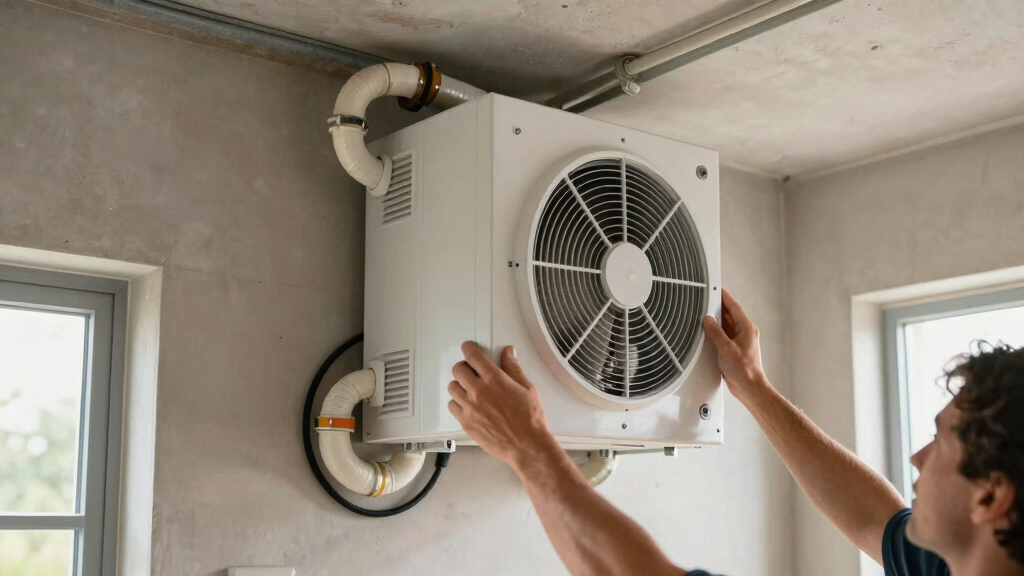
How We Picked
I evaluated these ERVs based on performance metrics such as airflow capacity (CFM), energy efficiency, and build quality. Usability factors like ease of installation, maintenance, and control features were also key considerations. Additionally, I prioritized products with solid reviews and certifications that demonstrate reliable operation over time. The ranking reflects a balance of value, versatility, and suitability for different home sizes and climates, ensuring each pick offers a clear advantage for specific buyer needs.Factors to Consider When Choosing Best Energy Recovery Ventilator ERV For Home
When selecting the best energy recovery ventilator for your home, understanding key factors can help you avoid costly mistakes. Consider your home’s size, climate, and existing ventilation system to choose a model that offers the right capacity and features. Proper installation and maintenance requirements also influence long-term satisfaction. Additionally, weigh the upfront costs against potential energy savings to find a solution that fits your budget and energy goals. The following factors will help clarify what to prioritize in your decision.Size and Capacity (CFM)
One of the most critical factors is the airflow capacity, measured in CFM (cubic feet per minute). Larger homes or spaces with higher occupancy need higher CFM ratings to maintain good air quality without overworking the system. Oversized units may waste energy and create noise, while undersized models can struggle to provide adequate ventilation. Carefully match the ERV’s capacity to your home’s size to ensure effective air exchange without unnecessary energy use.
Energy Efficiency and Certifications
Energy efficiency directly impacts your operating costs over time. Look for models with high-performance heat exchangers and certifications like HVI (Home Ventilating Institute) approval, which verify efficiency and quality. Features such as variable speed motors can adapt airflow to real needs, saving energy while maintaining comfort. Investing in a more efficient unit can lead to significant savings, especially in colder climates where heating costs are higher.
Control Features and Usability
Ease of use matters when managing your home’s ventilation. WiFi control, humidity sensors, and programmable timers add convenience, allowing you to customize operation to your lifestyle. However, these features often come with increased upfront costs and potential technical issues. Simpler models with manual controls might suffice for basic needs but could lack the flexibility for more complex or automated setups. Consider your comfort with technology and long-term maintenance when choosing controls.
Installation and Maintenance
Proper installation can be complex, especially for ducted systems that require precise placement and sealing. Ductless models are easier to retrofit but may have limitations in capacity. Maintenance involves regular filter changes, cleaning, and occasional system checks. Units with accessible filters and self-diagnostic features tend to be easier and cheaper to maintain. Evaluate your DIY skills or budget for professional installation to ensure reliable operation over time.
Cost and Value Considerations
While higher-end models may offer better energy savings and more features, they come with larger initial investments. Cheaper units might seem appealing but could lack durability or efficiency, leading to higher operating costs. Balance your budget against long-term savings and indoor air quality needs. Sometimes, investing more upfront can pay off through lower energy bills and fewer maintenance issues over the lifespan of the system.
Frequently Asked Questions
How do I know if an ERV is suitable for my climate?
Choosing an ERV for your climate depends on factors like temperature extremes and humidity levels. In cold climates, look for models with freeze protection features and high heat recovery efficiency to prevent frost buildup and maximize energy savings. In warmer, humid areas, an ERV with humidity sensors and dehumidification capabilities can help maintain comfortable indoor conditions. Always check the manufacturer’s specifications and reviews from users in similar climates to ensure suitability.
Can I install an ERV myself, or do I need a professional?
Installation difficulty varies by model and your home’s existing setup. Ductless ERVs are generally simpler to install and may be suitable for DIY enthusiasts with basic electrical skills. Ducted systems, however, often require precise sealing, proper placement, and sometimes building modifications, making professional installation advisable. Incorrect installation can reduce efficiency, cause noise, and lead to system failures, so weigh your skills carefully before attempting a DIY setup.
What maintenance does an ERV require over its lifespan?
Regular maintenance is essential for optimal operation. Most ERVs need periodic filter replacements—typically every 6 to 12 months—and occasional cleaning of the heat exchanger surfaces. Some models include self-diagnostic features or alerts to simplify upkeep. Proper maintenance not only prolongs the lifespan of the unit but also ensures consistent air quality and energy efficiency, preventing costly repairs down the line.
Is it worth paying extra for WiFi or smart controls?
Smart controls can provide convenience, allowing you to adjust ventilation remotely or set schedules based on occupancy and weather conditions. They can also help optimize energy use, leading to savings over time. However, these features increase the initial cost and may introduce complexity or compatibility issues. If you value automation and seamless integration with other smart home systems, investing in a model with smart controls can be worthwhile, but for basic needs, manual controls might suffice.
How long does an ERV typically last, and what warranties should I look for?
Most ERVs are designed to last between 10 and 20 years with proper maintenance. Look for units with robust build quality and reputable manufacturer warranties—ideally 5 years or more—covering parts and labor. Warranties provide peace of mind against early failures and can save money on repairs. Choosing a trusted brand with good customer support also helps ensure your system remains reliable over its lifespan.
Conclusion
For most homeowners seeking a reliable, all-around solution, the Panasonic Intelli-Balance 100 offers a great mix of performance, efficiency, and ease of use—making it the best overall choice. Budget-conscious buyers will appreciate the Awoco 6” Vent ERV, which provides solid basic features at a lower price point. Those with larger homes or demanding ventilation needs should consider the Broan B210E75RT or Aprilaire V22BEC for their higher capacity and advanced features. Beginners or retrofit projects benefit from ductless options like the Pioneer ECOasis. Ultimately, selecting the right ERV depends on your home’s size, climate, and preferred features—use this guide to find the best fit for your needs.