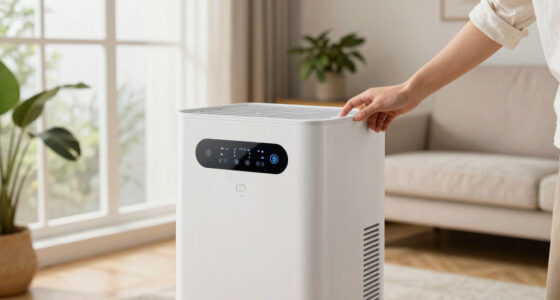
The Midea 7,800 BTU Inverter Window Air Conditioner is my best overall pick for its inverter design in a window unit, while the Midea Duo 14,000 BTU stands out among portable models for buyers who need more cooling capacity. For smaller rooms, the Midea EasyCool 5,000 BTU keeps the choice simple, though it lacks the efficiency features of inverter models. The main tradeoff is between the steady operation and window installation of inverter window units, the room-to-room flexibility of portable units, and the lower complexity of basic models. Capacity, installation, and energy performance all shape which option makes sense for your space. Read on for the full comparison and guidance on choosing among these 15 air conditioners.

Get cleaning gear delivered free — and shop member deals
- Fast, free delivery on millions of items
- Access to Prime Big Deal Days deals on October 6–7
- Prime Video, Amazon Music and more included
Complete the kit


Key Takeaways
- The Midea 7,800 BTU Inverter Window Air Conditioner earns the overall lead because its inverter design and window format offer a practical balance for buyers who can install a window unit.
- For portable cooling, the Midea Duo, DREO 740S, and TURBRO Greenland bring inverter features to a category where exhausting hot air outdoors can affect room performance.
- The roundup’s 5,000 BTU window models, including Midea EasyCool and Frigidaire, suit smaller spaces but lack the larger-capacity reach and advanced controls of the premium picks.
- Smart controls, heating, and dehumidification add useful functions, but they do not replace matching cooling capacity to room size or checking installation requirements.
- Several products share similar names or capacities, so buyers should compare the exact model, cooling format, hose setup, and included features rather than relying on a broad product title.
| Midea 8,000 BTU Window Air Conditioner with Electronic Controls |  | Best Smart Window Pick | Cooling capacity: 8,000 BTU | Coverage area: 350 sq. ft. | Installation type: Window | VIEW LATEST PRICE | See Our Full Breakdown |
| Midea EasyCool 5,000 BTU Window Air Conditioner |  | Best for Small Rooms | Cooling capacity: 5,000 BTU | Coverage area: Up to 150 sq. ft. | Modes: Cooling, 3-speed fan, dehumidifier | VIEW LATEST PRICE | See Our Full Breakdown |
| ZAFRO Smart Inverter Portable Air Conditioner, 14,000 BTU |  | Best Portable Efficiency Details | Cooling power: 14,000 BTU | SACC cooling power: 10,000 BTU | Energy efficiency: CEER 12.8 | VIEW LATEST PRICE | See Our Full Breakdown |
| Midea Duo 14,000 BTU Inverter Portable Air Conditioner |  | Best Premium Energy-Saving Claim | Cooling capacity: 14,000 BTU | Hose design: Dual hose-in-hose | Technology: Variable-speed inverter | VIEW LATEST PRICE | See Our Full Breakdown |
| 14000 BTU Portable Air Conditioner with Remote, Fan & Dehumidifier, Cools Rooms up to 700 Sq. Ft., White | 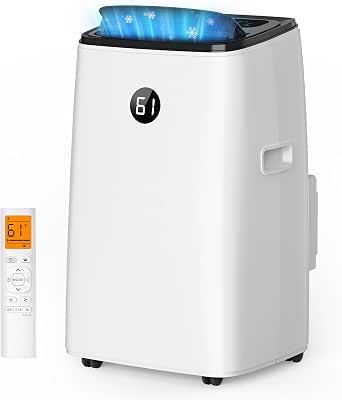 | Best for Large Rooms | Cooling capacity: 14,000 BTU ASHRAE / 10,000 BTU SACC | Coverage area: Up to 700 sq. ft. | Functions: Air conditioner, fan, dehumidifier | VIEW LATEST PRICE | See Our Full Breakdown |
| 14,000 BTU Portable Air Conditioner for Rooms up to 700 Sq. Ft. |  | Best for Large Rooms | Cooling capacity (ASHRAE): 14,000 BTU | Cooling capacity (SACC): 10,000 BTU | Recommended floor area: Up to 700 sq. ft. | VIEW LATEST PRICE | See Our Full Breakdown |
| TURBRO Greenland 14,000 BTU Inverter Portable Air Conditioner with Dehumidifier, Fan, Remote, WiFi, and Alexa/Google Assistant |  | Best Smart Inverter Portable | Cooling power: 14,000 BTU | Coverage area: Up to 600 sq. ft. | Compressor type: Inverter | VIEW LATEST PRICE | See Our Full Breakdown |
| Midea 8,000 BTU Smart Inverter Window Air Conditioner with Heat and Dehumidifier |  | Best Efficient Window Unit with Heat | Cooling capacity: 8,000 BTU | Coverage area: 350 sq. ft. | Functions: Cool, heat, dry, fan, and auto | VIEW LATEST PRICE | See Our Full Breakdown |
| DREO 14000 BTU Dual-Hose Inverter Portable Air Conditioner (740S) |  | Best for Smaller Rooms and Quiet Operation | Cooling capacity: 14,000 BTU ASHRAE; 10,000 BTU DOE | Coverage area: 200–300 sq. ft. | Hose type: Dual-hose | VIEW LATEST PRICE | See Our Full Breakdown |
| BLACK+DECKER BPACT10WT Portable Air Conditioner, 10,000 BTU, White |  | Best for Straightforward Portable Cooling | Cooling capacity: 10,000 BTU; 5,550 DOE | Recommended room size: Up to 450 sq. ft. | Functions: Air conditioner, dehumidifier, and fan | VIEW LATEST PRICE | See Our Full Breakdown |
| Midea EasyCool 5,000 BTU Window Air Conditioner |  | Best Simple Pick for the Smallest Rooms | Cooling capacity: 5,000 BTU | Room coverage: Up to 150 sq. ft. | CEER: 11.0 | VIEW LATEST PRICE | See Our Full Breakdown |
| Frigidaire 5,000 BTU Window-Mounted Air Conditioner |  | Best Small-Room Pick for Quiet Operation | Cooling capacity: 5,000 BTU | Room coverage: Up to 150 sq. ft. | Noise level: 52 dBA | VIEW LATEST PRICE | See Our Full Breakdown |
| Midea 7,800 BTU Inverter Window Air Conditioner |  | Best Overall for Efficient Window Cooling | Cooling capacity: 7,800 BTU | Room coverage: Up to 340 sq. ft. | Energy efficiency ratio: 15.1 | VIEW LATEST PRICE | See Our Full Breakdown |
| Shinco 12,000 BTU Portable Air Conditioner with Remote and Installation Kit |  | Best Portable Option for Renters | Cooling capacity: 12,000 BTU ASHRAE / 7,500 BTU SACC | Room coverage: Up to 450 sq. ft. | Modes: Cool, fan, dehumidifier | VIEW LATEST PRICE | See Our Full Breakdown |
| Midea 12,000 BTU Window Air Conditioner with Supplemental Heat, 550 Sq. Ft. | | Best for Year-Round Room Control | Cooling capacity: 12,000 BTU | Coverage area: Up to 550 sq. ft. | Cooling efficiency: CEER 13.3 | VIEW LATEST PRICE | See Our Full Breakdown |
| high-efficiency air conditioner | Cooling capacity | Noise level |
|---|---|---|
| Midea 8,000 BTU Window Air Con | 8,000 BTU | — |
| Midea EasyCool 5,000 BTU Windo | 5,000 BTU | As low as 52 dB on low mode |
| ZAFRO Smart Inverter Portable | — | As low as 42 dB |
| Midea Duo 14,000 BTU Inverter | 14,000 BTU | As low as 42 dB |
| 14000 BTU Portable Air Conditi | 14,000 BTU ASHRAE / 10,000 BTU SACC | 48 dB in Sleep Mode |
| 14,000 BTU Portable Air Condit | — | 52 dB; under 48 dB in sleep mode |
| TURBRO Greenland 14,000 BTU In | — | 43 dB |
| Midea 8,000 BTU Smart Inverter | 8,000 BTU | 45 dBA |
| DREO 14000 BTU Dual-Hose Inver | 14,000 BTU ASHRAE; 10,000 BTU DOE | 42 dB |
| BLACK+DECKER BPACT10WT Portabl | 10,000 BTU; 5,550 DOE | — |
| Midea EasyCool 5,000 BTU Windo | 5,000 BTU | — |
| Frigidaire 5,000 BTU Window-Mo | 5,000 BTU | 52 dBA |
| Midea 7,800 BTU Inverter Windo | 7,800 BTU | As low as 39 dBA |
| Shinco 12,000 BTU Portable Air | 12,000 BTU ASHRAE / 7,500 BTU SACC | 52 dB |
| Midea 12,000 BTU Window Air Co | 12,000 BTU | As low as 45 dBA |
More Details on Our Top Picks
Midea 8,000 BTU Window Air Conditioner with Electronic Controls
For a bedroom or living space up to 350 sq. ft., this Midea combines window-mounted cooling with app and voice control, so you can adjust settings without relying on the remote. Its cooling, dehumidifying, and fan modes cover more than temperature control, while Sleep Mode and a 24-hour timer make scheduled operation easier. Compared with the Midea EasyCool 5,000 BTU, it suits a substantially larger room and adds connected controls, but its stated coverage still limits it in open-plan spaces. The washable filter keeps routine upkeep simple. The tradeoff is that the supplied information gives no efficiency rating, so smart features alone do not establish how much energy it will use. I’d choose it for flexible control in a midsize room, not as a proven efficiency leader.
Pros:- App and voice assistant support allow convenient remote adjustments
- Cooling, dehumidifying, and fan modes address different comfort needs
- Sleep Mode and a 24-hour timer support scheduled use
- Washable filter can be reused for routine maintenance
Cons:- Coverage is limited to rooms up to 350 sq. ft.
- No energy-efficiency rating is provided in the supplied product data
Best for: People cooling a bedroom or living room up to 350 sq. ft. who want app or voice control
Not ideal for: Shoppers cooling larger open-plan rooms or comparing models by a published efficiency rating
- Cooling capacity:8,000 BTU
- Coverage area:350 sq. ft.
- Installation type:Window
- Modes:Cooling, dehumidifying, fan
- Controls:Electronic controls, remote, SmartHome app, voice assistant
- Timer:24-hour
- Filter:Washable
Our verdict“Choose this connected window unit for a midsize room when app control matters more than a documented efficiency rating.”
Midea EasyCool 5,000 BTU Window Air Conditioner
This compact window unit is sized for spaces up to 150 sq. ft., making it a more fitting match for a small bedroom or office than the 8,000 BTU Midea in this roundup. Its Eco mode and programmable timer give you basic scheduling tools, while the reusable filter avoids disposable replacements. Three fan speeds, cooling, and dehumidifying provide useful everyday flexibility without connected app controls. At low mode, the stated noise level is as low as 52 dB, a detail worth weighing for light sleepers. The included window hardware helps with setup, but you’ll need your own screwdriver. As an efficiency-focused choice, Eco mode is useful, though the supplied data does not include a formal efficiency rating. Its main limitation is straightforward: it is for small rooms, not broader living areas.
Pros:- Eco mode and programmable timer support scheduled operation
- Three-speed fan, cooling, and dehumidifying modes add flexibility
- Removable reusable filter supports straightforward maintenance
- Window mounting accessories are included
Cons:- Coverage is limited to spaces up to 150 sq. ft.
- A screwdriver is required for installation but is not included
- No formal efficiency rating is listed in the supplied data
Best for: Renters or homeowners cooling a small bedroom, study, or office up to 150 sq. ft.
Not ideal for: People cooling a midsize room or wanting app and voice controls
- Cooling capacity:5,000 BTU
- Coverage area:Up to 150 sq. ft.
- Modes:Cooling, 3-speed fan, dehumidifier
- Noise level:As low as 52 dB on low mode
- Controls:Electronic controls and remote
- Energy features:Eco mode and programmable EasyTimer
- Filter:Removable and reusable
- Installation:Window mounting accessories included; screwdriver required
Our verdict“Pick the EasyCool for a small room and basic scheduled operation, but choose the larger Midea for spaces beyond 150 sq. ft.”
ZAFRO Smart Inverter Portable Air Conditioner, 14,000 BTU
The ZAFRO stands out among this batch of portable models because its specs include a CEER of 12.8, along with an inverter compressor and dual-hose system. Together, those details make it the clearest pick here for buyers who want specific efficiency information and portable installation. Its 14,000 BTU cooling figure is paired with a 10,000 BTU SACC rating, giving a more useful basis for comparing portable cooling than the headline capacity alone. App control, six operating modes, and a stated 42 dB minimum add flexibility for day-to-day use. Compared with the Midea Duo, this model publishes a CEER figure, while the Duo claims energy use more than 40% below the federal standard. The ZAFRO weighs 54 lb and may need drainage in very humid conditions, so moving it or leaving it unattended can take planning.
Pros:- CEER 12.8 provides a stated efficiency figure for comparison
- Inverter compressor and dual-hose design support its portable cooling setup
- App and remote control with six operating modes
- Can operate drainage-free for up to 72 hours below 90% humidity
Cons:- At 54 lb, it may be cumbersome to move between rooms
- A drain hose may be needed in very humid conditions
- Its 10,000 BTU SACC rating is lower than the 14,000 BTU headline figure
Best for: Buyers who need a portable dual-hose unit and want a published CEER figure, app control, and multiple modes
Not ideal for: People who need a lightweight unit to move often or live in persistently humid conditions without convenient drainage
- Cooling power:14,000 BTU
- SACC cooling power:10,000 BTU
- Energy efficiency:CEER 12.8
- Airflow:480 m³/h
- Noise level:As low as 42 dB
- Modes:Cool, Dry, Fan, Sleep, Extra, Eco
- Controls:Wi-Fi app and remote
- Drainage-free operation:Up to 72 hours at humidity below 90%
- Weight:54 lb
Our verdict“Choose the ZAFRO if portable installation and a stated CEER matter, and you can accommodate its weight and possible drainage needs.”
Midea Duo 14,000 BTU Inverter Portable Air Conditioner
The Midea Duo pairs variable-speed inverter technology with a dual hose-in-hose design, addressing two common portable-unit concerns: energy use and warm outdoor air entering through the exhaust setup. Its stated energy use is more than 40% below the U.S. federal standard, which gives efficiency-minded shoppers a concrete claim to compare, though the supplied data does not provide a CEER value like the ZAFRO. Wi-Fi, app, and compatible voice controls make remote adjustments convenient, and its stated noise level reaches as low as 42 dB. Compared with the ZAFRO, the Duo foregrounds its relative energy claim and hose design rather than a CEER figure or detailed drainage window. A window hose assembly is still required, and voice control depends on compatible Alexa or Google Assistant devices. This is the better fit when those installation and ecosystem requirements are acceptable.
Pros:- Variable-speed inverter technology supports its stated energy-saving claim
- Dual hose-in-hose design helps limit hot outdoor air entering the room
- Wi-Fi app and compatible Alexa and Google Assistant controls
- Noise level is stated as low as 42 dB
Cons:- Requires installation of a window hose assembly
- Voice control depends on compatible Alexa or Google Assistant devices
- Supplied data does not include a CEER figure for direct comparison with the ZAFRO
Best for: Portable AC buyers prioritizing inverter operation, a dual-hose design, and connected controls
Not ideal for: People without a suitable window for the hose assembly or without compatible voice assistant devices
- Cooling capacity:14,000 BTU
- Hose design:Dual hose-in-hose
- Technology:Variable-speed inverter
- Energy savings:More than 40% compared to the U.S. federal standard
- Noise level:As low as 42 dB
- Connectivity:Wi-Fi, SmartHome App, Alexa, and Google Assistant
Our verdict“Choose the Midea Duo if you want a portable inverter unit with a strong stated energy-saving claim and can install its window hose assembly.”
14000 BTU Portable Air Conditioner with Remote, Fan & Dehumidifier, Cools Rooms up to 700 Sq. Ft., White
With a stated reach of up to 700 sq. ft., this portable unit targets larger rooms than the other products in this batch, and its 14,000 BTU ASHRAE / 10,000 BTU SACC ratings make the distinction between capacity measures visible. The 96-pint-per-day dehumidifier may also appeal in damp spaces, while self-evaporating operation can reduce routine water handling. A 24-hour timer, remote, and 48 dB Sleep Mode cover basic convenience. Compared with the inverter-equipped ZAFRO and Midea Duo, however, the supplied details do not list inverter technology or an efficiency rating, so I can’t place it ahead of them on measured efficiency. Its 360° wheels help with repositioning, but continuous drainage may still be needed in high humidity. Choose it for broad coverage and dehumidification, not documented energy performance.
Pros:- Stated coverage reaches up to 700 sq. ft.
- 96-pint-per-day dehumidification capacity
- Self-evaporating design can reduce routine drainage
- Included window kit, remote, timer, and 360° wheels aid setup and use
Cons:- Continuous drainage may still be needed in high-humidity conditions
- No efficiency rating or inverter technology is listed in the supplied data
- Remote requires two AAA batteries, which are not included
Best for: Households seeking a portable unit for a large room with strong dehumidification capacity and easy repositioning
Not ideal for: Efficiency-focused buyers who require a published rating or inverter details, or people in very humid settings without drainage access
- Cooling capacity:14,000 BTU ASHRAE / 10,000 BTU SACC
- Coverage area:Up to 700 sq. ft.
- Functions:Air conditioner, fan, dehumidifier
- Dehumidification:96 pints per day
- Noise level:48 dB in Sleep Mode
- Controls:Push button and remote control
- Timer:24 hours
- Auto-swing range:25–89°
Our verdict“Pick this unit for large-room coverage and dehumidification, while buyers prioritizing documented efficiency should compare the inverter-equipped ZAFRO or Midea Duo.”
14,000 BTU Portable Air Conditioner for Rooms up to 700 Sq. Ft.
This portable unit pairs a 14,000 BTU ASHRAE rating with cooling, fan, and dehumidifying modes, making it a flexible choice when a window unit is impractical. Its included window kit fits vertical and horizontal sliding windows, while casters help with moving it within the home. Compared with the TURBRO Greenland, it offers a broader stated coverage area, but it lacks the Greenland’s inverter compressor and Wi-Fi controls. Its 12 SEER rating is useful context for an efficiency-focused roundup, though the listing gives no energy-savings comparison against a standard model. The self-evaporating system reduces drainage during cooling, but dehumidification requires continuous drainage. I’d choose it for flexible placement and large-room coverage, while buyers focused on lower noise or smart control may prefer the TURBRO.
Pros:- Cooling, dehumidification, and fan modes cover several comfort needs
- Included window kit fits vertical and horizontal sliding windows
- Casters and remote control make day-to-day use more convenient
- Self-evaporating system reduces manual drainage during cooling
Cons:- Continuous drainage is required in dehumidification mode
- No inverter compressor or Wi-Fi control is listed
- The listed 700-square-foot coverage is broad for a portable unit
Best for: Households needing portable cooling for a larger room and a window kit that fits sliding windows in either direction
Not ideal for: Buyers who want inverter technology, app control, or to avoid setting up continuous drainage for dehumidification
- Cooling capacity (ASHRAE):14,000 BTU
- Cooling capacity (SACC):10,000 BTU
- Recommended floor area:Up to 700 sq. ft.
- SEER:12
- Refrigerant:R-32
- Noise level:52 dB; under 48 dB in sleep mode
- Wattage:1,300 W
- Modes:Cooling, dehumidification, and fan
Our verdict“Choose this model for portable, multi-mode cooling across a large stated area if you can accommodate its drainage needs and do not require smart controls.”
TURBRO Greenland 14,000 BTU Inverter Portable Air Conditioner with Dehumidifier, Fan, Remote, WiFi, and Alexa/Google Assistant
The Greenland’s inverter compressor and listed energy reduction of over 50% give it a stronger efficiency case than the standard portable units in this batch. It also runs at a stated 43 dB and includes app and voice control, so it suits rooms where noise and remote adjustments matter. Compared with the DREO 740S, the Greenland claims coverage up to 600 square feet and offers substantial dehumidification capacity; the DREO instead uses a dual-hose design and lists a lower noise level. The Greenland’s 71.2-pound weight and sizable body make room-to-room movement less convenient than its portable label suggests. Its 1,300-watt draw is listed, but actual energy use will depend on operating conditions. I’d favor it for smart, quieter portable cooling, provided its footprint stays put.
Pros:- Inverter compressor with a stated energy reduction of over 50%
- Listed 43 dB operating noise
- Wi-Fi app control and Alexa and Google Assistant support
- Cooling, fan, and dehumidifying modes with up to 85 pints per day of dehumidification
Cons:- At 71.2 pounds, it is difficult to move between rooms
- Large dimensions take up substantial floor space
- Coverage is listed at 600 square feet, below the 700-square-foot claim for the 14,000 BTU portable unit
Best for: People who want app or voice control and inverter cooling for a larger living area where the unit can remain installed
Not ideal for: Renters or households that need to move an air conditioner frequently between rooms, given its 71.2-pound weight and large footprint
- Cooling power:14,000 BTU
- Coverage area:Up to 600 sq. ft.
- Compressor type:Inverter
- Noise level:43 dB
- Dehumidification capacity:85 pints/day
- Wattage:1,300 W
- Dimensions:17.52 × 19.57 × 34.84 in
- Weight:71.2 lb
Our verdict“Pick the Greenland for smart, relatively quiet inverter cooling in a room where you can leave its large, heavy chassis in place.”
Midea 8,000 BTU Smart Inverter Window Air Conditioner with Heat and Dehumidifier
For a bedroom or office within its 350-square-foot coverage, this Midea combines window-unit efficiency features with heating, drying, and smart controls. Its Energy Star certified inverter technology is listed as saving up to 35% versus the Energy Conservation Standard, giving it a more clearly defined efficiency claim than the non-inverter portable options here. It also operates as low as 45 dBA. Compared with the Midea 7,800 BTU Inverter Window Air Conditioner elsewhere in the roundup, this model trades some cooling capacity for a heat-pump function and five operating modes. The heat pump works only when outdoor temperatures are above 41°F, so it cannot serve as reliable heat through colder weather. I’d pick it for a well-matched room and mild shoulder seasons, after checking the window dimensions.
Pros:- Energy Star certified inverter technology with stated savings up to 35%
- Cooling, heat-pump, dry, fan, and auto modes
- App, remote, Alexa, and Google Assistant controls
- Listed noise level as low as 45 dBA
Cons:- Heat-pump operation requires outdoor temperatures above 41°F
- Window fit is limited to double-hung windows within specified dimensions
- Its 8,000 BTU capacity is suited to smaller rooms than the larger portable models
Best for: Bedroom or office owners with a compatible double-hung window who want efficient cooling plus supplemental heat in mild weather
Not ideal for: People with windows outside the 24–38.5-inch width and 14.5-inch opening requirements, or anyone relying on heat below 41°F outdoors
- Cooling capacity:8,000 BTU
- Coverage area:350 sq. ft.
- Functions:Cool, heat, dry, fan, and auto
- Heat-pump operating note:Works when outdoor temperature is above 41°F
- Noise level:45 dBA
- Window fit:Double-hung windows, 24–38.5 in wide
- Required vertical opening:14.5 in
- Smart features:SmartHome app, Alexa, and Google Assistant
Our verdict“Choose this Midea for efficient, quiet window cooling with mild-weather supplemental heat if your room and window fit its limits.”
DREO 14000 BTU Dual-Hose Inverter Portable Air Conditioner (740S)
The DREO 740S combines a dual-hose layout with an inverter compressor, a useful pairing for portable cooling where maintaining room conditions efficiently matters. Its listed 42 dB noise level is the lowest among these five products, and its self-evaporating design avoids frequent emptying in most conditions. The stated energy-efficiency improvement is 32% over traditional models. Compared with the TURBRO Greenland, it covers a much smaller stated area—200 to 300 square feet—but is lighter and has a dual-hose setup. That makes the DREO a more focused fit for a bedroom or modest living room rather than a broad open area. Its drainage-free operation may not hold in humidity above 90%, and at 55.4 pounds it is still a substantial appliance to move.
Pros:- Inverter and dual-hose design with a stated 32% efficiency improvement over traditional models
- Listed 42 dB noise level
- Self-evaporating design reduces manual drainage in most conditions
- App, remote, and Alexa voice controls
Cons:- Coverage is limited to a stated 200–300 square feet
- Drainage-free operation may not apply above 90% humidity
- At 55.4 pounds, it is not effortless to move between rooms
Best for: Light sleepers or remote workers cooling a 200–300-square-foot room who want inverter operation and app or voice controls
Not ideal for: People cooling a large open space or living in very humid conditions where self-evaporation may not prevent drainage
- Cooling capacity:14,000 BTU ASHRAE; 10,000 BTU DOE
- Coverage area:200–300 sq. ft.
- Hose type:Dual-hose
- Compressor type:Inverter
- Noise level:42 dB
- Wattage:1,540 W
- Weight:55.4 lb
- Window fit:20–53 in
Our verdict“Choose the DREO for quieter inverter cooling in a smaller room, but look to the Greenland or larger portable unit for more stated coverage.”
BLACK+DECKER BPACT10WT Portable Air Conditioner, 10,000 BTU, White
The BLACK+DECKER is a simpler portable option for buyers who value basic controls and easy positioning over inverter or connected features. Its Follow Me remote uses the remote as a temperature reference, which can make control more relevant to where someone is sitting than a sensor on the unit. Casters and side handles also help when moving it around the home. Compared with the 14,000 BTU portable unit in this batch, it has lower stated cooling capacity and a smaller DOE capacity figure, so I’d reserve it for moderate cooling demands despite the listing’s 450-square-foot recommendation. Unlike the Midea window inverter, it does not list inverter technology or quantified energy savings. It includes dehumidifying and fan modes, but the product data gives no noise level, efficiency rating, or drawbacks, leaving those comparisons uncertain.
Pros:- Follow Me remote provides a temperature reference at the remote’s location
- Air conditioning, dehumidifying, and fan functions
- Casters and side handles aid repositioning
- Window installation kit is included
Cons:- Lower cooling capacity than the 14,000 BTU portable options in this batch
- No inverter compressor or quantified energy-savings claim is listed
- Product data does not provide a noise level or efficiency rating
Best for: Buyers seeking a portable unit with simple controls, a temperature-sensing remote, and included window installation hardware
Not ideal for: Efficiency-focused shoppers who require inverter technology or documented energy savings, and people needing published noise specifications
- Cooling capacity:10,000 BTU; 5,550 DOE
- Recommended room size:Up to 450 sq. ft.
- Functions:Air conditioner, dehumidifier, and fan
- Dimensions:15.3 × 14 × 24.8 in
- Controls:Top-mounted panel with LED display
- Remote control:Full-function remote with Follow Me thermostat feature
- Mobility:Bottom casters and side handles
- Included accessories:Window installation kit
Our verdict“Pick the BLACK+DECKER for straightforward portable cooling and convenient remote sensing, but choose an inverter model if energy efficiency is your main priority.”
Midea EasyCool 5,000 BTU Window Air Conditioner
The Midea EasyCool 5,000 BTU is a straightforward choice for a bedroom or office up to 150 square feet, with enough temperature and fan settings to adjust comfort without adding app controls or extra modes. Its CEER of 11.0 gives shoppers a concrete efficiency figure, though it lacks the inverter technology and higher efficiency ratio of the larger Midea 7,800 BTU Inverter Window Air Conditioner. Mechanical controls make operation simple, and the reusable filter can be removed and washed rather than replaced. The tradeoff is limited reach: this unit is sized for a single small room, while larger options in this roundup can cover substantially more space. Check your window measurements before buying, and plan to supply a screwdriver for installation.
Pros:- Sized for rooms up to 150 square feet
- Seven temperature settings and separate cooling and fan speeds
- Removable, reusable filter
- Installation accessories and a one-year parts and labor warranty are included
Cons:- CEER 11.0 is lower than the listed efficiency ratio of the Midea 7,800 BTU inverter model
- Limited to smaller rooms
- A screwdriver is required for installation but is not included
Best for: People cooling a small bedroom, study, or home office who want mechanical controls and a washable filter.
Not ideal for: People cooling rooms larger than 150 square feet or seeking inverter technology and smart controls.
- Cooling capacity:5,000 BTU
- Room coverage:Up to 150 sq. ft.
- CEER:11.0
- Temperature settings:7
- Cooling and fan speeds:2 cooling speeds; 2 fan-only speeds
- Controls:Mechanical
- Window fit:23–36 in. wide; at least 13 in. high
- Warranty:1 year parts and labor
Our verdict“Choose the EasyCool for simple, adjustable cooling in a small room; choose the Midea inverter model if efficiency features and wider room coverage matter more.”
Frigidaire 5,000 BTU Window-Mounted Air Conditioner
For a compact bedroom where operating noise matters, the Frigidaire 5,000 BTU has a stated noise level of 52 dBA and Effortless Temperature Control to help maintain the selected setting. It covers up to 150 square feet, the same stated room size as the Midea EasyCool 5,000 BTU, but adds auto restart to restore the previous settings after a power outage. Its washable filter also keeps routine maintenance simple. The limits are just as clear: two fan speeds offer fewer adjustments than the EasyCool’s separate cooling and fan-only settings, and the product data provides no efficiency figure to compare with the Midea models that list one. I would pick it for its specific comfort and restart features, not for proven efficiency leadership.
Pros:- Stated operating noise of 52 dBA
- Auto restart restores previous settings after a power outage
- Washable filter simplifies maintenance
- Adjustable side panels and an extra-long three-prong cord support installation
Cons:- Limited to rooms up to 150 square feet
- Only two fan speeds
- No efficiency rating is provided in the supplied product data
Best for: Light sleepers or apartment residents cooling a bedroom up to 150 square feet who value auto restart and a washable filter.
Not ideal for: Buyers prioritizing a documented efficiency rating, broad room coverage, or several fan-speed choices.
- Cooling capacity:5,000 BTU
- Room coverage:Up to 150 sq. ft.
- Noise level:52 dBA
- Fan speeds:2
- Filter:Washable
- Temperature control:Effortless Temperature Control
- Restart feature:Auto restart after power outages
- Power cord:Extra-long three-prong
Our verdict“Pick the Frigidaire for small-room comfort features and power-outage recovery, while the Midea EasyCool offers more listed fan adjustments.”
Midea 7,800 BTU Inverter Window Air Conditioner
The Midea 7,800 BTU Inverter Window Air Conditioner makes the strongest efficiency case among these five through its ENERGY STAR certification, inverter technology, and listed efficiency ratio of 15.1. It covers up to 340 square feet, a substantial step up from the 150-square-foot Midea EasyCool and Frigidaire units, while its noise level can fall as low as 39 dBA. Auto, Cool, Dry, and Fan modes, plus app and voice controls, add flexibility without requiring a portable unit and exhaust hose like the Shinco. The fit is more demanding, though: the window must be single- or double-hung, at least 19.6 inches high, and 23–36 inches wide. It is not compatible with casement windows, so measure before choosing it.
Pros:- ENERGY STAR certified with inverter technology
- Listed energy efficiency ratio of 15.1
- Noise level as low as 39 dBA
- App and voice assistant control with four operating modes
Cons:- Does not fit casement windows
- Requires a window opening at least 19.6 inches high
- Covers less area than the 12,000 BTU Midea supplemental-heat model
Best for: Households cooling a medium-sized room through a compatible hung window who want inverter operation, smart controls, and a stated efficiency rating.
Not ideal for: People with casement windows, short window openings, or rooms larger than its 340-square-foot coverage.
- Cooling capacity:7,800 BTU
- Room coverage:Up to 340 sq. ft.
- Energy efficiency ratio:15.1
- Energy certification:ENERGY STAR
- Noise level:As low as 39 dBA
- Modes:Auto, Cool, Dry, Fan
- Controls:LED display, 24-hour timer, SmartHome app, voice assistant
- Window fit:Single- or double-hung; 23–36 in. wide and at least 19.6 in. high
Our verdict“Choose this Midea for efficient, quiet cooling across a medium-sized room if your window meets its specific fit requirements.”
Shinco 12,000 BTU Portable Air Conditioner with Remote and Installation Kit
The Shinco portable air conditioner suits buyers who need to move cooling between rooms or cannot install a window unit. Its stated capacity is 7,500 BTU SACC (12,000 BTU ASHRAE), with coverage up to 450 square feet, and the included window kit and exhaust hose make it usable without a permanent window-mounted chassis. Casters, a remote, three fan speeds, and a 24-hour timer add day-to-day flexibility. Compared with the Midea 7,800 BTU inverter window unit, however, the Shinco is louder at 52 dB and lacks inverter technology; the product data also lists 3,520 W and annual consumption of 780 kWh. Its hose still requires a suitable window for exhaust, and portable placement takes floor space.
Pros:- Portable design with casters for moving between rooms
- Includes window kit and exhaust hose
- Cool, fan, and dehumidifier modes with three fan speeds
- Remote control and 24-hour timer
Cons:- Listed noise level is 52 dB
- No inverter technology
- Requires a window for exhaust and uses floor space
Best for: Renters or households that need movable cooling for a room up to 450 square feet and can vent the exhaust hose through a window.
Not ideal for: Buyers seeking quiet inverter operation, low floor-space use, or a setup without a window for exhaust.
- Cooling capacity:12,000 BTU ASHRAE / 7,500 BTU SACC
- Room coverage:Up to 450 sq. ft.
- Modes:Cool, fan, dehumidifier
- Dehumidification:Up to 43.2 L/day
- Temperature range:60°F–86°F
- Noise level:52 dB
- Annual energy consumption:780 kWh
- Exhaust hose:59 in.
Our verdict“Choose the Shinco when portability and flexible placement outweigh the quieter, inverter-based operation of the Midea window unit.”
Midea 12,000 BTU Window Air Conditioner with Supplemental Heat, 550 Sq. Ft.
This Midea 12,000 BTU window unit combines cooling for up to 550 square feet with supplemental heat, giving it a broader seasonal role than the Midea 7,800 BTU inverter model, which is cooling-focused and covers 340 square feet. Inverter technology, CEER 13.3, and noise as low as 45 dBA support its efficiency-minded pitch, while app and voice controls make scheduling and adjustments more convenient. The heating feature has a firm boundary: the heat pump does not operate when outdoor temperatures are 41°F or below, so it cannot replace a dependable cold-weather heating system. Its larger capacity and extra modes also come with a double-hung window requirement and a minimum 14.5-inch opening. It makes most sense when one room needs both cooling and shoulder-season heat.
Pros:- Cooling coverage up to 550 square feet
- Inverter technology and listed CEER of 13.3
- Cooling, drying, fan, and supplemental heat modes
- App and voice assistant controls; noise as low as 45 dBA
Cons:- Heat pump will not operate at outdoor temperatures of 41°F or below
- Requires a compatible double-hung window
- The 13.3 CEER is lower than the listed 15.1 efficiency ratio of the smaller Midea inverter model
Best for: Households with a compatible double-hung window that want cooling for a larger room plus supplemental heat during milder weather.
Not ideal for: Buyers needing primary heat in freezing weather, or people with casement windows or incompatible openings.
- Cooling capacity:12,000 BTU
- Coverage area:Up to 550 sq. ft.
- Cooling efficiency:CEER 13.3
- Noise level:As low as 45 dBA
- Modes:Heat, Auto, Cool, Dry, Fan
- Fan speeds:4
- Window fit:24–38.5 in. wide; at least 14.5 in. high
- Voltage:115 V
Our verdict“Choose this Midea for larger rooms that need efficient cooling and mild-weather supplemental heat, but not as a cold-weather heating source.”
How We Picked
I ranked these air conditioners by how well their stated design and features address the promise of high-efficiency cooling. Inverter models received an advantage because variable-speed operation can adjust cooling output instead of repeatedly cycling at full power; I also weighed unit type, stated capacity, controls, and added functions such as heating or dehumidification. I treated window and portable models as different solutions, since a portable unit’s exhaust setup and installation needs change how it fits a home.
The order favors a useful balance of efficiency-oriented design, capacity, and day-to-day fit, then distinguishes models for smaller rooms, flexible placement, smart control, or supplemental heating. Basic units remain in the roundup for buyers who value straightforward operation, but they rank below inverter-equipped alternatives when efficiency is the main goal. I also considered drawbacks such as installation demands, limited capacity, and feature complexity, while avoiding claims about energy savings that cannot be established from product names and listed features alone.
Factors to Consider When Choosing Best High-efficiency Air Conditioners
Choosing an efficient air conditioner starts with the room and installation, then narrows to the features that fit how you live. These broader checks can help prevent a common mismatch: buying an advanced unit whose capacity, exhaust path, or controls do not suit the space.
Match Capacity to the Room and Its Conditions
BTU capacity is a starting point, not a guarantee that a unit will cool well in every room. A sunlit space, high ceiling, open doorway, or several occupants can increase the cooling load beyond what floor area alone suggests. Oversizing can cool the air quickly without removing enough humidity, while undersizing may leave the unit running hard for long stretches. Use the manufacturer’s room guidance as a first screen, then account for the room’s layout and heat exposure. If the space connects freely to other rooms, size for the area the air conditioner must actually serve. For uncertain or unusual layouts, a qualified HVAC professional can help estimate the load.
Compare Window and Portable Installation Before Choosing
A window unit generally has a direct path to exhaust heat outdoors and keeps most of the appliance out of the room, but it requires a compatible window and secure mounting. Portable models can be moved between suitable rooms, yet still need a window or other approved opening for the exhaust hose. Check whether your window type works with the included kit, whether the hose can reach without sharp bends, and whether the unit blocks access or light. Dual-hose designs draw and exhaust air differently from single-hose models, which may affect how they interact with room pressure. Mobility is useful only if setup is practical in each destination room. Read the installation requirements before treating a portable unit as plug-and-play.
Read Efficiency Claims Alongside the Exact Model Specs
“High efficiency” can refer to different measurements and design choices, so compare the full specification label rather than relying on a headline or inverter mention alone. Look for the efficiency metric supplied for the model and compare like with like across the same unit type and test basis. An inverter compressor can vary its output, but that alone does not establish how much electricity a particular unit will use in your home. Also check operating modes, fan settings, and any energy-saving controls that may suit your schedule. The room’s insulation, air leaks, and thermostat setting affect real-world consumption too. Keep the product’s exact model number handy because similarly named units may differ in capacity or features.
Decide Whether Heating and Smart Features Earn Their Complexity
Supplemental heat can extend the usefulness of a window unit during mild weather, but it is not a substitute for a primary heating system unless the manufacturer’s specifications and your climate support that use. Wi-Fi, voice control, and scheduling may make it easier to run cooling only when needed, especially if routines change during the day. Those features add little if you prefer manual controls or have unreliable connectivity. Dehumidification can improve comfort in sticky weather, though its performance and operation vary by model. Before paying attention to extra modes, check whether they can run independently and how they affect the unit’s controls. Prioritize features that solve a recurring problem in your home.
Plan for Noise, Maintenance, and Seasonal Storage
Noise can matter as much as cooling performance in a bedroom, study, or shared living area. Compare published sound information when available, and note that compressor operation and fan speed can change what you hear. Washable filters need regular cleaning, while window seals and portable exhaust connections need periodic inspection to limit warm-air leaks. Portable units also occupy floor space and may need draining or other upkeep according to their manuals. Window units require safe installation and may need removal or protection during colder months. A little maintenance planning can preserve comfort and keep the unit operating as intended.
Frequently Asked Questions
Does an inverter air conditioner always use less electricity than a basic model?
No single feature guarantees lower electricity use in every home. Inverter compressors can adjust output to match cooling demand, which may reduce the repeated full-power cycling associated with some conventional designs. The result depends on the exact model, room load, settings, insulation, and how long the unit runs. Compare the efficiency figures on the model labels and choose capacity suited to the space. A well-matched basic unit may serve its purpose better than an oversized inverter model.
Should I choose a portable unit or a window unit for efficient cooling?
Start with the installation you can support consistently. Window units usually exhaust heat directly through the window, while portable units need a hose connection and take up indoor floor space. Portable models make sense when window installation is impractical or room flexibility matters, but mobility does not remove the need for a good exhaust seal. Compare exact efficiency specifications within the same type instead of assuming one format is always more efficient. Also check local rules, window dimensions, and whether you can safely support a window-mounted appliance.
How can I tell whether 5,000 BTU is enough for my room?
Use the manufacturer’s room-size guidance as a starting point, then account for factors that increase heat load. Direct afternoon sun, high ceilings, cooking heat, poor insulation, and an open connection to another room can all make a small unit struggle. A unit that runs constantly may still leave the space warm if its capacity is too low. A larger model is not automatically better, since too much capacity can shorten cooling cycles and leave humidity behind. For an irregular or connected space, get a room-load estimate before choosing.
Are smart controls worth prioritizing in an efficient air conditioner?
Smart controls are most useful when they help you avoid cooling an empty room or make temperature changes easier to schedule. They do not improve the compressor’s rated efficiency by themselves, and app support can depend on network conditions and software compatibility. If you already use a routine or voice assistant, a compatible model may make everyday control simpler. If you prefer a physical remote or fixed settings, basic electronic controls may be easier to live with. Compare the core capacity and efficiency specifications before treating connectivity as a deciding factor.
When does supplemental heat make sense in a window air conditioner?
Supplemental heat can be useful during cool mornings or mild shoulder seasons when you want one appliance to provide both cooling and some warmth. Check the unit’s heating capacity and operating limits against the climate and room, since heating functions vary and may not replace a dedicated heater. A heat feature can also add controls and installation requirements that are unnecessary if you only need summer cooling. Consider whether the room already has reliable heating and how often you would use the added mode. The Midea window models with supplemental heat are the relevant options in this roundup, but the right choice depends on the manufacturer’s specifications for your conditions.
Conclusion
For most buyers able to install a window unit, I recommend the Midea 7,800 BTU Inverter Window Air Conditioner as the best overall balance of inverter design and practical capacity. The Midea EasyCool 5,000 BTU is the straightforward value-style choice for a smaller room, while the Midea Duo 14,000 BTU is my premium portable pick for buyers who need higher capacity and a more feature-led design. Beginners who want familiar, direct controls can start with a basic window model after matching capacity to the room. Choose the DREO 740S or TURBRO Greenland if portable inverter features and connected controls matter more; pick a Midea model with supplemental heat if that extra function fits your climate. The best choice is the one whose capacity, installation, and efficiency specifications match your actual space.
Fall Picks
fall essentials
As an affiliate, we earn on qualifying purchases.