
TL;DR
A Family Handyman reviewer tested Anker’s Solix Smart Generator 5500 for just over a month using gasoline and propane, both alone and with an Anker E10 home battery. The reviewer reported easy setup and app-based starting, and observed DC charging output near the advertised 4,500 watts. Natural-gas operation was not tested, and the generator charged the battery system rather than directly powering the reviewer’s house.
Family Handyman published a hands-on review of Anker’s Solix Smart Generator 5500 after its reviewer tested the tri-fuel unit for just over a month at a Florida home. The review found that it could charge a compatible Solix E10 battery at output near Anker’s advertised maximum, but the reviewer tested only gasoline and propane and described noise and the cost of the larger backup system as drawbacks.

Get cleaning gear delivered free with Prime
- Fast, free delivery on millions of items
- Prime Video, Amazon Music and more included
- Member-only deals all year
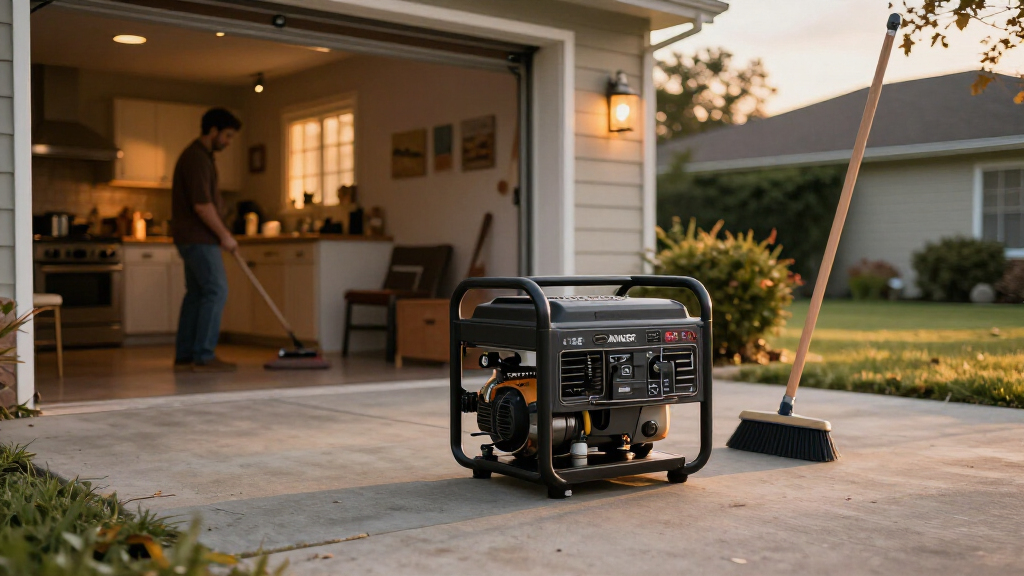
The 224cc, four-stroke generator runs on gasoline, propane or natural gas. Anker lists up to 4,500 watts of DC output on gasoline or propane and up to 4,000 watts on natural gas. For AC use, the unit provides up to 3,600 rated watts across a TT-30R outlet and a 5-20R outlet. The reviewer said the direct DC connection lets the generator send power to a compatible E10 battery without first converting it to AC and back.
During the month-long test, the reviewer tried gasoline and propane, manual and app-based starting, Eco and higher-output modes, portability, noise and battery integration. Setup took about 20 minutes, according to the review. Both the electric start and app start worked during testing, as did the manual pull start. The reviewer reported no starting problems, overloads, connection failures or app glitches.
The longest continuous test lasted about two hours. The reviewer observed DC output reaching roughly 4.5 kilowatts while the home was drawing power. The generator was charging the E10; the battery system, rather than the generator directly, supplied the home’s electrical loads. The reviewer’s system included rooftop solar, two E10 power modules and three battery expansion modules.
How the Generator Fits Home Backup
The review examines a specific role for a fuel-powered generator in a home that already has solar and battery storage: recharging the battery when solar output is insufficient. The reviewer said the generator could supply another charging source at night or during periods when solar did not meet the system’s needs. That arrangement can help extend a backup setup’s operation during an outage, though the review does not establish how long it would run under different household loads or fuel supplies.
The tested configuration also carries a substantial cost beyond the generator. The reviewer said the battery equipment cost about $14,000, with professional installation adding approximately $4,500. Those figures describe that reviewer’s own system, not a universal quote, and help explain why the generator’s strongest selling point in the report is its integration with Anker equipment rather than its standalone output alone.
Products Worth Considering

LG StanbyME 2 Max 32-Inch 4K Portable Smart Touchscreen TV

Ring Battery Doorbell Plus – Home or Business Security with Head‑to‑Toe HD+ Video, Motion Detection & Alerts, Two‑Way Talk

TCL 55 T7 Series 4K 120Hz QLED Smart Google TV (55T7)
As an affiliate, we earn on qualifying purchases.
A Florida Home Backup Test
The reviewer, writing for Family Handyman, tested the generator at a Florida home where hurricanes and severe storms can cause outages lasting hours or days. The home already had rooftop solar and an Anker Solix E10 whole-home battery system. During an outage, the battery powers the house; solar can recharge it in daylight, and the generator can add power when solar is not sufficient.
The reviewer said the generator weighs 110 pounds and was manageable to move. Initial preparation involved connecting its startup battery and adding engine oil. The review focuses on use with an existing Anker system while noting that the generator can also operate on its own. The stated testing period was just over a month, but the longest continuous run described was about two hours.
“The biggest surprise was how easy Anker made practically everything about using a gas-powered generator.”
— Paul Rankin, Family Handyman reviewer
Natural Gas and Long Runs Untested
The reviewer did not test natural-gas operation. The report says a professionally installed connection to the home’s gas supply would be needed, and the reviewer planned to add one later. The review also reports no test longer than about two hours, so it does not show performance across an overnight or multiday outage.
The source does not provide a measured noise level, fuel consumption rate, or runtime for a given load. It also does not quantify how long the reviewer’s home could remain powered under particular weather, solar or household-use conditions. The reported 4.5-kilowatt charging output is an observation from this setup; results may differ with other equipment and loads.
Planned Natural Gas Testing
Rankin said he planned to add a professionally installed natural-gas connection and test the generator on that fuel. That could address one of the review’s main gaps, but no date or results were provided. The report also leaves longer-duration performance and measured fuel use open for future testing.
Key Questions
What did the reviewer test?
Paul Rankin tested the Anker Solix Smart Generator 5500 for just over a month using gasoline and propane. He also tried app and manual starting, operating modes, portability, noise and integration with an E10 battery.
Did the generator directly power the reviewer’s whole house?
No. In the described integrated test, the generator charged the E10 battery system, and the battery supplied the home’s electrical loads. The review says the generator reached roughly 4.5 kilowatts of DC charging output.
Was natural-gas performance tested?
No. The reviewer said a professionally installed gas connection was needed and that natural-gas testing had not yet taken place.
How much did the complete setup cost?
The reviewer reported spending about $14,000 on battery equipment and approximately $4,500 on professional installation. These are costs for his home system; the supplied review material does not state the generator’s price.
Source: rss