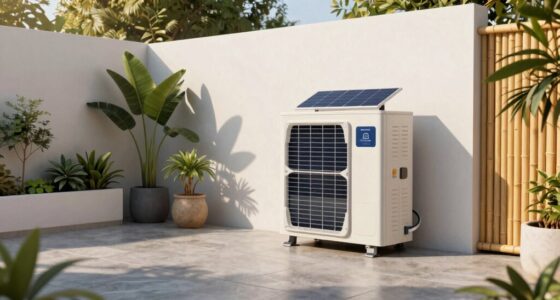

Climate-adaptive HVAC systems automatically respond to changing weather conditions and occupancy patterns to keep your indoor environment comfortable and energy-efficient. They use advanced sensors and smart controls to adjust heating and cooling in real time, preventing wasteful energy use. By forecasting weather and detecting occupancy shifts, these systems optimize performance and reduce costs. If you stay with us, you’ll find out how these intelligent solutions can transform your building’s climate management.

Get cleaning gear delivered free with Prime
- Fast, free delivery on millions of items
- Prime Video, Amazon Music and more included
- Member-only deals all year
Key Takeaways
- Climate-adaptive HVAC systems use sensors and real-time weather data to automatically adjust indoor climate for optimal comfort.
- They incorporate smart controls and remote management to respond to occupancy patterns and external weather changes.
- These systems optimize energy efficiency by preventing over-conditioning and adapting to unexpected weather fluctuations.
- Integration with other building systems like shading and ventilation enhances overall environmental control and performance.
- They promote sustainability and cost savings by reducing energy waste and maintaining healthy indoor air quality.

Climate-adaptive HVAC systems are revolutionizing how we manage indoor comfort by responding dynamically to changing weather conditions. These innovative systems use advanced sensors and smart controls to adjust heating, cooling, and ventilation in real time, guaranteeing ideal comfort while minimizing energy consumption. Instead of relying on traditional thermostats that operate on fixed schedules or set points, climate-adaptive HVACs analyze external weather data and indoor occupancy patterns to make precise adjustments. This responsiveness not only enhances comfort but considerably boosts energy efficiency, helping you save on utility bills and reduce your environmental footprint.
Climate-adaptive HVACs optimize comfort and energy use through real-time weather and occupancy data.
With smart controls integrated into these systems, you gain the ability to monitor and manage your indoor climate remotely via apps or automation platforms. Imagine waking up on a chilly morning, and your HVAC system automatically preheats your home based on the weather forecast and your usual schedule. When you leave for work, the system detects reduced occupancy and adjusts settings accordingly, conserving energy without sacrificing comfort. As you return, it anticipates your arrival and restores a cozy temperature. This level of automation ensures your indoor environment is always tailored to actual needs, avoiding unnecessary energy waste typical of traditional HVAC systems.
Energy efficiency is at the core of climate-adaptive HVAC technology. By responding to real-time weather fluctuations, these systems prevent over-conditioning—heating or cooling spaces more than necessary. For example, if a warm front moves in unexpectedly, the system can dial down cooling or turn it off altogether, avoiding wasteful operation. Conversely, during a cold snap, it ramps up heating only when needed, maintaining comfort without excessive energy use. The smart controls continuously learn from occupancy patterns and weather trends, optimizing operation further over time, which enhances overall system performance and longevity. Additionally, these systems often incorporate AI-driven algorithms, enabling them to improve their responsiveness and efficiency through continual learning.
Furthermore, climate-adaptive HVACs often integrate with other smart building systems, creating a cohesive environment that maximizes energy savings. These systems can communicate with window sensors, shading devices, and ventilation controls to coordinate adjustments based on sunlight, wind, and indoor air quality. As a result, your indoor climate is not just responsive but also proactive, ensuring efficiency and comfort are balanced seamlessly.
In today’s push for sustainable living, climate-adaptive HVAC systems offer a compelling solution. They empower you to reduce energy consumption, lower costs, and lessen environmental impact—all while maintaining a comfortable, healthy indoor environment. By leveraging smart controls and real-time data, you turn your home or building into an intelligent space that adapts intelligently to weather changes and occupancy, making your comfort more efficient and sustainable.
smart climate-adaptive HVAC system
As an affiliate, we earn on qualifying purchases.
As an affiliate, we earn on qualifying purchases.
Frequently Asked Questions
How Do Climate-Adaptive HVAC Systems Impact Long-Term Energy Savings?
Climate-adaptive HVAC systems boost your long-term energy savings by intelligently adjusting to weather and occupancy patterns. This reduces energy waste and optimizes renewable integration, lowering your utility bills. You’ll also enjoy improved occupant comfort since the system responds in real-time to changing conditions. Over time, these adaptive systems make your building more efficient, sustainable, and cost-effective, helping you achieve consistent energy savings and a greener footprint.
What Are the Initial Costs Versus Savings for Climate-Adaptive HVAC Systems?
You’ll find that initial installation costs for climate-adaptive HVAC systems are higher due to advanced technology and potential retrofit challenges. However, these systems offer significant savings over time by optimizing energy use based on weather and occupancy patterns. While the upfront investment can be substantial, the reduced energy bills and improved comfort often outweigh the initial costs, making them a smart long-term choice despite the installation challenges.
How Do These Systems Integrate With Existing Building Management Infrastructure?
You’ll find climate-adaptive HVAC systems seamlessly synchronize with your existing infrastructure by leveraging sensor integration and control system compatibility. These smart systems smoothly connect with your current building management setup, sharing data and adjusting operations in real time. This integration improves efficiency, enhances comfort, and reduces costs, all while maintaining the flow of control. With strategic setup, you can simplify system synergy, ensuring your building’s climate control is clever, coordinated, and completely compatible.
Are Climate-Adaptive HVAC Systems Suitable for All Climate Zones?
You should consider regional adaptation and technological limitations when evaluating climate-adaptive HVAC systems for your climate zone. These systems work well in moderate climates but may face challenges in extreme temperatures or highly variable weather. In colder or hotter regions, advanced features might need customization, and some technologies may not yet be fully effective. So, assess your local climate and technological options to determine if these systems suit your needs.
What Maintenance Requirements Are Unique to Climate-Adaptive HVAC Technology?
You’ll need to regularly check sensor calibration to guarantee the climate-adaptive HVAC responds accurately to weather and occupancy changes. Additionally, keep up with software updates to optimize system performance and security. These systems require more attention to sensor accuracy and software maintenance than traditional HVAC units. By staying proactive with calibration and updates, you’ll maximize energy efficiency, comfort, and system longevity, making your climate-adaptive HVAC a reliable and smart choice.
weather-responsive smart thermostat
As an affiliate, we earn on qualifying purchases.
As an affiliate, we earn on qualifying purchases.
Conclusion
As you consider climate-adaptive HVAC systems, the future of comfort and efficiency hangs in the balance. These systems hold the power to transform how you experience indoor environments, but their true potential is just beginning to emerge. Will they fully adapt to unpredictable weather shifts and changing occupancy patterns? One thing’s certain: staying ahead means embracing innovation now—because what’s coming next could redefine comfort as you know it. Are you ready to be part of this revolution?
As an affiliate, we earn on qualifying purchases.
As an affiliate, we earn on qualifying purchases.
Halloween Picks
halloween
As an affiliate, we earn on qualifying purchases.