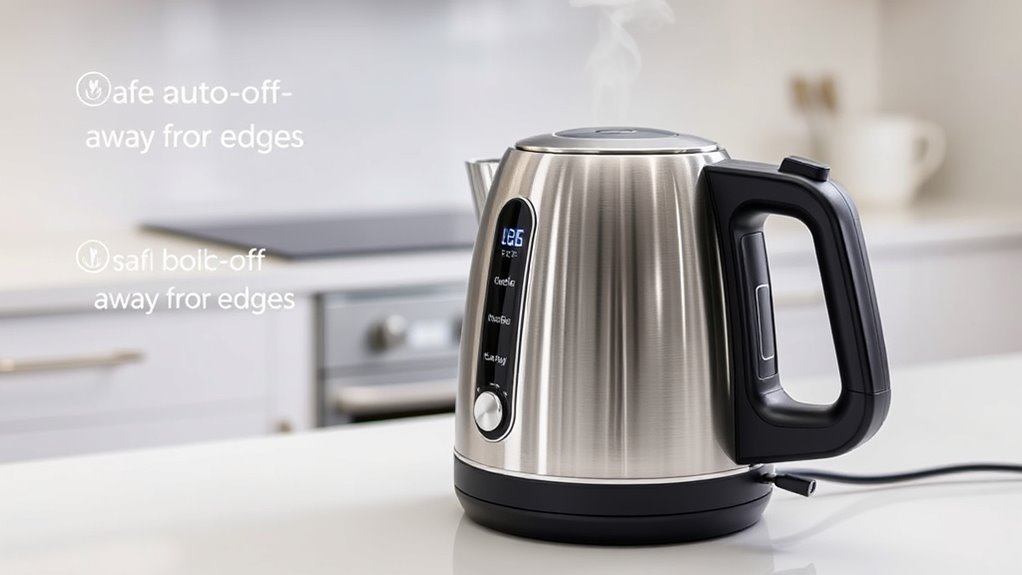

To stay safe with your electric kettle, always check that the auto-off feature works properly after boiling. Use it to prevent dry boiling and reduce fire risks, and be aware if your kettle lacks this feature—then set timers or stay nearby. Confirm your kettle is placed on a stable, heat-resistant surface, away from water, flammable materials, and children. Proper placement and understanding these safety features help you enjoy your kettle worry-free—keep going to learn more!

Get cleaning gear delivered free — and shop member deals
- Fast, free delivery on millions of items
- Access to Prime Big Deal Days deals on October 6–7
- Prime Video, Amazon Music and more included
Key Takeaways
- Ensure the auto-off feature functions properly to prevent dry boiling and fire hazards.
- Regularly test the boil-dry protection to confirm it activates in case of low water levels.
- Place the kettle on a stable, heat-resistant surface away from edges and flammable materials.
- Keep the kettle’s water level within recommended limits to avoid overheating or damage.
- Position the power cord safely, away from hot surfaces and water sources, to prevent tripping and electrical hazards.

Electric kettles are convenient appliances that can make boiling water quick and easy, but safety should always come first. One of the most important aspects of safe usage is paying attention to cord safety. Always guarantee that the power cord is in good condition, free from frays or damage, and positioned so that it doesn’t pose a tripping hazard. Keep the cord away from the hot surface of the kettle and avoid pulling on it to unplug. Instead, grasp the plug firmly and pull straight out of the socket. Be cautious about where you place your kettle; make sure it’s on a stable, flat surface away from the edges to prevent accidental knocks, which could cause hot water to spill or the appliance to fall.
Ensure your kettle’s cord is undamaged, kept away from hot surfaces, and unplugged safely to prevent accidents.
Another critical safety feature to think about is the water level indicator. Always fill the kettle within the recommended water level range, marked clearly on the water level indicator. Overfilling can cause water to spill over during boiling, potentially damaging the appliance or creating a burn risk, while underfilling might cause the kettle to overheat or operate dry. Regularly checking the water level indicator helps you avoid these issues and guarantees the kettle functions safely and efficiently.
Placement of the kettle is just as crucial. Keep it away from the edges of countertops and out of reach of children. Make sure the cord has enough slack to prevent pulling or tugging, which could tip the kettle over or disconnect it suddenly. Avoid placing the kettle near other appliances or sources of water, such as sinks or humidifiers, to reduce the risk of electrical shock. It’s also best to position the kettle on a heat-resistant surface and away from curtains, paper, or other combustible materials.
Using the automatic shut-off feature is another crucial safety measure. Once the water reaches boiling point, the kettle should turn off automatically. This prevents it from boiling dry, which can cause damage to the appliance and pose a fire risk. Always verify that this feature is functioning correctly, especially if you notice the kettle isn’t shutting off or if it’s been used for an extended period. If your kettle doesn’t have an auto-off feature, set a timer or stay nearby while it boils to prevent accidents. Additionally, understanding boil-dry protection can help ensure your kettle remains safe during use.
electric kettle auto shut-off safety
As an affiliate, we earn on qualifying purchases.
As an affiliate, we earn on qualifying purchases.
Frequently Asked Questions
Can Electric Kettles Be Used Outdoors Safely?
You can use an electric kettle outdoors if it has a weatherproof design and you use it near outdoor power sources. Make sure the area is dry, and avoid exposing the kettle to rain or snow. Always keep the cord away from water, and don’t leave it unattended. Using a kettle designed for outdoor use guarantees safety, preventing electrical hazards and damage.
What Materials Are Safest for Electric Kettle Construction?
Have you ever wondered if your kettle’s materials are truly safe? Opt for kettles made from high-quality stainless steel or BPA-free plastic, as these materials prioritize safety and durability. Look for construction materials that resist corrosion, don’t leach chemicals, and are heat-resistant. These choices guarantee your kettle is safe to use daily, reducing health risks while providing reliable performance. Isn’t your safety worth choosing the best materials?
How Can I Prevent Mineral Buildup in My Kettle?
To prevent mineral buildup in your kettle, regularly descale it using vinegar or commercial descaling solutions. Fill the kettle with a mixture of water and vinegar, bring it to a boil, then let it sit for an hour before rinsing thoroughly. This method effectively removes mineral deposits. To reduce future buildup, consider using filtered or soft water, which minimizes mineral deposits and keeps your kettle cleaner longer.
Are There Safety Concerns With Cordless Electric Kettles?
Cordless electric kettles offer great convenience and portability, but you should be aware of some safety concerns. Since they lack cords during use, you might accidentally tip or spill hot water, so handle them carefully. Also, make certain the base is stable and placed on a flat, heat-resistant surface. Always unplug after use and keep the kettle away from children to prevent accidents, making your cordless experience safer.
What Should I Do if My Kettle Leaks or Spills?
A leak is often a sign to act fast. If your kettle leaks or spills, unplug it immediately to prevent electrical hazards. Carefully check for the source of the leak and perform leak repair if possible. To prevent spills, ensure the lid is securely closed and avoid overfilling. Regularly clean and inspect your kettle for damage, and always prioritize spill prevention to keep your kitchen safe.
electric kettle boil-dry protection
As an affiliate, we earn on qualifying purchases.
As an affiliate, we earn on qualifying purchases.
Conclusion
By following safety tips like ensuring your kettle has auto-off, avoiding boil-dry situations, and placing it on a stable surface, you can prevent accidents. Imagine forgetting to switch off your kettle, only to find it boiling dry and overheating—dangerous and costly. Staying alert and maintaining your kettle properly keeps your home safe. So, always stay cautious, and enjoy hot drinks without worry, knowing you’re taking the right steps to stay safe.
heat-resistant kettle placement mat
As an affiliate, we earn on qualifying purchases.
As an affiliate, we earn on qualifying purchases.
electric kettle water level indicator
As an affiliate, we earn on qualifying purchases.
As an affiliate, we earn on qualifying purchases.
Fall Picks
fall essentials
As an affiliate, we earn on qualifying purchases.