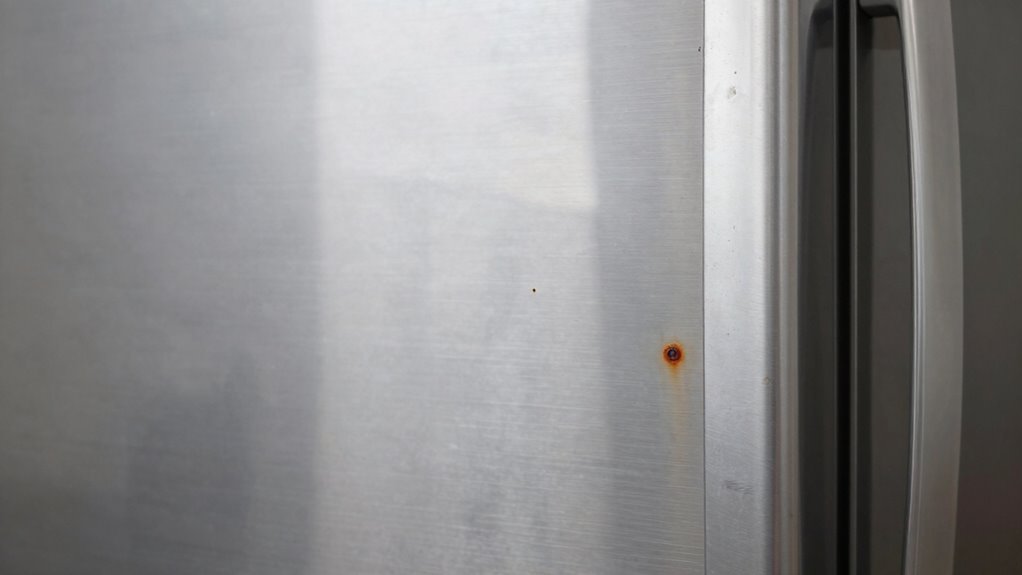

Stainless steel appliances can still rust if their protective chromium oxide layer gets damaged by scratches, abrasive cleaners, or harsh chemicals. Exposure to salt, chlorine, or acidic substances speeds up corrosion, especially in humid or coastal environments. Regular maintenance, gentle cleaning, and moisture control help prevent rusting. However, if you want to discover more about how to keep your appliances in top condition and avoid rust, there’s more you should know.

Get cleaning gear delivered free — and shop member deals
- Fast, free delivery on millions of items
- Access to Prime Big Deal Days deals on October 6–7
- Prime Video, Amazon Music and more included
Key Takeaways
- Scratches or damage to the chromium oxide layer expose the steel to moisture and corrosive elements.
- Contact with salt, chlorine, or acidic substances can accelerate rust formation by degrading protective layers.
- Surface finishes like brushed or polished can be more prone to scratching, reducing corrosion resistance.
- Environmental factors such as humidity and coastal air increase exposure to corrosive elements.
- Inadequate cleaning or neglecting maintenance allows dirt and residues to compromise the protective coating.
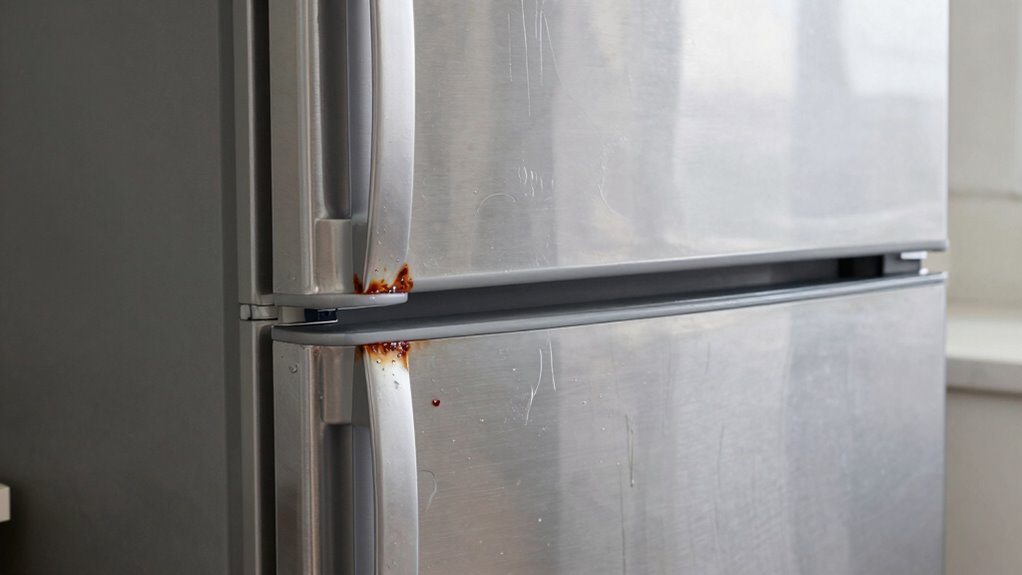
Stainless steel appliances are prized for their sleek look and durability, but they can sometimes develop rust, which can be frustrating. One common reason is that not all stainless steel surfaces are created equal. The surface finishes vary, from brushed to polished, and each reacts differently to cleaning techniques. If you’re using the wrong cleaning method, you might inadvertently damage the protective layer, making rust more likely to appear. For example, abrasive scrubbers or harsh chemicals can scratch or dull the finish, exposing the underlying metal to moisture and oxygen. To avoid this, it’s best to use gentle cleaning techniques—soft cloths, mild soap, and water—especially on brushed finishes, which are more prone to scratching. Additionally, understanding the surface finishes and how they react can help you choose the right cleaning approach. Another factor is that stainless steel isn’t completely rust-proof. It contains chromium, which forms a thin, protective oxide layer on the surface that prevents corrosion. However, this layer can be compromised if the surface is scratched or if corrosive substances like salt or chlorine come into contact with it. When that happens, rust can start to form. That’s why it’s crucial to pay attention to the cleaning techniques you employ. Always dry the surface thoroughly after cleaning to prevent moisture from lingering. Also, avoid leaving salty or acidic residues on the appliance, as they can eat through the protective layer faster. Environmental factors play a role too. If you live in a humid climate or near the coast, salt in the air can settle on your appliances and accelerate rust formation. Regular maintenance becomes even more important in these conditions. Using a stainless steel cleaner or polish designed for your specific surface finish can help restore the protective layer and keep rust at bay. Applying a thin coat of mineral oil or specialized stainless steel protectant can add an extra barrier against moisture and oxygen, especially in high-humidity environments. To further safeguard your appliances, employing appropriate cleaning techniques tailored for different finishes is essential. In the end, understanding the surface finishes and adopting correct cleaning techniques make a big difference. By avoiding abrasive tools, using appropriate cleaners, and maintaining a dry, clean surface, you can keep your stainless steel appliances looking sleek and rust-free for years. Remember, a little preventative care goes a long way in preserving the beauty and integrity of your appliances, ensuring they stay both functional and visually appealing. Regularly inspecting your appliances for surface damage can help catch early signs of rust and prevent larger issues later. Proper maintenance practices also contribute significantly to prolonging the lifespan of your appliances.
stainless steel appliance cleaner
As an affiliate, we earn on qualifying purchases.
As an affiliate, we earn on qualifying purchases.
Frequently Asked Questions
Can Rust on Stainless Steel Be Completely Removed?
Yes, you can often completely remove rust from stainless steel. Start with a gentle abrasive or a mixture of baking soda and water to scrub away the rust, then apply corrosion inhibitors or specialized surface treatments to prevent future spots. Using rust removers designed for stainless steel can also help. Regular maintenance and keeping the surface dry will minimize rust formation, ensuring your appliances stay shiny and corrosion-free.
Do Cheaper Stainless Steel Appliances Rust More Easily?
Think of stainless steel as a shield for your home, but not all shields are created equal. Cheaper stainless steel appliances often symbolize a false sense of durability, making them more prone to rust because of lower material quality. While they may seem cost-effective at first, their vulnerability can lead to costly repairs. Investing in higher-quality stainless steel guarantees better resistance, giving you peace of mind and lasting beauty.
How Often Should I Clean My Stainless Steel Appliances?
You should clean your stainless steel appliances at least once a week to keep them looking their best. Regular cleaning helps prevent dirt, fingerprints, and moisture buildup, which can lead to rust. Use gentle cleaning solutions and a soft cloth for maintenance tips. More frequent cleaning is recommended if you notice smudges or spills. Consistent cleaning frequency guarantees your appliances stay shiny and rust-free longer.
Can Rust Spread From Other Metals to Stainless Steel?
Rust can spread from other metals to stainless steel, especially if the alloy composition varies, making some areas more vulnerable. When you’re exposed to corrosive elements, the rust can migrate if proper corrosion prevention measures aren’t in place. To minimize this risk, keep your appliances dry, avoid contact with dissimilar metals, and clean them regularly. A protective coating can also help prevent rust from spreading and damaging your stainless steel.
Are There Specific Brands Less Prone to Rusting?
Some brands are less prone to rusting because of their strong reputation for quality. Look for brands known for high material quality, especially those using premium stainless steel with higher chromium and nickel content. Brands like Viking, KitchenAid, and Samsung generally have better corrosion resistance. However, even with reputable brands, proper cleaning and maintenance are essential to prevent rust. Always check reviews and product specifications for the best, rust-resistant options.
As an affiliate, we earn on qualifying purchases.
Conclusion
Even though stainless steel is praised for its durability, it’s not invincible—rust can still sneak in and surprise you. By understanding what causes it and taking simple precautions, you can keep your appliances gleaming like a mirror. Remember, a little extra care goes a long way to prevent rust from turning your shiny investment into a rusty relic. Don’t let rust win—stay vigilant, and your stainless steel appliances will stay stunning for years to come!
stainless steel polish for appliances
As an affiliate, we earn on qualifying purchases.
As an affiliate, we earn on qualifying purchases.
stainless steel protectant spray
As an affiliate, we earn on qualifying purchases.
As an affiliate, we earn on qualifying purchases.
Fall Picks
fall essentials
As an affiliate, we earn on qualifying purchases.