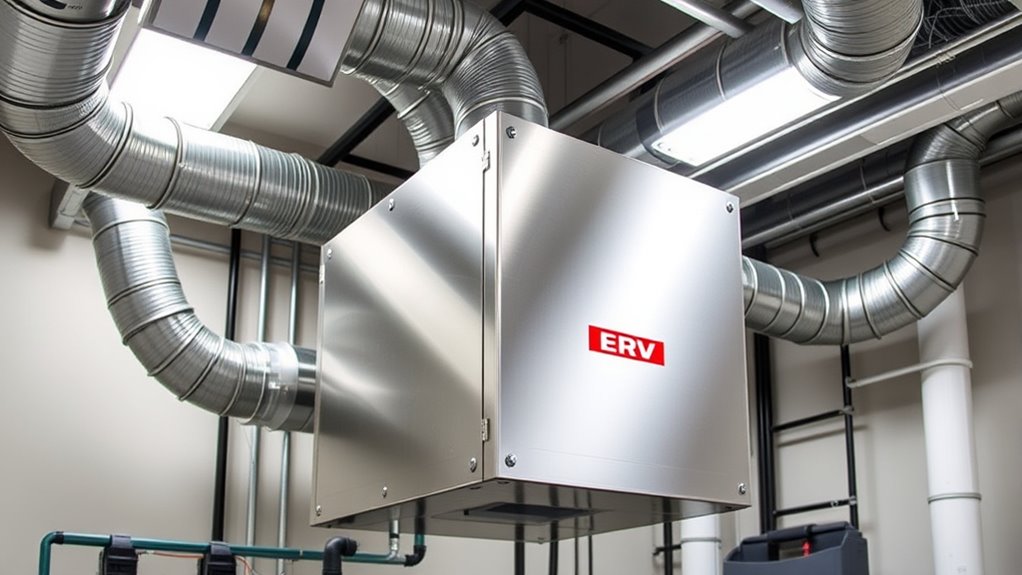
Energy recovery ventilators (ERVs) improve your indoor environment by exchanging stale indoor air with fresh outdoor air while saving energy. They capture heat or coolness from outgoing air and transfer it to incoming air, helping you lower heating and cooling costs. ERVs also enhance air quality by filtering pollutants and controlling humidity. Sealing well with your existing system, they provide a quieter, more comfortable space. Discover how ERVs can transform your indoor comfort and efficiency as you explore further.
Key Takeaways
- ERVs enhance indoor air quality by continuously exchanging fresh outdoor air with stale indoor air.
- They recover heat or coolness from outgoing air to pre-condition incoming air, reducing energy costs.
- ERVs help maintain optimal humidity levels, preventing mold growth and improving indoor comfort.
- Installation of ERVs seamlessly integrates with existing HVAC systems, operating quietly and efficiently.
- Using ERVs lowers heating and cooling loads, leading to significant energy savings and long-term cost benefits.
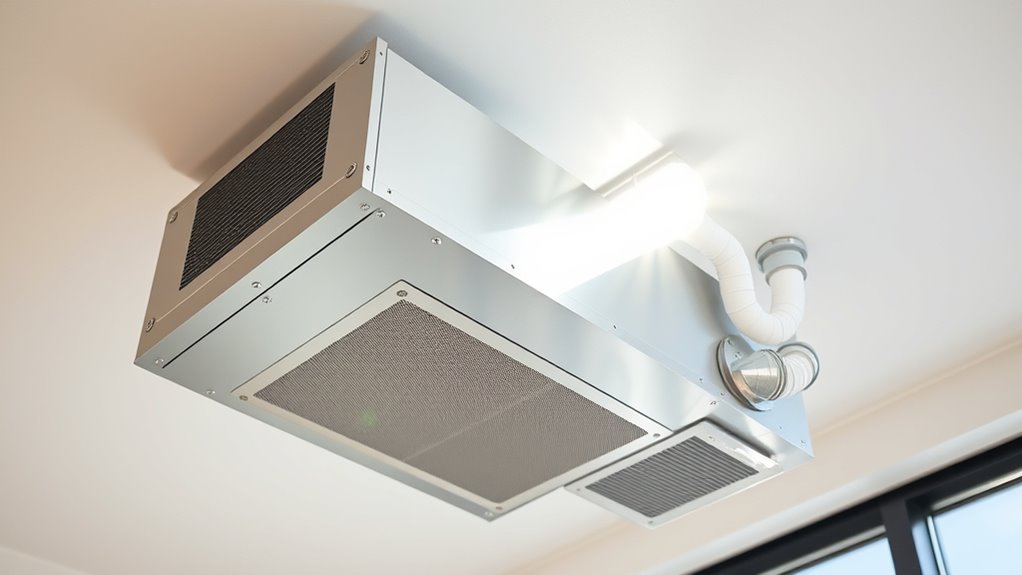
Have you ever wondered how you can improve indoor air quality while reducing energy costs? If so, energy recovery ventilators (ERVs) might be the perfect solution. These innovative systems are designed to bring fresh air into your home or workplace while simultaneously exhausting stale air. By doing so, they help maintain a healthy indoor environment and support energy savings. When you install an ERV, you’re not just improving air quality—you’re also making your space more energy-efficient.
Indoor air quality is vital for your health and comfort, especially since most people spend a significant amount of time indoors. Poor ventilation can lead to the buildup of indoor pollutants, allergens, and excess humidity, which may cause respiratory issues or discomfort. An ERV addresses this by continuously exchanging indoor air with fresh outdoor air, filtering out pollutants, and controlling humidity levels. This constant exchange ensures that you breathe cleaner air, which can boost your overall well-being.
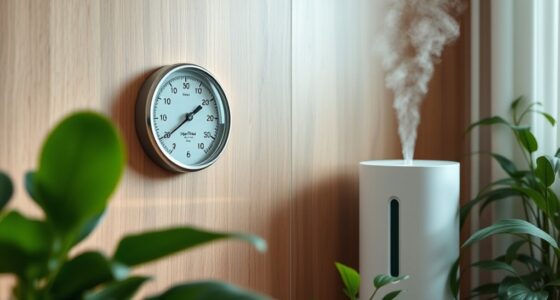
Indoor air quality is essential for health and comfort, with ERVs ensuring fresh, clean, and well-regulated indoor environments.
What sets ERVs apart is their ability to recover energy from the outgoing air. As stale indoor air is expelled, the system captures the heat or coolness from it and transfers that energy to the incoming fresh air. During winter, this means your heating system doesn’t have to work as hard to warm the incoming air, leading to noticeable energy savings. Conversely, in summer, ERVs help pre-cool incoming air, reducing the load on your air conditioning system. This process not only conserves energy but also lowers your utility bills, making ERVs a smart investment for long-term savings.
Implementing an ERV is straightforward, especially if you’re upgrading an existing HVAC system. These units are designed to integrate seamlessly, working quietly in the background to optimize air quality and energy use. By maintaining a steady flow of fresh air, ERVs help prevent issues like mold growth and indoor humidity problems, which can otherwise lead to costly repairs and health concerns. Plus, since they reduce the workload on your heating and cooling systems, you’ll notice a decrease in energy consumption and a more comfortable indoor climate year-round.
Frequently Asked Questions
How Do ERVS Differ From HRVS in Functionality?
You’ll find that ERVs differ from HRVs mainly in energy transfer and moisture control. ERVs transfer both heat and humidity, helping you maintain balanced indoor moisture and temperature levels. HRVs focus solely on heat exchange, so they improve energy efficiency but don’t manage moisture as effectively. This makes ERVs better suited for humid climates, while HRVs are ideal for colder environments where moisture control isn’t as critical.
What Is the Typical Lifespan of an ERV Unit?
You can expect an ERV unit to last around 10 to 15 years with proper maintenance. Warranty considerations are crucial; choose units with solid warranties to protect your investment. Energy efficiency plays a role in lifespan, as more efficient models tend to operate better and last longer. Regular cleaning and servicing ensure peak performance, helping you maximize your unit’s durability and energy savings over its lifespan.
Can ERVS Be Integrated With Smart Home Systems?
Yes, you can integrate ERVs with smart home systems, unlocking automation compatibility that enhances your home’s comfort and efficiency. Imagine controlling your ERV seamlessly through your favorite smart platform, adjusting ventilation settings with a tap or voice command. This integration not only simplifies management but also optimizes energy use, making your home smarter and more responsive to your needs. Don’t miss out on this cutting-edge upgrade—your comfort awaits.
Are ERVS Suitable for All Climate Zones?
Yes, ERVs are suitable for most climate zones, thanks to their climate adaptability. However, you should consider installation factors like local humidity, temperature, and ventilation needs to maximize efficiency. For example, in extremely cold or hot climates, additional insulation or specific unit features may be necessary. Consulting with a professional ensures proper installation, so your ERV functions effectively and provides the comfort and energy savings you seek.
What Maintenance Is Required for Optimal ERV Performance?
To keep your ERV running efficiently, you should regularly replace filters and clean the ducts. Check filters monthly, especially during peak seasons, and swap them out as needed to prevent airflow issues. Schedule duct cleaning every few years to remove dust and debris that can hinder performance. Regular maintenance ensures your ERV provides ideal energy recovery, improves indoor air quality, and prolongs its lifespan.
Conclusion
Think of energy recovery ventilators as the breath of fresh air your home’s been longing for. They seamlessly blend efficiency with comfort, acting like a gentle guardian that filters and renews your indoor environment. By choosing ERVs, you’re not just upgrading your home—you’re inviting a steady heartbeat of invigorating, healthy air that keeps your space vibrant and energy-smart. Embrace this quiet hero, and transform your living space into a sanctuary of crisp, sustainable comfort.