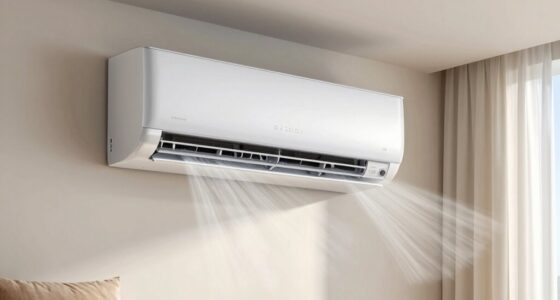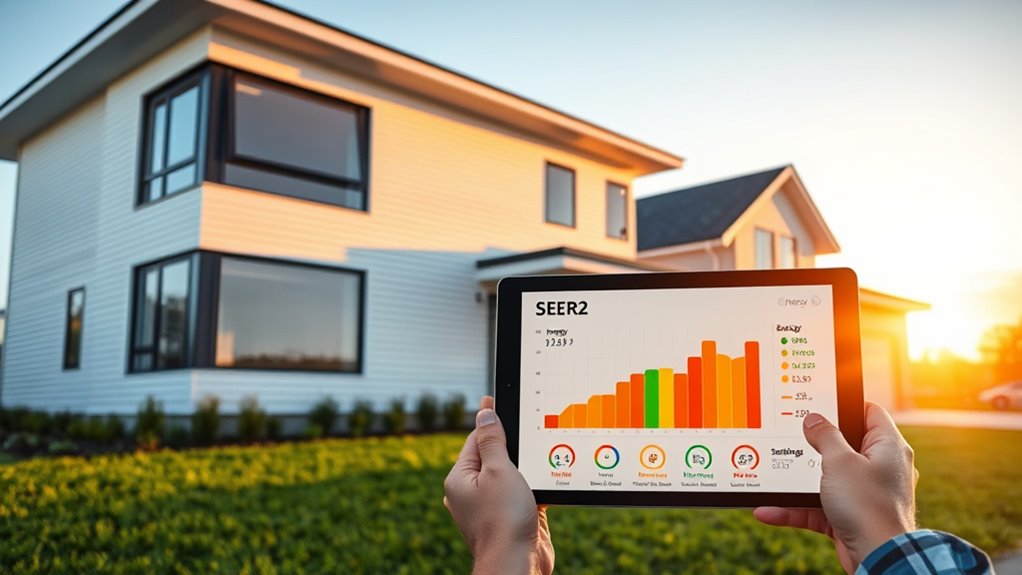

Understanding SEER2 standards helps you see how efficient your HVAC system truly is and how it impacts your energy bills. SEER2 provides a more accurate picture of performance over a cooling season by considering outdoor temperatures and usage patterns. Systems with higher SEER2 ratings use less energy, saving you money in the long run. To find out how these standards can affect your savings and what to look for, keep exploring these important updates.
Key Takeaways
- SEER2 measures your HVAC system’s seasonal energy efficiency, providing a more accurate estimate of energy savings over peak ratings.
- Higher SEER2 ratings indicate more energy-efficient units, which can lead to lower energy bills over time.
- SEER2 standards are part of regulations that require new HVAC systems to meet specific efficiency thresholds.
- Understanding SEER2 helps you choose systems that optimize performance and reduce environmental impact.
- Investing in higher SEER2-rated HVAC units can result in long-term savings and better energy cost management.
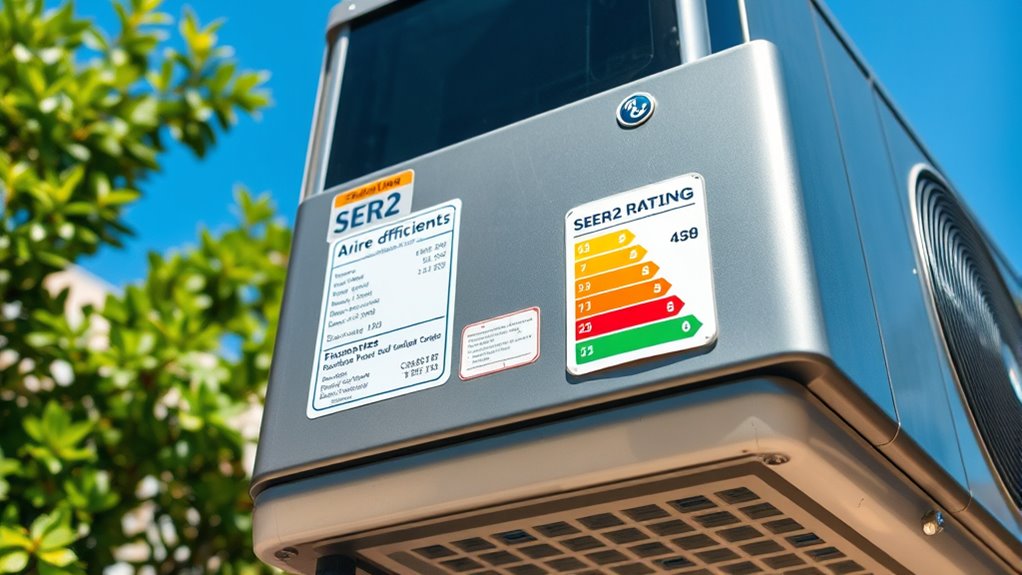
Have you ever wondered how HVAC systems are rated for efficiency? It’s a good question because knowing how your system performs can directly impact your energy bills and comfort. The efficiency of an HVAC unit isn’t just a guess; it’s measured and regulated through standards designed to ensure you get the most out of your investment. One of the most recent updates to these standards is the SEER2 rating system, which is part of a broader effort to improve energy efficiency and align with HVAC regulations aimed at reducing energy consumption and environmental impact.
SEER2, or Seasonal Energy Efficiency Ratio 2, provides a more accurate picture of how well an air conditioning or heat pump system performs over an entire cooling season. The older SEER ratings focused on peak efficiency, often not reflecting real-world performance across different conditions. SEER2 adjusts for this by considering factors like outdoor temperatures, humidity, and different usage patterns, giving you a clearer understanding of what to expect from your system in daily life. This means that when shopping for a new HVAC unit, you’ll see SEER2 ratings that better predict actual energy savings, helping you make smarter choices to lower your energy bills.
SEER2 ratings better reflect real-world HVAC performance and energy savings.
The transition to SEER2 isn’t just about better measurements; it’s also a step toward stricter HVAC regulations aimed at reducing energy consumption nationwide. These regulations set minimum efficiency standards, pushing manufacturers to develop systems that perform well under a variety of conditions while consuming less power. As a result, newer units with higher SEER2 ratings tend to be more energy-efficient, which benefits both your wallet and the environment. You’ll notice that these regulations encourage innovations in compressor technology, refrigerants, and system design—all geared toward making your HVAC system more sustainable and cost-effective over its lifespan.
Understanding SEER2 standards helps you grasp the importance of energy efficiency in your heating and cooling choices. When you see a higher SEER2 rating, you can be confident that your unit is designed to operate more efficiently, helping you save money on energy bills month after month. Plus, with HVAC regulations becoming more stringent, the industry is moving toward systems that not only meet minimum standards but surpass them, offering you better performance and lower operating costs. Recognizing these ratings and regulations empowers you to select equipment that aligns with your goals for comfort, savings, and environmental responsibility, ensuring you get the most value out of your investment. Additionally, understanding efficiency standards can help you stay informed about industry developments and future upgrades.
Frequently Asked Questions
How Do SEER2 Standards Impact Existing HVAC Systems?
SEER2 standards impact your existing HVAC system by requiring compatibility with new refrigerants, which can lead to retrofit challenges. You might need to upgrade or replace certain components to guarantee refrigerant compatibility, especially if your system was designed for older refrigerants. This can increase upfront costs and complexity, but ultimately, it helps improve efficiency and reduce energy bills. Planning ahead can make the shift smoother and more cost-effective.
Are Higher SEER2 Ratings Always More Cost-Effective?
Higher SEER2 ratings often lead to greater cost savings on your energy bill, but they’re not always the most cost-effective choice upfront. You might face higher installation costs, which can offset long-term savings. Consider your climate, usage patterns, and budget. If you plan to stay in your home for years, investing in a higher SEER2 unit could pay off, but for short-term needs, a less efficient model might be better financially.
Will My Energy Provider Offer Incentives for Seer2-Compliant Units?
Think of your energy provider like a helpful guide offering treasure maps. They often provide rebate programs for SEER2-compliant units, making upgrades more affordable. While the initial upgrade costs might seem steep, these incentives can substantially reduce expenses. Check with your provider to see what rebate programs are available. Taking advantage of these offers helps you save money on energy bills while enjoying the benefits of more efficient, compliant equipment.
How Often Will SEER2 Standards Change in the Future?
SEER2 standards are likely to evolve gradually over time, influenced by technology updates and regulatory revisions. These changes aim to improve energy efficiency and keep up with advancements. You can expect updates every few years, depending on industry progress and government policies. Staying informed about these updates helps you choose the most efficient units and potentially benefit from incentives, ensuring your system remains compliant and cost-effective in the long run.
Do SEER2 Standards Apply to All Types of Air Conditioning Units?
You might think all air conditioning units are the same, but SEER2 standards don’t apply to every single one. These rules mainly target new, high-efficiency systems, ensuring excellent energy efficiency and equipment compatibility. Older units often aren’t affected, so upgrading isn’t always mandatory. Still, for maximum savings and performance, it’s wise to contemplate SEER2-compliant models during your next upgrade. Staying informed helps you make the smartest, most energy-efficient choice possible.
Conclusion
Knowing about SEER2 standards helps you make smarter choices and save money on your energy bills. Did you know that upgraded systems meeting SEER2 can be up to 15% more efficient? That means you could see significant savings over time while reducing your environmental impact. Staying informed about these standards guarantees you’re getting the best value and performance from your HVAC system. Keep these facts in mind when upgrading—your wallet and the planet will thank you!