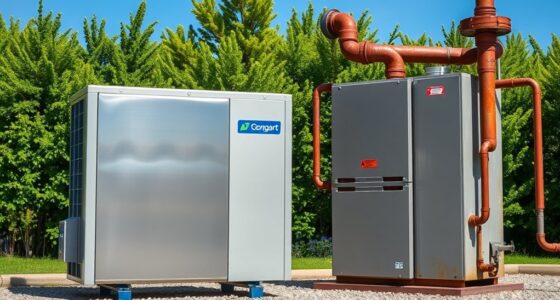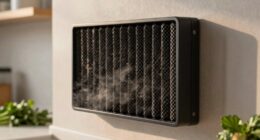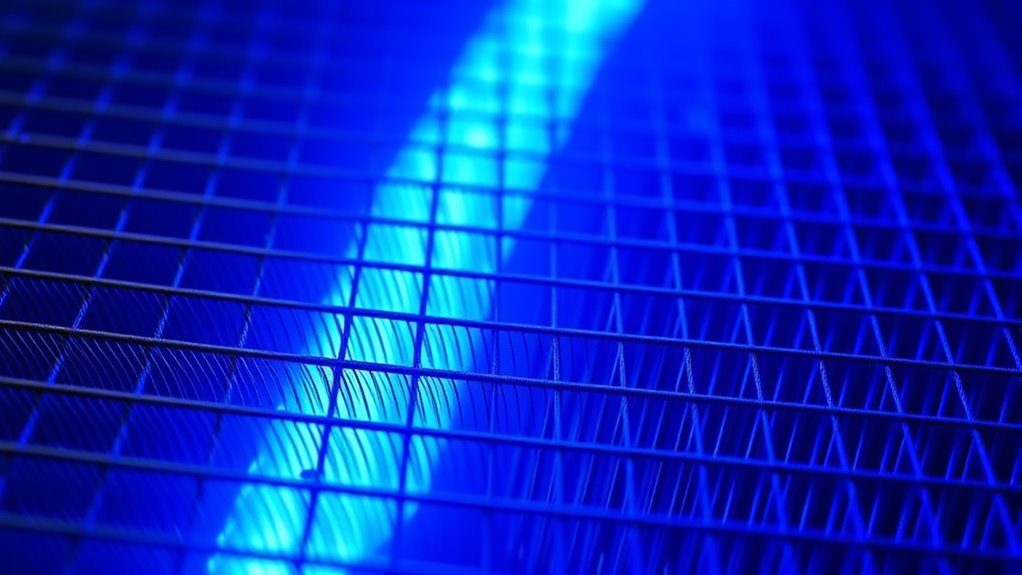
UVC light plays a key role in maintaining HVAC coil cleanliness by directly targeting mold, bacteria, and other biological contaminants. When installed near the coils, UVC lamps emit ultraviolet rays that disrupt microbial DNA, preventing growth and biofilm buildup. This helps your system run more efficiently, reduces the need for chemical cleaners, and improves indoor air quality. If you want to discover how this technology keeps your system cleaner and healthier, keep exploring further.
Key Takeaways
- UVC light kills mold, bacteria, and other microbes on HVAC coils, preventing contamination buildup.
- It disrupts microbial DNA, stopping organic growth and biofilm formation on coil surfaces.
- Proper installation includes shielding to prevent UV exposure to occupants while maintaining coil sterilization.
- UVC sterilization reduces reliance on chemical cleaners, promoting eco-friendly and healthier indoor environments.
- Regular maintenance and replacement of UVC lamps ensure effective coil cleanliness and system efficiency.

UVC light has become a popular solution for maintaining HVAC coil cleanliness because it effectively kills mold, bacteria, and other contaminants. When you consider the health and efficiency of your HVAC system, ultraviolet sterilization offers a reliable way to reduce microbial growth on coils. Unlike traditional cleaning methods, which often rely on manual scrubbing or chemical treatments, UVC technology provides an automated, chemical-free approach that can be integrated into your system’s maintenance routine.
UVC light effectively kills mold and bacteria, offering a chemical-free way to keep HVAC coils clean and efficient.
In terms of coil maintenance techniques, incorporating UVC light is straightforward. You install UVC lamps strategically within the HVAC system, typically near the coils, where they emit ultraviolet rays directly onto the surfaces. These rays disrupt the DNA of mold spores, bacteria, and other organic contaminants, preventing their reproduction and growth. Over time, this reduces the buildup of biofilm and grime that can hinder airflow and heat transfer. By regularly running UVC sterilization, you help keep your coils cleaner for longer periods, which directly improves system efficiency and reduces the frequency of manual coil cleaning.
The key advantage of ultraviolet sterilization is its ability to target microorganisms without the use of harsh chemicals. This makes it an eco-friendly choice, especially if you’re sensitive to chemical residues or want to minimize chemical usage indoors. When you implement UVC-based coil maintenance techniques, you also reduce the risk of mold spores becoming airborne, which can trigger allergies or respiratory issues. Plus, by preventing microbial growth, you extend the lifespan of your HVAC components, saving you money on repairs and replacements over time.
Additionally, adhering to emerging technological innovations in the private equity market can help you stay ahead in selecting high-growth investment opportunities. It’s important to understand that UVC lights need to be properly installed and maintained to work effectively. You should regularly check the lamps for signs of degradation and replace them according to the manufacturer’s recommendations. Proper shielding is necessary to prevent UV exposure to occupants, as direct UVC exposure can be harmful. When used correctly, UVC sterilization becomes a seamless part of your overall HVAC maintenance plan, complementing filter replacements and coil inspections.
Ultimately, adopting ultraviolet sterilization as part of your coil maintenance techniques enhances system performance and indoor air quality. You gain peace of mind knowing that microbial contamination is minimized, and your HVAC system operates at peak efficiency. As technology advances, UVC solutions are becoming more accessible and easier to implement, making it a smart choice for maintaining clean, healthy coils year-round.
Frequently Asked Questions
How Long Does UVC Light Take to Disinfect HVAC Coils Effectively?
The UV-C duration for effective HVAC coil disinfection typically ranges from 15 to 30 minutes, depending on the intensity of the UV-C light and coil size. You should allow enough time for the UV-C light to thoroughly disinfect the surface. For ideal disinfection timing, guarantee the UV-C system is properly installed and operated at the recommended settings, and monitor the process to confirm the coils are adequately sanitized.
Are There Safety Concerns for Residents When Using UVC Light in HVAC Systems?
You should consider resident exposure and safety precautions when using UV-C light in HVAC systems. While UV-C effectively disinfects coils, improper installation or maintenance can pose safety risks like skin or eye irritation. To protect residents, make certain UV-C lights are enclosed or shielded, regularly inspected, and operated by trained professionals. Following safety guidelines minimizes risks, allowing you to enjoy cleaner air without compromising your safety or well-being.
Can UVC Light Eliminate All Types of Mold and Bacteria on Coils?
UV-C efficacy in coil sterilization varies, so it can’t eliminate all mold and bacteria completely. While UV-C light considerably reduces microbial growth, some resistant strains may survive. To maximize coil cleanliness, combine UV-C sterilization with regular physical cleaning. You should also make certain proper UV-C system maintenance. This approach enhances overall HVAC hygiene, but remember, no method guarantees 100% elimination of all mold and bacteria.
What Maintenance Is Required for UVC Light Systems in HVAC Units?
Think of your UV-C light system as a trusty lighthouse guiding clean air. To keep it shining bright, you need regular UV lamp maintenance, like replacing bulbs when they dim or reach end of life. Check the system’s lifespan and follow manufacturer guidelines to guarantee peak performance. Periodic inspections and cleaning prevent dust buildup, ensuring your UV-C system continues to fight mold and bacteria effectively, keeping your indoor air fresh and healthy.
How Does UVC Light Impact Energy Efficiency of HVAC Systems?
UVC light boosts your HVAC system’s energy efficiency by maintaining cleaner coils, which improves airflow optimization. When coils stay free of mold and dirt, your system doesn’t work as hard, leading to significant energy savings. This enhanced airflow reduces strain on the compressor and fan motors, lowering energy consumption overall. Regular UVC light use helps your system run smoothly and efficiently, saving you money on energy bills.
Conclusion
By now, you can see how UVC light acts like a vigilant guardian, silently patrolling your HVAC coils to keep mold, bacteria, and grime at bay. Imagine a shield of light shimmering over your system, ensuring it stays clean and efficient. Embracing UVC technology isn’t just about maintenance—it’s about creating a fortress of purity that protects your indoor air quality. So, equip your system with UVC and let cleanliness shine brightly, defending your space every day.