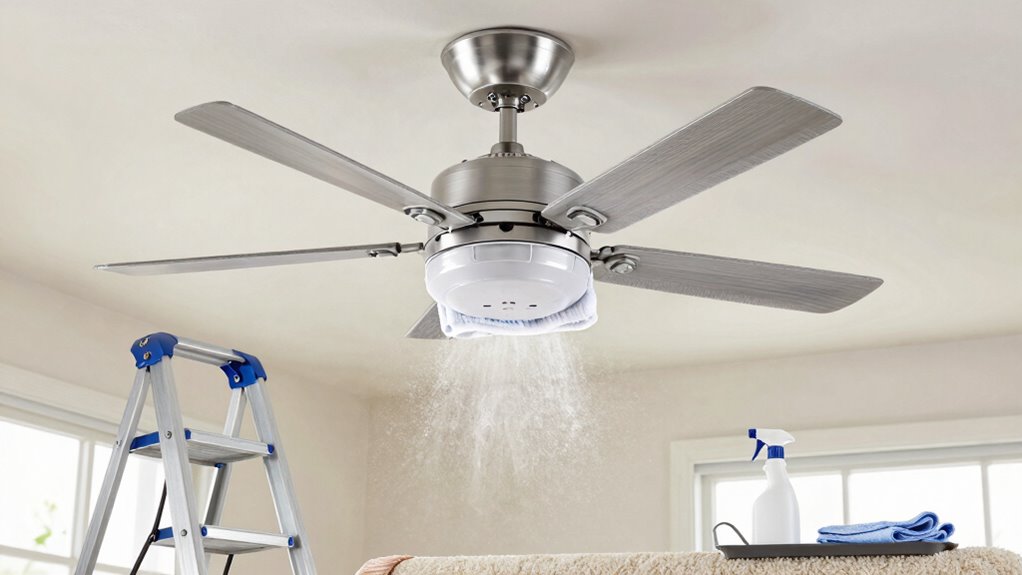

To clean your ceiling fan without making a mess, turn off the power and use a microfiber cloth or pillowcase to trap dust effectively. Wipe each blade from base to tip, using a damp cloth if needed, and slip the pillowcase over the blade to catch dust and grease. Always wait until blades are dry before turning the fan back on. For more tips on keeping your fan spotless and mess-free, keep exploring these simple but effective techniques.

Get cleaning gear delivered free with Prime
- Fast, free delivery on millions of items
- Prime Video, Amazon Music and more included
- Member-only deals all year
Key Takeaways
- Turn off the fan and use drop cloths to catch dust and drips during cleaning.
- Use a microfiber cloth or pillowcase to trap dust and prevent airborne particles.
- Slip a pillowcase over each blade and pull back to contain dust as you clean.
- Use extendable dusters and gentle, controlled motions to reach high or tricky areas safely.
- Ensure blades are dry and reassembled properly before turning the fan back on.
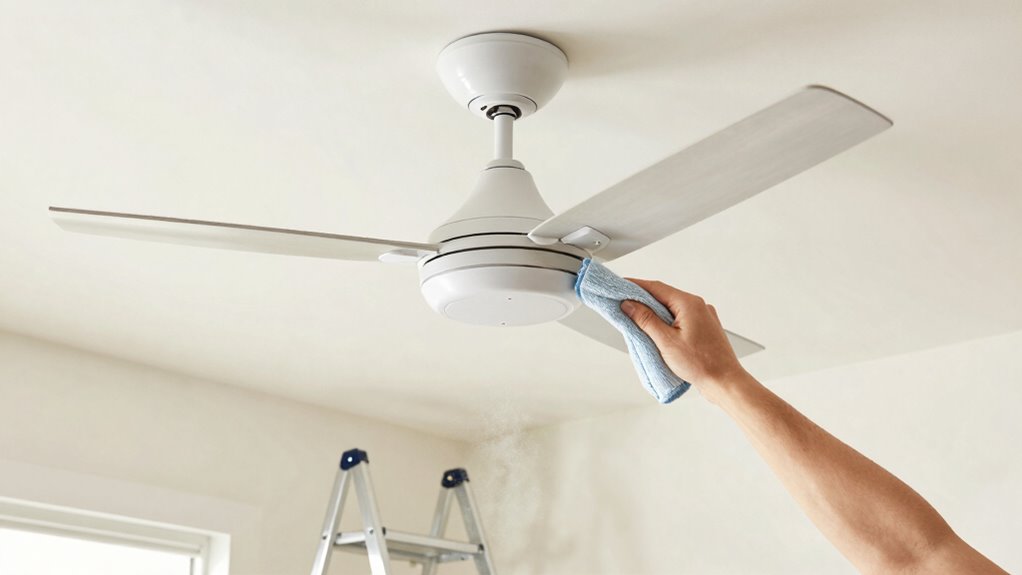
Over time, ceiling fans can collect dust, dirt, and grease, which not only dulls their appearance but also affects indoor air quality. Regular cleaning is essential, but it can be tricky if you’re worried about making a mess. To keep things tidy, start by turning off the fan and, if possible, shutting off the power at the circuit breaker. This prevents any accidental activation while you’re working.
Regularly clean ceiling fans to improve appearance and indoor air quality while preventing messy dust dispersal.
When it comes to fan blade dusting, the key is to avoid spreading dust into the air or onto nearby surfaces. Use a microfiber cloth or a pillowcase to trap dust effectively. If you prefer, you can dampen the cloth slightly with a gentle cleaner or water. Carefully slide the cloth over each blade, ensuring you wipe from the base to the tip to remove all dust and grease. Using a pillowcase is especially effective because you can slip it over each blade and pull it back, trapping the dust inside. This method minimizes airborne particles and keeps the dust contained. Additionally, understanding the importance of regular maintenance can extend the lifespan of your ceiling fan and improve its efficiency. Incorporating proper cleaning techniques can further enhance your results and reduce the frequency of deep cleans. Regularly inspecting and cleaning your fan can also prevent the buildup of dust and grease, which can be difficult to remove if neglected. Furthermore, choosing the right cleaning supplies, such as eco-friendly cleaning products, can help protect both your environment and indoor air quality.
To avoid a bigger mess, place a drop cloth or old sheet underneath the fan before you start cleaning. This catches any dust or drips, making cleanup easier. You can also consider using appropriate cleaning tools, such as extendable dusters, to reach high or difficult spots safely and efficiently. When you’re finished, inspect the blades for any missed spots and give them a final wipe if needed. Turn the fan back on only after you’re certain everything is dry and reassembled properly.
Scheduling this fan maintenance regularly—about every few months—helps keep your fan looking great and functioning efficiently. Remember, quick and careful fan blade dusting prevents dust from settling and keeps your room feeling fresh. With the right tools and a little planning, you can clean your ceiling fans without making a bigger mess. Just take your time, use gentle motions, and stay organized, and you’ll have a clean fan and a cleaner home in no time.
microfiber ceiling fan cleaning cloth
As an affiliate, we earn on qualifying purchases.
As an affiliate, we earn on qualifying purchases.
Frequently Asked Questions
What Tools Are Best for Cleaning Ceiling Fans Efficiently?
You should use a microfiber duster or an extendable duster with a soft head to efficiently clean ceiling fans. These tools help you reach and remove dust with minimal mess, especially when combined with gentle cleaning solutions like diluted vinegar or mild dish soap. Use duster techniques such as gentle back-and-forth motions to trap dust, and avoid harsh chemicals that could cause drips or splatters.
How Often Should I Clean My Ceiling Fan?
You should clean your ceiling fan at least every three to four months, especially if it’s a decorative style that catches dust like a magnet. Dust can pile up so high you’d think it’s a cloud! Using eco-friendly cleaning methods keeps your fan sparkling without harming the environment. Regular cleaning prevents dust buildup, keeps the air fresh, and guarantees your fan’s beauty and efficiency stay intact for years.
Can I Clean Ceiling Fans Without Removing Blades?
Yes, you can clean ceiling fans without removing the blades by performing fan blade dusting. Use a microfiber cloth or a pillowcase to gently wipe each blade, trapping dust and debris effectively. For ceiling fan maintenance, you might also attach a step ladder for safety. This method keeps your fan clean without the mess or hassle of removing blades, ensuring your space stays fresh and dust-free.
Is It Safe to Use Water on Ceiling Fans?
Using water on ceiling fans is like walking a tightrope—it’s safe if you take precautions. You should avoid direct water contact with electrical parts to prevent shocks. Instead, use a damp cloth with gentle cleaning solutions, like diluted dish soap or specialized cleaners. Always turn off the fan and make sure it’s dry before restoring power. Prioritizing electrical safety keeps your cleaning safe and effective.
How Do I Prevent Dust Buildup on Ceiling Fans?
To prevent dust buildup on ceiling fans, you should regularly perform fan maintenance by dusting it weekly with a microfiber cloth or a fan duster. Consider applying a dust prevention spray designed for fans or fixtures. Keeping your home’s air quality high with air purifiers also helps reduce dust. Consistent maintenance prevents heavy dust accumulation, making cleaning easier and extending your fan’s lifespan.
pillowcase dust trap for ceiling fans
As an affiliate, we earn on qualifying purchases.
As an affiliate, we earn on qualifying purchases.
Conclusion
By following these simple steps, you’ll keep your ceiling fans spotless without creating a tornado of dust and debris. Remember, a clean fan not only looks great but also breathes new life into your room. With just a little effort, you can prevent dust buildup from taking over your space like an unstoppable force of nature. So, grab your supplies and get to work—you’ll be amazed at how much brighter and fresher your room feels afterward!
As an affiliate, we earn on qualifying purchases.
As an affiliate, we earn on qualifying purchases.
Halloween Picks
halloween
As an affiliate, we earn on qualifying purchases.