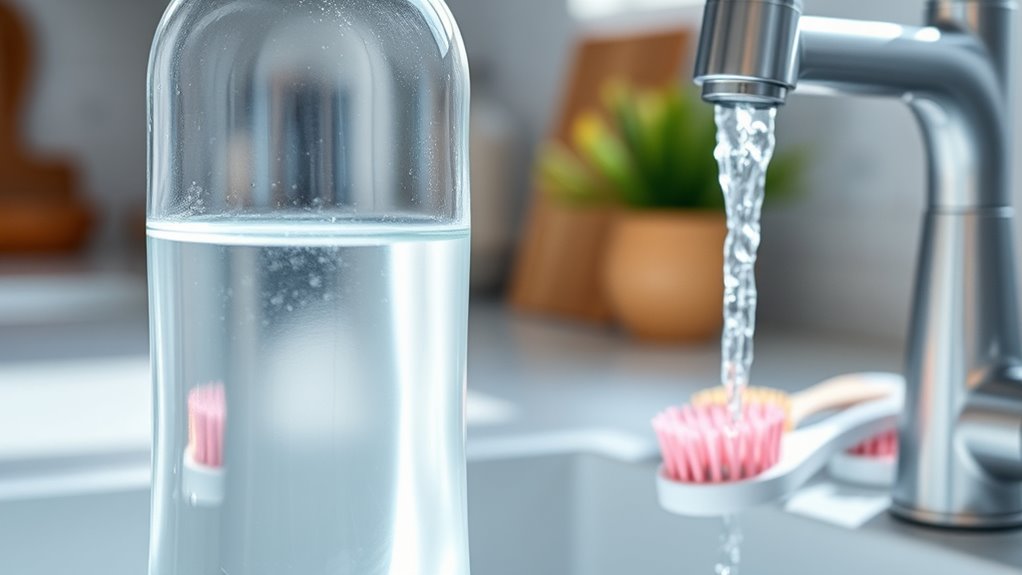

To keep your reusable bottles clean, rinse them with warm water immediately after use, then soak with a mix of vinegar or baking soda for deep cleaning. Use a bottle brush to scrub all surfaces, including hard-to-reach spots, and avoid abrasive scrubbers to prevent damage. Let them air dry upside down to prevent mold and odors. For more effective tips on maintaining your bottles, keep exploring ways to stay hygienic and eco-friendly.
Key Takeaways
- Rinse bottles with warm water immediately after use to prevent residue buildup.
- Use eco-friendly solutions like vinegar or baking soda for deep cleaning and odor removal.
- Scrub interior surfaces and lids with a bottle brush, avoiding abrasive materials to prevent scratches.
- Regularly disinfect bottles by soaking in natural solutions and thoroughly cleaning small crevices.
- Air dry bottles upside down to prevent mold growth and maintain hygiene.
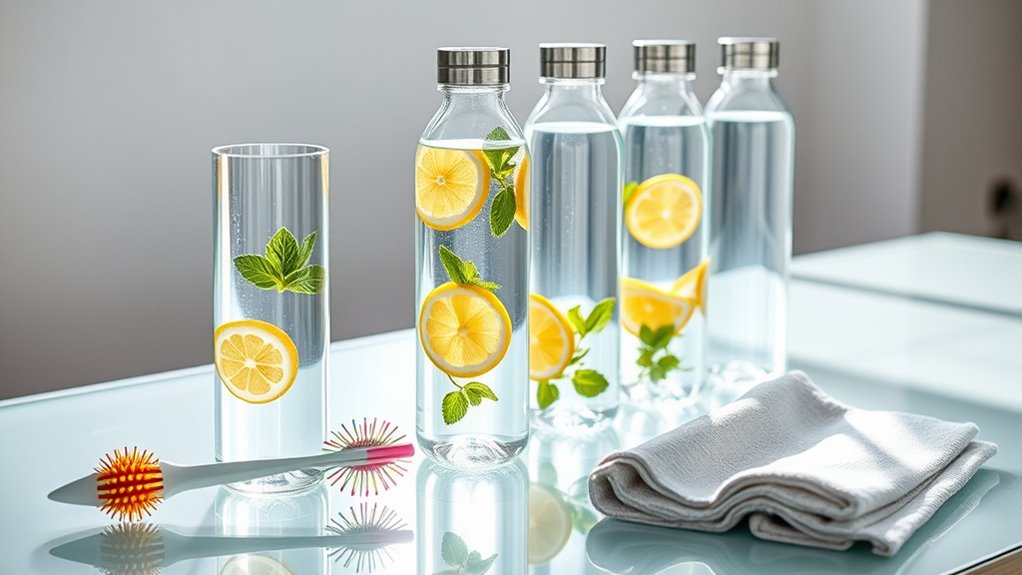
Have you ever wondered how to keep your bottles spotless and safe for use? Maintaining clean reusable bottles isn’t just about aesthetics—it’s about ensuring your health and the environment. One of the first things to contemplate is bottle material safety. Different materials like stainless steel, glass, or BPA-free plastics require specific cleaning methods to prevent the buildup of bacteria and mold. For example, some plastics can absorb odors or stain over time, making thorough cleaning essential. Choosing the right cleaning techniques helps preserve the integrity of your bottles and keeps harmful germs at bay. When it comes to eco-friendly cleaning, you don’t need harsh chemicals to get the job done. Natural solutions like vinegar, baking soda, and lemon juice are highly effective and gentle on the environment. These options not only eliminate bacteria but also prevent chemical residues that could leach into your beverages. Using eco-friendly cleaning methods aligns with sustainable living and minimizes your carbon footprint.
To start, rinse your bottle with warm water immediately after use to prevent residue from sticking. For a deeper clean, fill the bottle halfway with warm water, add a teaspoon of baking soda or a splash of vinegar, and give it a good shake. Let it sit for a few minutes to break down stubborn stains and odors. Use a bottle brush to scrub the interior thoroughly, paying special attention to the neck and lid threads where grime tends to accumulate. Avoid abrasive scrubbers that can scratch the material, especially on plastics or glass. After cleaning, rinse your bottle thoroughly with clean water to remove any lingering cleaning agents. Air drying upside down is ideal, as it allows water to evaporate completely and prevents mold growth. Proper drying methods are essential for preventing mold growth and maintaining freshness.
Regularly disinfect your bottles, especially if you use them daily, by soaking them in a solution of water and vinegar or a natural disinfectant once a week. This helps prevent bacteria buildup and keeps your bottles fresh. When cleaning the caps and lids, don’t forget to scrub small crevices and silicone seals, which can trap dirt. For bottles with narrow openings, a long-handled brush makes cleaning easier and more effective. Remember, maintaining bottle material safety isn’t just about what you clean with but also how often you do it. Consistent cleaning with eco-friendly solutions keeps your bottles safe, odor-free, and environmentally friendly. By following these simple tips, you can enjoy clean, safe, and eco-conscious bottles every day, ensuring your hydration habits stay healthy for you and the planet.
Frequently Asked Questions
How Often Should I Replace My Reusable Bottles?
You should replace your reusable bottles every 6 to 12 months, depending on their bottle lifespan and usage. Regular cleaning and proper care can extend their life, but over time, bacteria and wear can build up. Keep an eye out for cracks, stains, or odors, which signal it’s time for a replacement. Prioritize safety and hygiene by swapping out your bottle when it no longer feels or looks clean.
Are There Eco-Friendly Cleaning Products for Bottles?
Yes, you can find eco-friendly cleaning products for your bottles. Many biodegradable detergents and plant-based cleansers effectively clean without harming the environment. Some worry about cleaning power, but these natural options are gentle yet effective at removing residues and odors. Using eco-friendly products not only keeps your bottles safe and clean but also supports sustainability efforts, so you get a clean bottle and a cleaner planet.
Can I Put My Bottle in the Dishwasher?
Yes, you can put your bottle in the dishwasher if it’s dishwasher safe. Check the manufacturer’s guidelines for dishwasher safety before doing so. Use the appropriate cleaning cycle options, like the top rack or a gentle cycle, to avoid damage. Make sure to remove any lids or parts that aren’t dishwasher safe, and clean your bottle regularly to prevent odors and buildup.
How Do I Remove Stubborn Stains or Odors?
Stubborn stains and odors can feel like battles you’ll never win, but you can conquer them with ease. To remove stains and eliminate odors, fill your bottle with warm water, add a teaspoon of baking soda or vinegar, and let it soak overnight. Use a bottle brush to scrub away lingering grime. This powerful combo targets stain removal and odor elimination, leaving your bottle fresh and spotless every time.
Are Reusable Bottles Safe for Hot Liquids?
Reusable bottles are generally safe for hot liquids if made from heat-resistant materials like stainless steel or certain plastics labeled as microwave-safe. Always check the manufacturer’s guidelines for hot liquid safety to prevent warping or damage. Avoid using bottles made from materials that aren’t designed for hot liquids, as they may leach chemicals or degrade. When in doubt, choose bottles specifically designed for hot beverages to guarantee safety and durability.
Conclusion
Think of your reusable bottles as tiny gardens—you need to tend to them regularly to keep them thriving. Just like neglecting a plant leads to weeds and decay, skipping proper cleaning invites bacteria and mold. When I started cleaning my water bottle daily, I noticed my drinks tasted fresher and my health improved. With a little effort, you’ll keep your bottles sparkling and safe, turning everyday hydration into a simple act of self-care.