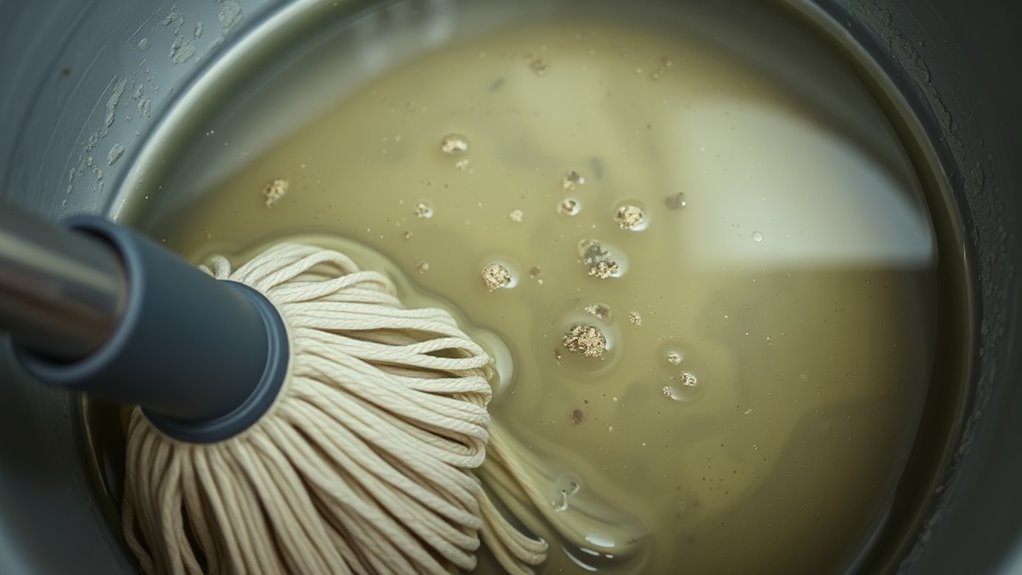

To stop spreading germs around, always use fresh, clean water when mopping and change it frequently, ideally every few minutes or when it becomes murky. After each use, rinse and disinfect your mop thoroughly to eliminate bacteria. Avoid reusing the same water on different areas or surfaces to prevent cross-contamination. Make sure your mop dries completely before storing it in a dry space. Keep these tips in mind to maintain a hygienic environment; explore more to learn effective cleaning practices.

Get cleaning gear delivered free with Prime
- Fast, free delivery on millions of items
- Prime Video, Amazon Music and more included
- Member-only deals all year
Key Takeaways
- Change mop water frequently to prevent bacteria buildup and reduce germ spread during cleaning.
- Rinse and disinfect mops thoroughly after each use to eliminate residual dirt and germs.
- Use separate mops for different areas to prevent cross-contamination between surfaces.
- Allow mops to dry completely before storage to inhibit bacterial growth.
- Follow manufacturer instructions for cleaning and disinfecting tools to maintain effective sanitation.
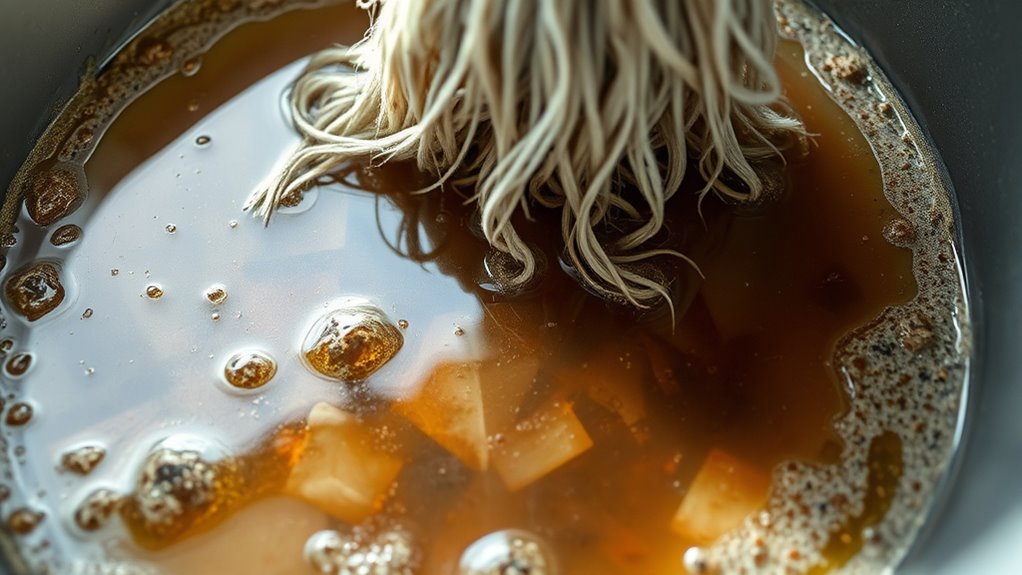
Have you ever paused to contemplate what’s lurking in the water you use to mop your floors? It’s a startling thought, but the water in your mop bucket can harbor bacteria, viruses, and other germs that you might not see but can easily spread around your home or workplace. This is why proper mop maintenance is essential to prevent cross-contamination and ensure cleaning safety. If you reuse dirty water without changing it frequently, you’re basically just redistributing grime and germs instead of removing them. So, it’s important to understand how to keep your mop water fresh and clean, especially when tackling different surfaces or areas that need special attention.
First, always start with clean water. Never dip your mop into water that’s already dirty or contaminated. Change the water frequently—at least once every few minutes or whenever it looks murky. Dirty water is a breeding ground for germs, and using it again will only spread bacteria around. After each use, rinse your mop thoroughly to remove debris and any residual dirt. Proper mop maintenance also involves regular disinfection. You can add disinfectant to your cleaning solution, but make sure it’s suitable for mops and safe for the surfaces you’re cleaning. This helps kill germs that might survive the cleaning process, reducing the risk of infection or illness. Proper maintenance of your cleaning tools is crucial for effective sanitation.
Always start with clean water and change it frequently to prevent germ buildup and ensure effective cleaning.
Another key point is to avoid cross-contamination by using separate mops or cleaning cloths for different areas, such as bathrooms and kitchens. This prevents transferring harmful pathogens from one spot to another. When you finish mopping, let your mop dry completely before storing it. Damp mops are a perfect environment for bacteria to grow, which can later be transferred back onto your floors during the next cleaning session. Additionally, always follow manufacturer instructions for your mop and cleaning products. Proper cleaning safety isn’t just about what you do during cleaning but also about understanding how to care for your tools.
Taking these simple steps in your routine can greatly enhance your cleaning safety. Regularly maintaining your mop and using fresh water are indispensable to preventing the spread of germs. Remember, a clean mop is a safe mop. Being vigilant about mop maintenance not only prolongs the life of your cleaning tools but also ensures your home or workspace stays healthier for everyone. By staying conscious of the water you use and practicing good hygiene habits, you can eliminate the risk of contaminating surfaces and keep germs at bay.
mop water bucket with separate compartments
As an affiliate, we earn on qualifying purchases.
As an affiliate, we earn on qualifying purchases.
Frequently Asked Questions
How Often Should Mop Water Be Changed During Cleaning?
You should change your mop water frequently, ideally every 2-3 rooms or every 15-20 minutes, depending on the cleaning frequency. This way, you prevent the mop water lifespan from extending too long, which can spread germs and dirt. Regularly changing the water guarantees you’re cleaning effectively and maintaining a hygienic environment, especially in high-traffic areas. Always monitor the water’s clarity and replace it as needed.
Can Contaminated Mop Water Cause Health Issues?
Yes, contaminated mop water can cause health issues. If you use water with mop water bacteria, contamination risks increase, leading to the spread of germs and potential infections. These bacteria can cause illnesses like stomach upset, diarrhea, or respiratory problems. To protect yourself and others, always change your mop water regularly, disinfect your mop, and avoid reusing dirty water. Staying vigilant helps prevent health problems caused by contaminated mop water.
What Signs Indicate Mop Water Is Contaminated?
You can tell mop water is contaminated when you notice a foul smell or murky, cloudy appearance. Bacteria buildup often shows as slimy residue or foam. If the water looks dirty despite frequent changes, or if it causes your hands to develop irritation or a rash, these are contamination signs. Always use clean water, and change it regularly to prevent bacteria from multiplying and spreading germs.
Are There Safe Disinfectants for Mop Water?
Like a shield protecting you from unseen threats, safe disinfectants for mop water exist. Choose products with proven disinfectant effectiveness, ensuring they kill germs effectively. Always check labels for chemical safety—avoid harsh chemicals that can harm you or surfaces. Use diluted disinfectants properly, and rinse your mop thoroughly. This way, you prevent germ spread while keeping your environment safe, confident that your cleaning efforts truly work.
How Can I Prevent Mop Water Contamination?
To prevent mop water contamination, you should regularly change the water and use disinfectants approved for cleaning. Dispose of mop water properly, ensuring it doesn’t contaminate other areas. Maintain cleaning tool hygiene by thoroughly rinsing and disinfecting mops after each use. Always wash your hands afterward, and avoid reusing dirty water. Proper mop water disposal and good hygiene practices help reduce germ spread and keep your environment safer.
disinfectant for mops and cleaning tools
As an affiliate, we earn on qualifying purchases.
As an affiliate, we earn on qualifying purchases.
Conclusion
Don’t let contaminated mop water be the silent thief of your health. Every swipe, every splash spreads germs lurking beneath the surface—hidden enemies waiting to strike. Think of your mop as a double-edged sword: it cleans but can also contaminate if you’re not careful. Take action now—change your water regularly, sanitize your tools, and stay vigilant. Because in the battle against germs, a simple step today can safeguard your tomorrow.
As an affiliate, we earn on qualifying purchases.
As an affiliate, we earn on qualifying purchases.
Columbus Day / Indigenous Peoples' Day Picks
long weekend sales
As an affiliate, we earn on qualifying purchases.