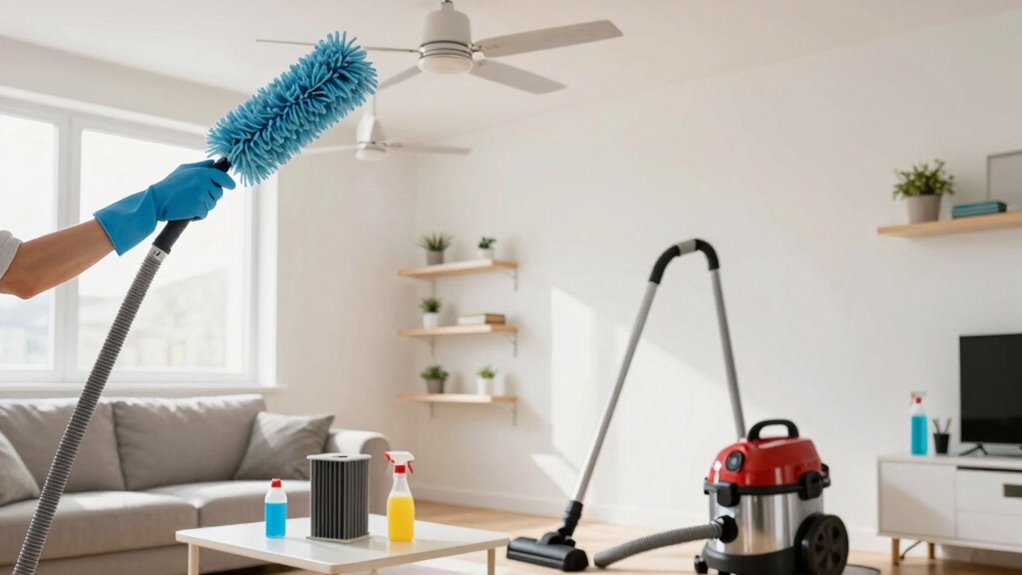
To prepare for allergy season, focus on cleaning and maintaining your home’s air filters, vents, and air purifiers. Regularly replace or clean filters to trap pollen, pet dander, and dust more effectively. Inspect and clean mold-prone areas like bathrooms and basements, and control humidity with dehumidifiers. Make sure to keep surfaces dust-free and address any leaks early. If you want to discover more ways to optimize your space, keep exploring these tips.
Key Takeaways
- Replace or clean air purifier filters to ensure maximum allergen removal efficiency.
- Deep clean carpets, upholstery, and drapes to eliminate dust, pet dander, and mold spores.
- Inspect and repair leaks, and control humidity to prevent mold growth.
- Regularly dust and wipe down surfaces to reduce allergen buildup.
- Conduct mold inspections in hidden areas and address any issues promptly.
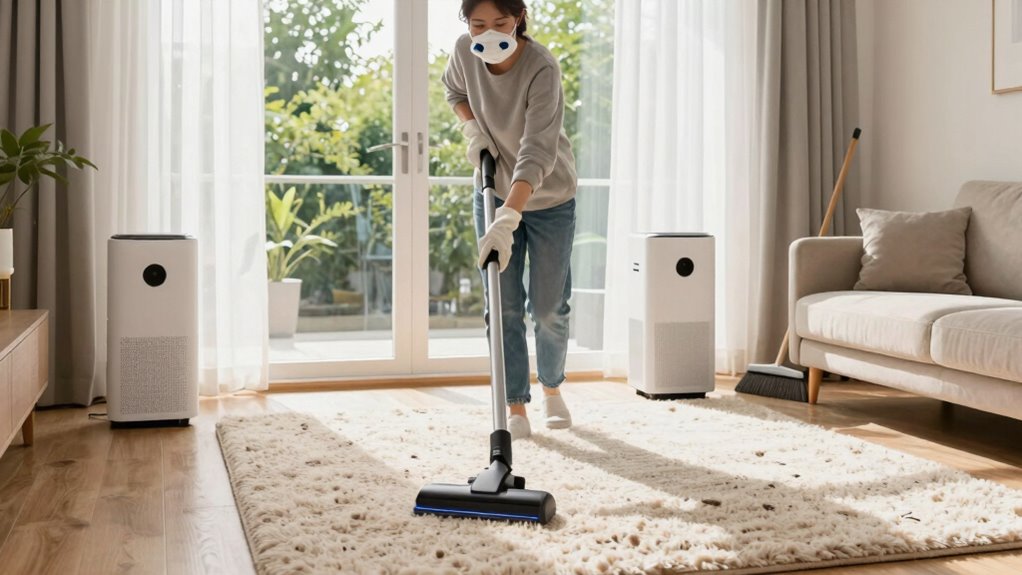
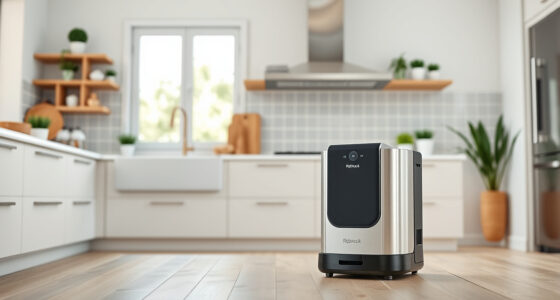
As allergy season approaches, now is the perfect time to tackle deep cleaning tasks around your home. Preparing your environment can considerably reduce allergy triggers, making the season more manageable. One of the first steps is making sure your air purifier is in top shape. Regular air purifier maintenance is essential; clean or replace filters according to the manufacturer’s instructions to make certain it’s effectively capturing airborne allergens like pollen, pet dander, and dust mites. A well-maintained air purifier can dramatically improve indoor air quality, helping you breathe easier during allergy peaks. Don’t forget to check for any signs of wear or damage, and keep the exterior clean to prevent dust accumulation. This small but important upkeep can make a big difference in reducing allergy symptoms. Additionally, inspecting and maintaining your air purification systems ensures optimal performance and long-term effectiveness. Properly functioning systems are crucial for maintaining a healthy indoor environment, especially during allergy season.
Another critical cleaning job is conducting a mold inspection. Mold thrives in damp, hidden areas such as bathrooms, basements, or behind appliances. Take the time to inspect these spots thoroughly. Look for visible signs of mold growth, such as black, green, or fuzzy patches, and sniff for musty odors that often indicate hidden mold. If you find any, promptly clean the area with mold-killing solutions or consider professional remediation if the growth is extensive. Addressing mold early prevents spores from becoming airborne and exacerbating allergy symptoms. Additionally, check for leaks or high humidity levels, which foster mold growth, and fix issues immediately. Using a dehumidifier can help maintain a low humidity level, discouraging mold development and improving overall indoor air quality. Regular monitoring of humidity levels and ventilation can further prevent mold from taking hold. Maintaining proper ventilation is essential for controlling indoor humidity and preventing mold growth. Incorporating routine inspections into your cleaning schedule can help catch problems early before they worsen. Enhancing air circulation by opening windows or using fans can also aid in reducing moisture buildup and allergens indoors.

2 Pack Core Mini Filter H13 True HEPA Filters for LEVOIT Core Mini Core Mini-P Air Purifier Replacement Filter 3-in-1 HEPA, High-Efficiency Activated Carbon, Replace Part Core Mini-RF
Compatible Model — Colorfullife Core Mini replacement filters are fully compatible with LEVOIT Core Mini Replacement Filter Air…
As an affiliate, we earn on qualifying purchases.
As an affiliate, we earn on qualifying purchases.
Frequently Asked Questions
How Often Should I Deep Clean for Allergy Prevention?
You should deep clean your home at least once a month to help prevent allergy symptoms. Focus on mold removal and dust elimination, especially in hidden areas like behind furniture and under sinks. Regularly washing bedding and vacuuming with a HEPA filter can also reduce allergens. During peak allergy season, consider deep cleaning bi-weekly to keep mold and dust levels low, creating a healthier environment for you.
Are Air Purifiers Necessary During Cleaning for Allergies?
Yes, air purifiers are necessary during cleaning for allergies because they effectively remove airborne allergens. Regular air purifier maintenance, like changing filters, guarantees ideal allergen removal. Combine this with thorough cleaning techniques—vacuuming with HEPA filters and dusting surfaces—to reduce dust, pollen, and pet dander. These allergen removal techniques help create a cleaner environment, making allergy season more manageable and improving your indoor air quality markedly.
What Cleaning Products Are Best for Allergy-Prone Households?
You might think fancy, chemical-laden cleaners are best, but allergy-prone households benefit most from eco-friendly cleaning products. For allergy proofing tips, choose natural ingredients like vinegar, baking soda, and mild soaps that trap dust and reduce irritants. Ironically, the simpler approach keeps your air cleaner and minimizes allergy triggers, proving less is often more when tackling allergens. Prioritize eco-friendly cleaning to breathe easier during peak allergy season.
Should I Change Bedding More Frequently During Allergy Season?
Yes, you should change your bedding more frequently during allergy season. Regularly washing sheets and pillowcases helps with dust mite control and improves bedding hygiene. Aim to wash your bedding at least once a week to reduce allergens and dust mites that thrive in warm, humid environments. This routine minimizes allergen buildup, making it easier to breathe and enjoy relief from allergy symptoms during peak seasons.
Can Cleaning Carpets Reduce Allergy Symptoms Effectively?
Think of your carpet as a sponge soaking up dust mites and pet dander. Regular vacuuming with a HEPA filter can considerably reduce allergy symptoms by trapping these allergens. Deep cleaning or steam cleaning carpets also helps remove embedded particles, preventing them from becoming airborne and irritating your respiratory system. By keeping your carpets clean, you create a healthier environment, easing allergy symptoms before they peak.
mold inspection kit
As an affiliate, we earn on qualifying purchases.
As an affiliate, we earn on qualifying purchases.
Conclusion
So, as you scramble to scrub away dust and dander before allergy season hits, remember this: all your cleaning efforts might just be a race against nature’s sneaky comeback. Ironically, the very act of tidying up could stir up more allergens, making you think twice about what’s truly worth cleaning. Sometimes, the best preparation is knowing when to let go and accept that a little dust might be inevitable—after all, perfection isn’t always the allergy-friendly answer.

Dehumidifier, 95OZ Dehumidifier for Home 1000 Sq.Ft – Quiet with Auto Shut Off & Relaxing 7 Color Ambient Light,Ideal for Livingroom, Bedroom, Basement(Black)
Semiconductor dehumidifiers use thermoelectric cooling to remove moisture from the air. They create a drier, more comfortable environment…
As an affiliate, we earn on qualifying purchases.
As an affiliate, we earn on qualifying purchases.
dust and allergen cleaning tools
As an affiliate, we earn on qualifying purchases.
As an affiliate, we earn on qualifying purchases.