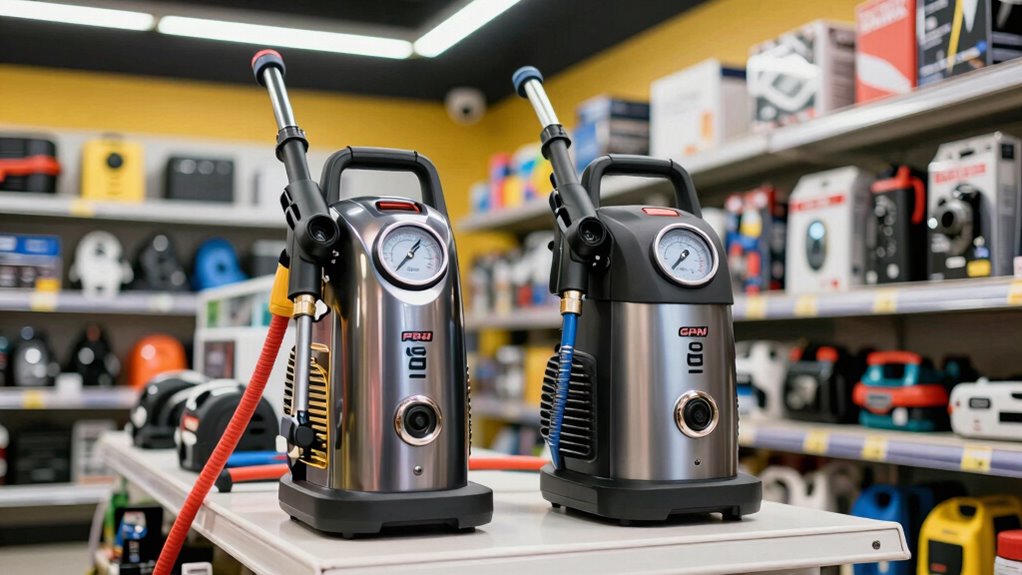
When choosing a pressure washer, it’s important to understand the difference between PSI and GPM. PSI measures the water pressure to help clear tough dirt, while GPM indicates how much water flows, affecting cleaning speed and efficiency. For tough jobs, look for higher PSI and GPM, but for delicate surfaces, lower settings are safer. Keep both in mind to get the best cleaning results, and you’ll find out more about balancing these factors as you continue.
Key Takeaways
- PSI measures water pressure; GPM indicates water flow rate, both impacting cleaning strength and efficiency.
- Higher PSI removes tough dirt but can damage delicate surfaces; GPM speeds up cleaning and covers larger areas.
- For delicate surfaces, lower PSI with adequate GPM prevents damage; for tough jobs, higher PSI and GPM are recommended.
- Balancing PSI and GPM optimizes cleaning power, surface safety, and water conservation.
- Choose a pressure washer based on your specific cleaning tasks and surfaces, adjusting settings for best results.
What Are PSI and GPM in Pressure Washers?
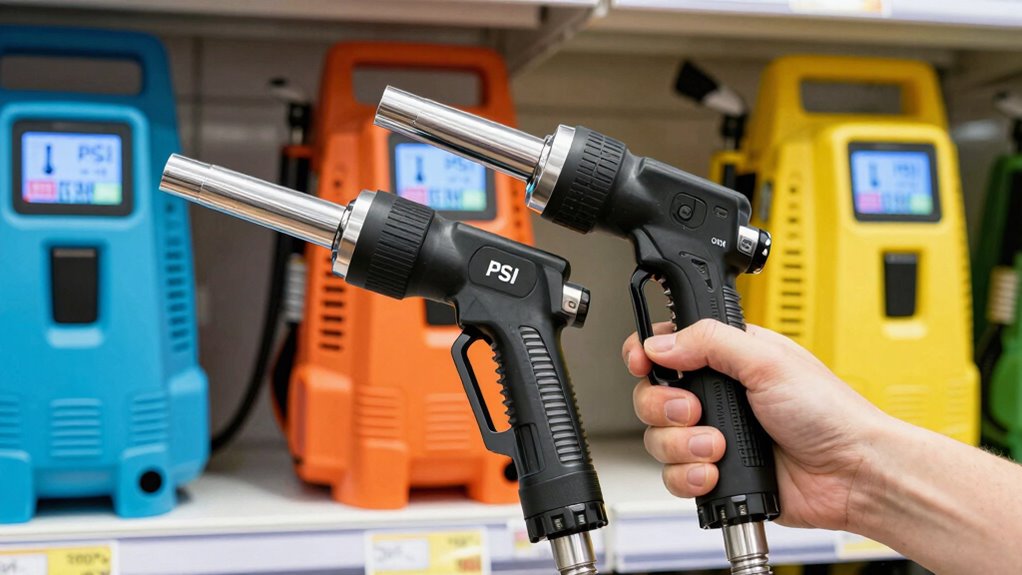
Understanding PSI and GPM is essential when choosing a pressure washer because these two metrics determine how effectively it cleans. PSI, or pounds per square inch, measures the water pressure, affecting how forcefully dirt is removed. GPM, or gallons per minute, indicates the water flow rate, which impacts cleaning speed and coverage. Higher PSI can improve cleaning power but may require careful pressure washer maintenance to prevent damage to surfaces. GPM influences how quickly you can complete tasks and supports eco-friendly cleaning by reducing water waste when balanced correctly. Additionally, knowing how water flow rate and pressure work together can help optimize cleaning performance for different tasks, especially when considering pressure washer maintenance to prolong the lifespan of your equipment. Understanding these factors helps you select a pressure washer that’s both powerful and efficient, ensuring you get the best results without unnecessary resource use or damage. Understanding pressure washer specifications is crucial for making an informed purchase decision that matches your cleaning needs. For example, balancing PSI and GPM appropriately can lead to more effective cleaning, saving time and resources while protecting delicate surfaces. Exploring creative ways to enhance your cleaning process can lead to more effective and enjoyable results.
How Does PSI Affect Cleaning Power and Surface Safety?
PSI directly influences how much cleaning power a pressure washer delivers. Higher PSI means more force, which can remove stubborn dirt and grime more quickly, boosting your cleaning efficiency. However, it’s important to weigh pressure safety. Too high PSI on delicate surfaces like paint or wood can cause damage or surface etching. Lower PSI settings may be safer for sensitive materials, reducing the risk of surface harm. The key is balancing PSI to maximize cleaning power without compromising surface safety. Fundamentally, understanding PSI helps you choose the right pressure level for each task, ensuring effective cleaning while protecting your surfaces. Always start with a lower PSI, then increase as needed, to avoid accidental damage. Additionally, considering surface compatibility is essential to prevent unintended damage during cleaning. Properly adjusting PSI based on surface materials can help maintain the integrity and appearance of your surfaces over time. Being aware of safe pressure ranges can further guide you in selecting appropriate settings for various surfaces. Knowing the industry standards for pressure settings can also help prevent damage and ensure optimal cleaning results. Recognizing the impact of GPM alongside PSI can give a more comprehensive understanding of cleaning effectiveness.
Why GPM Matters for Faster, More Effective Cleaning
A higher GPM (gallons per minute) means your pressure washer delivers more water flow, which is essential for faster, more thorough cleaning. With increased GPM, you can cover larger surfaces quickly, reducing cleaning time and effort. This is especially important when tackling heavy-duty cleaning tasks that require substantial water volume. This also helps you rinse away dirt and grime more effectively, especially on stubborn or heavily soiled areas. When considering GPM, check the pressure washer warranties; models with higher water flow often come with better coverage and durability guarantees. Plus, a higher GPM supports eco-friendly cleaning by reducing water waste—using less water while still achieving excellent results. Understanding water flow dynamics can help you choose the right model for your specific needs. Recognizing the importance of GPM in cleaning efficiency ensures you select a pressure washer that meets your workload demands.
How to Choose the Right Pressure Washer Based on Your Tasks
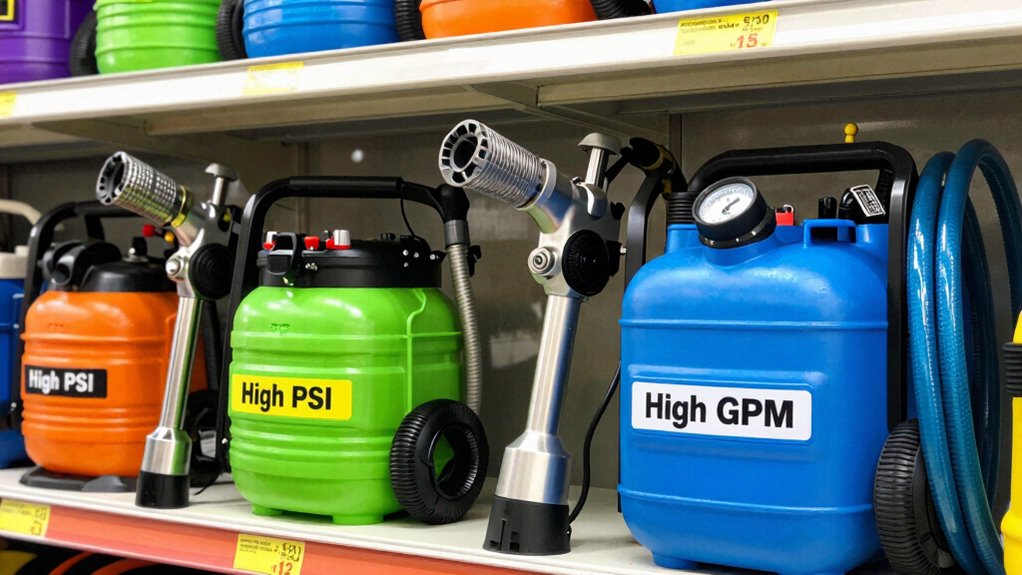
Choosing the right pressure washer depends on the specific tasks you plan to tackle. For heavy-duty jobs like removing stubborn grime or cleaning large surfaces, opt for a unit with higher PSI and GPM, ensuring good pressure washer durability. If you’re cleaning delicate surfaces, lower PSI settings prevent damage. Consider the durability of the pressure washer—look for models with solid construction and reliable parts. Regular maintenance tips, such as checking hoses and replacing worn nozzles, extend your machine’s lifespan and keep it performing efficiently. Match your pressure washer’s power to the task at hand, avoiding overkill or underperformance. Additionally, understanding the pressure washer specifications helps you select the most suitable equipment for your needs. Properly maintaining your pressure washer, including cable management and using compatible accessories, can prevent common issues and improve overall performance. Paying attention to build quality and selecting models with durable components ensures your investment lasts longer and performs reliably over time. Proper pressure washer maintenance can also help prevent breakdowns and extend the lifespan of your machine. Remember, a well-chosen machine suited to your needs minimizes wear and tear, saving you money and time in the long run.
Balancing PSI and GPM for the Best Cleaning Results
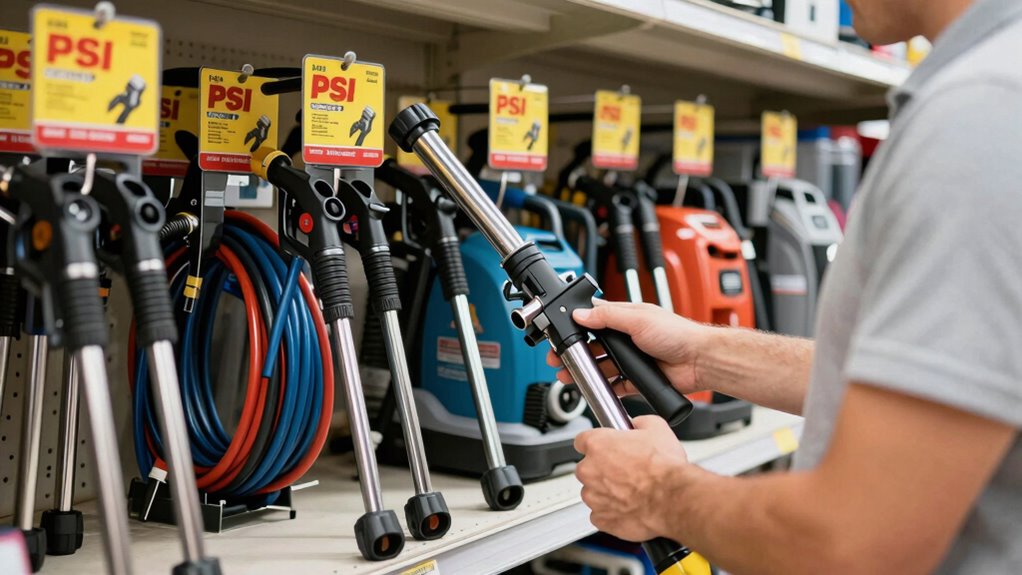
Finding the right balance between PSI and GPM guarantees your pressure washer can handle different cleaning tasks effectively. Many pressure washer myths suggest higher PSI always equals better cleaning, but user testimonials reveal that an ideal balance yields the best results. To achieve this, consider:
Balancing PSI and GPM ensures effective cleaning without damage or waste.
- Matching high PSI with adequate GPM for tough surfaces like concrete.
- Using moderate PSI with higher GPM for gentler tasks like cleaning cars.
- Avoiding excessive PSI, which can damage surfaces, even if GPM is high.
- Adjusting both settings based on the task to maximize efficiency.
- Recognizing that pressure washer performance can be influenced by adjustable settings, but for pressure washers, finding the right PSI and GPM balance is key to effective cleaning. Additionally, understanding performance factors can help you optimize your equipment’s capabilities.
- Properly managing both PSI and GPM can help prevent water wastage and potential surface damage, ensuring a safer and more efficient cleaning process.
Balancing these factors ensures you don’t waste water or cause damage. Remember, a well-balanced pressure washer delivers better cleaning results and longer equipment life, making it an essential part of your cleaning toolkit.
When Should You Prioritize PSI Over GPM (and Vice Versa)?

You should focus on PSI when cleaning tough, stubborn surfaces or when equipment requires high pressure for effective results. Conversely, prioritize GPM for tasks that need faster water flow, like large-area cleaning or delicate surfaces that risk damage. Consider the type of surface, your equipment’s compatibility, and the task’s intensity to decide which factor to emphasize. Additionally, understanding water flow dynamics can help optimize cleaning efficiency and prevent damage. Being aware of pressure and flow balance can further improve overall cleaning effectiveness and equipment longevity.
Cleaning Surface Type
When cleaning different surfaces with a pressure washer, understanding when to prioritize PSI (pounds per square inch) or GPM (gallons per minute) is essential. The surface texture and material durability guide this choice.
Consider these points:
- For smooth, durable surfaces like concrete or brick, higher PSI helps remove stubborn stains.
- Soft or delicate surfaces, such as wood or painted surfaces, require lower PSI to prevent damage.
- Porous surfaces benefit from higher GPM to rinse out dirt from crevices effectively.
- Fragile materials, like vinyl siding, need balanced PSI and GPM to avoid surface erosion.
Choosing the right combination ensures effective cleaning without harming the surface. Prioritize PSI for tough stains and GPM for rinsing and surface safety.
Equipment Compatibility Needs
Choosing the right pressure washer setting depends heavily on your equipment’s compatibility and the task at hand. If your equipment requires specific detergent compatibility, focus on GPM, since higher flow rates help distribute cleaning solutions effectively. Hose length considerations also matter; longer hoses may reduce pressure, so prioritize PSI to ensure adequate power. Conversely, if you’re cleaning delicate surfaces or need gentle scrubbing, lower PSI with higher GPM might be better. Here’s a quick comparison:
| Equipment Compatibility | Detergent Needs | Hose Length Considerations |
|---|---|---|
| High PSI needed for tough stains | Compatible detergents required | Long hoses may diminish pressure |
| Low PSI for delicate surfaces | Gentle cleaning detergents | Shorter hoses maintain pressure |
| Balance of both | Specialized detergents | Correct PSI for hose length |
| Heavy-duty tasks | Heavy-duty detergents | Ensure pressure meets hose specs |
Task Intensity Levels
Determining whether to prioritize PSI or GPM depends on the specific cleaning task’s intensity. For tasks requiring high pressure levels to remove stubborn grime, focus on PSI because water pressure directly impacts penetration. Conversely, if you need to wash large surfaces quickly, prioritize GPM since higher water flow speeds up the process. Consider these scenarios:
- Heavy-duty cleaning of concrete or grease buildup—maximize PSI.
- Washing vehicles or delicate surfaces—balance PSI and GPM carefully.
- Large area cleaning like decks or siding—prioritize GPM for efficiency.
- Removing loose dirt or dust—moderate pressure with high water flow works best.
Matching pressure levels and water flow to your task ensures effective cleaning without damaging surfaces.
Adjusting Pressure Settings for Different Surfaces and Jobs
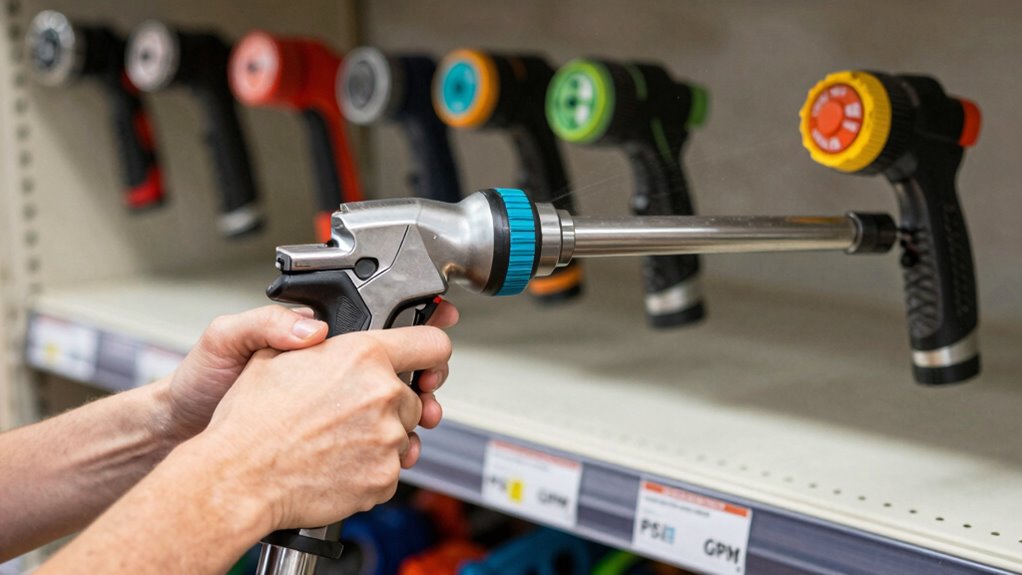
To get the best results, you need to calibrate your pressure washer based on the surface you’re cleaning. Knowing which nozzles and settings work for different materials helps prevent damage and ensures efficiency. Let’s explore some key tips for matching pressure levels to various jobs and surfaces.
Surface Compatibility Tips
Since different surfaces react uniquely to high-pressure water, adjusting your pressure washer settings is essential to avoid damage. Here’s how to guarantee surface compatibility:
- Use lower pressure settings for delicate surfaces like wood, painted surfaces, or windows to prevent etching or cracking.
- Check detergent compatibility; choose gentle cleaning solutions for softer materials to avoid residue buildup or damage.
- Consider noise levels; quieter settings help when working around neighbors or in noise-sensitive areas.
- Always test on a small, inconspicuous area first to see how the surface reacts and to adjust pressure or detergent accordingly.
Proper adjustments protect surfaces and prolong equipment life, ensuring you get the job done safely and effectively.
Adjusting Nozzle Settings
Ever wondered how to optimize your pressure washer for different cleaning tasks? It all comes down to nozzle adjustments and choosing the right spray pattern. Most pressure washers come with interchangeable nozzles that control the spray pattern, from a narrow pinpoint to a wide fan. For delicate surfaces like cars or outdoor furniture, use a nozzle with a wider spray pattern to avoid damage. For tougher grime or concrete, switch to a narrower, high-pressure spray for maximum cleaning power. Adjusting nozzle settings allows you to control the pressure and spray angle, making your cleaning more efficient and safe. Always start with a wider spray pattern and narrow it down if needed, ensuring you match the nozzle to the surface you’re cleaning.
Job-Specific Pressure Tips
Adjusting your pressure washer’s settings for specific jobs guarantees you get the best results without causing damage. To protect water flow and equipment durability, tailor your pressure and spray pattern based on the surface. Here are key tips:
- Use lower pressure for delicate surfaces like wood or painted areas.
- Increase pressure carefully when cleaning concrete or brick.
- Keep the spray nozzle at a proper distance to prevent damaging surfaces or reducing water flow.
- Regularly check and adjust pressure settings to ensure ideal performance and avoid unnecessary wear on your equipment.
Common Mistakes to Avoid When Buying a Pressure Washer
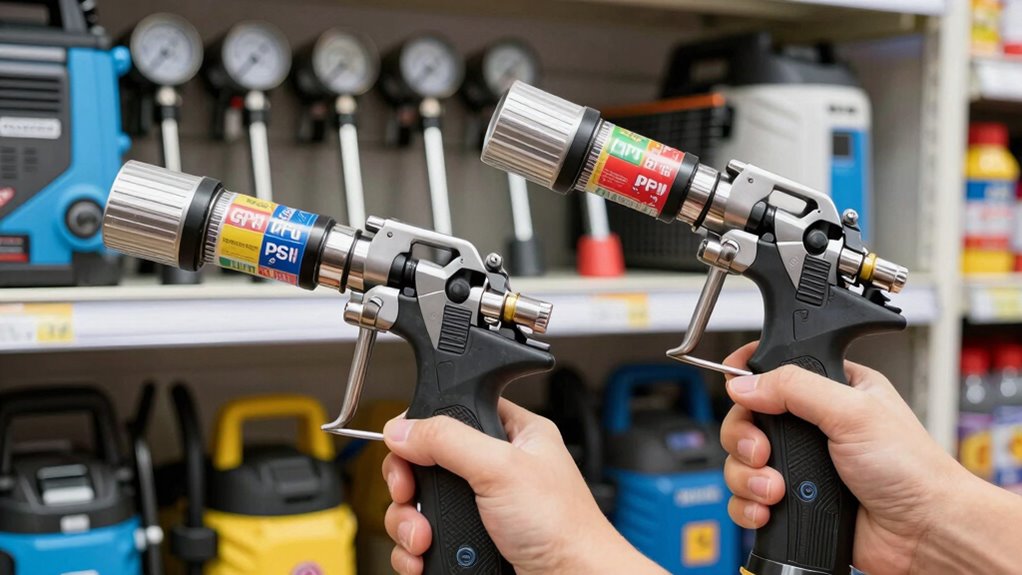
One common mistake to avoid when buying a pressure washer is not understanding your specific cleaning needs. Overspending on high PSI models for simple tasks can be wasteful, while choosing too weak a unit may leave you frustrated. Focus on the right balance between PSI and GPM. Also, neglecting pressure washer safety and maintenance tips can lead to accidents or damage. Always read user manuals and safety instructions before use. Here’s a quick guide:
| Task Type | Recommended PSI | Recommended GPM |
|---|---|---|
| Car washing | 1200-1900 | 1.3-1.5 GPM |
| Deck cleaning | 2200-3100 | 2.0-3.0 GPM |
| Concrete driveway | 3100-4000 | 2.5-4.0 GPM |
| Graffiti removal | 4000+ | 4.0+ GPM |
Choose wisely to guarantee safe, effective cleaning.
Frequently Asked Questions
Can a Pressure Washer With Higher PSI Damage Delicate Surfaces?
Yes, a pressure washer with higher PSI can harm delicate surfaces if you’re not careful. The increased pressure can cause surface damage or compromise surface safety, especially on softer materials like wood, paint, or siding. To avoid this, you should adjust the pressure settings or use a wider spray nozzle. Always start with the lowest PSI and work your way up to protect the surface and ensure surface safety.
How Does Water Temperature Impact Pressure Washer Performance?
Water temperature can dramatically boost your pressure washer’s performance, making cleaning efficiency skyrocket. Hot water loosens grime faster than cold, cutting through stubborn dirt like a hot knife through butter. When you crank up the water temperature, you release a cleaning powerhouse that tackles grease, oil, and grime with ease. Just remember, hotter water means more wear on your equipment, so use it wisely to keep your pressure washer running smoothly.
Are There Eco-Friendly Pressure Washers With High PSI and GPM?
Yes, eco-friendly pressure washers with high PSI and GPM do exist. They focus on eco-friendly cleaning and water conservation by using advanced technology to maximize efficiency while minimizing water usage. These models often feature energy-efficient motors and adjustable settings, allowing you to clean effectively without wasting water. Look for units with eco-friendly certifications and features designed to reduce environmental impact, helping you achieve powerful cleaning while protecting the planet.
What Maintenance Is Required to Keep a Pressure Washer Operating Effectively?
To keep your pressure washer running smoothly, you should regularly check and change the oil, inspect and clean the spray nozzle, and flush out the pump. Make sure to use detergent compatible with your washer to prevent damage. Store it in a dry, sheltered area, and drain water from the system after use. These steps help maintain ideal performance, prolong the machine’s lifespan, and ensure safe, effective cleaning every time you use it.
How Do Power Source Options (Gas Vs Electric) Influence PSI and GPM Choices?
Your power source influences your PSI and GPM choices because gas-powered washers typically deliver higher PSI and GPM for tougher jobs, offering greater operating efficiency. Electric models usually provide lower PSI and GPM, making them ideal for light to medium tasks with quieter operation. Consider your cleaning needs and portability; gas washers excel for heavy-duty use, while electric ones are convenient for quick, less demanding jobs.
Conclusion
Choosing the right pressure washer depends on understanding PSI and GPM. Did you know that commercial pressure washers can reach over 4,000 PSI, yet still need high GPM for efficiency? Balancing these specs guarantees you get the best cleaning results without damaging surfaces. Keep your tasks in mind, avoid common mistakes, and adjust settings accordingly. With the right knowledge, you’ll make smarter choices and enjoy a cleaner, safer home or workspace every time.