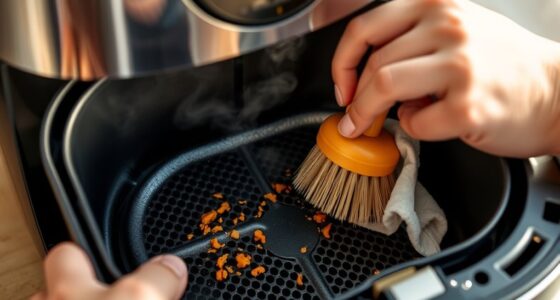
To restore your baking sheets to look brand new, start by soaking them in hot water with white vinegar to loosen grime, then scrub gently with a non-abrasive sponge. For stubborn stains, apply a baking soda paste and let it sit before scrubbing again. Rinse thoroughly and dry. Regular cleaning and preventive tips can keep them looking great longer. Keep going to discover more effective methods and maintenance tips.
Key Takeaways
- Soak baking sheets in hot water with white vinegar for 30 minutes to loosen stains and grime.
- Apply a baking soda paste to stubborn spots, let sit, then scrub gently with non-abrasive tools.
- Use vinegar and baking soda together for fizzing action to lift tough burnt-on residue effectively.
- Regularly clean and dry sheets promptly after use to prevent staining and surface damage.
- Consider replacing or resurfacing warped or severely damaged sheets for optimal baking results.
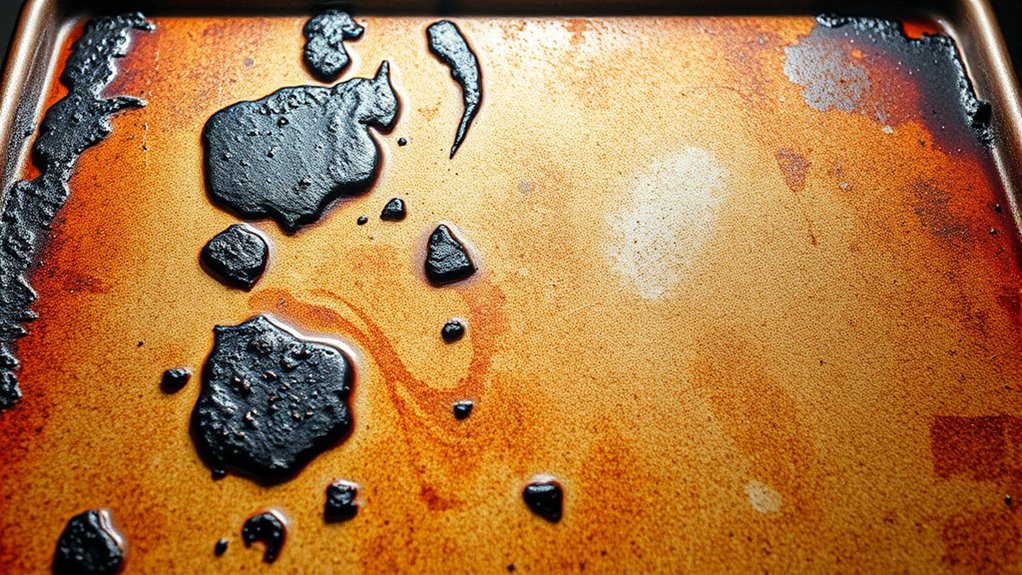
Over time, baking sheets can become stained, burnt, or warped, making them less effective and less appealing. The good news is, you don’t have to toss them out. With a few simple steps, you can restore your baking sheets to look almost brand new. The key is to focus on deep cleaning, especially using natural methods like cleaning with vinegar, which cuts through grease and stubborn stains without harsh chemicals. Vinegar’s acidity breaks down baked-on food and grime, making it easier to wipe away residues. To prevent future stains, it’s essential to develop a routine of cleaning your sheets promptly after use and applying protective layers like parchment paper or silicone baking mats. This prevents food from sticking directly to the surface and reduces the risk of burnt or stained areas.
Start by removing any loose debris or food particles from your baking sheet. Then, fill your sink or a basin with hot water, adding a cup of white vinegar. Submerge the sheet and let it soak for about 30 minutes. The vinegar will loosen baked-on grease and stains. After soaking, use a non-abrasive scrubber or sponge to gently scrub the surface. For stubborn spots, sprinkle baking soda over the stained areas, then scrub with a damp sponge. The combination of vinegar and baking soda creates a fizzing action that lifts grime effectively. Rinse thoroughly with hot water and dry with a clean towel. This routine not only cleans but also helps maintain the sheet’s surface, preventing future stains from setting in. Additionally, using proper cleaning techniques can extend the lifespan of your baking sheets and keep them looking their best.
To avoid future damage, always clean your baking sheets soon after each use. Allowing food to sit can cause stains and burnt spots that are harder to remove later. When baking, consider lining your sheets with parchment paper or silicone mats to shield the surface from direct contact with food and spills. These barriers make cleaning easier and reduce the likelihood of stubborn stains forming. Regular maintenance like this keeps your baking sheets in top shape and extends their lifespan. For particularly stubborn stains or burnt-on residue, repeat the vinegar soak and scrubbing process until the surface improves. You can also try a paste of baking soda and water applied directly to stains, letting it sit for a few hours before scrubbing.
Frequently Asked Questions
Can I Use Commercial Oven Cleaners to Restore My Baking Sheets?
Yes, you can use commercial oven cleaners to restore your baking sheets, but you must follow safety precautions. Wear gloves and eye protection, and work in a well-ventilated area. Apply the cleaner carefully, following the instructions on the label. Let it sit for the recommended time, then scrub and rinse thoroughly. Always prioritize safety to prevent skin or eye irritation and guarantee effective cleaning.
Are There Natural Methods to Remove Stubborn Stains From Baking Sheets?
Stubborn stains on your baking sheets can feel like a mountain, but natural remedies can help you clear the path. You can use baking soda and vinegar for powerful stain removal—sprinkle baking soda on the surface, spray with vinegar, let it fizz, then scrub gently. Alternatively, a paste of baking soda and water works wonders. These natural methods are eco-friendly and safe, making your sheets look fresh and clean again.
How Often Should I Clean My Baking Sheets for Optimal Results?
For ideal results, you should clean your baking sheets after every few uses to prevent stubborn stains and buildup. Regular baking sheet maintenance includes wiping them down after each use and doing a deep clean weekly or bi-weekly, depending on how often you cook. Following these cleaning frequency recommendations helps maintain their non-stick surface, extends their lifespan, and keeps them looking and functioning like new.
Will Using Steel Wool Scratch Non-Stick Baking Sheets?
Using steel wool on non-stick baking sheets is like playing with fire; it can definitely scratch and damage the non-stick coating. Steel wool is too abrasive for these surfaces and risks ruining their non-stick properties. Instead, opt for gentler cleaning tools like a soft sponge or baking soda paste to preserve your baking sheets. This way, you’ll avoid non-stick damage and keep them looking good as new.
Can I Prevent Discoloration and Stains on New Baking Sheets?
To prevent discoloration and stains on your new baking sheets, always follow oven safety guidelines and avoid exposing them to extreme temperatures or harsh chemicals. Use parchment paper or silicone baking mats to reduce direct contact with food and prevent stains. Regularly clean your sheets with gentle, non-abrasive cleaners, and dry them thoroughly to stop moisture buildup. These steps help maintain their appearance and prolong their lifespan.
Conclusion
Think of your baking sheet as a blank canvas waiting to be reborn. With a little effort, you can transform it from stained and worn to shiny and new, like a phoenix rising from the ashes. Keep up with these simple cleaning tricks, and your baking sheets will continue to serve you well, reflecting your care and kitchen mastery. Remember, a well-maintained baking sheet isn’t just clean; it’s a shining badge of your culinary craftsmanship.