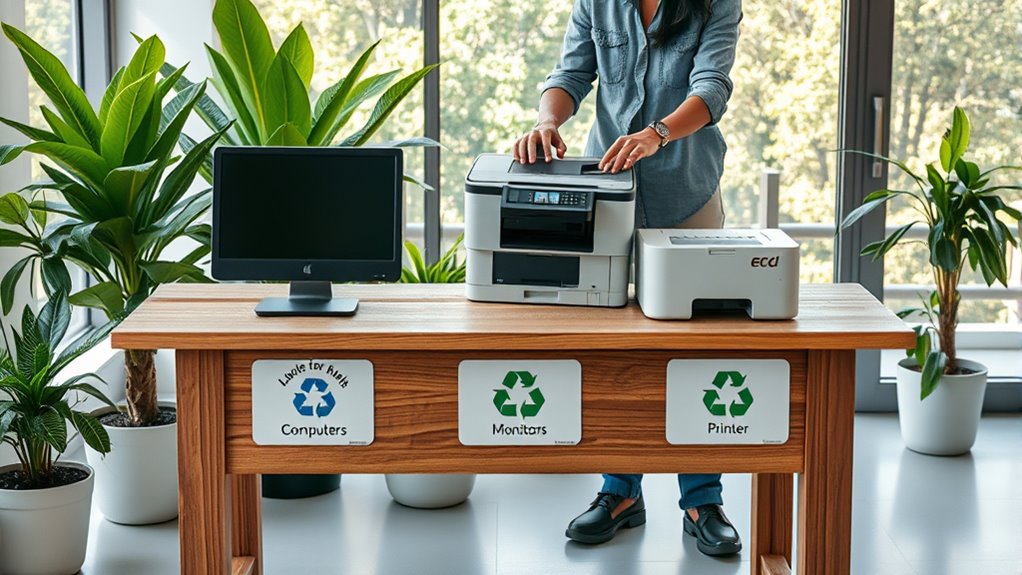

To dispose of computers and printers responsibly, follow local laws and use authorized recycling facilities to handle e waste safely. Look for drop-off points or collection programs offered by government or private organizations, ensuring hazardous materials are managed properly. Recycling helps recover valuable materials and prevents harmful chemicals from contaminating soil and water. Continue exploring this guide to learn more about eco-friendly disposal options and making a positive environmental impact.
Key Takeaways
- Follow local laws and regulations for electronic waste disposal to ensure compliance.
- Use authorized recycling facilities or programs to properly handle computers and printers.
- Take advantage of free or low-cost community e-waste collection events and drop-off points.
- Remove sensitive data and securely erase personal information before recycling devices.
- Avoid illegal dumping and improper disposal to prevent environmental contamination and health risks.
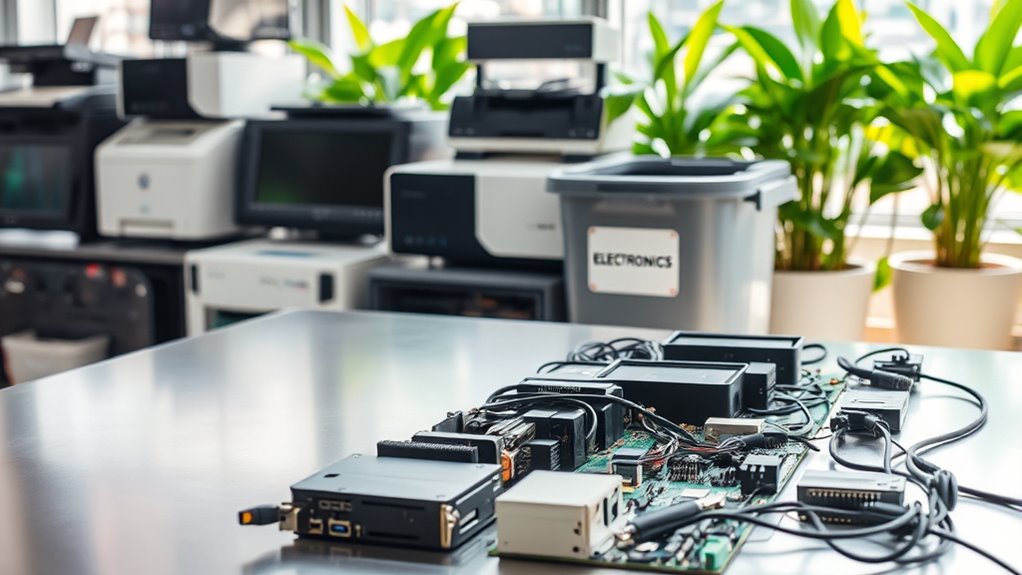
Have you ever wondered what happens to your old gadgets once you toss them out? Many people don’t realize that improperly disposing of electronics like computers and printers can cause serious environmental harm. That’s why understanding e waste legislation is essential. These laws are designed to regulate how electronic waste is handled, ensuring that e waste is managed in a way that minimizes pollution and health risks. When you follow these regulations, you help prevent hazardous materials, such as heavy metals and chemicals, from leaching into the soil and water. Participating in responsible disposal methods also supports the broader recycling program benefits, which include reducing the need for virgin material extraction, conserving energy, and cutting down greenhouse gas emissions. These programs are set up to make recycling convenient and accessible, often offering drop-off points or pick-up services that make it easier for you to do the right thing.
By adhering to e waste legislation, you not only stay compliant with local, state, or national laws but also contribute to a sustainable cycle that benefits everyone. Proper recycling prevents valuable components—like gold, copper, and rare earth metals—from going to waste. Instead, these materials are recovered and repurposed, reducing the demand for new mining operations that are often environmentally destructive. When you choose to recycle your old computers and printers through authorized facilities, you’re actively participating in a system that promotes environmental responsibility. Many local governments and private companies offer free or low-cost recycling programs specifically for electronic waste, which makes it easier than ever to dispose of your gadgets responsibly.
The benefits of engaging with these programs extend beyond environmental impact. Responsible disposal can protect your community from potential health hazards associated with e waste. It also keeps hazardous chemicals out of landfills, preventing soil and water contamination. Additionally, recycling helps create jobs in the recycling industry, supporting local economies. Many organizations also offer data destruction services, ensuring that your personal information remains secure when you recycle old electronics. Furthermore, understanding the proper disposal methods for electronic devices helps to minimize environmental contamination caused by improper handling of hazardous materials.
In short, understanding and following e waste legislation empowers you to make eco-friendly choices. Taking advantage of recycling programs benefits the environment, public health, and even the economy. So, the next time you upgrade your computer or get rid of an old printer, remember that responsible disposal isn’t just a personal choice—it’s a contribution to a healthier planet. By doing your part, you help turn what would be waste into valuable resources, ensuring that your discarded gadgets serve a purpose beyond their initial use.
Frequently Asked Questions
How Can I Identify if My Device Contains Hazardous Materials?
To identify if your device contains hazardous materials, start with hazardous material identification by checking the manufacturer’s specifications or labels. Conduct a device safety assessment by looking for warning labels or unusual odors, and avoid opening the device yourself if you’re unsure. If you’re still uncertain, consult a professional technician or recycling center. This guarantees safe disposal and minimizes environmental and health risks associated with hazardous materials.
Are There Any Fees Involved in Recycling Old Electronics?
When you recycle your old electronics, you might encounter recycling fees or the cost of disposal. These fees help cover proper processing and environmentally safe disposal. Some recycling centers offer free drop-off for certain items, while others charge a small fee, like a coin slipping into a machine. Always check with your local facility beforehand, so you’re prepared to pay any applicable fees and avoid surprises.
What Should I Do if My Device Is Still Under Warranty?
If your device is still under warranty, check the warranty coverage and return policies first. Contact the manufacturer or retailer to see if they accept returns or repairs for recycling. Often, they offer free or discounted options for recycling devices under warranty. Make sure to have your proof of purchase ready. This way, you guarantee proper disposal without extra costs and support environmentally responsible recycling.
Can I Recycle Broken or Damaged Computers and Printers?
Yes, you can recycle broken or damaged computers and printers. Since they’re classified as electronic waste, check your local recycling regulations to find approved e-waste disposal programs. Many communities offer special drop-off sites or collection events for electronic waste, ensuring harmful materials are safely handled. Don’t throw damaged devices in the trash—recycling responsibly helps protect the environment and conserves valuable resources.
How Long Does the Recycling Process Typically Take?
Think of the recycling process like brewing a fine tea; it takes time to extract the best flavors. Typically, the process duration varies from a few days to several weeks, depending on the facility and item complexity. The recycling timeline can be quicker if you drop off your device at a local center, but it may take longer if shipped or processed through multiple steps. Expect patience as your electronics are carefully handled.
Conclusion
By recycling your computers and printers responsibly, you’re not just decluttering—you’re saving the planet from turning into a mountain of e-waste that could swallow entire cities. Every device you dispose of properly helps conserve precious resources and reduces pollution. Remember, your small act of eco-consciousness can make a huge difference—like stopping a disaster before it starts. So, take action today and be a hero for the environment, one gadget at a time.