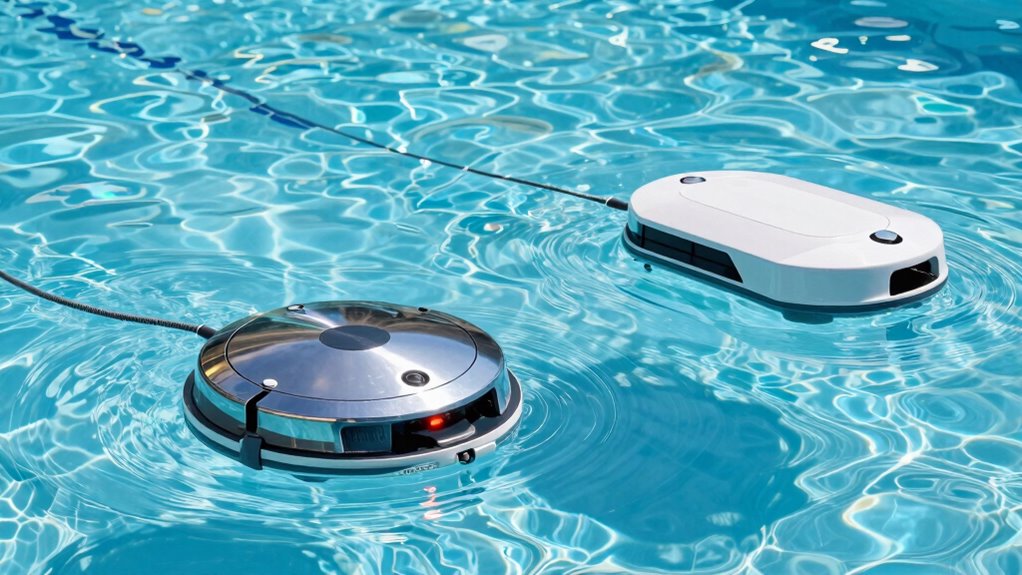
When choosing between corded and cordless robotic pool cleaners, consider power, ease of use, and maintenance. Corded models offer strong suction and longer run times, ideal for larger pools, but can be less maneuverable. Cordless cleaners are portable and quiet, great for small pools or quick jobs, but may struggle with batteries and debris. Understanding these tradeoffs helps you pick the right fit—more details can guide your best choice.
Key Takeaways
- Corded cleaners offer continuous power and are better for large pools, while cordless models provide portability and ease of use for smaller areas.
- Corded devices typically have lower upfront costs and easier maintenance but may limit mobility due to cord length.
- Cordless cleaners are more convenient, quieter, and ideal for quick cleanings, but often have shorter battery life and higher replacement costs.
- Battery capacity and charging time in cordless models directly affect cleaning duration and pool size efficiency.
- Long-term savings favor corded models with lower repair costs, but cordless options provide energy efficiency and reduced maintenance expenses.
What Are Robotic Pool Cleaners and How Do They Work?
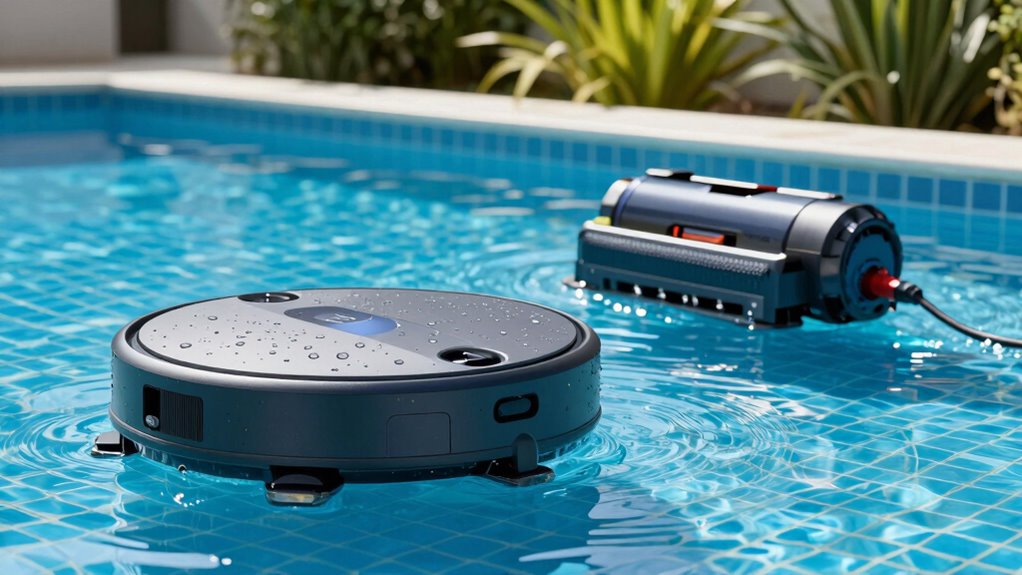
Robotic pool cleaners are automated devices designed to keep your pool spotless without much effort on your part. They use advanced robotic technology to navigate and clean your pool efficiently. These devices are equipped with sensors and programmed routes that allow them to move around the pool floor, walls, and waterline, scrubbing away dirt and debris. You simply place the cleaner in the water, turn it on, and let it do its job. Most robotic cleaners operate independently, requiring minimal supervision. Their intelligent systems adapt to different pool shapes and sizes, ensuring thorough pool cleaning. Thanks to robotic technology, maintaining a clean pool becomes easier, saving you time and energy while keeping your swimming area pristine. Additionally, some models feature programmable routes and customizable settings to optimize cleaning performance for various pool types.
How Do Corded and Cordless Pool Cleaners Compare in Power and Performance?
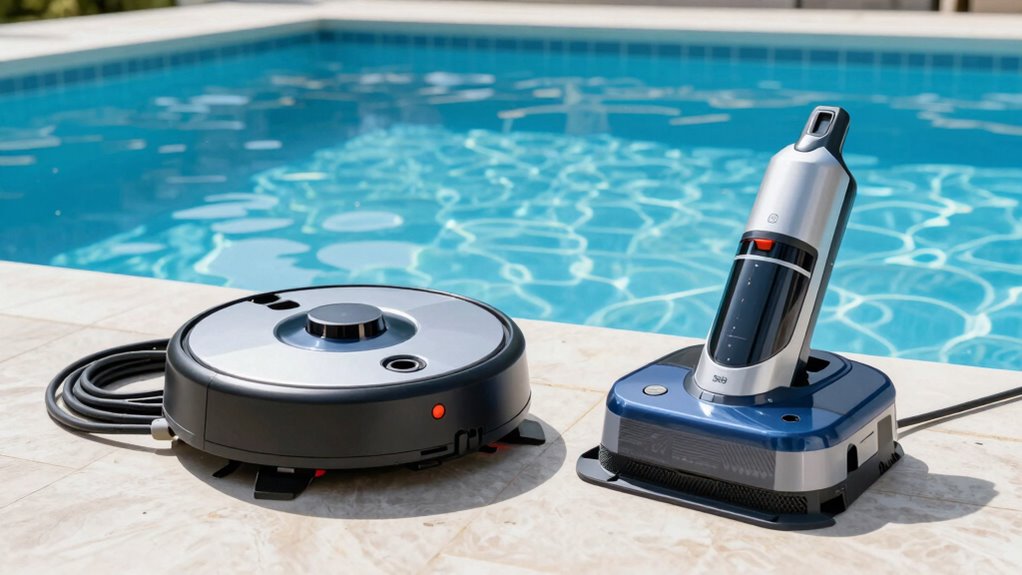
When comparing corded and cordless pool cleaners, it’s important to contemplate their power and performance, as these factors directly impact how effectively they clean your pool. Corded models typically offer higher power efficiency, giving you strong suction and thorough cleaning. They maintain consistent performance without worrying about battery life, but they can be noisy, which might disrupt your relaxation. Cordless cleaners, on the other hand, prioritize convenience and quiet operation, often at the expense of raw power. They excel in maneuverability and ease of use but may struggle with larger debris or longer cleaning sessions. Additionally, the technology behind motor design influences overall cleaning ability and durability. Advances in battery technology continue to enhance cordless models, narrowing the performance gap with corded options. As performance metrics improve with new innovations, cordless options are becoming increasingly viable for a variety of pool cleaning needs. Furthermore, ongoing improvements in energy efficiency are helping cordless cleaners operate longer between charges while maintaining effective cleaning performance. With the integration of smart features, some models now offer enhanced monitoring and scheduling capabilities, further boosting their appeal.
Which Is Easier to Use and Move Around: Corded or Cordless?
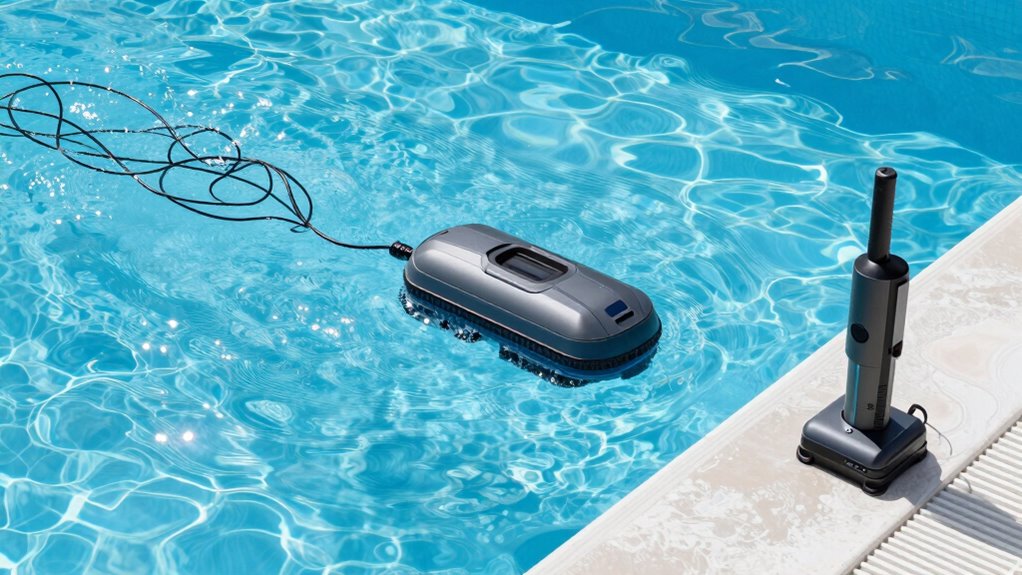
Corded and cordless pool cleaners each have their own advantages when it comes to ease of use and maneuverability. Cordless models shine in cordless portability, allowing you to move freely around your pool without worrying about a cord snagging or limiting your range. This makes it easier to reach tight corners and clean different pool areas comfortably. On the other hand, corded cleaners offer corded convenience, meaning you don’t need to worry about battery life or recharging. They can often run longer without interruption, especially for larger pools. Overall, if you value effortless movement and quick setup, a cordless cleaner is more user-friendly. But if you prefer continuous cleaning without the concern of battery life, a corded model provides consistent convenience. Additionally, understanding the energy efficiency of each type can help you make a more sustainable choice for your pool maintenance. Many power consumption considerations can influence the overall operational cost and environmental impact of your pool cleaner. For example, the battery life of cordless models can vary significantly depending on usage patterns and model quality. Moreover, advancements in battery technology continue to improve the performance and runtime of cordless units, making them increasingly competitive with corded options. When selecting your pool cleaner, it’s also helpful to consider the ease of maintenance of each model to ensure long-term reliability and performance.
Will the Battery Last Long Enough for Your Pool Size?
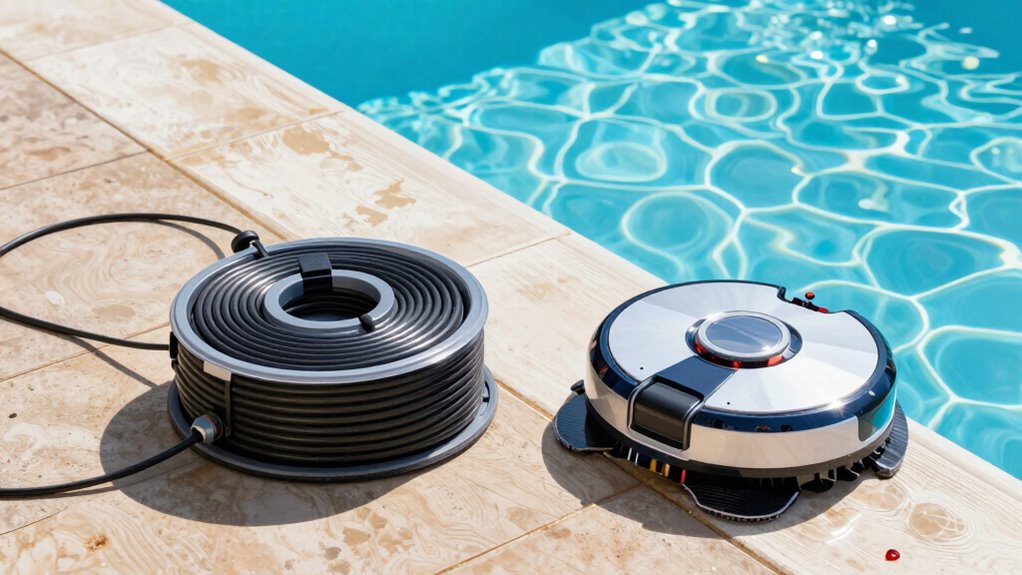
To guarantee your robotic cleaner can handle your pool, you’ll want to check its battery capacity and how well it matches your pool size. Consider how long it takes to fully charge and whether that gives it enough time to complete the cleaning. Making sure these factors align will keep your pool spotless without interruptions. Additionally, selecting a model with smart technology features can optimize cleaning schedules and monitor performance remotely. Being aware of battery longevity and how it correlates with your pool’s size will help prevent mid-clean shutdowns and ensure efficient operation. Understanding battery maintenance can also extend the lifespan of your device and maintain optimal performance over time. Moreover, understanding proper charging practices can further safeguard your investment and enhance overall battery life. Recognizing battery capacity relative to pool size is essential to choosing a model that can complete its cleaning cycle efficiently.
Battery Capacity and Pool Size Compatibility
Choosing a robotic pool cleaner that can handle your pool size depends heavily on its battery capacity. If the battery isn’t large enough, you risk incomplete cleaning sessions, leaving dirt behind. To guarantee your cleaner meets your needs, check the battery capacity relative to your pool size compatibility. Additionally, understanding how filter sizing and flow impact overall efficiency can help optimize your cleaning routine and prevent premature wear. A higher-capacity battery not only ensures longer cleaning cycles but also contributes to maintaining digital transaction security by reducing the need for frequent recharges and potential interruptions. Investing in models with advanced technology features can further improve cleaning performance and longevity. It’s also important to consider how measurement accuracy can influence the effectiveness of your cleaning system, ensuring you get the best results. Remember, the power-to-size ratio of the cleaner influences its ability to navigate and clean larger pools effectively. Imagine the frustration of a cleaner that stops mid-session, forcing you to restart or manually intervene. Or the relief of knowing it can complete its job in one go, saving you time and effort. And consider the peace of mind that comes with choosing a model designed for your pool’s dimensions.
Charging Time and Cleaning Duration
A robotic pool cleaner’s ability to complete its task depends not only on battery capacity but also on how quickly it charges and how long the battery lasts during use. Battery longevity plays a key role in ensuring your cleaner can handle your pool size without frequent recharging. Look for models with shorter charging times that match your cleaning schedule, so you’re not waiting long between sessions. Keep in mind that repeated charging cycles can wear out the battery over time, reducing overall runtime. A battery with a high number of charging cycles offers better durability, ensuring your cleaner maintains sufficient cleaning duration over its lifespan. Balancing quick charging with long-lasting battery performance helps you clean efficiently without interruptions. Additionally, battery maintenance and proper care can extend the overall lifespan and performance of your robotic cleaner’s power source. Properly managing your battery health can significantly improve its longevity and efficiency. Regularly monitoring and following manufacturer recommendations for battery care can further optimize your cleaner’s operational lifespan.
Which Option Saves You More on Cost and Maintenance?
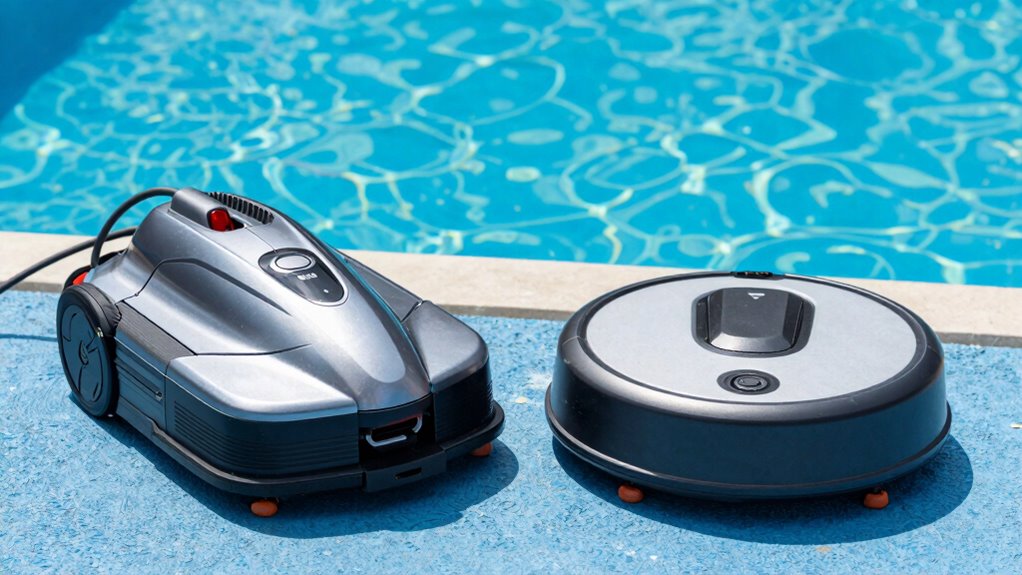
When comparing options, you’ll notice differences in purchase costs and ongoing maintenance expenses. Some cleaners may cost less upfront but require more frequent repairs, while others save money over time. Understanding these factors helps you choose the most cost-effective solution for your pool.
Purchase Cost Differences
Robotic pool cleaners vary substantially in purchase price and ongoing maintenance costs, making it important to compare options carefully. When doing a price comparison, corded models tend to be more affordable initially, but cordless cleaners often come with higher upfront costs. Consider warranty coverage too; some models offer extensive warranties that can save you money long-term by reducing repair expenses.
- Feel confident knowing you’re making a smart investment that balances cost and quality.
- Save money on unexpected repairs with exhaustive warranty coverage.
- Choose an option that fits your budget now and minimizes future expenses.
Ultimately, weighing the purchase cost difference helps you select a cleaner that offers the best value without sacrificing performance or peace of mind.
Maintenance Expenses Overview
While initial purchase price is important, understanding the ongoing maintenance costs can considerably impact your overall savings. Corded cleaners often have lower repair expenses due to simpler components, but may require more frequent parts replacement. Cordless models tend to cost more for repairs, mainly because of advanced batteries and electronics, but they usually need less routine maintenance. Here’s a quick cost comparison:
| Feature | Corded | Cordless |
|---|---|---|
| Repair Expenses | Lower | Higher |
| Routine Maintenance | More frequent | Less frequent |
| Battery Replacement | Not applicable | Needed every few years |
| Parts Availability | Widely available | Limited, specialized |
| Overall Cost Impact | Lower long-term | Slightly higher |
Choosing based on these factors helps you save on repair expenses and ongoing maintenance.
Long-Term Savings Potential
Considering all factors, cordless pool cleaners generally offer greater long-term savings despite their higher upfront cost. Their energy efficiency reduces electricity bills, saving you money over time. Plus, many models come with extensive warranty coverage, protecting your investment and lowering repair costs. Over the long run, you’ll benefit from fewer maintenance expenses and fewer replacements.
- Enjoy peace of mind knowing your cleaner is protected by a thorough warranty
- Cut energy costs with efficient, eco-friendly operation
- Avoid costly repairs and replacements with durable, high-quality components
How to Choose the Best Robotic Pool Cleaner for Your Needs
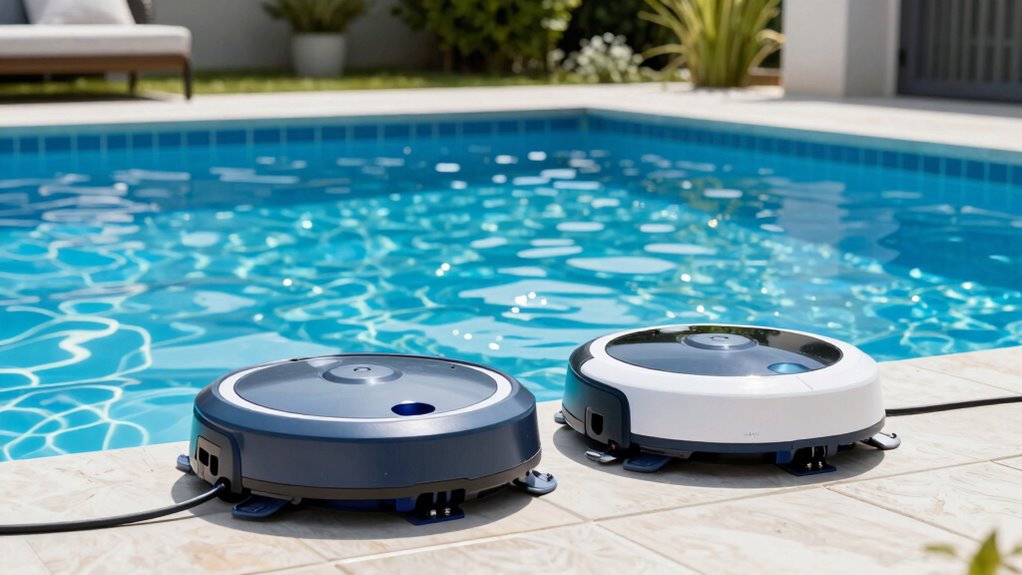
Choosing the right robotic pool cleaner depends on understanding your specific needs and the features that matter most to you. First, consider pool safety; a cleaner with reliable navigation minimizes obstacles and prevents accidents. Next, evaluate how water chemistry impacts the device—some cleaners are better at managing variable pH levels and chemical balances, ensuring ideal performance. If you have a larger or more complex pool, look for models with advanced navigation and longer battery life. For smaller pools, simpler models might suffice. Also, consider whether a corded or cordless design fits your setup better. Ultimately, think about how often you’ll use the cleaner and what features will keep your water safe, clean, and balanced, simplifying maintenance and enhancing safety.
Frequently Asked Questions
Are There Safety Concerns With Corded Robotic Pool Cleaners?
Yes, there are safety concerns with corded robotic pool cleaners. You should be aware of potential safety hazards like electrical risks, especially if the cord gets damaged or submerged improperly. Always follow the manufacturer’s instructions, keep the cord away from the water’s surface, and inspect it regularly for wear and tear. Taking these precautions helps prevent electrical hazards and guarantees safe operation around your pool.
Can Cordless Models Handle Large, Deep Pools Effectively?
Imagine a brave explorer conquering vast, deep waters—your cordless pool cleaner. While its battery life and power capacity are improving, it may struggle with large, deep pools where extended cleaning is needed. You might find it less effective for big spaces, as it needs frequent recharges. For extensive pools, a corded model with steady power often proves more reliable, ensuring every corner gets the deep clean you want.
How Often Do Battery Replacements or Upgrades Cost?
Battery lifespan typically ranges from 1 to 3 years, depending on usage and maintenance. Replacement costs for batteries vary, usually between $50 and $150, but some models may cost more. You’ll want to factor in these expenses when budgeting for your cordless robotic pool cleaner. Regularly caring for the battery can extend its lifespan, helping you avoid frequent replacements and keeping your cleaner running smoothly.
Do Corded and Cordless Cleaners Work on All Pool Surfaces?
Both corded and cordless robotic pool cleaners generally work on most pool surfaces, but you should check the specific model’s pool surface compatibility. Cordless cleaners offer better maneuverability on complex surfaces like textured tiles or uneven concrete, enhancing cleaning effectiveness. Corded models, with their steady power, tend to be more reliable on large or heavily soiled pools. Always verify compatibility to guarantee the best cleaning performance for your pool type.
What Are the Best Storage Practices for Both Types?
Did you know that improper storage can reduce a robotic pool cleaner’s lifespan by up to 25%? To keep your corded or cordless cleaner in top shape, focus on good storage organization and space-saving solutions. Store it in a cool, dry place, and avoid tangling cords or exposing batteries to extreme temperatures. Use wall mounts or storage bins to prevent damage and keep your pool area tidy.
Conclusion
Choosing between corded and cordless robotic pool cleaners depends on your pool size and cleaning needs. For instance, if you have a large pool, a corded model might be more reliable, while a cordless cleaner offers greater flexibility for smaller pools. Imagine saving time and effort with a cordless model that easily maneuvers around obstacles—making maintenance simpler. Ultimately, pick the one that fits your pool, budget, and lifestyle for effortless, sparkling results.