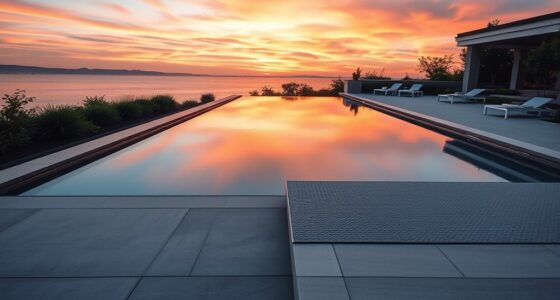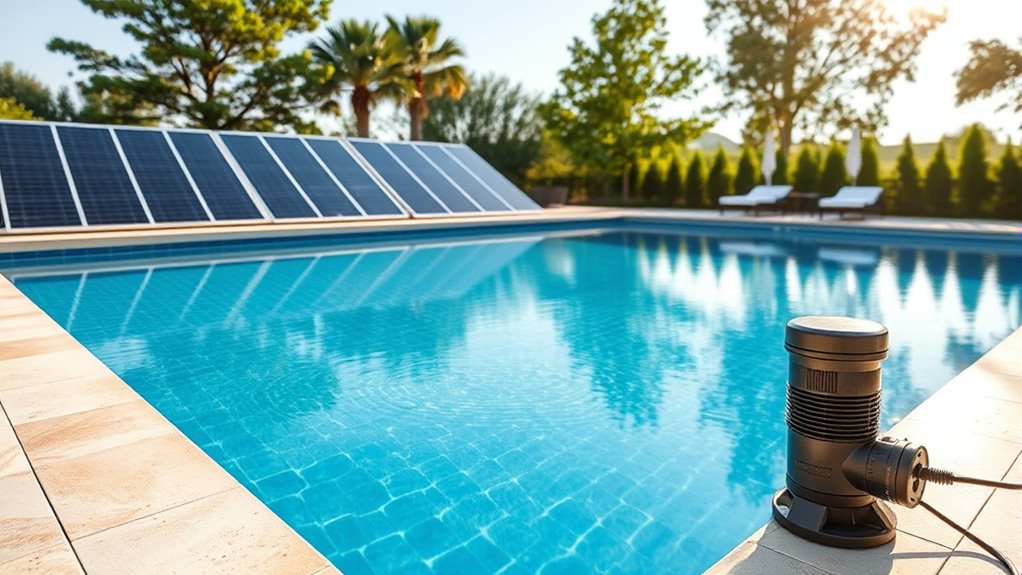

Eco-friendly pool designs with solar heating and variable-speed pumps help you cut energy and water use while supporting sustainability. Solar panels warm your pool naturally, reducing reliance on electric heaters and lowering energy costs. Variable-speed pumps adjust their operation to fit your filtration needs, saving power and minimizing noise. Choosing these eco-friendly options benefits the environment and your budget. To discover more ways to make your pool eco-conscious, explore further tips and solutions.
Key Takeaways
- Solar panels can be integrated to naturally heat pools, reducing reliance on fossil fuels and lowering energy costs.
- Variable-speed pumps optimize energy use by adjusting flow based on filtration needs, decreasing electricity consumption.
- Combining solar heating with variable-speed pumps enhances overall energy efficiency and sustainability of pool systems.
- Eco-friendly pool designs prioritize recycled, local, and natural materials to minimize environmental impact.
- Water-saving features like rainwater harvesting and pool covers complement solar and pump technology for comprehensive conservation.
Creating an eco-friendly pool isn’t just about luxury—it’s a smart choice for reducing your environmental impact. When planning your design, you should prioritize sustainable materials that minimize resource use and lessen your carbon footprint. Using recycled or locally sourced materials for your pool’s structure and surrounding features not only supports environmental preservation but can also add a unique aesthetic. For example, opting for natural stone or reclaimed wood reduces the demand for new resources and blends seamlessly with outdoor landscapes.
Prioritize recycled and local materials to create a sustainable, aesthetically pleasing eco-friendly pool.
Water conservation is another essential aspect of eco-friendly pool design. Traditional pools often waste a considerable amount of water through evaporation, backwashing, and overspending on unnecessary refills. To combat this, you can incorporate innovative features like a pool cover that minimizes evaporation when the pool isn’t in use. Additionally, installing a rainwater harvesting system can help you collect and reuse water, decreasing reliance on municipal supplies. Incorporating a well-designed filtration system that reduces backwashing frequency also conserves water, ensuring you’re not wasting resources on excessive maintenance.
Switching to solar heating is one of the most effective ways to make your pool more sustainable. Solar panels capture energy from the sun, warming your pool naturally without consuming electricity from fossil fuels. Not only does this considerably cut down on energy costs, but it also reduces your carbon footprint. You can install solar pool heaters on the roof or nearby structures, making sure they’re positioned to maximize sun exposure. This setup allows you to enjoy a comfortably heated pool year-round without relying on traditional gas or electric heaters, which often use non-renewable energy sources.
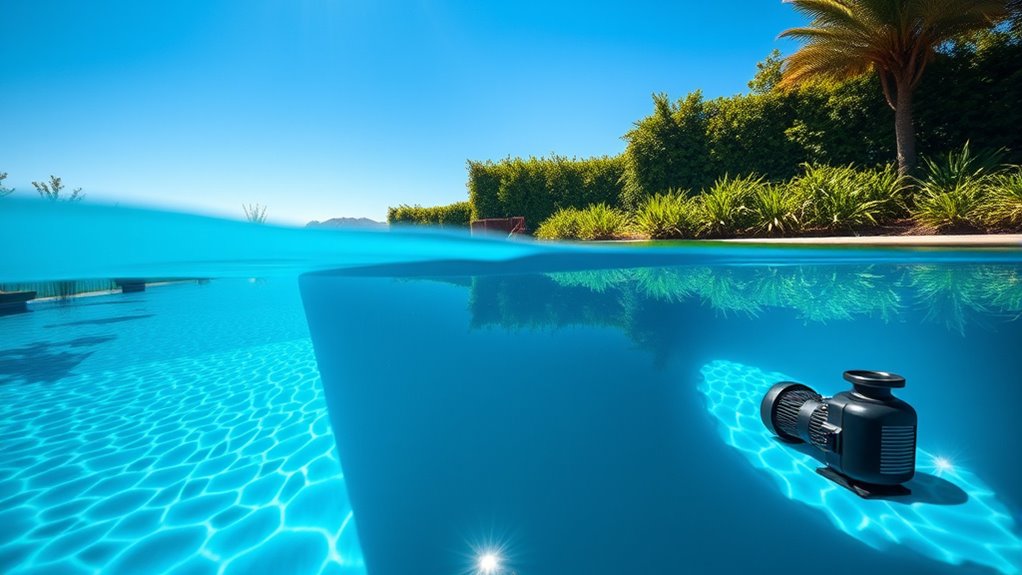
Complementing solar heating with variable-speed pumps can further enhance your pool’s eco-friendliness. Unlike standard pumps that run at a fixed speed, variable-speed pumps adjust their motor speed based on the pool’s needs. This flexibility means you use less energy during maintenance or filtration cycles, substantially lowering your electricity consumption. Over time, this translates into notable savings on utility bills while also reducing the associated greenhouse gas emissions. Plus, these pumps operate quieter, creating a more peaceful environment around your pool area.
Frequently Asked Questions
How Long Does a Solar Pool Heater Typically Last?
A solar pool heater typically lasts around 10 to 15 years, depending on solar panel durability and installation quality. You can extend its lifespan by regular maintenance and guaranteeing proper system care. The pump lifespan also influences overall efficiency; a high-quality, variable-speed pump can last 5 to 10 years. By choosing durable materials and keeping up with maintenance, you ensure your solar heater performs well for many seasons.
Are Variable-Speed Pumps Suitable for Small Residential Pools?
They say, “Good things come in small packages,” and that applies to variable-speed pumps for small residential pools. Yes, they’re suitable because they efficiently manage pool size and reduce pump noise, making your pool area more peaceful. These pumps adapt to your needs, saving energy and lowering costs. For small pools, they’re a smart choice, providing quiet operation and ideal performance without overkill.
What Maintenance Is Required for Solar Heating Systems?
You should regularly check your solar heating system for leaks and clean the solar collectors to guarantee efficiency. Maintain proper chlorine balance in your pool to prevent algae buildup that can block solar panels. Also, inspect and clean your pool cover to keep debris off the panels, improving heat absorption. Regularly monitor system components and perform seasonal inspections to keep your solar heating running smoothly and efficiently.
Can These Eco-Friendly Systems Be Integrated With Existing Pools?
You can definitely integrate eco-friendly systems with your existing pool—it’s not as tricky as it seems. Think of it as giving your pool a facelift through pool retrofitting, enhancing its efficiency and sustainability. Just check the system compatibility first to make sure the solar heating or variable-speed pumps work seamlessly with your current setup. With a bit of planning, you’ll be swimming in green energy in no time!
What Is the Average Cost Savings Over Time With Solar and Variable-Speed Pumps?
You can expect significant cost savings over time with solar heating and variable-speed pumps, often reducing energy bills by 50% or more. These eco-friendly systems boost energy efficiency, meaning you use less electricity to keep your pool comfortable. While initial investments are higher, the long-term savings on energy costs quickly offset these expenses, making your pool more economical and environmentally friendly.
Conclusion
By embracing eco-friendly pool designs, you’ll enjoy efficient energy use, save significant sustenance, and support sustainable solutions. Solar heating and variable-speed pumps provide powerful, practical, and planet-friendly performance. With wise water and waste management, your pool becomes a perfect blend of beauty and balance. Make mindful modifications, maximize your maintenance, and marvel at your minimal impact. Ultimately, your eco-conscious choices create a cleaner, clearer, and more sustainable sanctuary for yourself and the planet.