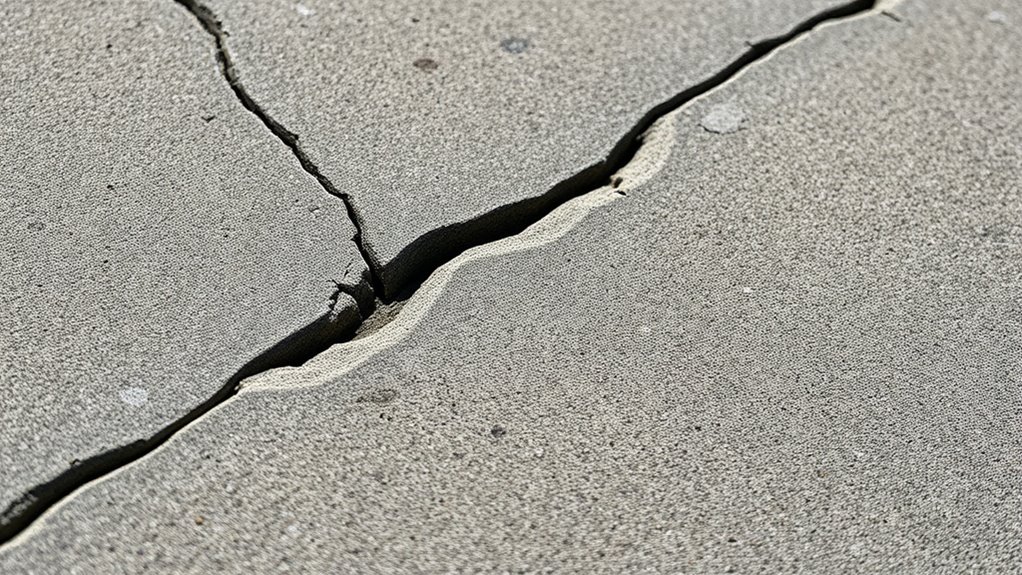

Concrete movement joints are placed where the edges are most likely to crack due to stresses from expansion, contraction, and environmental changes. These joints provide designated spaces for movement, preventing random cracks that can weaken your structure. Poor design or installation can lead to joint failure and water infiltration. If you want to understand how to optimize joint placement and maintain their effectiveness, there’s plenty more to explore.
Key Takeaways
- Cracks tend to form at movement joint edges due to concentrated stresses from expansion and contraction.
- Improper joint design or placement increases stress concentration, making edges more prone to cracking.
- Edges often crack when joints are not properly sealed or maintained, allowing water ingress and weakening.
- Excessive shrinkage or temperature changes cause tension at joint edges, leading to cracking.
- Inadequate joint spacing or size can overload edges, making them the most likely crack points.
Understanding the Purpose of Movement Joints in Concrete

Understanding the purpose of movement joints in concrete is essential for guaranteeing the durability and integrity of your structure. These joints are intentionally placed gaps designed to control where cracks form as the concrete expands and contracts with temperature changes, moisture levels, and settling. Without them, cracks can appear randomly, weakening the structure and reducing its lifespan. Movement joints help manage these natural stresses by providing designated spaces for movement, preventing random surface cracks that compromise appearance and strength. Properly designed joints also facilitate easier maintenance and repairs, saving you time and money. When correctly implemented, movement joints ensure your concrete stays solid and functional, even as the environment and load conditions change over time. Additionally, understanding the behavior of concrete can help in designing more effective joint placements to accommodate future shifts.
The Mechanics Behind Cracking at Joint Edges

Cracking at the edges of movement joints occurs because these areas experience concentrated stresses as the concrete expands and contracts. When concrete moves, the edges of joints bear the brunt of stress, making them prime spots for cracks. This happens because the concrete’s natural tendency to shrink or swell creates tension at these boundaries. If the joint isn’t designed to accommodate this movement, cracks develop. Additionally, the contrast ratio, which influences how well the concrete can display subtle differences in shading, can affect the visual prominence of these cracks over time.
Common Causes of Movement Joint Failures
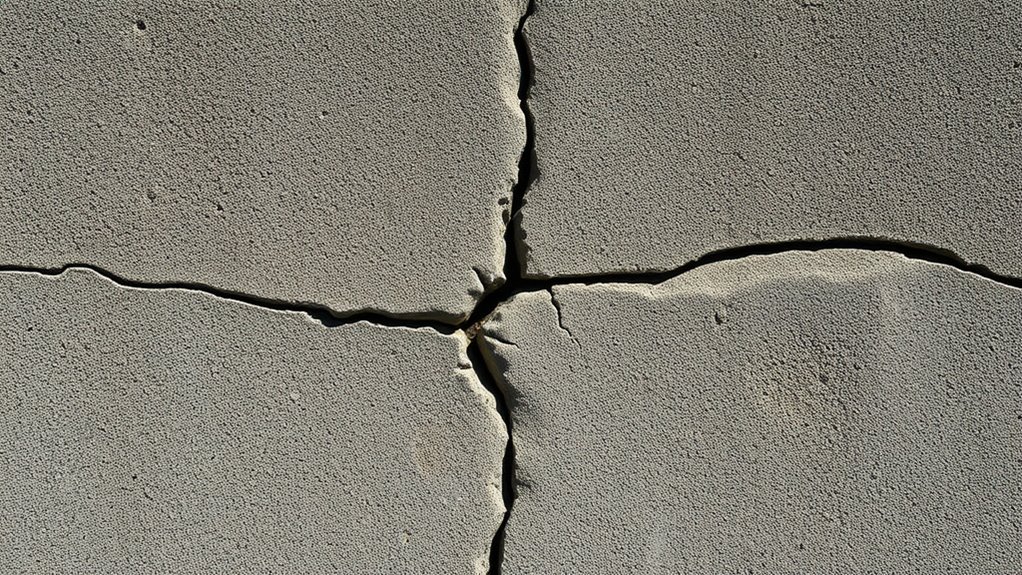
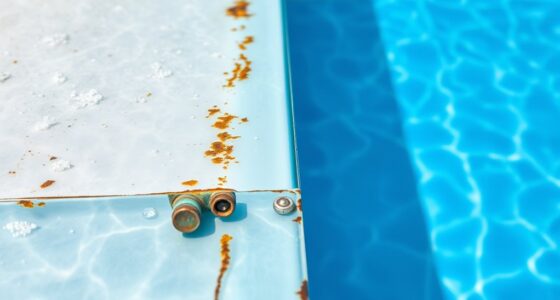
Movement joint failures often stem from improper design, material selection, or installation errors. If joints aren’t designed correctly, they can’t accommodate anticipated movements, leading to cracks and spalling. Using unsuitable materials, like low-quality sealants or inadequate reinforcement, weakens the joint’s effectiveness. Poor installation practices—such as incorrect cutting, insufficient curing, or improper sealing—also cause failures. For example, if joints aren’t properly aligned or sealed, water infiltration can accelerate deterioration. Over time, these issues cause the joint to lose flexibility, crack, or degrade prematurely. Additionally, neglecting the right joint spacing or not accounting for environmental conditions can increase stress concentrations. Understanding material compatibility is crucial to ensure joint longevity. Identifying and avoiding these common mistakes helps guarantee your movement joints perform their function and extend the lifespan of your concrete structures.
Techniques for Designing Effective Movement Joints
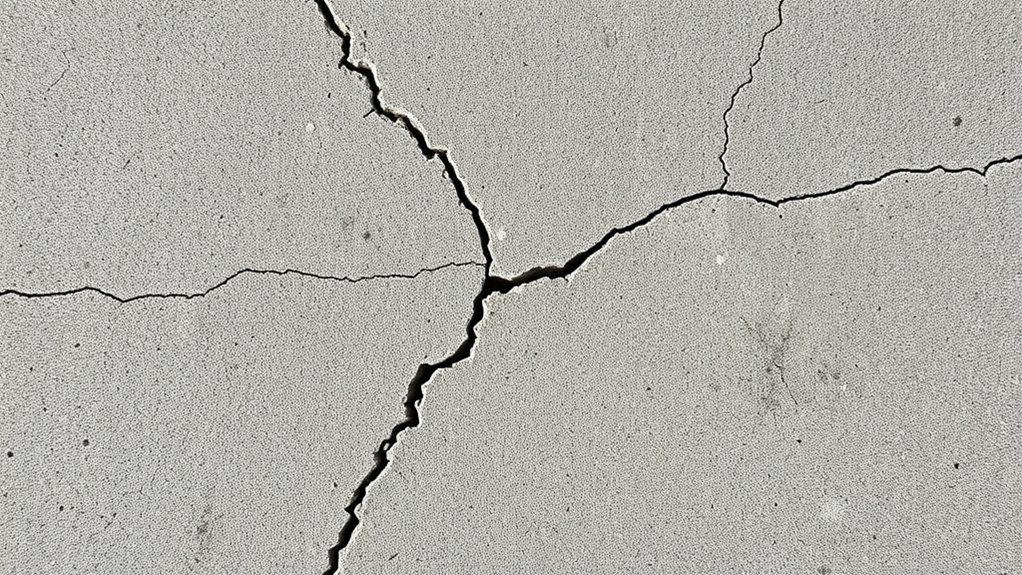
Designing effective movement joints begins with careful planning to accommodate expected structural movements. You need to assess factors like temperature changes, shrinkage, and load conditions to determine joint placement and size. Proper spacing ensures cracks form at joints instead of randomly across the slab. Use the following techniques:
- Identify and locate joints based on structural analysis and anticipated movement.
- Choose appropriate joint types—control, expansion, or construction joints—tailored to your project.
- Ensure joints are clean, sealed, and properly filled to prevent debris buildup and water ingress.
- Regularly review and adjust joint placement during design revisions to address changes in usage or environmental conditions.
- Incorporate natural materials such as wood or stone in nearby finishes to complement the joints and enhance durability. These strategies help you create durable, effective joints that minimize uncontrolled cracking and improve the concrete’s longevity.
Innovations and Best Practices for Crack Control
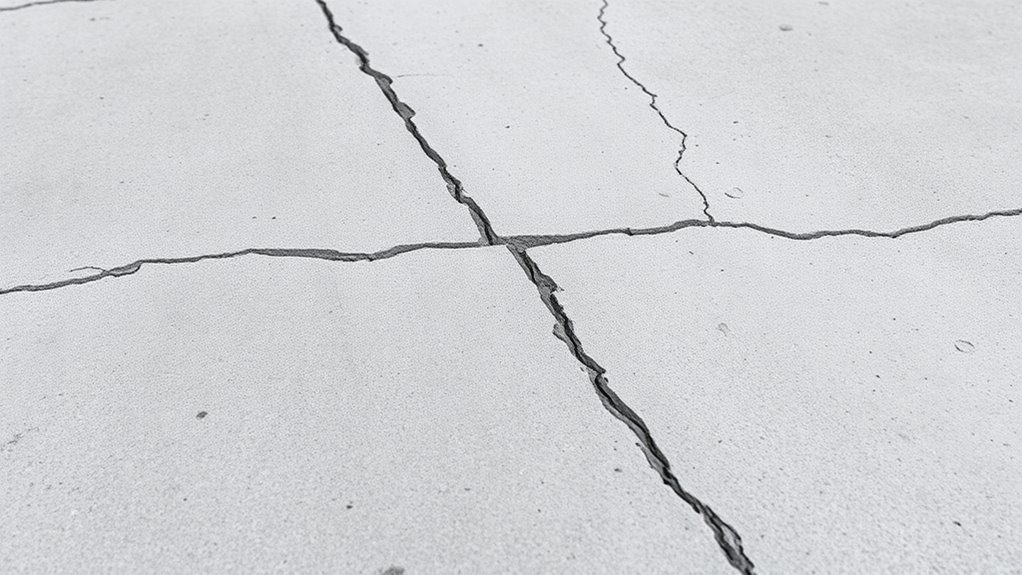
Advancements in materials and construction techniques have considerably enhanced crack control in concrete structures. Modern fiber-reinforced concretes improve durability by reducing shrinkage cracks, while advanced admixtures help manage hydration and minimize internal stresses. You should consider using early-age curing techniques, like curing blankets or sprays, to promote uniform strength development. Additionally, implementing precision joint placement with computer-aided design ensures joints are ideally positioned to control cracks without compromising aesthetics. Incorporating crack sensors and real-time monitoring systems allows you to detect and address cracks early. Best practices also include adjusting mix designs for low shrinkage and ensuring proper consolidation during pouring. Staying updated with innovations enables you to reduce cracking risks, extend the lifespan of your structures, and achieve more durable, visually appealing results. Understanding the importance of risk assessment can help you identify potential vulnerabilities before they develop into significant issues.
Frequently Asked Questions
How Do Environmental Conditions Influence Movement Joint Effectiveness?
Environmental conditions greatly impact how well movement joints work. If you face temperature fluctuations, joints help accommodate expansion and contraction, preventing cracks. In humid conditions, moisture can cause concrete to swell, making joints essential for flexibility. Extreme weather, like freezing or heatwaves, stresses concrete, so you must design joints considering climate. Properly placed and maintained joints guarantee your structure remains durable and crack-free despite environmental challenges.
What Materials Are Best Suited for Durable Movement Joints?
You should use flexible, durable materials like elastomeric sealants, bituminous joint fillers, or silicone-based products for movement joints. These materials accommodate expansion and contraction without cracking or failing. Make certain you select products compatible with your concrete type, climate, and load requirements. Proper installation and regular maintenance are vital to maximize their lifespan and effectiveness. These materials help your joints perform well under changing environmental conditions, preventing damage and extending your concrete’s durability.
Can Movement Joints Be Retrofitted After Concrete Has Cured?
Yes, you can retrofit movement joints after concrete has cured. Remarkably, studies show that properly added joints can extend a concrete slab’s lifespan by up to 30%. You’ll need to cut into the existing slab carefully, insert the joint material, and seal it properly. This process requires precision to avoid damaging the concrete or creating weak spots, so consider consulting a professional for the best results.
How Does Concrete Thickness Affect Joint Placement Strategies?
You should consider concrete thickness when planning joint placement because thicker slabs require wider or more frequent joints to accommodate expansion and contraction. Thinner slabs need closer joints to prevent cracking, while thicker ones can handle larger movement zones. By adjusting joint spacing based on thickness, you guarantee the slab remains durable and crack-free, effectively managing stresses and minimizing damage over time.
What Maintenance Practices Extend Joint Lifespan and Performance?
Maintain, monitor, and manage your concrete joints to maximize lifespan and performance. Regularly inspect for cracks, debris, or deterioration, and promptly clean and seal joints to prevent water ingress. Implement timely touch-ups and resealing to reduce wear. Proper planning of joint placement minimizes stress points, while consistent care prevents premature cracking. By prioritizing proactive practices, you preserve structural integrity and prolong the pavement’s durability, ensuring lasting performance and safety.
Conclusion
To keep your concrete looking its best, you need to understand and properly implement movement joints. When you overlook their importance, cracks tend to follow like a bad habit. Think of these joints as the backbone of crack control—without them, your efforts are fighting a losing battle. By applying the right techniques and staying up-to-date with innovations, you can stay ahead of the curve and ensure your concrete remains durable and crack-free for years to come.