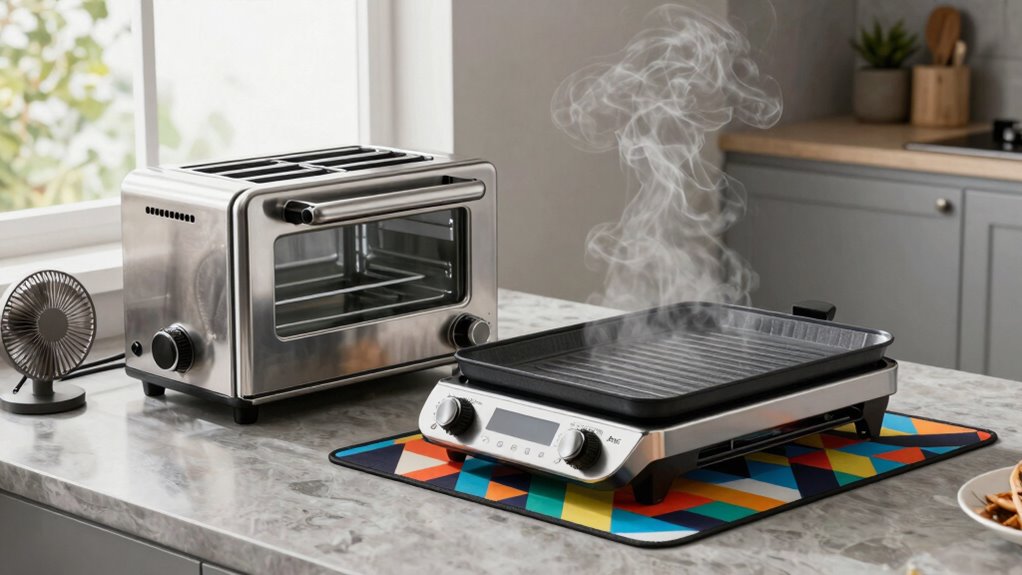

To reduce heat build-up from countertop cooking devices, make sure you place them on heat-resistant surfaces and use heat shields or insulation mats to protect your counters. Keep the area well-ventilated with exhaust fans or open windows, and use portable fans to improve airflow. Limit the time appliances are on and turn them off promptly to prevent excessive heat. Regularly clean and inspect your devices for safety, and you’ll find even more helpful tips ahead.
Listen free for 30 days with Audible
Thousands of audiobooks and originals — cancel anytime.
As an affiliate, we earn on qualifying purchases.
Key Takeaways
- Place appliances on heat-resistant surfaces and use insulation mats to deflect heat away from countertops.
- Ensure proper ventilation with exhaust fans or open windows to dissipate heat and fumes.
- Limit appliance operation time and turn off devices promptly after use.
- Regularly clean appliances and inspect vents to maintain optimal cooling and airflow.
- Use heat shields or insulation to protect surrounding surfaces from heat transfer.
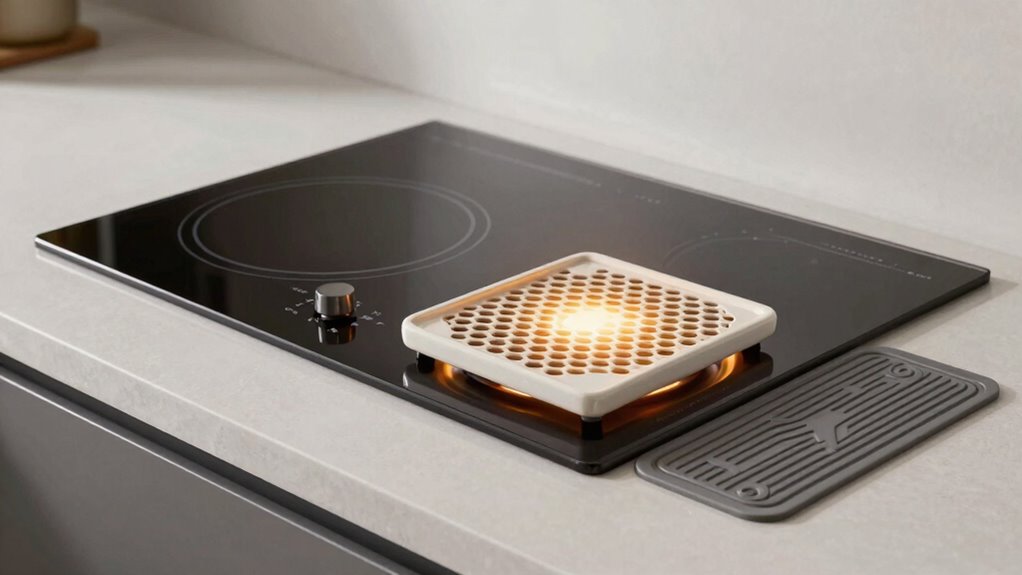
Countertop cooking devices are convenient, but they can quickly lead to heat build-up that affects your kitchen environment and safety. When you use appliances like hot plates, griddles, or toasters regularly, heat can accumulate in the surrounding area, making the space uncomfortable and increasing the risk of accidents. Managing this heat is essential to maintaining a safe and comfortable kitchen. Proper appliance maintenance plays a critical role here—regularly cleaning and inspecting your devices ensures they operate efficiently and generate less excess heat. Dust and grease buildup can cause appliances to work harder, producing more heat and increasing the potential for safety hazards.
Countertop appliances can cause heat build-up, so regular maintenance is key to safety and efficiency in your kitchen.
To reduce heat build-up, always position your countertop devices on heat-resistant surfaces that can tolerate high temperatures and prevent heat transfer to countertops. Avoid placing appliances directly against cabinets or walls, as this can trap heat and restrict airflow, causing the devices to overheat. Using heat shields or insulation mats can help deflect heat away from sensitive surfaces, protecting your countertops and keeping heat levels in check. When you’re cooking, try to limit the duration of appliance use. Turn off devices promptly once you’re done, and avoid leaving them running unnecessarily. This not only conserves energy but also prevents heat from accumulating in the area. Additionally, selecting appliances with energy-efficient features can help minimize excess heat production.
Air circulation is key to managing heat. Keep the area around your cooking devices well-ventilated by opening windows or using exhaust fans. If your kitchen has an overhead range hood, make sure it’s functioning properly to vent heat and fumes outside. Additionally, consider using portable fans or small oscillating fans to improve airflow around your appliances. This helps disperse heat more evenly and prevents hotspots that can cause damage or safety issues. Regularly inspecting appliance operation and ensuring vents are clear can significantly reduce excess heat. Proper ventilation practices, such as using the right ventilation methods, can further enhance heat dissipation and safety in your kitchen. Maintaining good kitchen airflow is crucial for preventing heat buildup and ensuring safety. Proper airflow also helps in reducing lingering fumes and moisture that might contribute to other hazards.
Consistent appliance maintenance is essential for controlling heat. Regularly check cords, plugs, and switches for signs of wear or damage. Ensure that vents and cooling fans are clean and unobstructed. If your appliance has a temperature control feature, use it correctly to avoid overheating. When appliances become too hot or show signs of malfunction, don’t hesitate to unplug them and seek professional repairs. Taking these steps will extend the lifespan of your devices and keep your kitchen safer.
As an affiliate, we earn on qualifying purchases.
Frequently Asked Questions
Are There Specific Materials That Resist Heat Transfer Better?
Yes, you should look for heat-resistant materials like silicone, ceramic, and tempered glass, as they resist heat transfer better than plastics or metal. Insulation alternatives, such as heat pads or mats, can also help reduce heat buildup. By choosing these materials and insulation options, you can protect your countertops from excessive heat, prolong device lifespan, and maintain a safer, cooler cooking environment.
How Long Should I Wait Before Cleaning Hot Countertops?
You should wait at least 15 to 30 minutes before cleaning hot countertops. During this time, cooling methods like wiping with a damp cloth or using a heat-resistant mat help prevent damage. Consistent cleaning frequency guarantees safety and longevity, while proper cooling methods protect your surface. Always check the surface’s temperature first, then proceed with cleaning once it’s comfortably cool to avoid burns and surface deterioration.
Can Using a Heat Diffuser Protect the Countertop?
Using a heat diffuser can protect your countertop by reducing direct heat transfer. Place a heat resistant mat or protective coating between your cooking device and the surface to prevent heat damage. These mats absorb and distribute heat evenly, preventing hotspots and scorching. Regularly using these protective measures keeps your countertop safe from heat build-up, ensuring it stays in good condition while you cook.
What Are the Signs of Heat Damage on Countertops?
You’ll notice heat damage on your countertops through signs like discolored areas, countertop stains, or surface cracks. These often appear where heat from cookware has been intense or prolonged. If you see bubbling or peeling finishes, that’s another sign of heat damage. Addressing these early can prevent further harm, so keep an eye out for any unusual discoloration or cracks that might indicate your countertop is suffering from heat exposure.
Is It Safe to Use Insulation Pads Permanently?
Using insulation pads permanently isn’t typically safe because their insulation longevity can decline over time. Prolonged use may lead to potential heat transfer issues or damage to your countertop. For permanent safety, replace pads as recommended by the manufacturer and consider alternative solutions like heat-resistant mats or protective barriers designed for long-term use. This approach helps guarantee your countertop remains protected without risking heat damage or safety hazards.
heat shields for cooking appliances
As an affiliate, we earn on qualifying purchases.
As an affiliate, we earn on qualifying purchases.
Conclusion
By taking these simple steps, you can keep your kitchen cool and comfortable, preventing heat from creeping in like an unwelcome shadow. Think of your countertop as a delicate stage where careful moves prevent the spotlight from overheating it. So, stay mindful, use ventilation, and give your appliances space to breathe. With these small acts, you’ll transform your cooking area into a revitalizing oasis amid the sizzling chaos, keeping heat buildup at bay and your kitchen breezy.
As an affiliate, we earn on qualifying purchases.
portable oscillating fan for kitchen
As an affiliate, we earn on qualifying purchases.
As an affiliate, we earn on qualifying purchases.
Flea & tick season Picks
flea and tick prevention
As an affiliate, we earn on qualifying purchases.